Home
Home
Why Snapchat My AI Is Easier for Teachers to Catch Than You Think
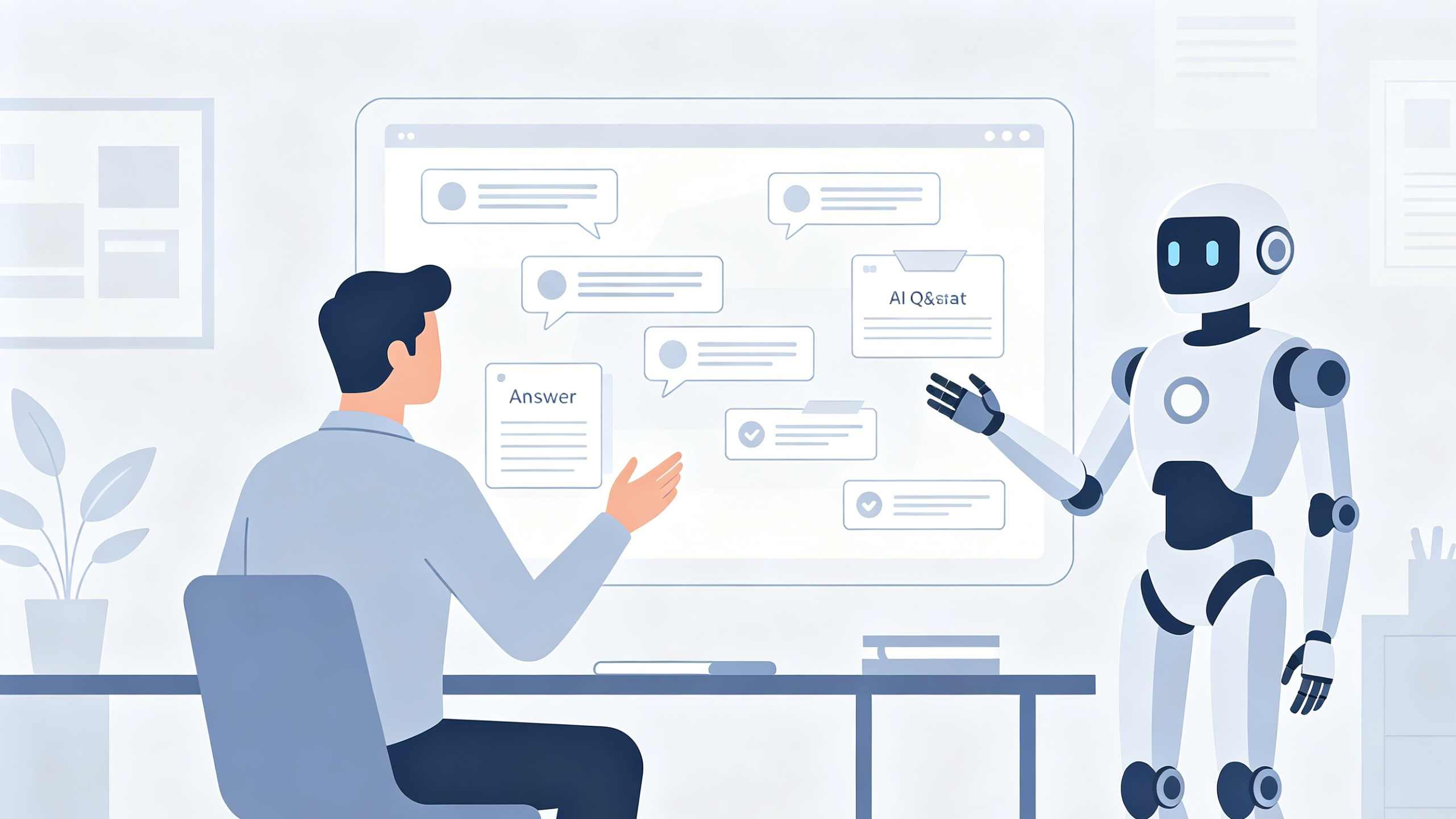
Teachers can detect Snapchat My AI through a combination of sophisticated detection software and professional pedagogical observation. While many students believe that the casual, conversational nature of Snapchat’s "My AI" makes it stealthier than ChatGPT, the reality is that its output still carries the distinct statistical fingerprints of a large language model. Educational institutions currently utilize industry-standard tools like Turnitin, GPTZero, and Winston AI, which are specifically calibrated to identify the predictable patterns, lack of structural variance, and linguistic consistencies inherent in AI-generated text.
Beyond technology, educators are trained to recognize the unique "writing voice" of each student. A sudden shift from a student's typical sentence structure to the polished, error-free, and often generic prose of My AI serves as an immediate red flag. Furthermore, Snapchat My AI is prone to "hallucinations"—generating confident but factually incorrect information—which can be easily spotted by an instructor familiar with the subject matter.
The Technological Infrastructure of AI Detection in Schools
The primary defense against AI-assisted plagiarism is a suite of software tools that have rapidly evolved since the release of public generative AI. To understand why Snapchat My AI is detectable, one must understand how these detectors analyze text.
How Turnitin and GPTZero Analyze Linguistic Patterns
Most modern AI detectors do not look for specific "banned" words. Instead, they apply complex mathematical models to assess two primary metrics: Perplexity and Burstiness.
- Perplexity: This measures the complexity of the text. Human writing is naturally "perplexing" to a computer because humans often make unexpected word choices or use idiosyncratic phrasing. AI, including the model powering Snapchat My AI, is designed to be as predictable as possible. It selects the "next most likely token" in a sequence. When a detector sees a string of text where every word choice is highly predictable, the perplexity score drops, and the AI probability score rises.
- Burstiness: This refers to the variation in sentence length and structure. Human writers tend to vary their sentences—some are long and flowery, while others are short and punchy. This creates a "bursty" rhythm. AI-generated content often features sentences of relatively uniform length and structure, creating a monotonous rhythm that detection algorithms can identify with high accuracy.
In testing environments, text copied directly from Snapchat My AI frequently returns a 90% to 100% "AI-generated" probability on platforms like GPTZero. Even though the tone is informal, the underlying mathematical structure remains formulaic.
Integration with Learning Management Systems (LMS)
Schools rarely require a teacher to manually upload a document to a detector. Platforms like Canvas, Blackboard, and Google Classroom often have these detectors integrated directly into the submission portal. When a student submits an essay or a discussion post, the system automatically generates a "Similarity Report" or an "AI Writing Indicator." If the indicator shows a high percentage of AI involvement, it triggers an automatic alert for the instructor to review the submission more closely.
The Human Factor: Why Teachers Are the Best Detectors
While software is a powerful tool, the professional intuition of a teacher remains one of the most effective methods for identifying unauthorized AI use. Educators spend months, sometimes years, reading a student's work, allowing them to develop a deep understanding of that student’s intellectual "fingerprint."
The Discrepancy in Student Voice
Every student has a specific way of expressing ideas, often characterized by certain vocabulary preferences, common grammatical errors, or specific argumentative styles. Snapchat My AI produces text that is generally "perfect" in its grammar but "hollow" in its voice. If a student who typically struggles with comma splices or has a limited academic vocabulary suddenly submits a perfectly punctuated analysis of The Great Gatsby using words like "ephemeral" or "multaceted," the teacher will immediately notice the discrepancy.
The Problem of Generalization
Snapchat My AI is designed for quick, casual interactions. When asked to perform academic tasks, it tends to produce very broad, generalized summaries. It lacks the ability to reference specific in-class discussions, unique teacher-provided prompts, or nuanced interpretations that were covered during a lecture. A teacher who asks for an analysis of a specific chapter will find an AI’s generic summary of the entire book to be suspicious.
Factual Hallucinations and Source Fabrication
One of the most significant weaknesses of the GPT-based models used by Snapchat is the tendency to hallucinate. This occurs when the AI generates information that sounds plausible but is entirely false. For example, My AI might quote a historian who doesn't exist or cite a scientific study with a fabricated title. Teachers who are experts in their fields can spot these inaccuracies instantly. If a student cannot explain where they found a specific (fabricated) fact during a follow-up conversation, it becomes clear that the work was not their own.
Why Snapchat My AI is Not "Stealthy"
There is a common misconception among users that because Snapchat is a "social" app, its AI is somehow different from academic tools like ChatGPT or Claude. This is false.
Shared Underlying Technology
Snapchat My AI is powered by OpenAI’s GPT technology. The training data and the output mechanisms are fundamentally similar to those used by ChatGPT. Therefore, a detection tool trained to catch ChatGPT output is equally capable of catching Snapchat My AI output. The "cutesy" or "friendly" persona that Snapchat overlays on the AI does not change the statistical distribution of the words it generates.
The "Casual Tone" Trap
Some students believe that by asking the AI to "sound like a teenager" or "use slang," they can bypass detectors. However, AI detectors are trained on these specific prompts as well. When an AI tries to sound like a human, it often does so in a way that is still statistically predictable. It might over-use certain slang terms or apply them in a way that feels slightly "off" to a human reader. Modern detectors are increasingly adept at identifying "AI-paraphrased" content, which includes text that has been modified to change its tone.
The Risks of Academic Misconduct
Using Snapchat My AI for school assignments is not a victimless shortcut; it carries significant academic and personal risks. Most educational institutions have updated their codes of conduct to specifically include the unauthorized use of generative AI under the umbrella of plagiarism or academic dishonesty.
Disciplinary Actions
If a student is caught using AI, the consequences can range from a zero on the assignment to a failing grade for the entire course. In higher education, repeated offenses can lead to suspension or even expulsion. These marks on a permanent record can affect college admissions, scholarship eligibility, and future career opportunities.
The False Positive Dilemma
It is important to note that AI detectors are not 100% accurate. They occasionally produce "false positives," where a human-written essay is flagged as AI. This creates a stressful situation for both the student and the teacher. However, if a student has truly written the work themselves, they should be able to provide evidence of their process, such as:
- Early drafts or outlines.
- Browser history showing research.
- The ability to explain their arguments in detail during a viva (oral exam). Students who rely on AI lack this "paper trail," making it impossible for them to defend themselves if flagged.
How Teachers Adapt Their Assignments
As AI becomes more prevalent, educators are changing the way they assess students to make AI assistance less effective. If a student finds that their assignments are becoming more difficult to "outsource" to Snapchat, it is likely because the teacher is using one of the following strategies:
In-Class Assessments
The most foolproof way to prevent AI use is to have students write in person. Blue-book exams, timed in-class essays, and oral presentations are becoming more common as a way to verify that a student understands the material without digital assistance.
Reflective and Hyper-Specific Prompts
Teachers are moving away from generic prompts like "Compare and contrast two characters in Macbeth." Instead, they might ask: "How does the conversation we had in Tuesday's class regarding the color red in Act 2 change your personal interpretation of Lady Macbeth’s guilt?" Snapchat My AI has no way of knowing what happened in "Tuesday's class," making it impossible for the AI to answer the prompt accurately.
Multi-Stage Projects
By requiring students to submit a thesis statement one week, an annotated bibliography the next, and a rough draft the third, teachers can see the evolution of the work. A sudden leap in quality or a change in direction between the draft and the final version is a major indicator of AI intervention.
What is Snapchat My AI?
Snapchat My AI is a chatbot integrated into the Snapchat messaging app. It is designed to act as a personal assistant and companion, capable of answering questions, giving gift advice, planning trips, and engaging in general conversation. While it is marketed as a social tool, its ability to generate structured text has led many students to use it as a shortcut for schoolwork.
Can Snapchat My AI write essays?
Yes, My AI can generate essays, poems, and summaries. However, the quality is often subpar for high-level academic work. It excels at short-form content but struggles with maintaining a coherent argument over a long document. More importantly, as established, the text it produces is highly detectable.
Does Snapchat store My AI conversations?
Yes. Unlike regular Snaps that disappear, conversations with My AI are stored on Snapchat’s servers until they are manually deleted by the user. This means there is a digital record of every prompt a student gives the AI. In some cases, if a school investigation is launched, this data could potentially be used as evidence, depending on the school's legal access and privacy policies.
How to Check Your Own Work for AI Patterns
If you have used AI for brainstorming and are worried that your final, human-written essay might be flagged, it is wise to understand how your work appears to a detector.
Using Public Detectors
Tools like GPTZero or the free version of ZeroGPT allow users to paste their text and see an AI probability score. If your score is high despite writing it yourself, you may need to vary your sentence structures and use more specific, personal examples to "humanize" the text.
The Importance of Human Editing
True human writing is messy, opinionated, and deeply specific. If you use AI to generate an outline, you must ensure that every sentence in the final draft is rewritten in your own voice. Simply changing a few words (synonym swapping) is not enough to fool modern detection algorithms, which look at the structural logic of the paragraph rather than just individual words.
Why Relying on AI Hinders Learning
Beyond the risk of being caught, using Snapchat My AI for assignments prevents the development of critical skills.
- Critical Thinking: Writing is not just the act of putting words on a page; it is the process of organizing thoughts. When an AI does the writing, the student skips the thinking process.
- Writing Proficiency: Like any skill, writing requires practice. Relying on a chatbot leads to "skill atrophy," making it much harder for students to succeed in college or the workplace where AI might not be available or permitted.
- Intellectual Ownership: There is a unique sense of accomplishment in producing a piece of original work. Using AI robs the student of the pride associated with genuine achievement.
Summary of Detection Methods
| Method | How it Works | Reliability |
|---|---|---|
| Linguistic Analysis (Software) | Measures Perplexity and Burstiness. | High (80-99%) |
| Voice Consistency (Teacher) | Compares current work to previous student submissions. | Very High (Context-dependent) |
| Factual Auditing | Checking for "hallucinations" or fabricated sources. | High |
| LMS Integration | Automatic flagging during the submission process. | Consistent |
| Interactive Follow-up | Teachers asking students to explain their reasoning. | Definitive |
Conclusion
The short answer to whether teachers can detect Snapchat My AI is a definitive yes. Through a combination of statistical analysis software like Turnitin and GPTZero, and the practiced observation of a student's unique writing voice, educators have become highly proficient at identifying AI-generated content. While Snapchat My AI offers a tempting shortcut, the mathematical predictability of its output makes it a high-risk tool for academic work. The most effective way to avoid detection is not to find a better "prompt" or a stealthier AI, but to engage authentically with the learning process and produce original work. As detection technology continues to advance, the gap between human creativity and AI-generated mimicry becomes narrower, but the markers of human thought remain distinct to those trained to look for them.
FAQ
Can Turnitin specifically detect Snapchat My AI?
Yes. Turnitin’s AI detection model is trained on the same GPT architectures that power Snapchat My AI. It identifies the structural and statistical patterns of the writing, regardless of which app or interface was used to generate it.
What happens if I get a "false positive" on an AI detector?
If your original work is flagged, stay calm. Collect your evidence: outlines, research notes, and previous drafts. Request a meeting with your teacher to discuss your writing process. Most teachers use AI detectors as a starting point for a discussion rather than as absolute proof.
Is using Snapchat AI for ideas considered cheating?
This depends on your school's specific policy. Many teachers allow using AI for "brainstorming" or "outlining," provided the final writing is entirely your own. However, copying any text directly is almost always considered a violation of academic integrity. Always check your syllabus first.
Does "humanizing" the text by changing words work?
Rarely. Modern detectors look at the "flow" and the underlying probability of word sequences. Simple word swapping doesn't change the basic structure that the AI created. Advanced detectors can now identify "AI-paraphrased" text with high accuracy.
Can teachers see if I used Snapchat AI on my phone?
While teachers generally cannot see what is on your private phone, they can see the results of that activity in your submitted work. Additionally, if you are using the school’s Wi-Fi, some network logs may show activity related to AI services, though this is less common for specific app features like My AI.
-
Topic: Can Snapchat AI Be Detected by Teachers? - AEANEThttps://www.aeanet.org/can-snapchat-ai-be-detected-by-teachers/
-
Topic: Can Snapchat AI Be Detected? We Tested Ithttps://www.twaingpt.com/blog/can-snapchat-ai-be-detected
-
Topic: Can professors detect Snapchat AI?https://www.spainexchange.com/faq/can-professors-detect-snapchat-ai