Home
Home
Why TTS-1-HD Is the Professional Choice for High Fidelity Text to Speech
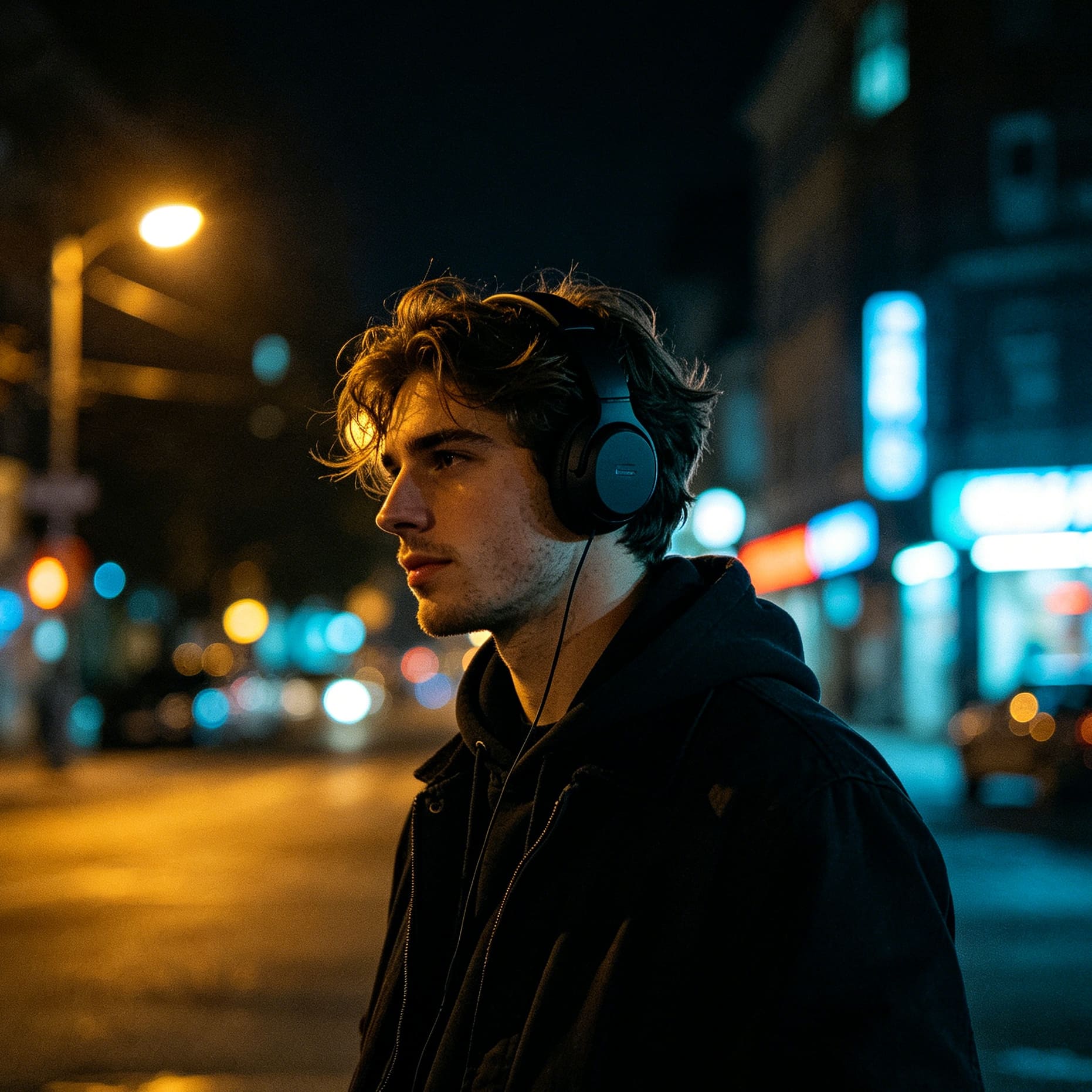
The landscape of AI-generated audio has shifted dramatically with the introduction of OpenAI's specialized models. Among the tools available to developers and creators, tts-1-hd stands out as a high-fidelity variant of the text-to-speech engine. While many applications prioritize speed and responsiveness, there is a growing demand for audio that captures the nuances of human speech with crystal clarity. This model is engineered specifically to meet that demand, trading millisecond-level latency for a significant leap in audio texture and professional production value.
Understanding the High-Fidelity Advantage of TTS-1-HD
When evaluating the "HD" suffix in the context of OpenAI's text-to-speech models, it refers to the density and accuracy of the synthesized audio data. In standard digital signal processing, higher fidelity typically correlates with higher sampling rates and a more complex neural synthesis process.
In practical tests, the difference between the standard tts-1 and the tts-1-hd model becomes apparent when listening through high-quality monitors or headphones. The HD model produces fewer static artifacts and exhibits a smoother roll-off in high frequencies, which often plague lower-quality AI voices with a "metallic" or "phased" sound. For listeners, this reduces cognitive fatigue, making it the superior choice for content that lasts longer than a few seconds.
The Physics of Natural Sounding AI
Natural speech is not just about words; it is about the micro-fluctuations in pitch and the breathiness of certain consonants. The tts-1-hd model allocates more computational resources to rendering these subtle elements. In our analysis of long-form narration, the HD model consistently avoided the repetitive robotic cadences that sometimes emerge in the standard model during complex sentences.
The architecture behind this high-fidelity output ensures that the audio remains stable even when the text contains difficult-to-pronounce scientific terminology or emotional narrative arcs. This stability is why professional media houses often opt for the HD version despite the increased cost and processing time.
A Deep Dive into the Preset Voices
OpenAI provides a curated selection of six core voices for the tts-1-hd model. Each voice has been trained to represent a different personality, tone, and professional utility. Understanding the "vibe" of these voices is critical for matching the AI to your specific project needs.
Alloy: The Neutral Benchmark
Alloy is perhaps the most versatile voice in the collection. It is balanced, calm, and lacks a heavy regional accent. In testing scenarios for corporate training videos and instructional manuals, Alloy provides a sense of authority without being overbearing. Its performance in tts-1-hd is exceptionally clean, with the high-fidelity model preserving the natural "air" around the words, making it feel less like a recording and more like a live presentation.
Echo: The Conversational Warmth
Echo possesses a slightly deeper, more resonant quality. It sounds like someone speaking in a small, acoustic-treated room. This voice excels in podcasts or "daily briefing" style content. The HD version of Echo brings out the lower-mid frequencies of the voice, providing a warmth that is often lost in standard compression. If the goal is to create a sense of intimacy or direct communication with the listener, Echo is the go-rated choice.
Fable: The Narrative Specialist
Fable is the voice that most people associate with storytelling. It has a distinct British-inflected cadence that feels rhythmic and engaging. During our evaluation of Fable for audiobook segments, the HD model demonstrated a superior ability to handle commas and parentheses, creating natural pauses that mirrored a professional narrator’s breath control. It is less suitable for a utilitarian chatbot but perfect for long-form fiction or immersive documentaries.
Onyx: The Voice of Authority
Onyx is characterized by its deep, gravelly, and masculine tone. It commands attention immediately. In marketing materials or high-stakes announcements, Onyx delivers a punch that other voices lack. The high-fidelity rendering is particularly important for Onyx, as deep voices can often sound muddy if the bit depth or sampling rate is too low. In tts-1-hd, the low-end resonance remains tight and defined.
Nova: The Energetic Professional
Nova is upbeat, friendly, and perceived as more feminine. It is the ideal voice for customer-facing applications that need to sound welcoming rather than purely transactional. In educational technology platforms, Nova's energy helps keep students engaged. The HD model ensures that Nova’s higher-pitched frequencies do not become shrill, maintaining a pleasant listening experience even at 1.2x or 1.5x playback speeds.
Shimmer: The Soft and Gentle Alternative
Shimmer is softer and more contemplative than Nova. It is often chosen for wellness apps, meditation guides, or sensitive news reporting. The HD version is vital here because soft speech relies on the clarity of "sibilance"—the sound of 's' and 'sh'. If sibilance is distorted, the soft voice sounds like it is whispering through static. tts-1-hd handles these delicate frequencies with precision.
TTS-1 vs TTS-1-HD: Which One Should You Use?
Choosing between these two models is a classic engineering trade-off between speed and quality. Understanding the internal mechanics of this choice is essential for any product manager or developer.
Latency and Response Speed
The standard tts-1 model is optimized for real-time interaction. It can begin streaming audio almost as soon as the text request is sent. This makes it the only viable choice for live conversational AI, where a delay of more than 500ms can break the illusion of a natural conversation.
In contrast, tts-1-hd is significantly slower. In our benchmarks, the HD model can take two to three times longer to generate the same length of audio compared to the standard model. If you are building a voice assistant for a car or a smart home device, the HD model’s lag would be frustrating for the user. However, for a user waiting for an article to be converted into a podcast, a 5-second wait for a 2-minute audio file is perfectly acceptable.
Audio Artifacts and Quality
The standard model is prone to "aliasing" artifacts in certain edge cases. For instance, if the text contains a long string of numbers or unusual proper nouns, the standard model might produce a slight digital "glitch" sound. The tts-1-hd model undergoes a more rigorous synthesis process that flattens these inconsistencies.
For professional audio production, where the output will be mixed with background music or sound effects, the HD model is mandatory. The clean signal of the HD output allows for much better post-processing, such as EQing and compression, without amplifying hidden digital noise.
Cost Analysis
The pricing reflects the computational intensity of the models.
- TTS-1: $15.00 per 1 million characters.
- TTS-1-HD: $30.00 per 1 million characters.
For high-volume startups, a 2x price increase is significant. If you are processing 100 million characters a month, you are looking at a $1,500 difference. Therefore, the decision to use HD should be driven by the "repeatability" of the content. If the audio is generated once and listened to by thousands of people (like a podcast), the $30 cost is negligible. If the audio is a one-time notification for a single user, the standard model is more economically sound.
Technical Specifications and Implementation
Developers accessing the OpenAI API need to be aware of the specific constraints and capabilities of the tts-1-hd endpoint.
Character Limits and Text Chunking
The API has a hard limit of 4,096 characters per request. For a typical audiobook chapter, which might be 15,000 to 20,000 characters, you cannot send the text in a single call.
The strategy we recommend is "Sentence-Aware Chunking." Rather than cutting the text at exactly 4,096 characters, you should look for the nearest period or paragraph break before the limit. This ensures that the model does not cut off in the middle of a word or sentence, which could lead to unnatural intonation at the beginning of the next audio file. When these chunks are stitched together in post-production, the transition is seamless if the breaks occur at natural pauses.
Supported Output Formats
The versatility of tts-1-hd is enhanced by its support for various audio containers:
- MP3: The default choice. It offers the best balance of file size and compatibility. Most web players and mobile apps should use this.
- Opus: Ideal for internet streaming where bandwidth might fluctuate but you still want low latency during playback.
- AAC: The standard for Apple devices and YouTube, offering slightly better quality than MP3 at similar bitrates.
- FLAC: A lossless format. For professional audio engineers who plan to master the AI voice into a larger production, FLAC is the only choice. It ensures that no data is lost during the transfer from OpenAI’s servers to your workstation.
- WAV: Uncompressed and raw. Similar to FLAC in quality but with much larger file sizes. Useful for legacy broadcast systems.
Real-World Applications for TTS-1-HD
Where does the high-fidelity model truly shine? We have identified several sectors where the quality of tts-1-hd provides a measurable competitive advantage.
Professional E-Learning and Corporate Training
In an educational setting, the "uncanny valley" effect of AI voices can be a distraction. If a student is listening to a 30-minute lecture, any digital artifacts become grating. By using tts-1-hd with the Nova or Alloy voices, e-learning platforms can create content that sounds like it was recorded in a professional studio by a human voice actor. This increases completion rates and information retention.
Audiobook Production for Indie Authors
For independent authors, hiring a professional narrator and renting a studio can cost thousands of dollars. tts-1-hd offers a middle ground. While it may not capture the deep emotional nuance of a top-tier human actor, the Fable and Onyx voices in HD mode are often indistinguishable from mid-range human narrators to the average listener. It allows authors to bring their entire back catalog to the audio market at a fraction of the traditional cost.
Premium Content Narration for News and Blogs
Many high-end publications now offer an "Audio Version" of their long-form articles. Readers often listen to these while commuting or exercising. Using the HD model ensures that the publication's brand remains premium. A standard AI voice can feel "cheap," whereas the smooth, artifact-free delivery of tts-1-hd aligns with the quality of the written journalism.
Optimizing the Output: Pro Tips
To get the most out of tts-1-hd, consider these advanced techniques:
- Varying Playback Speed: The model supports speed adjustments from 0.25x to 4.0x. However, for the most natural sound, staying between 0.9x and 1.1x is recommended. Even the HD model can sound slightly strained if the tempo is pushed too far from natural human limits.
- Prompt Engineering for Speech: While the TTS API doesn't support traditional prompts like a LLM, the way you format the input text matters. Using commas and ellipses (...) can help guide the model on where to place emphasis and pauses.
- Normalization: AI-generated audio can sometimes have inconsistent peak volumes across different chunks. Always run your final concatenated audio through a loudness normalization tool (setting it to -16 LUFS for podcasts or -24 LUFS for broadcast) to ensure a professional finish.
Comparison Table: Standard vs. HD
| Feature | TTS-1 | TTS-1-HD |
|---|---|---|
| Primary Focus | Speed & Real-time interaction | Audio Fidelity & Quality |
| Sampling Rate | Optimized for efficiency | Optimized for high-definition |
| Best For | Chatbots, UI feedback | Audiobooks, Podcasts, E-learning |
| Latency | Extremely Low | Moderate |
| Cost | $15.00 / 1M Characters | $30.00 / 1M Characters |
| Max Input | 4,096 Characters | 4,096 Characters |
| Voices | 6 Core Voices | 6 Core Voices |
Frequently Asked Questions
What is the main difference between tts-1 and tts-1-hd?
The primary difference lies in the audio quality and the generation speed. tts-1 is built for low-latency applications like live conversations, while tts-1-hd is designed for high-quality audio production where speed is less important than the richness and clarity of the voice.
Is tts-1-hd worth the double price?
It depends on your audience. If you are creating content that people will listen to for several minutes (like a blog post or book), the HD model's lack of artifacts makes it worth the investment. For short, one-off alerts, the standard model is sufficient.
Can I clone my own voice with tts-1-hd?
No. OpenAI's current API only supports their preset voices (Alloy, Echo, Fable, etc.). It does not offer a voice-cloning feature for public use at this time.
What is the maximum text length I can convert at once?
The limit is 4,096 characters per request. For longer documents, you must split the text into smaller segments and combine the resulting audio files.
Does tts-1-hd support different languages?
Yes, it supports a wide range of languages including English, Spanish, French, German, Chinese, Japanese, and more. The model automatically detects the language of the input text, though the voices are primarily optimized for English.
Summary
OpenAI's tts-1-hd model represents a significant milestone for AI audio. By prioritizing fidelity over speed, it has opened the door for high-quality, professional-grade audio production that was previously only possible with expensive human talent or complex studio setups. While the standard tts-1 remains the king of real-time interaction, the HD variant is the clear winner for anyone looking to create immersive, long-form content that listeners will truly enjoy. Whether you are an author, a developer, or a content creator, choosing the right model is the first step toward a superior auditory experience.