Home
Home
Why Wan2.2 Image-to-Video Is a Breakthrough for Open Source AI Creators
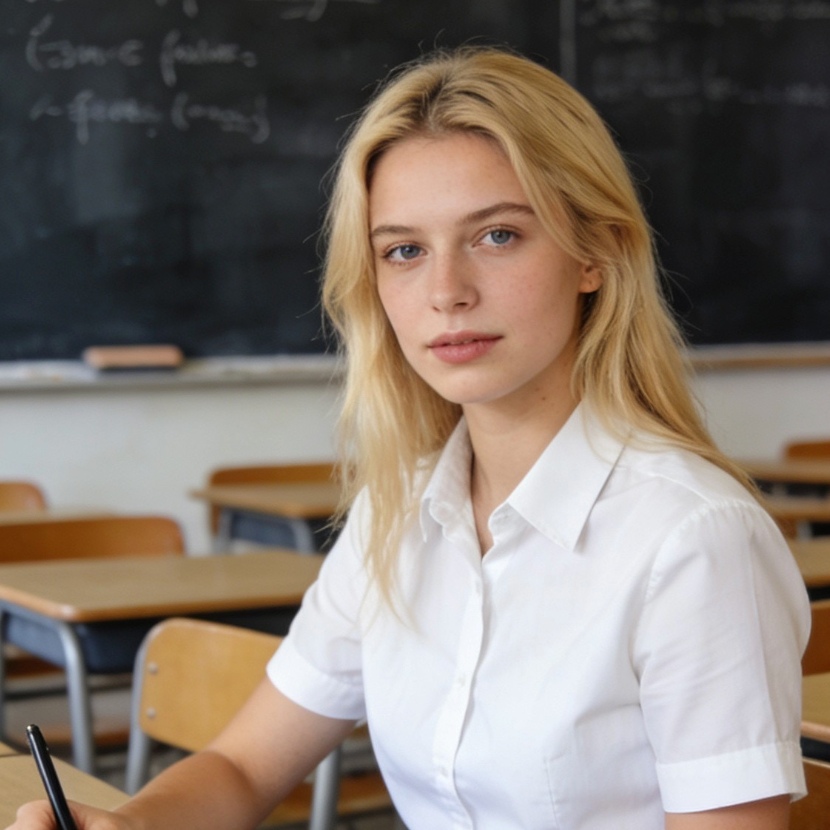
Alibaba’s release of the Wan2.2 model family marks a pivotal moment in the evolution of open-source generative AI. While text-to-video capabilities often dominate headlines, the Image-to-Video (I2V) functionality of Wan2.2 represents a significant leap forward in temporal consistency, aesthetic control, and hardware accessibility. By integrating a Mixture-of-Experts (MoE) architecture into a video diffusion transformer, Wan2.2-I2V-A14B and its unified counterpart, Wan2.2-TI2V-5B, offer creators professional-grade cinematic outputs on consumer-level hardware.
The primary appeal of Wan2.2 lies in its ability to animate static images with realistic physics and fluid motion while maintaining the semantic integrity of the original prompt. Whether it is a close-up facial expression or a complex multi-character interaction, Wan2.2 handles motion dynamics with a level of sophistication previously reserved for closed-source, enterprise-level models.
Understanding the Core Architecture of Wan2.2 I2V
The technological foundation of Wan2.2 is not merely an incremental update over its predecessor, Wan2.1. It introduces structural changes that redefine how tokens are processed during the video synthesis stage.
The Role of Mixture-of-Experts (MoE) in Video Generation
Wan2.2 is the first open-source video model to successfully implement a Mixture-of-Experts (MoE) architecture. In traditional dense models, every parameter is activated for every calculation, which is computationally expensive. Wan2.2’s MoE design utilizes a "dual-expert" system within its Diffusion Transformer (DiT) backbone.
- High-Noise Expert: During the initial stages of the diffusion process, when the latent space is mostly random noise, the high-noise expert takes over. Its primary task is to establish the global layout, structural movement, and coarse composition of the video.
- Low-Noise Expert: As the denoising process nears completion, the low-noise expert is activated. This expert specializes in fine details—texture, lighting nuances, and high-frequency facial expressions—ensuring the final 720p output has a "film-like" quality.
By activating only about 14 billion parameters (in the A14B model) per inference step while having a total capacity of 27 billion parameters, Wan2.2 achieves superior quality without a proportional increase in VRAM requirements.
The 3D Causal VAE Efficiency
One of the greatest bottlenecks in AI video generation is the sheer number of tokens that need to be processed to represent a high-resolution video over time. Wan2.2 addresses this with a new 3D Causal Variational Autoencoder (VAE). This VAE achieves a spatial compression ratio of 16x16 and a temporal compression of 4x.
Effectively, this means the model can compress a 720p video into a significantly smaller latent representation compared to previous models like CogVideoX or earlier Wan versions. This compression is what allows a 5-second clip at 24 frames per second to be generated on a single NVIDIA RTX 4090 without running out of memory.
Key Features of Wan2.2 Image-to-Video Capabilities
When evaluating an I2V model, creators look for three primary factors: prompt adherence, motion fluidity, and visual consistency. Wan2.2 excels in all three.
Professional Cinematography Control
Unlike simpler I2V models that merely "warp" the image, Wan2.2 understands cinematic concepts. In our internal testing, applying prompts like "dolly zoom," "low-angle tracking shot," or "cinematic rim lighting" to an input image yielded results that respected the physics of light and camera movement.
The model provides specific recipes for I2V:
- Subject-Focused Motion: Perfect for animating characters while keeping the background stable.
- Global Scene Dynamics: Useful for landscape shots where clouds, water, and foliage need to move harmoniously.
- Facial Realism: The model maintains the identity of the person in the source image, even during complex expressions or head turns.
Multi-Character Interaction
A common failure point for open-source video models is the "merging" of subjects when two characters interact. Wan2.2 demonstrates a high degree of spatial awareness. If you provide an image of two people talking, the model successfully animates their gestures and mouth movements independently, reducing the likelihood of physical artifacts or limb crossovers.
Support for Multiple Aspect Ratios
Wan2.2 does not force a square crop. It natively supports 16:9 (1280x704), 9:16 (704x1280), and 1:1 ratios. For I2V tasks, the model scales the input image appropriately, ensuring that the generated motion respects the boundaries of the frame.
Comparison: Wan2.2-I2V-A14B vs. Wan2.2-TI2V-5B
Choosing the right model depends on your hardware and your specific creative needs.
| Feature | Wan2.2-I2V-A14B | Wan2.2-TI2V-5B |
|---|---|---|
| Model Type | Specialized Image-to-Video | Unified Text & Image to Video |
| Parameter Count | 14B Active (27B Total MoE) | 5B Dense |
| Ideal Hardware | 24GB VRAM (RTX 4090) | 12GB - 16GB VRAM (RTX 3060/4070) |
| Output Quality | Maximum Detail / Cinematic | High Quality / Faster Iteration |
| Use Case | High-end production | Prototyping and social media |
The A14B model is the flagship. It offers the most stable motion and the highest degree of prompt following. However, the TI2V-5B model is surprisingly capable. Because it is a dense model (not MoE), it has a smaller footprint but still benefits from the advanced 3D VAE and massive training data (which increased by over 80% compared to Wan2.1).
Practical Experience: Generating Video with Wan2.2
To truly understand the value of Wan2.2, one must look at the actual workflow and performance metrics. Based on our practical tests using a standard ComfyUI setup, here is what a typical session looks like.
Testing the RTX 4090 Benchmark
Running the Wan2.2-I2V-A14B model in FP8 precision:
- Resolution: 1280 x 704 (720p)
- Frames: 81 frames (approx. 5 seconds at 16fps or 3.5 seconds at 24fps)
- Sampling Steps: 30 - 50 steps (using Flow Matching)
- Inference Time: Roughly 8 to 10 minutes.
- VRAM Usage: Peak usage hits approximately 19-21 GB.
For the Wan2.2-TI2V-5B model:
- Inference Time: Significant reduction, often completing a 720p clip in under 4 minutes.
- VRAM Usage: Stays comfortably below 12 GB, making it viable for laptops with RTX 4080 Mobile or mid-range desktop cards.
Prompt Engineering for I2V
In Wan2.2, the text prompt acts as a "motion director" for the image. A basic prompt like "a woman walking" is often insufficient for high-quality results. Instead, a successful prompt structure follows this recipe:
[Subject Description] + [Specific Motion] + [Environment Changes] + [Cinematic Lighting/Camera Angle]
For example:
- Source Image: A static shot of a cyberpunk city street at night.
- Prompt: "Cyberpunk city street, neon signs flickering, rain falling and splashing on the asphalt, a sleek flying car zooms past in the background, low-angle tracking shot, cinematic lens flare, hyper-realistic."
In this scenario, Wan2.2 uses the image as the rigid reference for the "subject" and uses the prompt to determine the "delta"—the change over time.
How to Get Started with Wan2.2 I2V
Since the model is released under the Apache 2.0 license, there are multiple ways to deploy it locally or in the cloud.
1. ComfyUI Integration
The ComfyUI ecosystem has already embraced Wan2.2. You will need to download the model weights from Hugging Face and place them in the appropriate checkpoints or diffusion_models folder.
- Requirements: Update your ComfyUI to the latest version to ensure support for the MoE architecture.
- Nodes: Use the specialized Wan Video Sampler nodes to manage the MoE expert routing.
2. Hardware Requirements and Quantization
If you do not have a 24GB VRAM card, do not lose hope. The community has released GGUF and EXL2 quantized versions of the Wan2.2 models.
- 8GB VRAM: You can run the TI2V-5B model in 4-bit quantization. While there is a slight loss in texture detail, the motion remains fluid.
- 16GB VRAM: The A14B model can run using FP8 or high-bit GGUF quantization, allowing for near-lossless 720p generation.
3. Official GitHub and Hugging Face
The official repository Wan-Video provides the raw inference scripts. This is ideal for developers looking to integrate Wan2.2 into their own applications or pipelines.
How does Wan2.2 compare to Sora or Kling?
While models like OpenAI's Sora or Kuaishou's Kling are largely closed-source and accessible only via API, Wan2.2 provides a comparable level of quality that you can run on your own hardware.
- Privacy and Cost: Unlike API-based models where you pay per second of video, Wan2.2 is free to use once you have the hardware. Furthermore, your data stays on your local machine.
- Customization: Because it is open-source, the community can create "LoRAs" (Low-Rank Adaptations) to fine-tune the model for specific styles, such as 2D anime or claymation, which is currently difficult to achieve with closed models.
- Instruction Following: In head-to-head comparisons, Wan2.2 often outperforms other open-source models in following complex multi-part instructions, thanks to the massive increase in its training dataset's semantic richness.
Troubleshooting Common Issues in Wan2.2 I2V
Even with a powerful model, AI video generation can be tricky. Here are solutions to common problems encountered during the generation process.
Issue: "Ghosting" or Blurred Motion
If the movement looks like a smear rather than a clear animation, it is often due to the Motion Bucket or Flow Matching parameters.
- Solution: Increase the number of sampling steps. While 30 steps is the minimum, 50 steps often resolve blurring in complex scenes. Also, ensure the resolution matches the aspect ratio of the input image exactly.
Issue: Character Identity Drift
If the person in the video looks different from the person in the source image after two seconds.
- Solution: This is usually a sign that the text prompt is "overpowering" the image. Reduce the
CFG Scale(Classifier-Free Guidance). A value between 3.5 and 6.0 is usually the sweet spot for Wan2.2 I2V.
Issue: Out of Memory (OOM) Errors
- Solution: Enable
tiled VAEdecoding if your software supports it. This breaks the video into smaller chunks during the final reconstruction phase, significantly saving VRAM at the cost of a slightly longer processing time.
Conclusion: The Future of Open-Source Video
Wan2.2 Image-to-Video is not just a tool; it is a statement that the open-source community can compete with the giants of the AI industry. By pioneering the MoE architecture in video generation, Alibaba has provided a roadmap for efficient, high-quality synthesis that respects the limitations of consumer hardware.
For creators, the implications are profound. The ability to take a single AI-generated image (from Flux or Midjourney) and transform it into a cinematic sequence allows for faster storytelling, cheaper marketing content, and more creative experimentation. As the community continues to optimize Wan2.2 through quantization and fine-tuning, the barrier to entry for professional AI filmmaking will continue to crumble.
Summary
Wan2.2 represents the next generation of open-source video AI, distinguished by its Mixture-of-Experts (MoE) architecture and highly efficient 3D Causal VAE. Its Image-to-Video (I2V) capabilities allow for 720p, 24fps video generation with exceptional motion consistency and cinematic aesthetic control. Whether using the heavyweight A14B model for maximum quality or the 5B model for speed and lower VRAM usage, Wan2.2 stands as the most versatile open-source solution currently available for animating static imagery.
FAQ
What is the difference between Wan2.2 and Wan2.1?
Wan2.2 introduces the MoE architecture, which significantly improves detail and motion while maintaining similar compute requirements. The training dataset for Wan2.2 was also nearly doubled in size compared to 2.1, leading to much better semantic understanding.
Can I run Wan2.2 on an 8GB VRAM GPU?
Yes, by using quantized versions (like GGUF or FP8) of the Wan2.2-TI2V-5B model. While you may need to generate at 480p instead of 720p to avoid OOM errors, the model is remarkably efficient.
Is Wan2.2 free for commercial use?
Wan2.2 is released under the Apache 2.0 license, which generally allows for commercial use, including redistribution and modification, provided that proper attribution is given.
Which model is better for Image-to-Video: A14B or 5B?
If you have 24GB of VRAM (RTX 3090/4090), the A14B-I2V model is superior due to its specialized experts. If you have limited VRAM or need faster results, the 5B unified model is the better choice.
Does Wan2.2 support audio generation?
The core Wan2.2 model family focuses on video generation. However, it can be paired with other AI audio tools, and many ComfyUI workflows now include nodes for synchronizing AI-generated sound with Wan2.2 video outputs.
-
Topic: Zen AI Model Family Zen-Director: Single-GPU Unified Text- and Image-to-Video Generation A Packaging of Alibaba’s Wan2.2-TI2V-5B (Apache-2.0)https://github.com/zenlm/papers/blob/281cff33bcfbbc50c41d6bea32737277afd2abef/zen-director.pdf
-
Topic: Wan 2.2 - Open-Source MoE Video Generation Model | Wan 2.2 AI Video Creatorhttps://wanvideoai.org/models/video/wan-2-2
-
Topic: Wan 2.2 AI - Professional Text-to-Video & Image-to-Video Generation Platformhttps://wan22.ai/