Home
Home
Why Your AI Generated Music Might Not Be Protected by Law
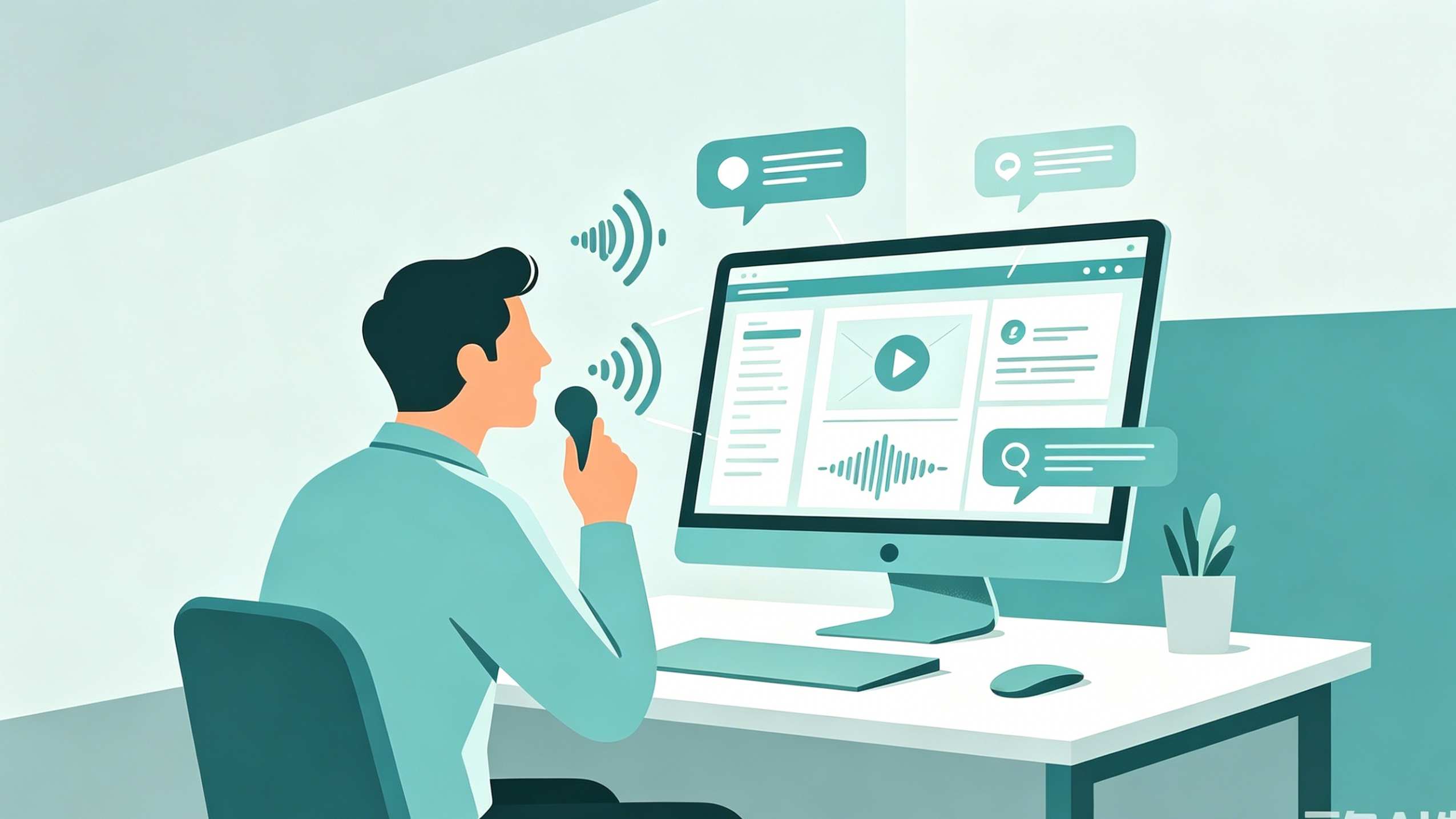
The emergence of generative artificial intelligence has fundamentally altered the landscape of music production, allowing anyone with a computer to create complex symphonies or catchy pop tracks within seconds. However, this technological leap has crashed headlong into a centuries-old legal framework designed to protect human creativity. For creators utilizing tools like Suno, Udio, or specialized DAW plugins, the most pressing question remains: can you actually copyright the music you make with AI?
The current legal consensus, particularly within the United States, is that music generated entirely by artificial intelligence cannot be copyrighted. The U.S. Copyright Office (USCO) maintains a rigid stance that copyright protection requires "human authorship." Without a human being as the creative force behind the specific expressive elements of a work, the output is considered part of the public domain, meaning anyone can use, remix, or monetize it without permission. However, the reality becomes far more nuanced when AI is used as a tool rather than a replacement. If a human creator exercises significant, original creative control—shaping the melody, writing the lyrics, or arranging the composition—those specific human-authored portions may still qualify for protection.
The Human Authorship Requirement as a Legal Barrier
The foundation of modern copyright law is built upon the principle that the law exists to incentivize and protect human intellectual labor. This is not a new debate, but AI has pushed it to its breaking point. In the United States, the Copyright Act protects "original works of authorship fixed in any tangible medium of expression." Historically, the courts have interpreted "authorship" exclusively as a human endeavor.
A landmark decision that continues to haunt the AI music space is the Thaler v. Perlmutter case. Stephen Thaler attempted to register a piece of visual art created by his AI system, the "Creativity Machine," listing the machine as the author. Both the U.S. Copyright Office and the federal courts rejected the application, affirming that copyright law does not extend to works generated by non-humans. While this case focused on visual art, the precedent applies directly to musical compositions and sound recordings. If the AI "decides" the arrangement of notes, the tempo, and the sonic texture, the resulting file lacks the "human spark" necessary for legal ownership.
This requirement poses a significant challenge for "prompt-based" creators. When a user types a command like "create a melancholic jazz track with a female vocal," they are acting more like a patron than an author. In the eyes of the law, the human is providing an idea, and the AI is executing the creative expression. Since copyright protects the expression rather than the idea, the "author" is effectively the machine—and machines cannot own property.
Distinguishing Between AI Generated and AI Assisted Music
To understand where your work stands, it is essential to distinguish between music that is "AI-generated" and music that is "AI-assisted." This distinction is the primary factor the Copyright Office uses when evaluating registration applications.
What Defines Purely AI Generated Content?
Purely AI-generated music is the result of a process where the machine determines the traditional elements of authorship. This includes the selection of the melody, the rhythmic structure, the harmonic progression, and the lyrical content based solely on a high-level prompt or an autonomous algorithm. In these scenarios, the human’s role is limited to initiating the process and selecting the output they like best. From a legal standpoint, selecting an output from a list of machine-generated options is not considered "creative authorship." It is viewed similarly to a photographer choosing which photo to keep from a burst of automated shots, but with even less creative control over the subject and composition.
How AI Assisted Work Gains Protection
AI-assisted music involves the use of artificial intelligence as a tool within a broader creative process led by a human. This is comparable to using a synthesizer, a drum machine, or a Digital Audio Workstation (DAW). The key difference is that the human must retain "creative control" over the final expressive output.
If you use an AI tool to generate a basic chord progression but then manually write the melody over it, record your own vocals, and significantly rearrange the structure, you have contributed original authorship. In this case, the music is not "AI-generated" in its entirety; it is a human work that incorporates AI-generated elements. The copyright protection would likely cover your specific contributions—the lyrics, the vocal performance, and the original melody—even if the underlying chord progression remains in the public domain.
What Parts of an AI Song Can You Actually Own?
When a musical work involves both human and machine input, copyright is not an "all or nothing" proposition. Instead, the law looks at the work as a collection of parts. To secure protection, you must identify which elements were authored by you.
Lyrics and Composition
If you write the lyrics yourself, they are your intellectual property. Even if the AI generates the melody and the backing track, your words remain yours. Similarly, if you compose a melody on a keyboard and use AI only to "hallucinate" or generate a realistic-sounding vocal performance based on your MIDI data, the melodic composition itself is protectable. The challenge here is documentation; you must be able to prove that the "expression" originated in your mind and was merely executed or enhanced by the tool.
Arrangement and Sound Engineering
The U.S. Copyright Office has suggested that the "selection and arrangement" of AI-generated material can be copyrightable if it is done in a sufficiently creative way. For example, if you take dozens of small AI-generated "stems" (individual tracks like drums, bass, and synth) and manually edit, chop, and arrange them into a cohesive seven-minute electronic track, the arrangement of those stems might be protectable as a compilation. However, you would not own the copyright to the individual stems themselves—only the specific way you put them together.
Human Performance and Recording
Any human performance captured in a recording is fully eligible for copyright. If you record yourself playing a guitar solo over an AI-generated backing track, you own the copyright to that guitar performance and the sound recording of that specific solo. This is one of the most reliable ways for modern producers to "harden" their copyright claims: by layering human-performed elements over AI-generated foundations.
The Prompt Problem and Why Instructions Are Not Authorship
A common misconception among AI enthusiasts is that the "art of the prompt" constitutes a creative act deserving of copyright. There is an argument that crafting a 500-word detailed prompt is a form of literary authorship. While the prompt itself might be a copyrighted text, the output of that prompt is not.
The legal system views a prompt as a set of instructions. If you tell a session musician to "play something funky in E minor," you do not become the author of the notes they play. You provided the idea; they provided the expression. AI functions in a similar capacity. Because the AI model determines the specific notes and timing based on its training data and probability weights, it—not the prompter—is the entity performing the "expressive" work.
The U.S. Copyright Office clarified this in their 2023 policy statement, noting that when an AI technology receives solely a prompt from a human and produces complex written, visual, or musical works in response, the "traditional elements of authorship" are determined and executed by the technology. This creates a "black box" between the human’s intent and the final output, which breaks the chain of authorship required by law.
How to Register Music That Contains AI Elements
If you are a professional musician using AI tools, you may still want to register your work with the U.S. Copyright Office to gain the full benefits of legal protection, such as the ability to sue for statutory damages. However, the registration process for AI-involved works requires full transparency.
The Duty of Disclosure
The USCO requires applicants to disclose the use of AI-generated content in their works. You cannot simply list yourself as the author of a song if 80% of it was generated by an algorithm. Failure to disclose AI use can lead to the cancellation of your registration later, which could be disastrous in a legal dispute.
When filing an application, you must include a "Brief Statement" in the "Limitation of Claim" section. Here, you should describe which parts were human-authored and which were AI-generated. For example: "The lyrics and vocal melody were created by the human author, while the instrumental backing track was generated using artificial intelligence and is not claimed as part of this registration."
Documenting Your Creative Process
To protect your claims, you must maintain a clear "chain of custody" for your creative decisions. This is essentially the digital version of a songwriter’s notebook.
- Keep Version History: Save different versions of your project files. Show the transition from a human-written MIDI melody to the final AI-enhanced vocal.
- Save MIDI Files: MIDI data is a strong indicator of human authorship. It shows the specific arrangement of notes you chose before any AI processing took place.
- Prompt Logs: While prompts don't give you copyright, keeping them can help explain the extent of the AI's involvement if your work is ever audited.
Current Legal Battles Shaping the Future of Music
The question of whether you can own AI music is currently being overshadowed by an even larger question: did the AI companies steal the music used to train their models?
In June 2024, the Recording Industry Association of America (RIAA), representing giants like Universal Music Group, Sony Music, and Warner Music, filed massive lawsuits against Suno and Udio. The record labels allege that these platforms engaged in "wholesale theft" by training their models on copyrighted recordings without permission.
These lawsuits are critical for individual creators for two reasons:
- Infringement Risk: If an AI tool is trained on copyrighted material and produces an output that is "substantially similar" to a famous song, the user of the AI could potentially be held liable for copyright infringement, even if they didn't intend to copy anyone.
- Market Validity: If these platforms are found to be illegal or are forced to pay massive licensing fees, the music created on them may become a liability rather than an asset. No major label will want to sign a track that has an unresolved "training data" cloud hanging over it.
The outcome of these cases will likely determine whether "Fair Use" covers AI training. If the courts side with the record labels, the entire ecosystem of AI music generation could be forced into a licensed model, which might actually make copyrighting AI-assisted music easier in the long run, as the "provenance" of the sounds would be legally cleared.
International Perspectives on AI Music Copyright
It is important to note that copyright law varies significantly by jurisdiction. While the U.S. is strict about human authorship, other countries are exploring different paths.
The United Kingdom and the "Computer-Generated" Exception
The UK is one of the few jurisdictions with a specific provision for "computer-generated works" where there is no human author. Under the Copyright, Designs and Patents Act 1988, the author of such a work is deemed to be "the person by whom the arrangements necessary for the creation of the work are undertaken." This protection lasts for 50 years from the end of the calendar year in which the work was made. This is a significantly different approach from the U.S., potentially offering more protection to UK-based AI music creators.
The European Union and the AI Act
The EU has recently passed the AI Act, which focuses more on transparency and ethics than on authorship itself. However, EU copyright law generally follows the "author's own intellectual creation" standard, which aligns closely with the U.S. requirement for human creativity. The EU also mandates that AI companies provide summaries of the copyrighted material used for training, which will give creators more visibility into whether their own work was used to train the tools they are now using.
How to Protect Your AI Assisted Tracks Right Now
Until the law catches up with the technology, creators must be proactive. If your goal is to build a professional music career using AI, follow these practical steps to maximize your legal protection:
- Use AI for "Stems," Not "Songs": Instead of asking an AI to generate a full song, use it to generate a drum loop or a specific texture. By building your track piece-by-piece, you ensure that the "arrangement" and "composition" remain firmly in your control.
- Incorporate "Analog" Elements: Layering live instruments or your own voice over AI elements is the fastest way to satisfy the "human authorship" requirement.
- Check Terms of Service: Some AI platforms claim ownership of the outputs, while others grant you a commercial license. Note that a "commercial license" from a company is not the same as a "copyright" from the government. You can have the right to sell a song without actually owning the intellectual property.
- Avoid "Style-Alike" Prompts: Do not use prompts like "in the style of Drake" or "sounds like Taylor Swift." Not only does this reduce your chances of copyrighting the work, but it also opens you up to "Right of Publicity" claims, where an artist can sue you for using their likeness or "identity" without permission.
Frequently Asked Questions
Can I put AI music on Spotify?
Yes, you can upload AI-generated music to Spotify and other streaming platforms, provided you have the rights from the AI service provider's terms of service. However, Spotify has recently taken down thousands of tracks that were suspected of "streaming fraud" (using bots to listen to AI music) or those that violated their policies on mimicry. While you can upload it, you may not "own" the copyright to it in a way that prevents others from copying it.
If I pay for a pro subscription to an AI tool, do I own the copyright?
No. Paying for a subscription usually grants you a commercial license to use the music, but a private contract with a company cannot override federal law. If the USCO says purely AI music isn't copyrightable, your subscription doesn't change that. It only means the AI company won't sue you for using their tool.
Is AI music in the public domain?
In the United States, if a work is created entirely by AI without sufficient human authorship, it is legally considered to be in the public domain. This means you cannot stop someone else from using your "viral" AI hit in their own YouTube video or commercial.
What is the Music Modernization Act's role in this?
The Music Modernization Act (MMA) and organizations like the Mechanical Licensing Collective (MLC) are currently navigating how to distribute royalties for AI music. The U.S. Copyright Office has advised the MLC that if a work lacks human authorship, it is not eligible for statutory mechanical royalties, as there is no "copyright owner" to pay.
Summary of the Current Legal Landscape
Navigating the world of AI music copyright is a balancing act between leveraging new technology and maintaining human creative agency. The core takeaway is simple: the more work the AI does, the less protection you have. If you want to own your music and build a defensible catalog, you must treat AI as a collaborator or a tool, not as the primary artist.
- Human Authorship is Mandatory: You cannot own a work produced solely by an algorithm.
- Disclosure is Required: Always tell the Copyright Office if you used AI; hiding it can invalidate your protection.
- The "Human Spark" Matters: Lyrics, original melodies, and human performances are your strongest path to ownership.
- Legal Flux: This is a rapidly evolving field. Ongoing lawsuits and new legislation will likely redefine these rules over the next 24 to 36 months.
As AI tools become more integrated into the standard music production workflow, the definition of a "tool" will undoubtedly expand. Until then, the safest path for any creator is to keep their hands on the steering wheel and ensure that their unique human voice remains the heart of their music.
-
Topic: Re: Royalty Eligibility of Musical Works Generated Using Artificial Intelligence Under the Music Modernization Acthttps://www.copyright.gov/ai/USCO-Guidance-Letter-to-The-MLC-Letter-on-AI-Created-Works.pdf
-
Topic: Can AI Music Be Copyrighted? Your Platform's Terms Say Otherwisehttps://makebestmusic.com/blog/can-ai-music-be-copyrighted
-
Topic: Can You Copyright Music Made By AI? Not Yet—But Here's Your Workaroundhttps://makebestmusic.com/blog/can-you-copyright-music-made-by-ai