Home
Home
Why Your Dog Doesn't Actually Think You Are a Dog

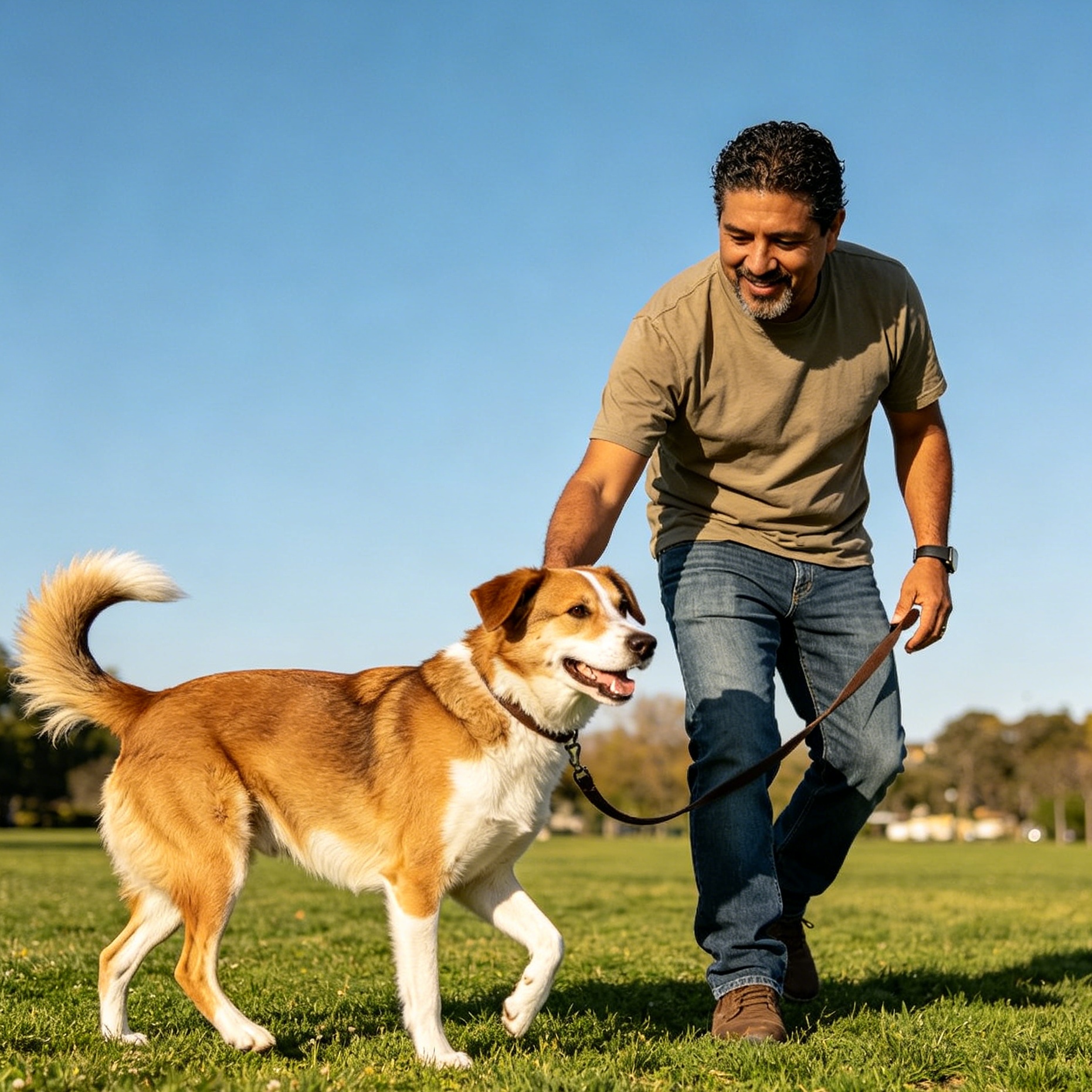
The bond between a human and a dog is often described as a friendship, but science suggests it is something far more complex and neurologically profound. For decades, popular culture insisted that dogs view their owners as "alpha wolves" in a rigid domestic pack. However, modern canine cognition research has dismantled this narrative. Your dog does not think you are a large, hairless, and somewhat incompetent dog; they perceive you as a unique entity that combines the roles of a parent, a provider, and a primary social partner.
When a dog looks at a human, their brain does not process the interaction the same way it does with another member of their own species. Through a combination of evolutionary adaptation and individual learning, dogs have developed a specialized cognitive framework dedicated entirely to understanding, manipulating, and loving humans.
The Death of the Alpha Theory and the Rise of Cooperation
To understand what a dog thinks about humans, we must first unlearn the "alpha" myth. This theory, popularized in the mid-20th century, was based on studies of unrelated wolves forced together in captivity. These wolves fought for status, leading researchers to believe that domestic dogs also viewed their human families as a hierarchy to be climbed.
In reality, natural wolf packs are family units where the "alphas" are simply the parents. Domestic dogs have taken this a step further. Thousands of years of domestication have selected for "pro-social" traits—the ability to cooperate rather than compete. In our observations of canine behavior, dogs show a remarkable lack of interest in "dominating" their humans. Instead, they focus on harmony and resource security. They think of humans not as rivals for a throne, but as the stable center of their social universe.
The Secure Base Phenomenon
One of the most striking findings in canine science is the "secure base effect." This is a psychological concept originally used to describe the relationship between human infants and their primary caregivers. When a child feels safe with a parent, they feel confident enough to explore a new environment, knowing they have a "secure base" to return to if things get scary.
In controlled behavioral tests, dogs exhibit this exact same pattern with their owners. If a dog is placed in a room with a stranger, they often remain cautious or anxious. However, if their owner is present, the dog’s confidence surges. They use the human as an emotional anchor. When faced with a frightening or confusing object—like a robotic toy or a strange noise—a dog’s first instinct is not to fight or flee, but to look at their human’s face. This is called "social referencing." They are checking your emotional state to decide how they should feel. They think of you as the ultimate authority on reality.
How the Canine Brain Processes Your Existence
The advent of canine fMRI (functional Magnetic Resonance Imaging) has allowed us to see what happens inside a dog’s head when they think about their humans. Research conducted by neuroscientists like Gregory Berns has shown that the "reward center" of the dog’s brain—the caudate nucleus—lights up most intensely not when they see food, but when they smell the scent of their familiar human.
In these studies, dogs were exposed to five different scents: their own, a familiar dog, an unfamiliar dog, an unfamiliar human, and their familiar owner. While the scent of a familiar dog triggered a positive response, the scent of the owner elicited the strongest activation in the brain’s reward systems. This proves that dogs don’t just "recognize" us; they prioritize us. To a dog, the smell of their human is associated with a profound sense of safety and pleasure that no other stimulus can replicate.
Do Dogs Know We Are a Different Species?
A common question is whether dogs think we are just "weird dogs." The evidence suggests they know exactly what we are. Dogs communicate with other dogs primarily through body language and ritualized displays that involve very little eye contact. In the canine world, a prolonged stare is often a threat or a challenge.
However, dogs have evolved to use eye contact with humans as a tool for bonding. When a dog looks into your eyes, they aren't challenging you; they are seeking a connection. They have even developed a specific muscle above their eyes—the levator anguli oculi medialis—which allows them to raise their inner eyebrows to create "puppy dog eyes." This muscle is virtually non-existent in wolves. It is an evolutionary adaptation designed specifically to trigger a nurturing response in humans. Dogs think of us as a species that can be communicated with through visual cues that they would never use with their own kind.
The Oxytocin Loop: The Chemistry of Love
The feeling of love between a dog and a human is not a one-way street, nor is it merely a product of "cupboard love" (the desire for food). It is a biochemical feedback loop. When a human and a dog gaze into each other’s eyes, both species experience a significant spike in oxytocin, often called the "love hormone" or "bonding hormone."
This is the same chemical mechanism that facilitates the bond between a mother and her newborn baby. No other interspecies relationship has been found to trigger this specific hormonal response in such a consistent way. When your dog leans against you or nudges your hand for a pet, they aren't just looking for physical sensation; they are seeking a chemical "hit" of security and affection. They think of humans as their primary source of emotional regulation.
Interpreting Human Emotions and Speech
Dogs are masters of observation. They spend a massive portion of their lives watching us, far more than we spend watching them. This intense focus has granted them an uncanny ability to read human micro-expressions and tone of voice.
Reading the Face
Research has shown that dogs are sensitive to the asymmetry of human emotional expression. They tend to look at the right side of a human face first, which is the side that more accurately reflects our true emotions. They can distinguish between a happy face, an angry face, and a neutral face, even when shown only a photograph.
Understanding Language
While dogs do not understand syntax or complex grammar, they are experts at "lexical processing." Studies using EEG and fMRI have shown that dogs process the meaning of words in the left hemisphere of their brain and the intonation (the emotion behind the voice) in the right hemisphere—exactly like humans. If you say "Good boy!" in a flat, robotic voice, or say "Vacuum cleaner!" in a cheerful, high-pitched voice, the dog's brain works to resolve the conflict between the word and the tone. They think of our voices as complex signals that provide a map of our internal state.
Why Dogs "Apologize" (And Why It’s Not What You Think)
Many owners believe their dogs feel "guilty" when they knock over a trash can or chew a shoe. The dog lowers its head, tucks its tail, and avoids eye contact. However, cognitive tests suggest that dogs don't actually think about "right" or "wrong" in a moral sense.
Instead, they are reacting to the human’s body language. In experiments where owners were told their dog had misbehaved (even if the dog had done nothing wrong), the dogs still displayed "guilty" behaviors because the owners were projecting anger or disappointment. To a dog, a human's disapproval is a threat to their safety and social standing. Their "apology" is a submissive gesture intended to de-escalate the human's anger. They think of us as powerful figures whose emotional weather must be managed for their own survival.
Breed Differences and Individual Perception
It is important to acknowledge that not all dogs think the same way. Selective breeding has influenced how different dogs perceive humans.
- Herding Breeds: Dogs like Border Collies or German Shepherds often view humans as "partners in work." They are hyper-attuned to our gestures and pointing, often anticipating our commands before we even speak.
- Companion Breeds: Dogs like Shih Tzus or Pomeranians may view humans more purely as a source of physical comfort and protection.
- Independent Breeds: Some breeds, like Huskies or Basenjis, retain a more "wolf-like" independence. They still bond deeply, but they may view humans as "associates" rather than "directors."
Regardless of breed, a dog’s individual history—socialization in puppyhood or past trauma—can alter their view. A well-socialized dog thinks of humans as a generic source of "good things," while a traumatized dog may see humans as unpredictable and dangerous until a specific bond is formed.
The Cognitive Map of the Human Routine
Dogs are the world’s greatest "pattern recognizers." They don't have a concept of "Tuesday" or "5:00 PM," but they have an incredibly accurate internal clock based on environmental cues. They know that the sound of your keys means you are leaving, and the specific vibration of your car’s engine means you are home.
They think of humans as predictable entities. When we break our routines, it causes them genuine distress. To a dog, a human who follows a schedule is a reliable leader; a human who is erratic is a source of anxiety. They build a mental "map" of our habits, which allows them to feel a sense of control over their lives.
Summary: A Unique Social Category
In the mind of a dog, humans occupy a category all their own. We are not dogs, we are not prey, and we are not predators. We are a "hyper-specialized social partner." They rely on us for their physical needs—food, water, shelter—but more importantly, they rely on us for their emotional equilibrium.
When you ask, "What does my dog think of me?" the answer is that they think of you as the most important thing in existence. You are the provider of resources, the interpreter of danger, the source of chemical joy, and the secure base from which they experience the world. They have spent 30,000 years evolving just to be able to understand the look in your eyes.
Frequently Asked Questions
Do dogs know their names?
Yes, but they think of their names as a "cue" rather than a self-identity. To a dog, their name usually means "Listen to me" or "Something is about to happen involving me." They don't have a conceptual "ego" tied to the name the way humans do.
Can dogs tell if I’m a good person?
Dogs cannot judge human morality in the way we do, but they are incredibly sensitive to "social cheating." Studies have shown that if a dog watches a person refuse to help their owner, the dog will often refuse to take treats from that person later. They think of humans in terms of "helpfulness" and "reliability."
Why does my dog follow me to the bathroom?
This is a combination of their "pack" instinct and the "secure base" effect. They don't want to be excluded from a social activity, and they feel more secure when they are in your presence. They also might be "guarding" you while you are in a vulnerable position, as dogs often do for each other in the wild.
Do dogs dream about their owners?
While we can't see their dreams, the sleep patterns of dogs (REM cycles) are very similar to humans. Given that dogs spend their waking hours obsessing over their humans' movements and scents, it is highly likely that their dreams involve these same significant social stimuli.
Does my dog really love me, or just the food?
Brain scans show that the reward centers of a dog’s brain light up more for their owner's presence and praise than for food in many cases. While food is a strong motivator, the emotional bond is a distinct neurological reality for them.
-
Topic: Frontiers | How Dogs Perceive Humans and How Humans Should Treat Their Pet Dogs: Linking Cognition With Ethicshttps://www.frontiersin.org/journals/psychology/articles/10.3389/fpsyg.2020.584037/full
-
Topic: What Dogs Think About Humans: Insights from Canine Mindshttps://www.petscare.com/en-gb/news/faq/what-does-a-dog-think-about-humans
-
Topic: What Do Dogs Think We Are? | Canine Mind Unveiledhttps://furric.com/what-do-dogs-think-we-are/