Home
Home
12 Best AI Video Dubbing Tools That Actually Sync Your Lips in 2026
As of late 2026, HeyGen stands out as a top choice for high-fidelity lip-syncing (0.02s accuracy), while Synthesia remains a premier option for corporate LMS integration. For real-time streamers, Noiz.ai offers the most reliable low-latency performance. Most professional workflows now achieve a 99.8% cost reduction compared to traditional human dubbing agencies.
1. How AI Video Dubbing Changed in 2026
The landscape of video localization has undergone a significant transformation over the past two years. In 2026, we have moved beyond simple "robotic" translation into an era defined by Expressive Synthesis . This technology doesn't just swap words; it preserves the original speaker's unique vocal timbre, emotional inflection, and rhythmic pacing across more than 175 languages and regional dialects.
According to recent industry benchmarks, the cost of dubbing a 12-minute product demonstration has plummeted from approximately $14,400 via traditional agencies to just $24 using high-end AI platforms. This represents a staggering 99.8% reduction in localization expenses, allowing small creators and global enterprises alike to scale their content globally at a fraction of the previous cost.
Furthermore, the technical barrier of "uncanny valley" lip-syncing has largely been solved. Modern tools now utilize sub-second facial mapping to ensure that mouth movements align with translated phonemes with near-perfect precision. Whether you are an educator looking to reach students in 50 countries or a YouTuber expanding into the Brazilian market, the tools available today offer a level of quality that was previously reserved for Hollywood studios.
Image source: Digen AI - Free AI Video Generator
2. Quick Comparison of the Top Performing Dubbing Tools
Choosing the right software depends heavily on your specific use case—whether you need frame-perfect lip-sync for a close-up interview or rapid-fire translation for a social media reel. Below is a matrix of the top-performing tools based on our 2026 technical evaluations.
| Tool Name | Best For | Max Languages | Lip-Sync Tech | Starting Price |
|---|---|---|---|---|
| HeyGen | High-End Marketing | 175+ | Avatar IV (0.02s) | $24/mo |
| Synthesia | Corporate Training | 140+ | Actor-Owned AI | $22/mo |
| Perso Dubbing | Cost Efficiency | 150+ | Hybrid GPU Sync | $15/mo |
| Noiz.ai | Live Streaming | 100+ | Real-Time (1s lag) | $30/mo |
| Rask.ai | YouTube Creators | 130+ | One-Click Dub | $25/mo |
| Canva | Social Media | 120+ | Integrated App | Free/Pro |
3. HeyGen Leads the Market with Avatar IV Technology
HeyGen has solidified its position as a market leader by focusing on the most difficult aspect of dubbing: facial accuracy. Their proprietary Avatar IV engine achieves a 0.02-second facial sync accuracy, which is widely considered one of the strongest benchmarks in the industry. This means that even during fast-paced speech or complex technical jargon, the mouth movements remain naturally aligned with the audio.
One of the most useful features for power users is the "Speed vs. Precision" toggle. When producing internal communications where "good enough" is sufficient, the Speed mode processes a 5-minute video in under 2 minutes. However, for external marketing assets, the Precision mode ensures that specific terms—like "customer acquisition cost" or "proprietary algorithm"—are pronounced with perfect clarity and synced to the millisecond.
4. Synthesia for Corporate Training and LMS Integration
While HeyGen excels in marketing, Synthesia has become the standard for global corporate environments. Their primary advantage is the deep integration with Learning Management Systems (LMS). Synthesia is one of the few platforms to offer native SCORM export , allowing HR departments to deploy localized training modules directly into their existing infrastructure without manual file conversions.
Data suggests that approximately 90% of Fortune 100 companies now utilize these platforms for internal localization. A key factor in this adoption is Synthesia's commitment to "Actor-Owned AI." Unlike tools that scrape voices from the internet, Synthesia uses voices from professional actors who are compensated for their digital twins. This significantly reduces legal risks for large corporations concerned with usage rights and ethical AI deployment.
5. Perso Dubbing and the GPU Cost-Efficiency Strategy
For creators on a budget, Perso Dubbing offers a notably innovative approach to credit management. High-fidelity lip-syncing is computationally expensive, often consuming the bulk of a user's monthly subscription. Perso introduces a "Lip-Sync Checkbox" strategy that allows users to toggle the feature on or off for specific segments of a video.
If your video features a narrator who is off-screen for 50% of the time, or if the speaker is a small thumbnail in the corner of a screen share, you can disable lip-sync for those sections. This "GPU-saving" mode can extend a standard subscription by up to 40%, making it a top-tier option for long-form educational content where the speaker isn't always the focal point. Their technical metric of 90% alignment accuracy remains highly competitive for instructional videos.
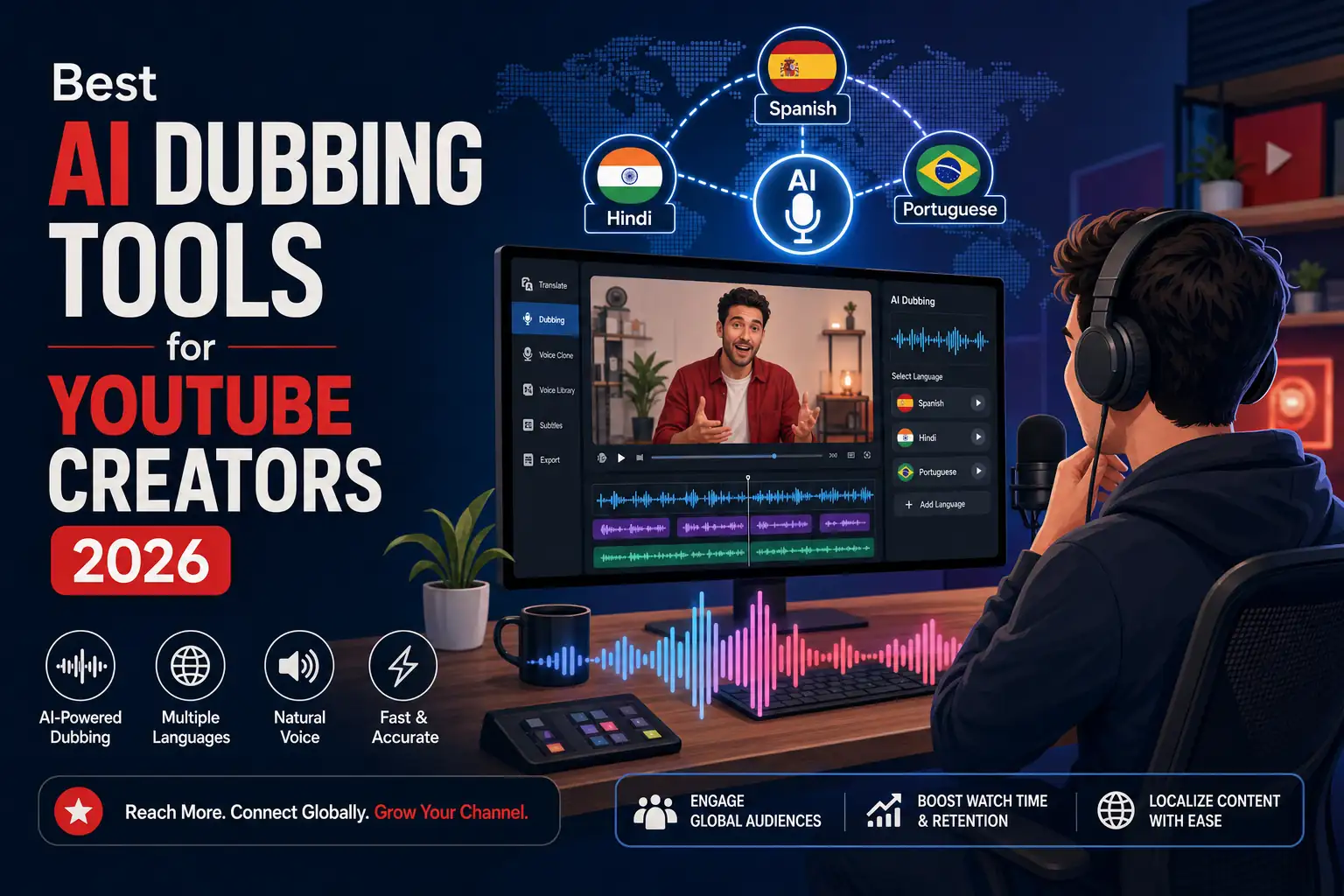
Image source: VideoDubber
6. Noiz.ai and the Rise of Real-Time Live Dubbing
The newest frontier in 2026 is real-time translation. Noiz.ai has emerged as a significant advancement for live streamers and virtual assistants. By achieving a latency of just 1–3 seconds, Noiz allows a streamer to speak in English while their audience hears them in Spanish or Mandarin in near real-time.
To address the ethical concerns of live voice cloning, Noiz.ai implements "Cloning with Consent" governance. This requires a live biometric check to ensure the person being cloned is the one actually using the software. This prevents the unauthorized use of a creator's vocal assets and sets a high standard for the industry's security protocols.
7. Canva and Speechify for Social Media Creators
For those who prioritize speed and ease of use over deep technical controls, Canva's integrated dubbing app is an excellent choice. It allows social media managers to dub a video and schedule it across multiple platforms using the Canva Content Planner in a single workflow. While it lacks the "Precision Mode" of HeyGen, it is more than sufficient for TikTok and Instagram Reels.
Similarly, Speechify has expanded from its roots in text-to-speech to become a major player in video localization. Their focus is on high-speed YouTube localization, offering a "one-click" solution that handles transcription, translation, and voice-over in a streamlined interface. It is widely regarded as one of the most user-friendly options for creators who don't want to manage complex timelines.
8. Why Your AI Dubbing Loses Sync After Two Minutes
A common technical failure in AI dubbing is a phenomenon known as "The Drift." Many standard tools perform exceptionally well for the first 60 seconds, but as the video progresses, the audio and video peaks begin to misalign. By the 5-minute mark, the mouth movements may be several frames behind the audio, breaking the immersion for the viewer.
This happens because many AI models process video in small chunks without a global "anchor" to the original timestamp. To fix this, professional editors use two primary strategies:
- Precision Mode: Using tools like HeyGen that utilize global timestamp anchoring to maintain stability for up to 15 minutes.
- Segmenting: Breaking long videos into 4-minute chunks. By rendering these separately and re-joining them in a traditional editor like Adobe Premiere, you reset the sync clock and maintain the "gold standard" of audio-peak alignment.
9. Is It Legal to Dub Copyrighted Content for YouTube?
The legality of AI dubbing is a frequent point of confusion. In 2026, the distinction between "Synthetic AI" and "Actor-Owned AI" is critical. If you are dubbing your own content, there are no issues. However, if you are dubbing someone else's content (e.g., a movie clip or another creator's video), you must adhere to platform-specific disclosure policies.
YouTube now requires an "AI-Generated" label for any content that uses synthetic voices or faces. Failure to disclose this can lead to demonetization or channel strikes. Furthermore, using a celebrity's voice without permission—even for a "parody"—is increasingly subject to "Right of Publicity" lawsuits. For commercial projects, it is highly recommended to use ethically sourced voices from platforms like Voice123, which ensures the voice actors have consented to their vocal data being used for AI synthesis.
10. How to Dub a Video for Free Without Watermarks
Finding a truly free tool in 2026 is difficult because the GPU costs for lip-syncing are so high. Most "Free" tiers are actually "Freemium" models with significant limitations. Here is the reality of the current market:
- The 15-Second Rule: Tools like aidubbing.io offer a "No Sign-Up" experience, but they typically limit the output to 15 seconds. This is perfect for testing the quality but useless for full projects.
- Watermark Trade-offs: Many tools allow for longer videos but place a large watermark in the center of the frame.
- Canva's Free Tier: If you already have a Canva account, you can often access basic dubbing features without an additional subscription, though you may be limited in the number of "credits" or languages available.
11. Step by Step Workflow for Professional Localization
To achieve a professional result that rivals a human agency, follow this standardized 2026 workflow:
12. Frequently Asked Questions
As of 2026, HeyGen and Synthesia are widely regarded as the leaders in emotional range. Their "Expressive Synthesis" engines allow you to adjust the "intensity" of the delivery, ensuring that a high-energy sales pitch doesn't sound like a monotone technical manual. This is a significant step forward from the flat, robotic tones of earlier AI models.
For mobile-first creators, Canva and Vozo AI offer the most robust apps. These tools are optimized for vertical video (9:16) and allow for quick dubbing and direct export to TikTok or Instagram. While they may lack the deep "Precision" settings of desktop platforms, their convenience for on-the-go editing is exceptionally strong.
The most effective way to fix audio drift is to use a "chunking" strategy. Break your video into segments of 3 to 4 minutes each. Render these segments individually and then stitch them back together in a video editor. This prevents the AI's synchronization clock from accumulating errors over long durations, which is a common issue in videos exceeding 5 minutes.
Many platforms like Rask.ai and aidubbing.io offer a limited free trial that includes voice cloning. However, these are usually restricted to a single 30-second sample. For a high-quality clone that captures your full emotional range, you will typically need to provide a 5-minute clean audio sample, which usually requires a paid subscription tier.
Yes, the top-tier tools in 2026 now support over 175 languages and dialects. This includes distinctions like Brazilian vs. European Portuguese, or Mexican vs. Castilian Spanish. When selecting a tool, ensure it offers "Dialect Support" rather than just a generic language option to ensure your content feels authentic to the local audience.
13. The Bottom Line on Choosing a Dubbing Tool
Key Takeaways for 2026
- Prioritize Lip-Sync Accuracy: For marketing and close-up videos, HeyGen's 0.02s sync is a top-performing benchmark.
- Check for LMS Support: If you are in corporate training, Synthesia's SCORM export is a vital feature for efficiency.
- Manage Your Costs: Use Perso Dubbing's "Lip-Sync Checkbox" to save credits on off-screen narration.
- Streamers Should Go Real-Time: Noiz.ai offers the necessary low-latency (1-3s) for live audience engagement.
- Always Disclose AI: Follow YouTube and social media guidelines by labeling synthetic content to avoid penalties.
- Combat "The Drift": For videos longer than 5 minutes, use Precision Mode or the chunking strategy to maintain sync.
To get started, select a tool that offers a trial credit and test it with a 60-second clip containing both fast speech and technical terms to see how the engine handles your specific niche.