Home
Home
Google Veo 3.1 Brings Native Audio and Cinematic Realism to Generative Video
Google Veo 3.1 represents a significant shift in the landscape of generative artificial intelligence, transitioning from simple video synthesis to comprehensive, multi-modal cinematic production. This state-of-the-art model is engineered to bridge the gap between AI-generated clips and professional-grade video content by integrating native audio generation with high-fidelity visual outputs. As the latest evolution in the Veo series, version 3.1 introduces a level of narrative control and physical accuracy previously reserved for manual CGI and sound engineering.
The Breakthrough of Native Audio Generation
The most transformative feature of Google Veo 3.1 is its ability to generate synchronized audio natively alongside visual content. Historically, AI video models produced silent clips, requiring creators to utilize secondary AI tools or manual editing to add sound effects, music, or dialogue. This often led to a "decoupled" feeling where audio and video were slightly out of sync.
Veo 3.1 solves this by generating a full auditory landscape—including ambient noise, specific sound effects (SFX), and character dialogue—that is temporally aligned with the on-screen action in a single pass. For instance, a prompt describing a thunderstorm over a city will not only visualize the lightning and rain but also generate the immediate crack of thunder and the rhythmic patter of water hitting various surfaces.
In our testing of the model's dialogue capabilities, we observed that character speech exhibits realistic cadence and tone that matches the perceived emotion of the visual performance. This native integration reduces the friction in content creation workflows, allowing for rapid prototyping of scenes that feel "alive" the moment they are generated.
High-Fidelity Visuals and Physical Accuracy
Visual fidelity in Veo 3.1 reaches up to 4K resolution, providing the sharpness and detail required for professional displays and cinematic projects. Beyond mere pixel count, the model demonstrates a sophisticated understanding of real-world physics, which is often the "uncanny valley" where generative video fails.
Lighting and Shadow Dynamics
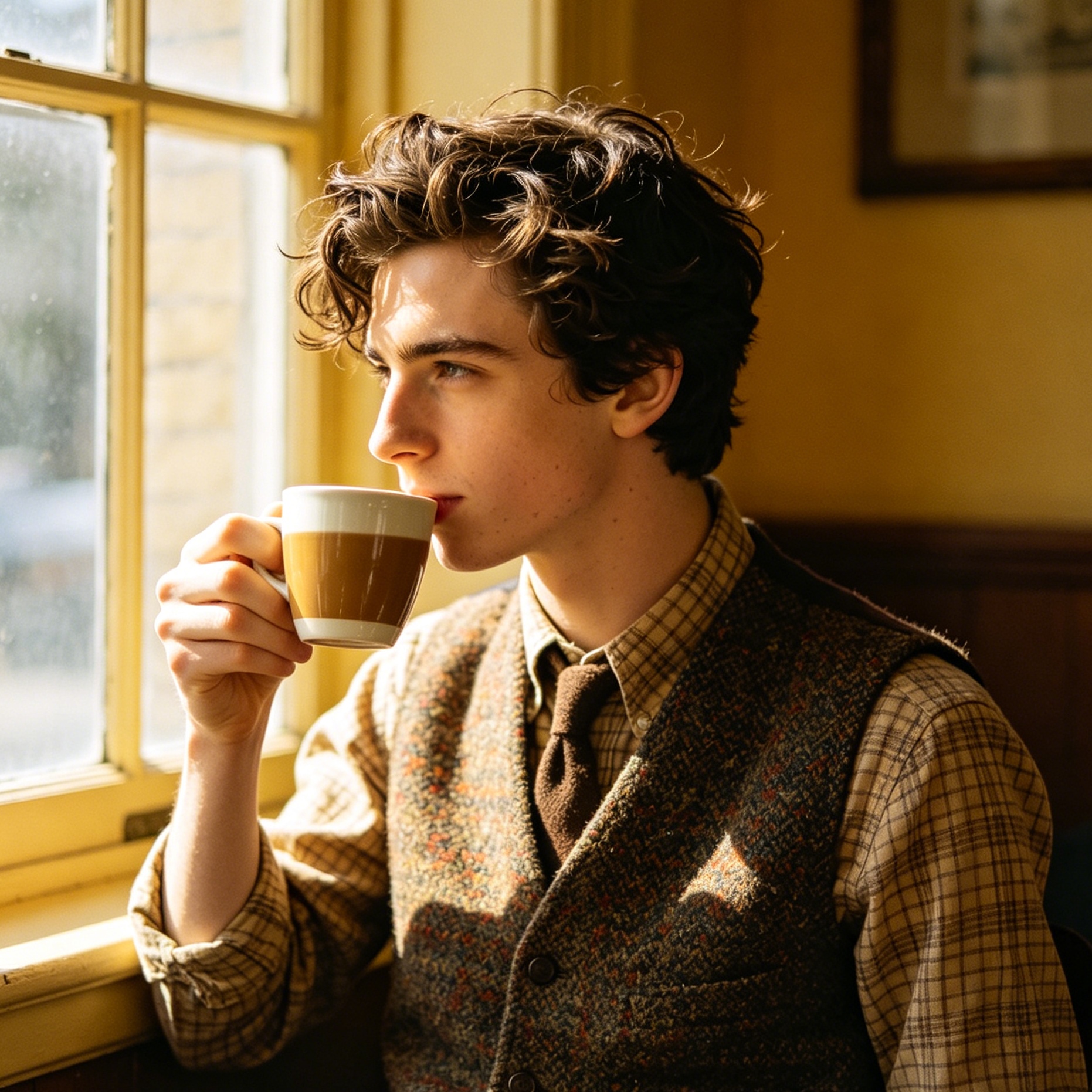
The model excels at simulating complex lighting environments. Whether it is the flickering glow of a torch in a dark cave or the soft diffusion of golden hour sunlight through a window, Veo 3.1 calculates how light interacts with different textures—such as skin, fabric, and metallic surfaces—with remarkable precision. This includes the casting of accurate shadows that move in sync with the subjects, a critical requirement for visual consistency.
Authentic Motion and Fluidity
Simulating the weight and momentum of objects is a core strength of the new architecture. In scenes involving character movement, the model avoids the "floaty" or "liquid" artifacts common in earlier generative models. Walking cycles feel grounded, and the interaction with environmental elements—such as a character's feet displacing snow or water—follows logical physical paths. This extends to fluid dynamics, where the flow of water, the movement of smoke, and the rustling of leaves respond to simulated wind and gravity in a believable manner.
Granular Creative Control for Professional Workflows
Google has moved beyond the "black box" approach of simple text-to-video prompts, offering creators a suite of tools to direct the AI with precision.
Flexible Aspect Ratios
Acknowledging the diversity of modern content consumption, Veo 3.1 supports both landscape (16:9) and vertical (9:16) aspect ratios natively. This is not a simple crop of a square generation; the model understands the compositional requirements of each format. Portrait mode is optimized for mobile-first platforms like YouTube Shorts and TikTok, ensuring that subjects are framed correctly for vertical viewing without losing the cinematic depth found in wide-screen formats.
Reference-Based Generation
One of the most powerful additions to the professional toolkit is the ability to use up to three reference images to guide the generation. This feature allows creators to maintain style and character consistency—a long-standing challenge in AI video production. By providing an image of a character or a specific environmental aesthetic, users can ensure that the generated video adheres to an established visual identity.
Frame-Specific Precision
Veo 3.1 introduces first-frame and last-frame control. This allows a director to specify exactly how a scene should begin and end, leaving the AI to "in-fill" the motion and narrative arc between these two points. This capability is essential for creating seamless transitions or ensuring that a clip fits perfectly within a larger edited sequence.
Video Extension and Continuity
The model can extend existing clips, analyzing the style, motion, and audio of the previous segment to generate a logical continuation. This enables the creation of longer narratives that exceed the standard 8-second generation window while maintaining a consistent "soul" across the entire production.
Developer Implementation and API Integration
For engineers and developers, Veo 3.1 is accessible via the Gemini API and Vertex AI. The implementation utilizes a "long-running operation" pattern, which is necessary due to the significant compute resources required for high-resolution video and audio synthesis.
Python Implementation Example
To integrate Veo 3.1 into an application, developers can use the Google GenAI SDK. The following logic illustrates the basic workflow of triggering a generation and polling for the result:
-
Topic: 在 gemini api 中 使用 veo 3.1 生成 视频 | google ai for developershttps://ai.google.dev/gemini-api/docs/video?hl=zh-cn
-
Topic: Pembuat video berteknologi AI di Gemini, didukung oleh Veo 3https://gemini.google/overview/video-generation/?hl=id
-
Topic: Build with Veo 3, now available in the Gemini API - Google Developers Bloghttps://developers.googleblog.com/veo-3-now-available-gemini-api/