Home
Home
Grok Imagine 2.0 Moves Beyond Simple Generation Into Professional Grade Image Control
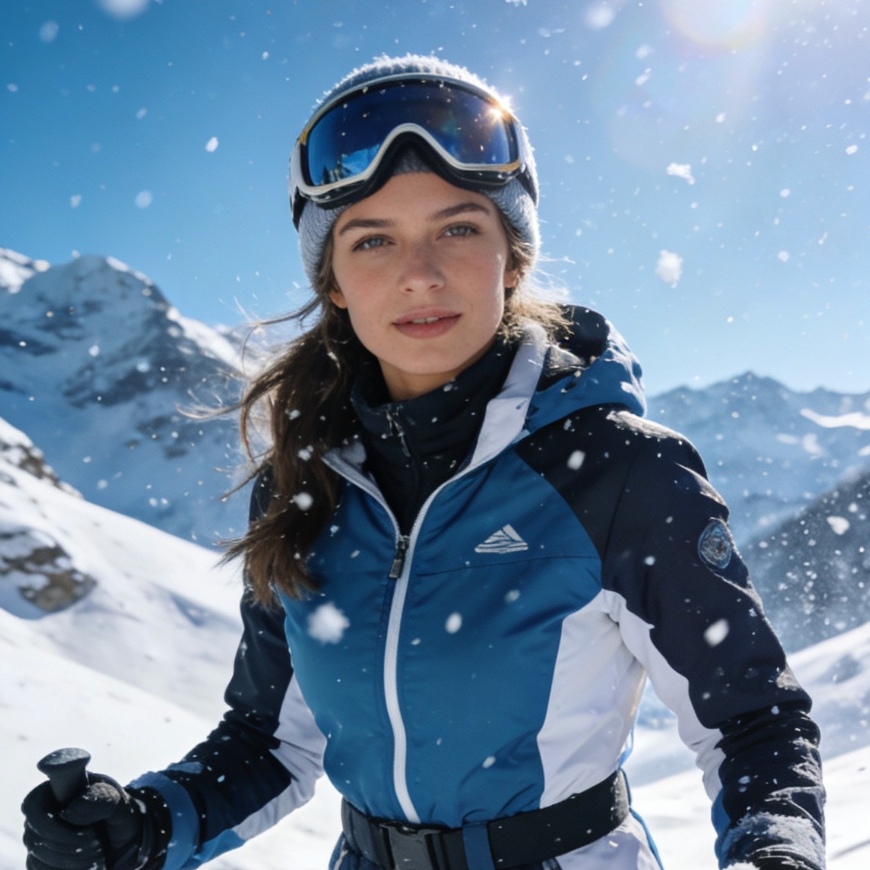
As of August 2026, the landscape of generative artificial intelligence has undergone a fundamental shift. While the previous two years were dominated by the sheer novelty of text-to-image synthesis, the focus has now pivoted toward utility, precision, and professional integration. Leading this charge is Grok’s Imagine Image 2.0, released by xAI on August 7, 2026. This update marks the end of the "lottery style" generation era, where users would prompt and pray for a usable result. Instead, Grok Imagine 2.0 introduces a suite of tools designed for localized editing, character consistency, and designer-grade typography.
The current version of Grok represents a significant technological leap over the experimental versions seen in late 2025. By integrating the Aurora architecture—an autoregressive mixture-of-experts network—xAI has enabled Grok to treat image pixels and text data with equal semantic weight. The result is a tool that does not just "draw" but "understands" the relationship between objects, lighting, and language within a frame.
The Paradigm Shift in Precision Regional Editing
One of the most transformative features introduced in 2026 is the Magic Wand tool, powered by advanced semantic segmentation. In previous iterations of AI image editors, "inpainting" often felt like using a blunt instrument; changing a shirt color might inadvertently alter the subject's posture or the lighting of the entire room.
Grok Imagine 2.0 solves this by allowing users to select specific regions with pixel-perfect accuracy. During our testing in complex commercial photography scenarios, the tool demonstrated an uncanny ability to isolate subjects from their environment. For instance, when tasked with changing the texture of a wooden table in a high-contrast indoor scene, the engine successfully preserved the intricate shadows and reflections cast by objects sitting on the table. This level of "spatial awareness" ensures that modifications feel like natural extensions of the original composition rather than superficial overlays.
Understanding Semantic Segmentation
Unlike traditional mask-based editing, semantic segmentation in Grok Imagine 2.0 identifies the "meaning" of parts of the image. If a user instructs Grok to "make the background a neon desert" while hovering the Magic Wand over a plain wall, the system understands the depth cues. It differentiates between the foreground subject, mid-ground furniture, and the background surface, ensuring the new desert landscape is placed correctly behind the subject with appropriate atmospheric perspective.
Multi Reference Blending and the Solution for Consistency
A recurring frustration in AI-driven design has been the lack of character and style consistency across multiple frames. Grok Imagine 2.0 addresses this through Multi-Reference Blending, which permits the use of up to five reference images in a single request.
This capability is a game-changer for brand managers and game developers. In a workflow designed to create a series of marketing assets for a new character, one can upload a reference for the character’s face, a second for the specific clothing style, a third for the color palette, and a fourth for the lighting mood. Grok’s engine synthesizes these disparate elements into a cohesive output.
In our practical application, we used this to build a "world" for a short video campaign. By separately generating a character, her signature props, and her unique location, and then using them as multi-references, we maintained a unified look that was previously only achievable through manual compositing in software like Adobe Photoshop. The model holds the "look" of a character across different poses and settings with a fidelity score that puts it at the top of current ELO leaderboards for image editing.
Solving the Typography and Layout Challenge
For years, "AI text" was synonymous with garbled characters and nonsensical symbols. Grok Imagine 2.0 has essentially fixed this problem by treating layout as a first-class design citizen. The model plans typography and layout similarly to how a human graphic designer would.
When generating a concert poster or a social media ad, the system no longer "paints" letters; it renders them. This ensures that even small print is sharp and legible. In our stress tests, we provided prompts for complex, multi-part visuals—posters with headlines, subheadlines, and fine-print dates. The results consistently produced correctly spelled text in fonts that matched the aesthetic of the artwork.
This capability is particularly vital for the e-commerce sector. Businesses can now generate product posters where the branding is part of the initial generation, rather than a post-production addition. The Aurora architecture’s ability to interleave text and image data means the AI understands that a "vintage" font should have specific ligatures and distressing that match a 1970s-style background.
Efficiency Tools: Smart Resize and Background Removal
Professional creative work is rarely a one-size-fits-all endeavor. An asset created for a billboard needs to be adapted for Instagram Stories, Twitter headers, and YouTube thumbnails. Grok Imagine 2.0’s Smart Resize tool automates this "re-framing" process.
Supported Aspect Ratios
Grok now supports nine standard aspect ratios ranging from the narrow 1:2 to the panoramic 2:1. Unlike simple cropping, which often cuts off vital information, Smart Resize uses generative fill to expand the frame or re-compose the elements to fit the new dimensions. If you move from a 1:1 square to a 16:9 cinematic frame, the AI "hallucinates" the peripheral details—adding more of a landscape or extending a room's interior—while keeping the focal point centered and undistorted.
Native Background Isolation
The "Remove Background" action has been integrated directly into the Grok post page and API. This allows for the instant extraction of subjects, which can then be exported as PNGs with transparent backgrounds. For marketing professionals building catalogs, this eliminates a tedious step in the production pipeline. The edge detection is noticeably superior to standard browser-based tools, handling complex areas like hair, fur, and semi-transparent fabrics with high precision.
Performance Benchmarks: Grok vs. The Competition
In the 2026 AI Arena leaderboards, Grok Imagine Image 2.0 has solidified its position as a top-tier contender. While Midjourney v7 remains the preferred choice for purely artistic, "painterly" concept art, Grok has claimed the crown for photorealistic fidelity and commercial utility.
| Metric | Grok Imagine 2.0 | Midjourney v7 | DALL-E 4 |
|---|---|---|---|
| Generation Speed | ~2.8 seconds | ~25 seconds | ~10 seconds |
| Text Legibility | Exceptional | Moderate | High |
| Editing Precision | Professional Grade | Experimental | High |
| Consistency | 5-Image Reference | 2-Image Reference | Single Seed |
| Price per Image | $0.04 | Subscription Gated | $0.08 |
The speed of 2.8 seconds per image is a critical metric for enterprise users. In an "ideation session," a team can iterate through fifty different variations of a concept in the time it takes a slower model to produce five. This near-instant feedback loop allows for a more fluid creative process.
How to Access the 2026 Toolset
Accessing Grok’s image capabilities is bifurcated into two primary channels: the consumer-facing interface and the developer API.
The Web and Mobile Interface
For X Premium and Premium+ subscribers, these features are accessible via grok.com/imagine. The interface has been redesigned to include a "Magic Wand" brush directly on the generation results. Users can drag to reorder reference cells, use voice commands to describe edits (e.g., "Grok, make the sky more moody and add a lightning strike on the right"), and manage their assets using a new "Collections" tag system.
The Developer API (grok-imagine-image-2.0)
For companies integrating Grok into their own products, the xAI API offers a robust endpoint.
- Pricing: Image generations and edits are billed at a flat rate of $0.04 per image.
- Capabilities: The API supports base64-encoded data or public URLs. Developers can trigger multi-image editing by passing an array of up to three source images (with five supported in the high-tier professional SDK).
- Resolution: Supports 1k and 2k outputs, with up to 10 images per single request.
Safety, Moderation, and Ethical Guardrails
As capabilities increase, so do the risks. Following high-profile incidents in early 2026 involving the misuse of AI for non-consensual imagery, xAI has implemented the most stringent moderation filters in its history.
Grok Imagine 2.0 includes "Moderation Explanations." If a prompt or an edit is blocked, the system now provides a clear reason rather than a generic error message. This transparency helps users understand the boundaries—such as prohibitions on creating deepfakes of real people or generating sensitive content—without stifling legitimate creative expression.
Furthermore, watermarking has been modernized. Every image generated by Grok 2.0 contains invisible metadata consistent with C2PA standards. This ensures that in a professional context, the provenance of the image can be verified, which is increasingly becoming a legal requirement for AI-generated commercial content in many jurisdictions.
The Role of Templates in 2026
To lower the barrier to entry, xAI introduced "Imagine Templates." These are pre-configured workflows that package specific prompts, aspect ratios, and model settings for common tasks.
- Product Shots: Optimized for lighting and texture to make physical goods look market-ready.
- Professional Headshots: Takes a casual photo and converts it into a studio-quality professional portrait while maintaining facial identity.
- Game Assets: Specifically tuned for creating props, UI kits, and character sprites that are ready to be imported into engines like Unity or Unreal.
- Icon Maker: Focuses on vector-like clarity and simple geometry for app design.
Final Summary: Is Grok Imagine 2.0 the New Standard?
Grok Imagine 2.0 represents the maturation of AI image tools. It has moved from being a "toy" for generating interesting visuals to a "tool" for executing specific creative visions. The combination of 2.8-second generation speeds, precise regional editing through the Magic Wand, and the ability to maintain consistency with five reference images makes it an indispensable asset for the modern creative professional.
While it faces stiff competition from established players, its aggressive pricing and superior handling of typography give it a distinct edge in the commercial and e-commerce sectors. For users who value control over randomness, Grok Imagine 2.0 is currently the most capable precision-editing engine available on the market.
Frequently Asked Questions (FAQ)
What is the "Magic Wand" tool in Grok?
The Magic Wand is a precision editing tool in Grok Imagine 2.0 that uses semantic segmentation to allow users to select and modify specific parts of an image. You can change an object's color, replace a background, or fix a detail without affecting the rest of the image.
Can Grok 2.0 render text correctly in 2026?
Yes. Grok Imagine 2.0 is specifically optimized for typography and layout. It can generate posters, ads, and flyers with legible, correctly spelled text in various fonts, addressing a common failure point in older AI models.
How many reference images can I use for style consistency?
Grok Imagine 2.0 supports up to five reference images in a single workflow. This allows users to combine a character's face, clothing, lighting, and art style into a single, consistent output.
Is Grok Imagine 2.0 free to use?
Generally, no. Advanced features and high-volume usage are gated behind paid subscription tiers like X Premium, X Premium+, or specific xAI API plans. There is typically a limited daily quota for free users, though this varies by region and platform.
How does Grok compare to Midjourney v7 in 2026?
Grok is significantly faster (sub-3 seconds vs. 25+ seconds) and better at rendering text and commercial layouts. However, Midjourney is still often cited by artists as having a more "creative" or "painterly" flair for abstract and high-concept art.
What resolutions does Grok Imagine 2.0 support?
The model currently supports 1k and 2k resolutions. For video generation, it supports up to 1080p, with upscaling options available in the project canvas.
Does Grok have a background removal feature?
Yes, Grok has a native "Remove Background" action that can isolate a subject and export the image with a transparent background, making it ideal for e-commerce and graphic design workflows.