Home
Home
How AI Image Creation Is Changing Digital Art Forever
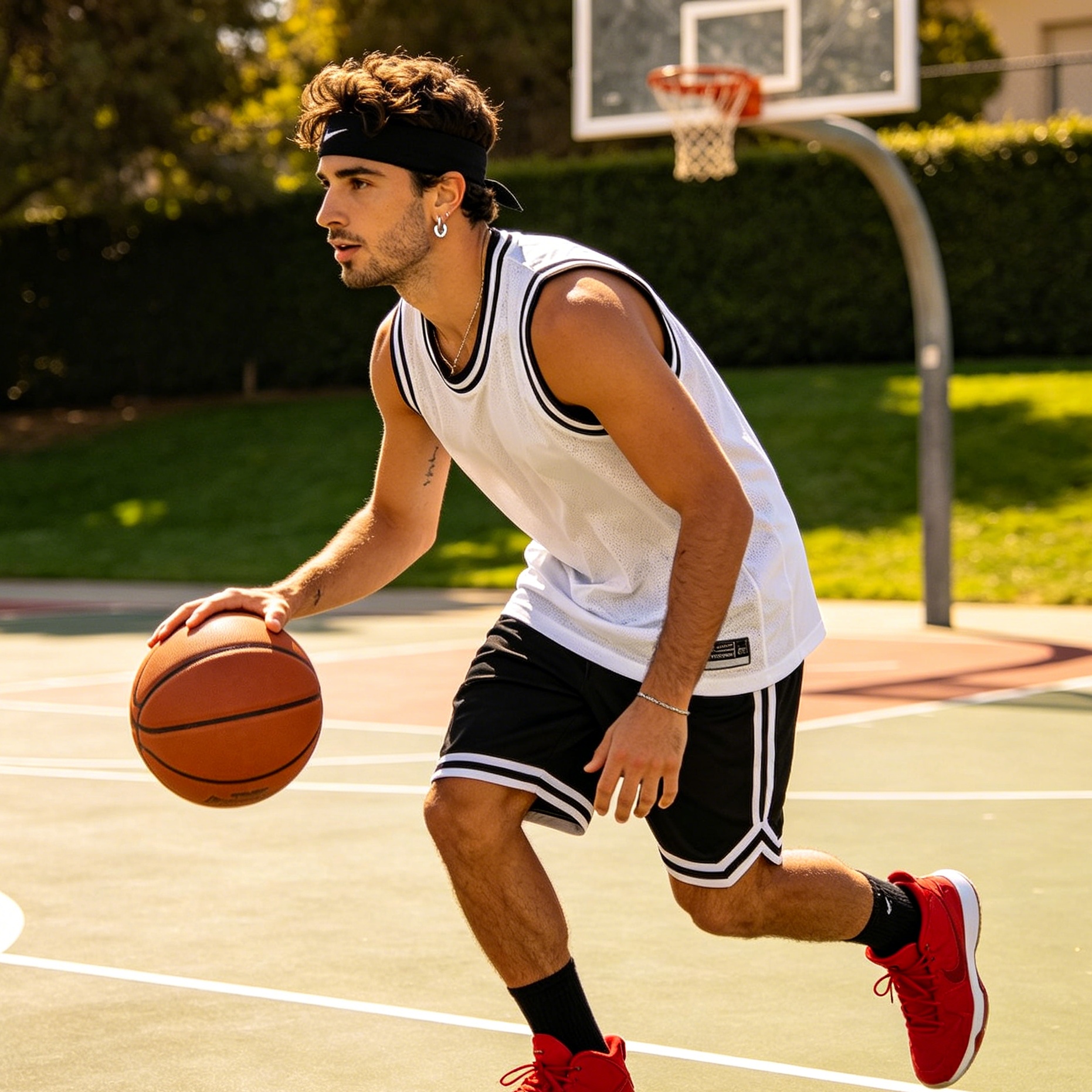
AI image creation represents the most significant shift in visual communication since the invention of the camera. It is a technology that leverages deep learning models to transform text descriptions—known as prompts—into high-fidelity visual content. By training on billions of image-text pairs, these systems have learned the complex relationships between language and aesthetics, allowing anyone to function as an art director of their own imagination.
In today's creative economy, AI image generation has evolved from a novel experiment into a fundamental professional tool. From marketing agencies generating rapid storyboards to indie game developers creating high-quality textures, the ability to synthesize pixels from ideas is redefining what it means to be a "creator."
Understanding the Technology Behind the Pixels
To truly master AI image creation, one must understand that these tools do not "search" the internet for images to collage together. Instead, they understand the mathematical essence of visual concepts.
How Diffusion Models Generate Meaning from Noise
The dominant architecture in modern AI image creation is the diffusion model. This process begins with a canvas of pure digital noise, resembling the static on an old television screen. The model has been trained to recognize patterns and gradually "denoise" this static.
When a user inputs a prompt like "a cyberpunk city in the rain," the AI begins to nudge the noise toward shapes, colors, and textures that match its internal representation of "cyberpunk," "city," and "rain." Through dozens of iterations, the blurry static resolves into a coherent, high-resolution image. This iterative refinement is why users often see an image "develop" during the generation process in tools like Midjourney or Stable Diffusion.
The Role of Latent Space and Neural Networks
At its core, the AI operates in a "latent space"—a multi-dimensional mathematical map where similar concepts are clustered together. For instance, the concept of "dog" is positioned near "fur" and "barking" but far from "airplane." When you write a prompt, the AI navigates this map to find the intersection of your requested concepts. Neural networks, specifically Transformers and U-Nets, handle the heavy lifting of interpreting natural language and translating it into visual instructions for the diffusion process.
Strategic Comparison of Leading AI Image Tools in 2026
Not all AI image generators are created equal. Depending on the professional requirement—whether it is artistic flair, photorealism, or commercial safety—the choice of platform is critical.
Midjourney: The Artistic Powerhouse
In our extensive testing across various creative campaigns, Midjourney remains the undisputed leader for aesthetic quality. It possesses an inherent "opinion" on lighting and composition that other models often lack.
- Best For: Conceptual art, cinematic visuals, and high-end fashion photography.
- Real-world Experience: When using Midjourney v6.1, we found that the
--stylizeparameter is the most powerful lever for controlling output. Setting it to--s 250provides a balanced professional look, while--s 750pushes the model toward extreme artistic abstraction. Its ability to handle "raw" photography styles via the--style rawcommand is essential for avoiding the "plastic" look common in AI images.
Adobe Firefly: The Commercial Choice
Adobe Firefly distinguishes itself through its training data. Unlike other models that scraped the open web, Firefly was trained primarily on Adobe Stock images and public domain content. This makes it the only "commercially safe" option for many large-scale enterprises concerned about copyright infringement.
- Best For: Corporate design, advertising, and integration into Photoshop workflows.
- Key Advantage: The integration of "Generative Fill" and "Generative Expand" within the Creative Cloud ecosystem allows designers to modify existing assets with surgical precision, rather than starting from scratch.
FLUX and Stable Diffusion: The Open Source Controllers
For users who require absolute control and privacy, open-source models like FLUX.1 (developed by Black Forest Labs) or Stable Diffusion (by Stability AI) are the standard. These models can be run locally on hardware with high VRAM (at least 24GB for optimal performance of FLUX.1 Dev).
- Best For: Custom LoRA training, architectural rendering, and "uncensored" creative exploration.
- Technical Insight: The advantage here is the ecosystem of extensions like ControlNet, which allows users to dictate the exact pose of a character or the structure of a room using depth maps or edge detection.
Ideogram: Precision in Typography
One of the historical weaknesses of AI image creation was the inability to render legible text. Ideogram has solved this. It can integrate complex typography into logos, posters, and T-shirt designs with near-perfect accuracy.
- Best For: Graphic design, branding, and social media assets requiring integrated text.
How to Master Prompt Engineering for Professional Results
A prompt is more than just a description; it is a set of coordinates for the AI. Effective prompt engineering requires a structured approach that mimics an art director's brief.
The Four-Pillar Prompt Framework
To get consistent results, we recommend structuring prompts using these four pillars:
- Subject Definition: Be hyper-specific. Instead of "a cat," use "a Maine Coon cat with thick silver fur."
- Environment and Context: Define the setting. "In a Victorian-era library with dust motes dancing in the sunlight."
- Style and Medium: Specify the technical medium. Is it a "35mm film photograph," an "oil on canvas," a "vector illustration," or a "3D octane render"?
- Lighting and Composition: Use photography terminology. "Low-angle shot," "dramatic chiaroscuro lighting," "bokeh background," or "wide-angle lens."
Refinement and Iterative Prompting
The first generation is rarely the final product. Professional AI artists use an iterative process. If the lighting is too harsh, don't delete the prompt; add "soft morning light" or "diffused studio lighting." In tools like Midjourney, using "Vary Region" (Inpainting) allows you to fix a specific hand or eye without changing the rest of an otherwise perfect image.
Negative Prompting: What to Exclude
In models like Stable Diffusion and DALL-E 3, telling the AI what not to do is just as important. Common negative prompts include:
- "Low resolution, blurry, watermark, distorted hands, extra limbs, text (unless requested), grainy."
Practical Applications in Modern Industries
The impact of AI image creation extends far beyond digital art galleries. It is actively transforming multiple sectors.
Marketing and Advertising
Agencies are no longer waiting days for a mood board. With AI, a creative team can generate 50 different visual directions for a campaign in an afternoon. This speed allows for "A/B testing" of visual concepts before a single dollar is spent on a real photoshoot.
Architecture and Interior Design
Architects use tools like LookX or specialized Stable Diffusion models to turn simple floor plans into photorealistic 3D visualizations. This allows clients to "see" a space before construction begins, drastically reducing the feedback loop.
Game Development and Entertainment
From generating character concept art to creating seamless textures for 3D environments, AI is a massive force multiplier for small studios. It allows a single artist to produce the output of an entire department.
Ethical, Legal, and Copyright Considerations
The rapid rise of AI image creation has outpaced the legal framework. It is crucial for users to understand the current risks.
The Question of Ownership
In many jurisdictions, including the United States, the Copyright Office has ruled that purely AI-generated images—created solely from a text prompt—cannot be copyrighted. For an image to be protected, there must be "significant human authorship." This might include extensive manual editing in Photoshop or using AI as only one part of a much larger, human-controlled creative process.
Training Data and Fair Use
The "black box" nature of training datasets remains controversial. Many models were trained on copyrighted works without explicit permission. While companies like Adobe claim their datasets are "clean," others rely on the "Fair Use" doctrine, arguing that the AI is learning concepts, not copying pixels. This remains a subject of ongoing litigation that will shape the future of the industry.
Bias and Representation
AI models are a reflection of their training data. If the data contains biases—such as always depicting "doctors" as male or "nurses" as female—the AI will perpetuate those stereotypes. Proactive prompt engineering, such as explicitly requesting diverse representation, is a necessary step for responsible creators.
Troubleshooting Common Issues in AI Image Creation
Even with the best tools, things can go wrong. Here is how to handle the most common frustrations.
Fixing "AI Hands" and Anatomy
Diffusion models often struggle with complex anatomy, particularly the number of fingers on a hand. To solve this:
- Use "Inpainting" to regenerate just the hand area.
- Use a "ControlNet" pose to force the AI to follow a human skeletal structure.
- Mention "anatomically correct" or "five fingers" in the prompt, though this is not always 100% effective.
Overcoming Over-Saturation and "Plastic" Looks
Many models default to a very "smooth" look. To add realism:
- Specify film stocks: "Shot on Kodak Portra 400" or "Fujifilm Superia."
- Add "film grain" and "imperfections" to the prompt.
- Avoid the word "photorealistic," as it often triggers a CGI-style hyper-perfection. Instead, use "unfiltered documentary photography."
What is the future of AI image generation?
We are moving toward "multimodal" and "video-integrated" generation. In the near future, the boundary between a still image and a short cinematic clip will blur. Models are becoming more aware of "physics," meaning shadows and reflections will become increasingly accurate. Furthermore, "personal AI models" will allow artists to train the AI on their own unique style, creating a digital assistant that understands their specific visual language.
Summary
AI image creation is not a replacement for human creativity; it is a new medium. While the machine handles the execution of pixels, the human provides the vision, the context, and the curation. By understanding the underlying diffusion technology, choosing the right tools like Midjourney or Firefly, and mastering the art of structured prompting, creators can unlock a level of productivity and imagination that was previously impossible.
Frequently Asked Questions
What is the best AI image generator for beginners?
ChatGPT (DALL-E 3) is generally considered the most beginner-friendly because it understands conversational language. You don't need to know complex technical codes; you can simply describe what you want in plain English.
Can I sell images I create with AI?
This depends on the platform's Terms of Service. For example, Midjourney paid plans and Adobe Firefly generally allow for commercial use. However, remember that you may not be able to "copyright" the image to prevent others from using it.
How much does AI image creation cost?
Most professional tools operate on a subscription model, typically ranging from $10 to $30 per month. Open-source options like Stable Diffusion are free to use if you have a powerful enough computer to run them locally.
Does AI art steal from human artists?
This is a complex debate. AI learns the style of art similarly to how a human student studies masters in a museum. However, because the AI can do this at an industrial scale, it creates significant economic competition for human illustrators.
Why do some AI images look "fake"?
AI images often look fake due to perfect symmetry, lack of texture (the "plastic" skin effect), and unrealistic lighting. Using specific technical prompts regarding lens types and film grain can significantly improve realism.
-
Topic: AI-Powered Image Generation System using AIhttps://www.ijarsct.co.in/Paper29529.pdf
-
Topic: Quickstart: Generate images with Azure OpenAI in Azure AI Foundry Models - Azure OpenAI | Microsoft Learnhttps://learn.microsoft.com/en-us/azure/ai-services/openai/dall-e-quickstart
-
Topic: Imagen on Vertex AI | AI Image Generator | Generative AI on Vertex AI | Google Cloud Documentationhttps://docs.cloud.google.com/vertex-ai/generative-ai/docs/image/overview?authuser=2