Home
Home
How AI Outpainting Tools Complete and Expand Your Cropped Photos
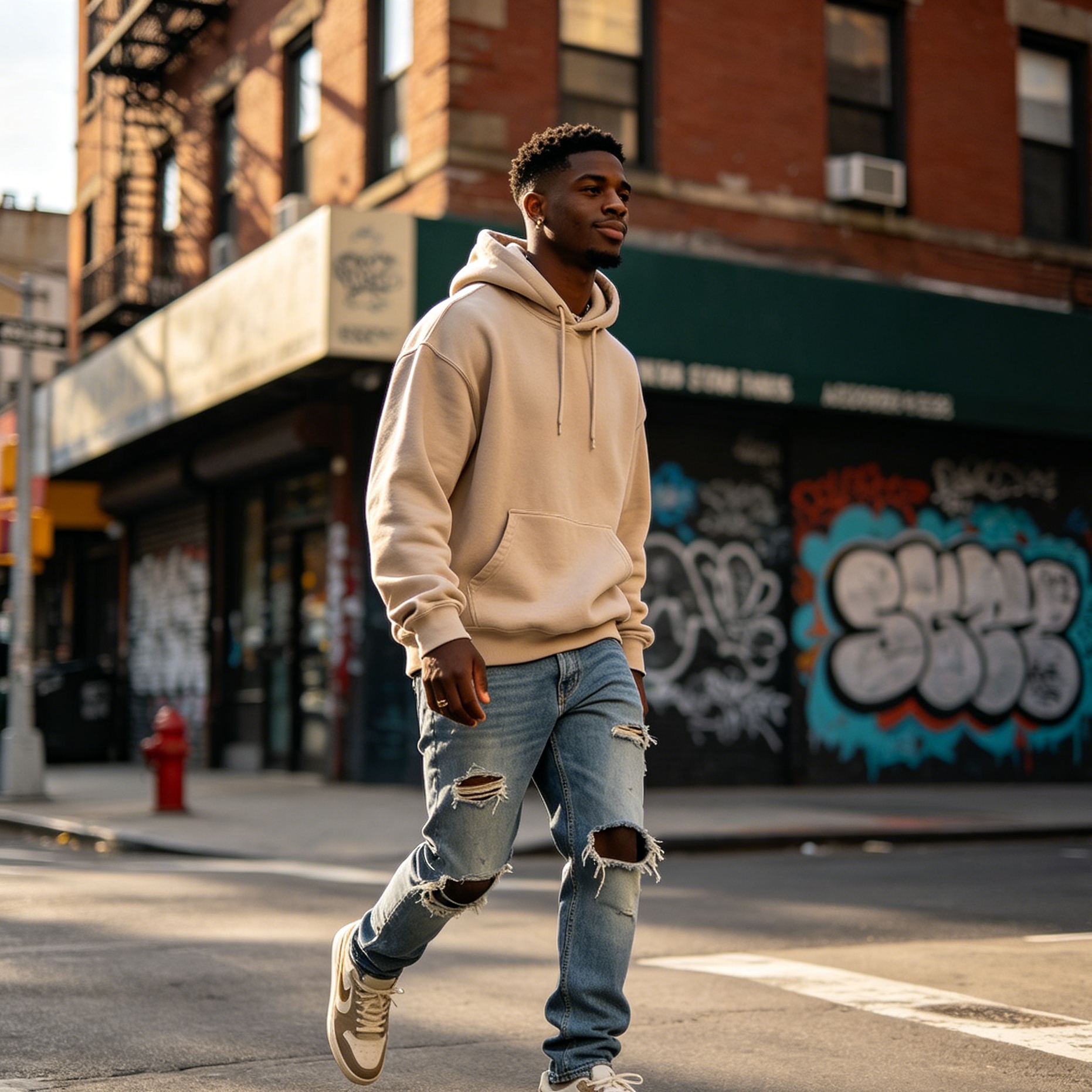
Artificial Intelligence has transformed image editing from simple pixel manipulation to complex semantic understanding. The concept of a "complete image AI" refers to the technological process known as AI Outpainting or Generative Fill. This capability allows users to take a tightly cropped photograph and expand its borders, instructing the AI to imagine and generate what exists beyond the original frame. This technology does not merely stretch pixels; it analyzes textures, lighting, shadows, and perspective to synthesize entirely new content that blends seamlessly with the source material.
Defining the Mechanics of AI Image Completion
At its core, AI image completion is divided into two primary functions: Inpainting and Outpainting. While Inpainting focuses on filling a hole or removing an unwanted object within the existing boundaries of a photo, Outpainting extends the canvas outward.
The technology relies on deep learning models, specifically Diffusion Models, which have been trained on billions of image-text pairs. When an AI tool is asked to "complete" an image, it performs a contextual analysis of the edges. It identifies the horizon line, the direction of light sources, and the artistic style (such as bokeh, grain, or brushstrokes). The model then predicts the most probable arrangement of pixels that would naturally follow the existing scene.
In professional environments, this is often referred to as "generative expansion." The process involves a neural network operating in a latent space—a mathematical representation of visual concepts—to ensure that a generated forest background, for instance, maintains the same species of trees and time-of-day lighting as the original center-crop.
Core Technologies Behind Generative Expansion
To understand how a machine "completes" a visual narrative, one must look at the underlying architecture. Most modern image completion tools utilize Latent Diffusion Models (LDM).
The Role of Contextual Attention
The most critical component is the "Attention Mechanism." As the AI generates new pixels for the expanded area, the attention layers constantly reference the original image. If the source image contains a sunset, the attention mechanism ensures the expanded sky maintains the correct gradient of orange and purple. Without this, the generated portions would look like a disjointed collage rather than a single cohesive photograph.
Noise Removal and Pixel Synthesis
AI completion starts with a field of random Gaussian noise. Through a series of iterative steps, the model "denoises" the area, gradually shaping the noise into recognizable structures based on the prompt and the reference image. The precision of this process determines whether the transition between the old and new pixels is detectable to the human eye.
Top Professional Tools for AI Image Completion
Several platforms have emerged as leaders in the field of image expansion, each catering to different skill levels and professional requirements.
Adobe Photoshop and Firefly
Adobe has integrated its Firefly model directly into the Photoshop ecosystem under the "Generative Expand" feature. In professional workflows, this tool is highly regarded for its ability to match the metadata of the original file. When expanding a high-resolution portrait, Photoshop’s AI attempts to replicate the specific lens blur (depth of field) and film grain of the source.
Key characteristics observed in professional testing:
- Resolution Scaling: It handles large-format prints better than most web-based alternatives.
- Layer Integration: Generated content is placed on a separate Generative Layer, allowing for non-destructive editing.
- Style Match: It is exceptionally proficient at maintaining consistent lighting across the expanded canvas.
DALL-E 3 and OpenAI Outpainting
OpenAI’s DALL-E 3, accessible through ChatGPT Plus or the DALL-E editor, offers a more conversational approach to image completion. Its Outpainting feature allows users to add "frames" around an image. DALL-E 3 is known for its strong semantic understanding; if an image is expanded to include a "futuristic city," the AI adds logically consistent architecture without requiring complex technical prompts.
Canva Magic Expand
For social media managers and non-designers, Canva’s Magic Expand provides a simplified interface. It is specifically optimized for aspect ratio corrections. If a user needs to turn a 4:5 Instagram post into a 16:9 YouTube thumbnail, Magic Expand automates the process by analyzing the background and filling the empty space. While it may lack the granular control of Photoshop, its speed is unmatched for rapid content creation.
Midjourney Pan and Zoom
Midjourney approaches image completion through its "Pan" and "Zoom Out" commands. Unlike the interactive brush tools in other software, Midjourney’s system is more procedural. Users can pan the camera in any direction—left, right, up, or down—extending the narrative of the scene. The "Zoom Out" feature (2x or custom) essentially creates a wide-angle version of a close-up shot, maintaining impressive artistic consistency.
Stable Diffusion and ControlNet
For users with high-end hardware (typically requiring 8GB to 24GB of VRAM), Stable Diffusion offers the most customizable image completion experience. By using "Inpaint Upload" and adjusting the "Mask Blur" and "Denoising Strength" parameters, users can achieve results that are tailored to specific artistic needs. The "Poor Man's Outpainting" script or the "ControlNet Inpaint" model allows for precise control over how much of the original image the AI is allowed to change.
Step-by-Step Workflow for Successful Image Expansion
Completing an image requires more than just clicking a button; it involves a strategic workflow to ensure the result looks authentic.
1. Preparing the Canvas
The first step is to increase the canvas size. In tools like Photoshop, this is done using the Crop Tool to drag the borders outward. In web tools, this is often a selection of a new aspect ratio.
2. Defining the Mask
The AI needs to know exactly where to generate. A common mistake is to leave no overlap between the original image and the expansion area. For a seamless blend, the generation mask should overlap the original pixels by at least 10% to 20%. This gives the AI a "bridge" of data to reference for texture matching.
3. Crafting the Prompt
While some tools are "auto-fill," providing a descriptive prompt usually yields better results. Instead of a blank prompt, using descriptive phrases like "matching mountain range with soft morning mist" helps the AI align the new pixels with the existing mood.
4. Iterative Refining
Rarely is the first generation perfect. Most tools provide three or four variations. It is often necessary to generate multiple times or to expand in small increments rather than one giant leap to maintain structural integrity.
Practical Use Cases for AI Image Completion
The ability to "complete" an image has solved several long-standing problems in digital media.
Social Media Adaptation
Content creators often face the challenge of having a high-quality landscape photo that needs to be converted into a vertical "Story" or "Reel" format. AI outpainting allows for the vertical extension of the sky and ground, making the subject fit the new dimensions without awkward cropping or blurry side-bars.
Commercial Photography and E-commerce
In product photography, a shot might be too tight to allow for marketing text. By using generative fill, designers can expand the background of a product shot (e.g., adding more of a wooden table or a marble countertop) to create "white space" for copy, without the need for a re-shoot.
Historical Photo Restoration
Old photographs are often damaged at the edges or were taken with limited wide-angle capabilities. AI can assist in "restoring" these images by completing missing corners or expanding the scene to provide more context to a historical event, provided the user acknowledges the synthetic nature of the additions.
Creative Concepting
Concept artists use outpainting to "world-build." Starting with a single character sketch, they can expand the canvas repeatedly to reveal an entire environment, using the AI to brainstorm landscapes, architecture, and atmospheric effects that match the character's style.
The Limitations and Ethical Considerations of AI Expansion
Despite its power, AI image completion is not infallible.
Structural Hallucinations
When asked to expand complex human figures or intricate machinery, AI often "hallucinates" incorrect anatomy or nonsensical mechanical parts. The lack of a true 3D understanding means the AI might place a limb in a physically impossible position or fail to maintain the perspective lines of a building's architecture.
Resolution Mismatch
Some AI models generate at a lower internal resolution (e.g., 1024x1024) and سپس upscale. This can lead to a slight loss of sharpness in the expanded areas compared to the original high-resolution center. Professionals often have to use secondary AI upscalers to fix this discrepancy.
Authenticity and Copyright
The use of AI to complete images raises questions about the "truth" of a photograph. In photojournalism, using AI to expand a scene is generally considered a breach of ethics, as it adds elements that were not present in reality. Furthermore, the copyright status of AI-generated pixels remains a complex legal gray area in many jurisdictions.
Technical Comparison of AI Outpainting Models
| Feature | Adobe Firefly | DALL-E 3 | Stable Diffusion | Canva |
|---|---|---|---|---|
| Primary Platform | Photoshop / Web | ChatGPT / API | Local PC / Cloud | Web / App |
| Control Level | High (Brushes/Layers) | Medium (Prompts) | Extremely High | Low (Presets) |
| Hardware Req. | Low (Cloud-based) | Low (Cloud-based) | High (GPU) | Low (Cloud-based) |
| Best For | Professional Design | Creative Brainstorming | Advanced Research | Quick Social Posts |
Improving Results Through Advanced Techniques
For those seeking the highest quality output, several advanced techniques can be employed.
Frequency Separation
After using AI to complete a background, applying frequency separation can help blend the texture of the generated area with the original. By separating the color (low frequency) from the detail (high frequency), an editor can smooth out any "seams" that the AI might have left behind.
Selective Masking
Instead of expanding the whole image at once, try expanding specific sections. If you need more sky, mask only the top. This prevents the AI from getting "confused" by trying to calculate the ground and sky simultaneously.
Using Reference Images
Some tools allow for "Image-to-Image" referencing. By providing a secondary photo of the desired background style, you can guide the AI to complete your primary image using the color palette and textures of the reference.
What is the Future of Image Completion?
The next frontier for this technology is Video Outpainting and 3D Scene Completion. Research is already underway to allow AI to expand the field of view in moving footage, maintaining temporal consistency across frames. In the realm of Virtual Reality (VR), AI completion will play a role in turning 2D photographs into navigable 3D environments by "imagining" the parts of the room behind the camera.
As models become more efficient, we can expect real-time outpainting on mobile devices, allowing photographers to see an "expanded" view through their viewfinder before they even take the shot.
Summary
The rise of "complete image AI" through outpainting and generative fill has redefined the boundaries of digital creativity. Whether through the professional-grade tools in Adobe Photoshop or the accessible features in Canva and DALL-E 3, users now have the power to fix poor framing, adapt content for various platforms, and explore new creative horizons. While the technology requires a strategic approach and an understanding of its limitations, it remains one of the most practical and impressive applications of generative artificial intelligence today.
FAQ
What is the best AI to complete an image for free?
Many tools offer limited free trials. For completely free use, Stable Diffusion (if you have a compatible GPU) is the best open-source option. Web platforms like HitPaw and Pixlr also offer limited free generations for new users.
Can AI expand a photo to full body?
Yes, this is a common use case for outpainting. By expanding the canvas downwards and prompting for "full body, matching legs and shoes," tools like Photoshop or Rawshot AI can synthesize the lower half of a person, though the accuracy of footwear and anatomy may require several iterations.
Is AI outpainting the same as resizing?
No. Resizing or scaling changes the dimensions of the existing pixels (often making them larger or smaller). Outpainting adds new pixels and content to the image that did not previously exist.
How do I avoid blurry edges in AI expanded images?
Ensure there is a significant overlap between the original image and the expansion zone. Additionally, using a "Denoising Strength" of around 0.5 to 0.7 in advanced tools helps the AI blend the new textures without creating a sharp, noticeable line.
Does Adobe Firefly own the rights to my completed images?
Generally, under Adobe’s terms, you retain the rights to the content you create, though the generated portions are governed by their specific generative AI terms of use, which usually allow for commercial use depending on your subscription level.
-
Topic: Top 10 AI Image Completion Tools with Full Reviewshttps://www.hitpaw.com/ai-photo/ai-image-completion.html
-
Topic: Trending 1000 of the best complete Images | AI complete Generatorhttps://www.promeai.pro/design-ideas-ai-images/complete
-
Topic: AI Full Body Image Generator | Rawshot.aihttps://rawshot.ai/best/ai-full-body-image-generator