Home
Home
How AI Photo Enhancers Turn Low Quality Snaps Into High Resolution Masterpieces
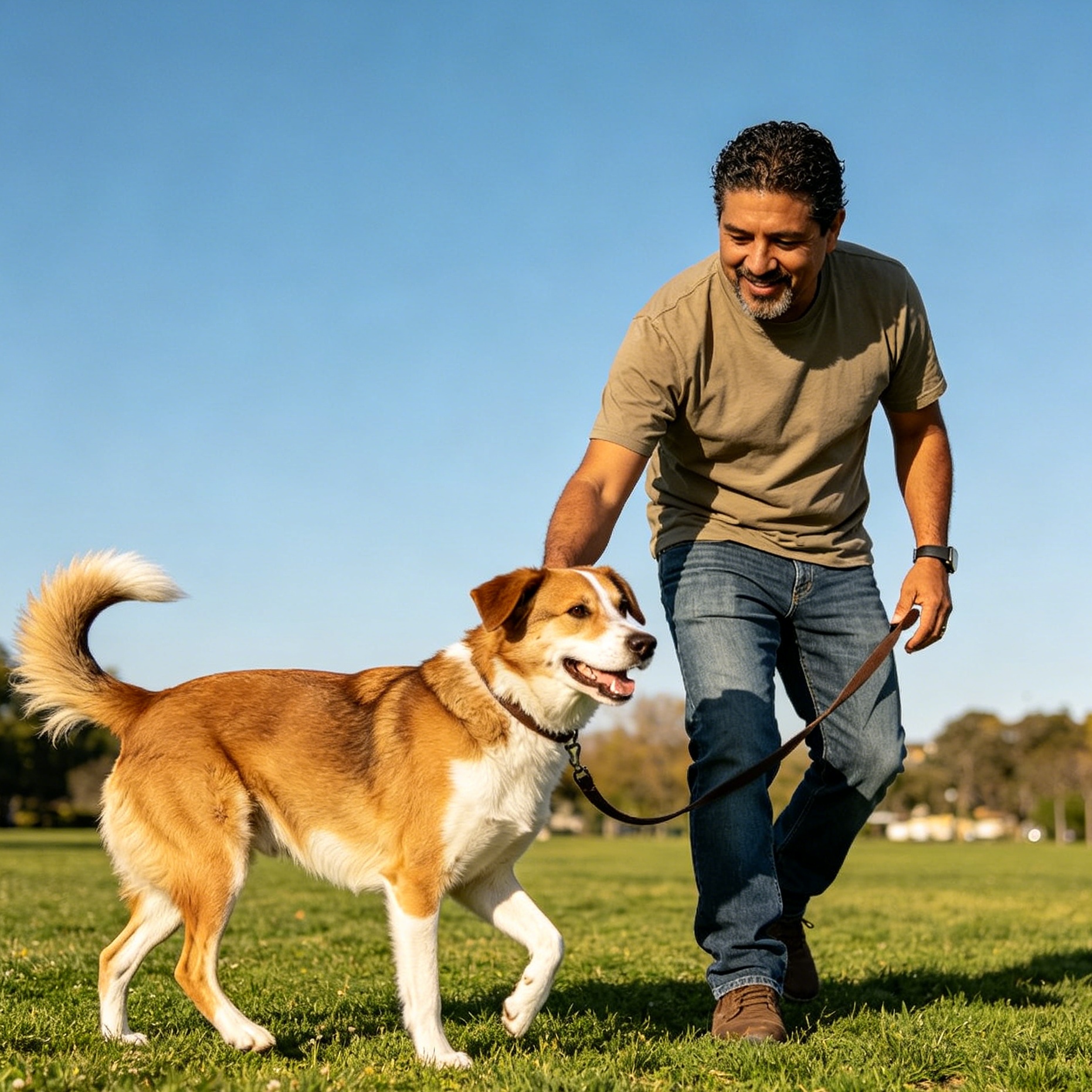
AI photo enhancers are sophisticated software tools that utilize deep learning models, such as convolutional neural networks (CNNs), to automatically improve the resolution, clarity, and overall aesthetic quality of digital images. Unlike traditional photo editing software that relies on manual adjustments of brightness or contrast, AI enhancers analyze the underlying patterns of an image and "predict" missing details based on training data from millions of high-quality photographs. These tools perform complex tasks like upscaling, noise reduction, and facial reconstruction in a single click, effectively bridging the gap between amateur snapshots and professional-grade visuals.
The Technological Evolution from Interpolation to AI Synthesis
To understand the value of an AI photo enhancer, it is essential to distinguish it from traditional digital enlargement. For decades, the industry standard for resizing images was interpolation—methods like "Bicubic" or "Nearest Neighbor." These techniques work by looking at existing pixels and creating new ones by averaging the colors of their neighbors. The result is often a larger image that looks blurry, soft, or "blocky" because no new information is actually being created.
Modern AI enhancers operate on a principle of synthesis rather than simple math. Using Generative Adversarial Networks (GANs) or Diffusion Models, the AI identifies objects within the frame—such as eyes, hair, or architectural textures. It then refers to its vast library of learned patterns to synthesize new pixels that logically belong in those gaps. When an AI "upscales" a low-resolution portrait, it isn't just stretching the skin; it is reconstructing the microscopic details of the pores and eyelashes to match a high-definition reference.
Core Capabilities of Modern AI Image Enhancement
The scope of AI in photography has expanded far beyond simple sharpening. Today's tools offer a suite of specialized functions designed to tackle specific photographic failures.
Intelligent Upscaling and Super-Resolution
Super-resolution is perhaps the most sought-after feature. It allows a 720p image to be scaled up to 4K or even 8K resolution while maintaining sharp edges. This is particularly valuable for print media, where a low-resolution smartphone photo might otherwise appear pixelated when enlarged to a poster size. Advanced models can increase pixel count by 400% to 600% without the "halo" effects common in legacy software.
Neural Noise Reduction
Digital noise, often appearing as grainy specks in low-light photos, is a byproduct of high ISO settings. Traditional denoisers often blur the entire image to hide the grain, sacrificing detail. AI denoisers use a "denoising autoencoder" structure to differentiate between unwanted sensor noise and actual image textures. This allows the software to remove the grain from a night sky while keeping the sharp edges of a mountain range intact.
Face Recovery and Detail Refinement
Human faces are the most difficult subjects for AI because the human eye is highly sensitive to even the slightest anatomical distortion. High-end AI enhancers use dedicated "Face Modules." These sub-networks are trained exclusively on human portraits to recognize facial geometry. They can fix "motion blur" on a face or recover features from a heavily compressed thumbnail, ensuring that eyes remain expressive and skin looks natural rather than like plastic.
Color Calibration and Dynamic Range Expansion
Beyond resolution, AI models can analyze the lighting conditions of a scene. If a photo is underexposed, the AI doesn't just "gamma-up" the brightness; it re-balances the shadows and highlights to simulate a higher dynamic range (HDR). It can also perform "Colorization," adding realistic hues to vintage black-and-white photos by identifying objects like grass, sky, and clothing and applying historically and contextually accurate colors.
The Professional Workflow: Maximizing AI Output Quality
Achieving a professional result with an AI enhancer requires more than just clicking a button. Based on rigorous testing across various lighting conditions and sensor types, a specific sequence of operations yields the best fidelity.
The "Clean Before Scale" Rule
A common mistake is upscaling a noisy image immediately. When the AI increases the resolution, it also increases the size of the noise artifacts, making them harder to remove later. The optimal workflow is to apply a light pass of AI Denoising first at the original resolution. Once the "grain" is managed, the Upscaling model has a cleaner canvas to work on, resulting in much sharper reconstructed textures.
Handling RAW vs. Compressed Inputs
While AI is powerful, the quality of the source file (the "ground truth") matters. Enhancing a highly compressed JPEG often results in "hallucinations," where the AI interprets compression blocks as actual textures, creating weird, wavy patterns. Whenever possible, using a RAW file or a high-bit-depth TIFF provides the AI with more data headroom, allowing for smoother color transitions and more accurate edge detection.
Parameter Tuning for Skin and Texture
In our technical assessments, we found that "Auto" settings frequently over-process skin. For professional portrait work, it is advisable to reduce the "Face Refinement" slider to approximately 60-70%. This prevents the "uncanny valley" effect where the subject looks too perfect to be real. Retaining a small amount of the original luminance noise can also help maintain a "filmic" look that resonates better with viewers than a digitally sterile finish.
Industry Applications and Use Cases
The adoption of AI photo enhancement is no longer restricted to hobbyists. It has become a cornerstone of several major industries.
E-commerce and Product Photography
Conversion rates on platforms like Amazon or Etsy are heavily influenced by image clarity. E-commerce sellers often use AI to sharpen product textures and remove backgrounds. A 2024 study indicated that creative teams using AI-driven workflows saw a significant reduction in the time spent on repetitive retouching, allowing for faster product launches.
Archival Restoration and Family Heritage
Historical societies and families with fading prints use AI to "save" memories. AI can fill in scratches, repair torn edges, and reverse the yellowing effects of time. By synthesizing missing parts of a damaged photo, these tools allow archivists to preserve history in a way that was previously impossible without weeks of manual digital painting.
Social Media and Digital Marketing
Content creators face aggressive compression when uploading to platforms like Instagram or TikTok. By "over-enhancing" an image—adding extra sharpness and resolution—before upload, creators can ensure that the final compressed version still looks crisp on high-pixel-density mobile screens.
Evaluating Leading AI Enhancement Platforms
The market is currently divided into three main categories: desktop software, web-based tools, and mobile applications.
- Topaz Photo AI (Desktop): Widely considered the industry benchmark for detail recovery. It excels in professional environments where high-resolution output and batch processing are required. Its "Autopilot" feature is particularly adept at detecting whether an image needs sharpening, denoising, or both.
- Adobe Photoshop Neural Filters (Cloud/Hybrid): Adobe has integrated AI directly into the Photoshop ecosystem. The "Photo Restoration" and "Super Zoom" filters are powerful but often require a stable internet connection as the heavy lifting is done on Adobe’s servers.
- Pixelfox and Remini (Web/Mobile): These are the leaders in accessibility. They are optimized for "one-tap" enhancements, particularly for faces. While they may lack the granular control of desktop suites, their ability to transform a low-quality selfie into a high-definition portrait is unmatched for casual users.
Hardware Requirements for Local AI Processing
Running these models locally requires significant computational power. AI enhancement is a "parallel" task, meaning it relies heavily on the Graphics Processing Unit (GPU) rather than the CPU.
| Component | Minimum Requirement | Recommended for 4K+ |
|---|---|---|
| GPU | NVIDIA GTX 1050 / AMD equivalent | NVIDIA RTX 3060 or higher (8GB+ VRAM) |
| RAM | 16 GB | 32 GB or higher |
| Processor | Intel i5 8th Gen / Ryzen 5 | Intel i7 12th Gen / Ryzen 7 |
| Storage | 10GB for Models | NVMe SSD for fast I/O |
For users without high-end hardware, web-based enhancers are the better choice, as the processing occurs on remote GPU clusters, delivering the result back to your browser in seconds.
Limitations and Ethical Considerations of AI Detail Synthesis
Despite the "magic" of AI, there are hard limits to what can be achieved.
The Risk of Hallucinations
Because the AI is "guessing" based on its training, it can sometimes insert details that weren't in the original scene. For example, it might turn a blurry piece of text into legible but incorrect letters, or add a mole to a person's face that doesn't exist. This "hallucination" risk means AI enhancers should be used with caution for legal, forensic, or strictly documentary photography.
The Aesthetic Cost of "Perfection"
There is a growing critique in the photography community regarding the "AI look." Over-enhanced photos can lose their "soul"—the subtle imperfections that make a photo feel authentic. The loss of film grain, the smoothing of natural skin folds, and the hyper-real sharpening can result in images that feel artificial or "computed" rather than captured.
Summary of Best Practices for AI Enhancement
- Originals Only: Always use the highest resolution original file available. Avoid enhancing screenshots or images already compressed by social media.
- Sequential Processing: Denoise first, then upscale, then perform final color corrections.
- Moderation is Key: Use a "Before/After" split view to ensure you haven't crossed the line into an unnatural aesthetic.
- Targeted Enhancement: If the background is fine but the face is blurry, use tools that allow for masked or selective enhancement to preserve the original mood of the environment.
Frequently Asked Questions
Can AI fix a completely blurry photo?
AI can significantly improve photos with mild motion blur or out-of-focus issues by reconstructing edges. However, if a photo is severely blurred to the point where no structural information remains, the AI will likely create artifacts or a "painted" look rather than a clear photo.
Is AI photo enhancement safe for my privacy?
Most reputable desktop tools (like Topaz) process images locally on your computer, meaning your photos never leave your hard drive. Web-based tools like Pixelfox often have a 24-hour deletion policy, but users should always review the privacy policy before uploading sensitive or personal images.
Does upscaling an image increase its file size?
Yes, significantly. When you increase the resolution (e.g., from 1MB to 40MB), the amount of data stored increases. It is recommended to save the final enhanced version as a PNG or high-quality TIFF to avoid re-introducing compression artifacts.
Can I use AI enhancers for commercial work?
In most cases, yes. Most software providers grant you full ownership of the enhanced output. However, you should check the terms of service of the specific tool you are using, especially if it is a free web-based service.
Why does my enhanced photo look like a painting?
This usually happens when the "Strength" or "Denoise" settings are too high. The AI replaces the original pixel noise with perfectly smooth gradients, which mimics the look of a digital painting. Reducing the intensity of the effect or adding a small amount of "Add Grain" in post-processing can fix this.
Conclusion
The rise of the AI photo enhancer has democratized high-end photo editing, allowing anyone to rescue cherished memories or elevate their professional brand. By moving beyond simple pixel stretching into the realm of neural synthesis, these tools provide a level of detail recovery that was once the stuff of science fiction. However, the true power of AI lies in its measured application. By understanding the underlying technology and following a structured workflow, you can ensure that your photos aren't just "bigger," but truly better, maintaining the delicate balance between high-resolution clarity and authentic photographic character.
-
Topic: A Comprehensive Guide to Enhance Your Photos With Best Free AI Photo Enhancerhttps://www.cyberlink.com/blog/app-photo-editing/2246/guide-to-enhance-photos-on-phone
-
Topic: AI Photo Enhancer: Enhance Photo Quality at Ease with AI | AVCLabshttps://avclabs.com/photo-enhancer-ai.html
-
Topic: Image Enhancer: The Complete Guide to Sharpen and Upscale Photos with AIhttps://pixelfox.ai/blog/image-enhancer-the-complete-guide-to-sharpen-and-upscale-photos-with-ai