Home
Home
How AI Predicts What Your Future Son Might Look Like
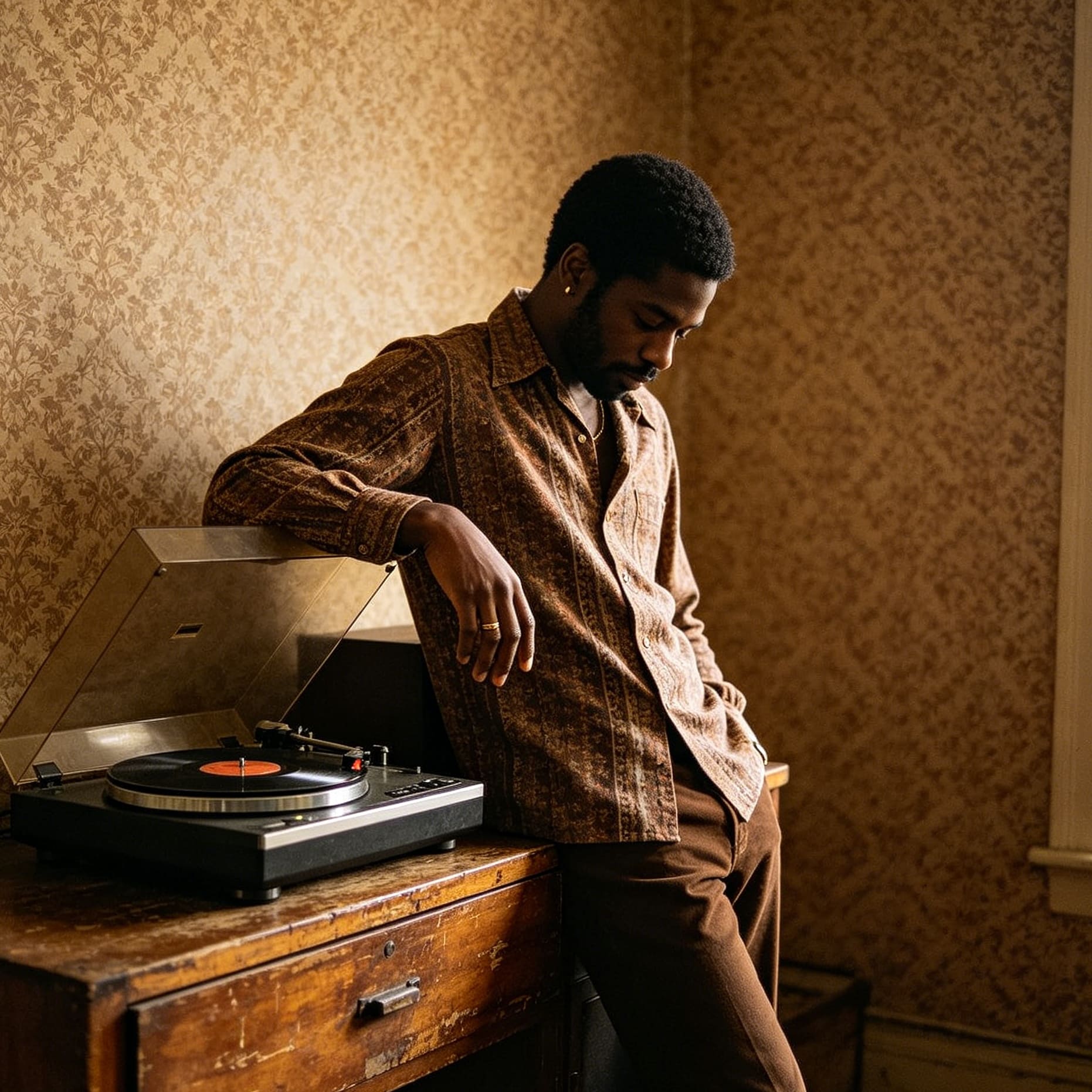
The term "AI baby son" refers to two distinct but related digital phenomena. First, it describes AI-powered image generators that analyze photos of two parents to predict the facial features of a potential male child. Second, it refers to a viral trend on platforms like TikTok and Instagram where hyper-realistic AI-generated babies are depicted speaking with adult voices or participating in complex discussions. While these tools offer a fascinating glimpse into a hypothetical future, they rely on advanced machine learning rather than biological genetics.
The Science of Synthesizing a Future Son
Predicting what a son might look like using artificial intelligence is a complex process that moves far beyond simple photo blending. Traditional "baby maker" apps of the past decade used basic transparency layering, which often resulted in blurry or unrealistic images. Modern AI baby generators, however, utilize deep learning models—specifically Generative Adversarial Networks (GANs)—to create high-fidelity portraits.
When a user uploads a photo of themselves and their partner, the AI begins by mapping hundreds of facial landmarks. For a "son" prediction, the algorithm specifically looks for sexually dimorphic traits. It analyzes the father's jawline, the mother's eye shape, and the nasal bridges of both parents. The AI doesn't just "mix" these features; it understands the underlying geometry of the human face.
In practice, the system generates a latent representation of both faces. It then traverses this latent space to find a point that represents a logical combination of the two, skewed toward male secondary sex characteristics as the child ages. This results in a "future son" image that possesses a recognizable familial resemblance while appearing as a unique individual.
Why Social Media Is Obsessed With AI Baby Sons
The fascination with AI-generated sons has exploded recently due to the rise of "talking baby" content. Creators use image generation tools like Midjourney to craft a portrait of a cherubic infant, then employ lip-syncing AI to animate the mouth to match a specific audio track.
These videos often feature a baby "son" delivering a philosophical rant, a stand-up comedy routine, or a deep-dive podcast analysis. The cognitive dissonance—seeing a baby with the voice and vocabulary of a seasoned adult—triggers a viral response. This trend has moved from simple humor to sophisticated storytelling, where AI sons are characters in ongoing digital narratives.
From a sociological perspective, this trend reflects our culture's growing comfort with synthetic media. We are no longer just looking at static photos of what our children might look like; we are interacting with dynamic, albeit artificial, personalities.
How to Get the Most Accurate AI Son Prediction
Achieving a high-quality result from an AI baby generator requires more than just a random selfie. Based on extensive testing with various generative models, the quality of the input data is the single most important factor.
Optimal Lighting and Background
AI models perform best when facial landmarks are clearly defined. Using photos taken in natural daylight, without harsh shadows, allows the AI to accurately map the depth of the eye sockets and the curve of the cheeks. A neutral background prevents the AI from accidentally incorporating environmental textures into the baby's skin or hair.
The Impact of Facial Expressions
For a realistic son prediction, both parents should maintain a neutral expression or a slight, closed-mouth smile. Extreme expressions, such as wide laughing or frowning, can distort the AI's understanding of the muscle structure. When the AI attempts to "de-age" these distorted features into a baby's face, the result often looks uncanny or unnatural.
Resolution and Angles
Photos should be high-resolution and taken head-on. If one parent provides a side profile and the other a front-facing shot, the AI may struggle to interpolate the three-dimensional structure of the child's face. Consistency in angles ensures the synthesized "son" has a symmetrical and believable appearance.
What Is the Technology Behind the Image?
To understand how a computer "imagines" your son, we must look at the architecture of modern vision models.
Convolutional Neural Networks (CNNs)
CNNs are the workhorse of facial recognition. They scan images in layers, first identifying simple edges, then shapes, and finally complex features like a human nose or ear. In the context of an AI baby son generator, CNNs are used to encode the parents' features into a mathematical format the computer can manipulate.
StyleGAN and Feature Blending
StyleGAN, developed by researchers in the late 2010s, revolutionized this field. It allows for "style mixing," where the coarse features (head shape) can come from one source, and fine features (eye color, skin texture) can come from another. When you request an AI son, the model is essentially performing a sophisticated style mix of the two parents' data points.
Diffusion Models
The latest generation of AI, such as Stable Diffusion or DALL-E, uses a process called "diffusion." The model starts with pure noise and gradually refines it into an image that matches a prompt (e.g., "a baby boy with blue eyes and his father's chin"). This allows for much more creative control, enabling users to see their son at different ages—from a newborn to a teenager.
The Ethical and Privacy Risks of AI Baby Generators
While generating an AI son is a fun and heartwarming activity for many, it is not without significant risks. Users must be aware of how their biometric data is being handled.
Biometric Data Storage
When you upload a high-resolution photo of your face, you are providing sensitive biometric information. Many free or low-cost AI baby generator websites do not have transparent privacy policies. There is a risk that these photos could be stored and used to train future facial recognition models without your explicit consent.
The "AI Slop" Phenomenon
As the internet becomes saturated with AI-generated imagery, the term "AI slop" has emerged to describe low-quality, repetitive, or misleading AI content. Some AI baby generators are simply wrappers for older, inferior technology designed to capture user data or drive ad revenue. It is crucial to distinguish between high-quality creative tools and data-harvesting "slop."
Psychological Impact
Seeing a hyper-realistic version of a future child can have an emotional impact. For couples struggling with fertility, these images can provide hope but also lead to potential distress if the AI-generated "dream" doesn't align with reality. It is important to remember that these are artistic interpretations, not biological guarantees.
What Are the Most Popular AI Baby Generator Tools?
Several platforms have become leaders in this niche, each offering different levels of control and realism.
Web-Based Consumer Tools
These are the most accessible. They usually require a simple upload of two photos and a small fee. They are optimized for speed and social media sharing. The results are generally "cute" and follow standard baby aesthetics, though they may lack the deep personality of more advanced models.
Prompt-Based Image Generators
For those with more technical inclination, using tools like Midjourney or Stable Diffusion allows for granular control. Instead of just blending two photos, a user can write a prompt such as: "A hyper-realistic portrait of a 2-year-old boy, blending the sharp jawline of [Parent A] and the curly hair of [Parent B], 8k resolution, cinematic lighting." This method often yields the most artistic and striking results.
Mobile Apps
Mobile apps are convenient but often the most aggressive regarding data collection. They frequently use pre-set filters to make the baby look "perfect," which can sometimes strip away the unique familial traits that make the prediction interesting in the first place.
How to Protect Your Privacy While Using AI Tools
If you want to see your AI son but are worried about your data, follow these best practices:
- Read the Terms of Service: Specifically look for sections on "Data Retention." If a site says they keep your photos indefinitely, avoid it.
- Use Reputable Platforms: Stick to well-known AI research labs or companies with a clear business model that doesn't rely on selling data.
- Opt for Local Processing: If you have a powerful computer, you can run models like Stable Diffusion locally. This means your photos never leave your hard drive.
- Low-Resolution Testing: Upload lower-resolution versions of your photos. Modern AI is often good enough to reconstruct features without needing the raw, high-megapixel original.
The Future of AI and Family Planning
We are moving toward a future where AI might be integrated into actual genetic counseling—though we are not there yet. Currently, AI baby generators are for entertainment. However, researchers are looking at how machine learning can help identify potential genetic markers in a more clinical setting.
In the near term, we can expect "AI baby son" technology to become even more immersive. Imagine a VR environment where you can interact with a 3D-generated version of your future child, or an AI that can predict how your son's voice might sound based on the vocal patterns of both parents.
Conclusion
The "AI baby son" trend is a fascinating intersection of technology, curiosity, and social media culture. Whether you are using an AI generator to spark a conversation with your partner about the future or you are laughing at a viral video of a talking infant, it is clear that AI has changed how we visualize the next generation. While these tools offer an incredible look at "what could be," they should be treated as creative experiments rather than crystal balls. As the technology continues to evolve, the balance between fun and privacy will remain the most important consideration for every digital parent.
Frequently Asked Questions
Can an AI baby generator accurately predict eye color?
AI generators can predict eye color based on the parents' photos, but it is not a genetic certainty. In biology, eye color is determined by multiple genes, and recessive traits can appear unexpectedly. AI simply follows the most likely visual blend.
Is there a free AI baby son generator?
Many apps offer a "free trial," but they often watermarked the result or require a subscription for high-definition downloads. Some open-source tools allow you to generate images for free if you have the technical knowledge to set them up.
Are these tools safe for my data?
It depends on the provider. Always check if the company deletes your photos after processing. Reputable services will state that they do not store your original images for more than 24 to 48 hours.
Why does my AI son look nothing like me?
This can happen if the input photos have poor lighting, if the parents have very different ethnic backgrounds that the AI struggles to balance, or if the model is using a "generic baby" template rather than true feature extraction.
Can I see what my son will look like as an adult?
Yes, some premium AI packages offer "aging" features that can project what the child might look like at ages 10, 20, or even 50. These are based on standard aging patterns and the parents' current adult features.