Home
Home
How Artificial Intelligence Drawing Generators Transform Simple Text Into High-Quality Sketches
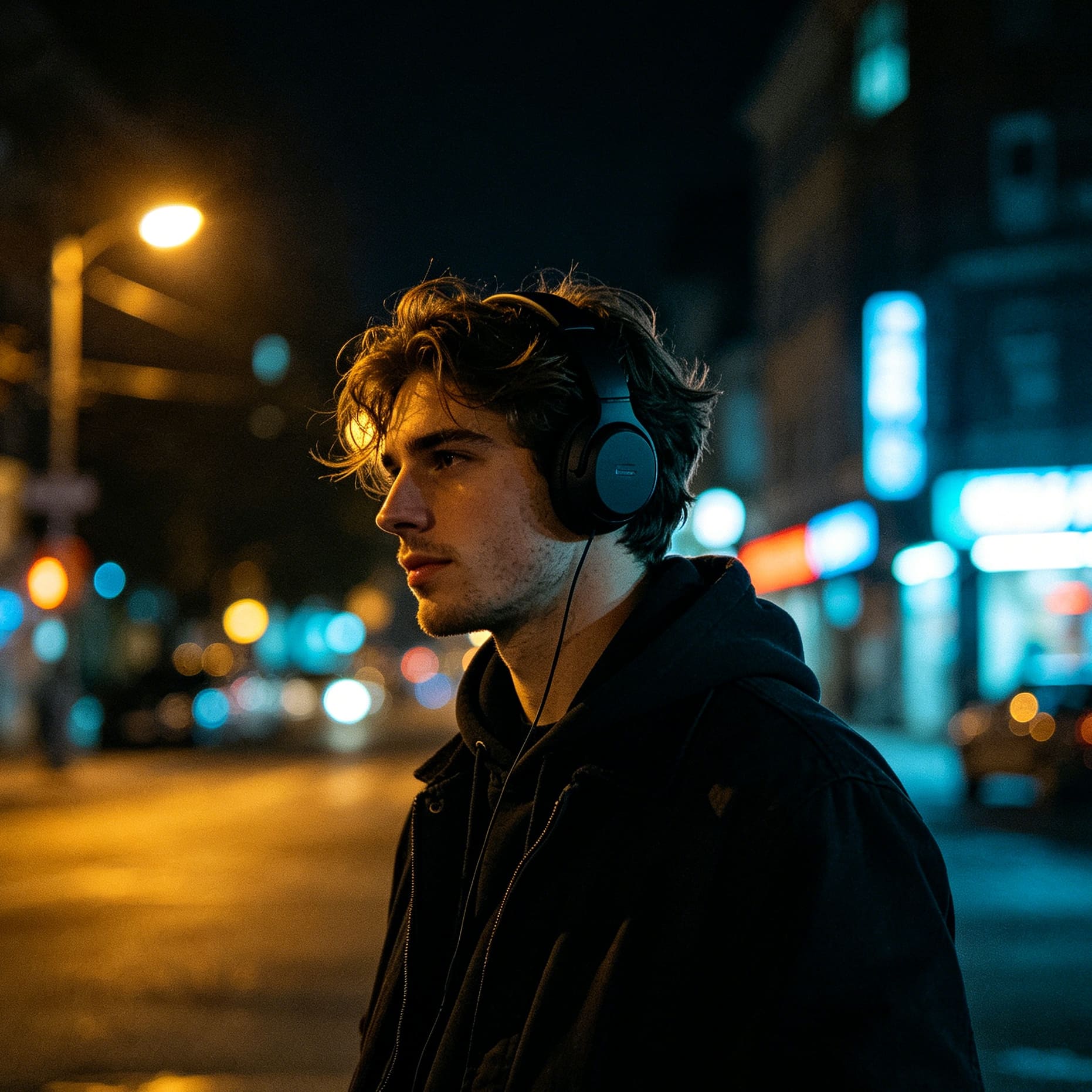
An artificial intelligence drawing generator is a specialized tool that utilizes machine learning algorithms to translate natural language descriptions into visual representations. Unlike traditional graphic design software that requires manual input through brushes and layers, these generators interpret the semantic meaning of a user's prompt to synthesize images from scratch. While often grouped under the broad category of "AI Art," a dedicated drawing generator frequently focuses on mimicking hand-drawn aesthetics, such as pencil sketches, ink renderings, and line art, providing a bridge between raw imagination and structured conceptual design.
The core technology behind these systems has shifted significantly over the last few years. Modern generators predominantly rely on diffusion models, which represent a breakthrough in how computers perceive and reconstruct visual data. By understanding the relationship between billions of image-text pairs, these tools allow anyone—regardless of their technical drawing skill—to produce professional-grade visuals in seconds.
Understanding the Mechanics of AI Drawing Generators
To appreciate the value of an artificial intelligence drawing generator, one must understand the underlying processes that occur between the moment a user hits "enter" and the appearance of the final image.
The Transition from GANs to Diffusion Models
Earlier iterations of AI image generation often used Generative Adversarial Networks (GANs). While innovative, GANs were difficult to train and often produced "hallucinations" or distorted figures. The industry has since pivoted to Diffusion Models.
In a diffusion model, the AI is trained by intentionally adding "noise" (random pixels) to an image until it becomes unrecognizable. The model then learns to reverse this process, effectively "cleaning" the noise to recover the original image. When you provide a prompt to an artificial intelligence drawing generator, the system starts with a field of pure noise and iteratively refines it, guided by your text, until a coherent drawing emerges. This iterative refinement is why modern AI drawings possess such high levels of detail and structural integrity compared to models from just a few years ago.
How Prompt Interpretation Shapes Visual Output
The intelligence of a drawing generator lies in its "latent space"—a multi-dimensional map where the AI stores its understanding of concepts. For instance, the AI doesn't just see the word "cat" as a string of letters; it associates it with a specific cluster of visual features: pointed ears, whiskers, and a tail.
When a user adds modifiers like "minimalist line drawing" or "charcoal sketch," the AI shifts its focus within that latent space toward specific textures and stroke styles. The sophistication of the Large Language Model (LLM) integrated into the generator determines how well it understands complex syntax, such as "a cat sitting on a fence in the style of a 19th-century botanical illustration."
Defining the Difference: AI Drawing vs. AI Art
While the terms are often used interchangeably, there is a functional distinction in professional workflows.
- AI Art Generators are typically used for "finished" pieces. These include hyper-realistic portraits, lush cinematic landscapes, and intricate digital paintings with complex lighting and shading.
- AI Drawing Generators focus on the "drafting" phase. They excel at producing minimalist sketches, ink outlines, and concept drawings that look hand-made. This is particularly useful for architects, fashion designers, and storyboard artists who need to visualize a concept quickly without the distraction of photo-realism.
Using an artificial intelligence drawing generator specifically for sketches allows for a "looser" feel, which is often more effective for brainstorming and early-stage presentations where a polished, final image might feel too rigid or premature.
Top Professional AI Drawing Generators in 2025
The market for generative AI is crowded, but a few platforms stand out for their specific ability to handle drawing and sketching tasks with high fidelity.
Adobe Firefly: The Leader in Conceptual Sketching
Adobe Firefly has carved out a niche by focusing on the needs of creative professionals. One of its most powerful features is the "Structure Reference" and "Style Reference" capability. In our testing, Firefly excels at maintaining the architectural integrity of a drawing while allowing for radical shifts in artistic style.
For example, if you upload a rough, hand-drawn layout of a room, Firefly can transform it into a clean, professional ink sketch or a watercolor concept. Because it was trained on Adobe Stock images and public domain content, it is also one of the most commercially "safe" options available, making it a favorite for corporate design teams.
Midjourney: Capturing Artistic Nuance and Texture
Midjourney remains the gold standard for artistic quality. While it is accessed through Discord, its latest versions have introduced web-based interfaces that make it more accessible. Midjourney’s strength lies in its "aesthetic personality."
When tasked with a prompt like "rough graphite sketch of a futuristic city," Midjourney produces results that capture the grit and smudging associated with real graphite. It understands the "imperfections" of human drawing—the varying pressure of a pencil or the bleed of ink on paper—better than almost any other model. However, it often requires more specific prompt engineering to move away from its default "epic" style and into a simpler drawing aesthetic.
DALL-E 3: Precision in Conversational Prompting
Integrated directly into ChatGPT, DALL-E 3 is the most user-friendly artificial intelligence drawing generator. Its primary advantage is its ability to follow complex instructions without requiring technical "prompt hacking."
If you ask DALL-E 3 to "draw a diagram of a bicycle but make it look like it was sketched by Leonardo da Vinci on aged parchment," it will follow those instructions with remarkable accuracy. It is particularly adept at including text within drawings, which was a significant weakness in earlier AI models. This makes it an excellent tool for quick mockups that require specific labels or annotations.
Stable Diffusion: Unmatched Control for Power Users
For those who want absolute control over the drawing process, Stable Diffusion is the tool of choice. Unlike the closed ecosystems of Adobe or OpenAI, Stable Diffusion can be run locally on a powerful PC.
Through the use of LoRAs (Low-Rank Adaptation) and ControlNet, users can force the AI to follow a very specific "pose" or "line art" structure. If you are a professional artist looking to integrate AI into your pipeline, Stable Diffusion allows you to "train" the AI on your own drawing style, ensuring that the generated sketches remain consistent with your personal brand.
Mastering the Craft: How to Write Effective Drawing Prompts
The quality of an output from an artificial intelligence drawing generator is directly proportional to the quality of the prompt. A vague prompt yields a generic result.
The Anatomy of a High-Performance Prompt
A professional-grade drawing prompt should follow a structured formula. Through extensive testing, we have found that the following structure consistently produces the best results:
- Subject: What is the main focus? (e.g., "A vintage typewriter")
- Style: What kind of drawing? (e.g., "Cross-hatched ink drawing," "Loose charcoal sketch")
- Composition/Angle: From where are we looking? (e.g., "Macro close-up," "Bird's eye view")
- Lighting/Mood: (e.g., "High contrast," "Soft morning light")
- Medium/Surface: What is it drawn on? (e.g., "On textured cream paper," "Digital vector lines")
Prompt Example: "A detailed architectural cross-section of a Victorian mansion, fine-liner ink style, clean white background, technical drafting aesthetic, high precision, 8k resolution."
Using Reference Images to Direct Style
Most high-end drawing generators now allow for "Image Prompting." This is a game-changer for consistency. By uploading a sketch you've already made and asking the AI to "generate a series of furniture pieces in this exact style," you can maintain a unified look across an entire project. This reduces the randomness often associated with AI and turns the generator into a sophisticated assistant rather than just a random image producer.
Practical Applications for Businesses and Creators
The adoption of artificial intelligence drawing generators is moving beyond novelty and into serious commercial use cases.
- Storyboarding for Film and Animation: Instead of spending days sketching out every frame, directors can use AI to generate "quick-and-dirty" storyboards to check pacing and composition before committing to expensive production phases.
- Fashion and Product Design: Designers use AI to rapidly iterate on silhouettes. A simple prompt can generate fifty different variations of a sneaker or a handbag in a sketch format, allowing the human designer to pick the best concepts for manual refinement.
- Marketing and Branding: Brands are increasingly using "hand-drawn" aesthetics in their social media content to appear more authentic and less corporate. AI generators allow them to produce these custom illustrations at scale.
- Education: Teachers can create custom coloring pages or visual aids for complex scientific concepts, tailored specifically to the lesson of the day.
Ethical Considerations and Intellectual Property
As artificial intelligence drawing generators become more prevalent, the conversation around ethics and copyright has intensified. It is important to understand the current landscape.
In many jurisdictions, including the United States, AI-generated content that does not have "significant human creative input" may not be eligible for copyright protection. This means that if you generate a drawing purely from a text prompt, you might not "own" that image in the traditional sense, and others could theoretically use it without your permission.
Furthermore, there is the ongoing debate regarding the training data. Most AI models were trained on billions of images from the internet, often without the explicit consent of the original artists. Platforms like Adobe are attempting to solve this by using licensed datasets, but for many creators, the ethical implications remain a point of concern. When using these tools for commercial work, it is advisable to use them as a starting point—adding your own manual edits and creative layers to ensure the final work is distinctively yours.
Conclusion
The rise of the artificial intelligence drawing generator represents a fundamental shift in the democratization of creativity. By removing the mechanical barrier of "learning how to draw," these tools allow individuals to focus on the more important aspects of art: concept, composition, and storytelling.
Whether you are using Adobe Firefly for a professional marketing deck, Midjourney for an artistic project, or DALL-E 3 for a quick brainstorming session, the key to success lies in understanding the nuances of the technology. As these models continue to evolve, the line between "human-made" and "AI-assisted" will continue to blur, leading to a new era of collaborative creativity where the only limit is the clarity of your description.
FAQ
What is the best free AI drawing generator?
While many professional tools require a subscription, Microsoft Designer (which uses DALL-E 3) and the free tier of Leonardo.ai offer excellent drawing capabilities at no cost. Adobe Firefly also offers a limited number of free "generative credits" each month.
Can AI drawing generators create vector files?
Most AI generators produce raster images (pixels). However, Adobe Firefly has a "Text to Vector Graphic" feature that specifically creates scalable vector drawings (SVG) that can be edited in Adobe Illustrator.
How do I make my AI drawings look more realistic?
To achieve a "realistic" hand-drawn look, include specific technical terms in your prompt, such as "hatching," "stippling," "varying line weight," or "graphite smudging." Mentioning the paper type, such as "cold-press watercolor paper," also adds a layer of realism to the texture.
Is it legal to sell AI-generated drawings?
Generally, yes, you can sell the images you generate, especially if you have a paid subscription to the service (like Midjourney or DALL-E). However, you should be aware that you may not be able to claim exclusive copyright over the image, meaning you cannot stop others from using it unless you have significantly modified it.
Will AI drawing generators replace human artists?
Rather than replacing artists, these tools are more likely to change the role of the artist. Much like the camera changed the role of portrait painters, AI is shifting the artist's focus from the execution of lines to the curation of ideas and the direction of complex visual systems.
-
Topic: AI ART GENERATORhttps://www.irjmets.com/upload_newfiles/irjmets70600175079/paper_file/irjmets70600175079.pdf
-
Topic: AI Drawing Generator: Turn Text & Photos to Sketch - Adobe Fireflyhttps://www.adobe.com/au/products/firefly/features/ai-drawing-generator.html
-
Topic: Generate Drawings - Free Online Drawing Generator - Adobe Fireflyhttps://www.adobe.com/ie/products/firefly/features/ai-drawing-generator.html