Home
Home
How Specific Language Shapes High Quality AI Image Prompts
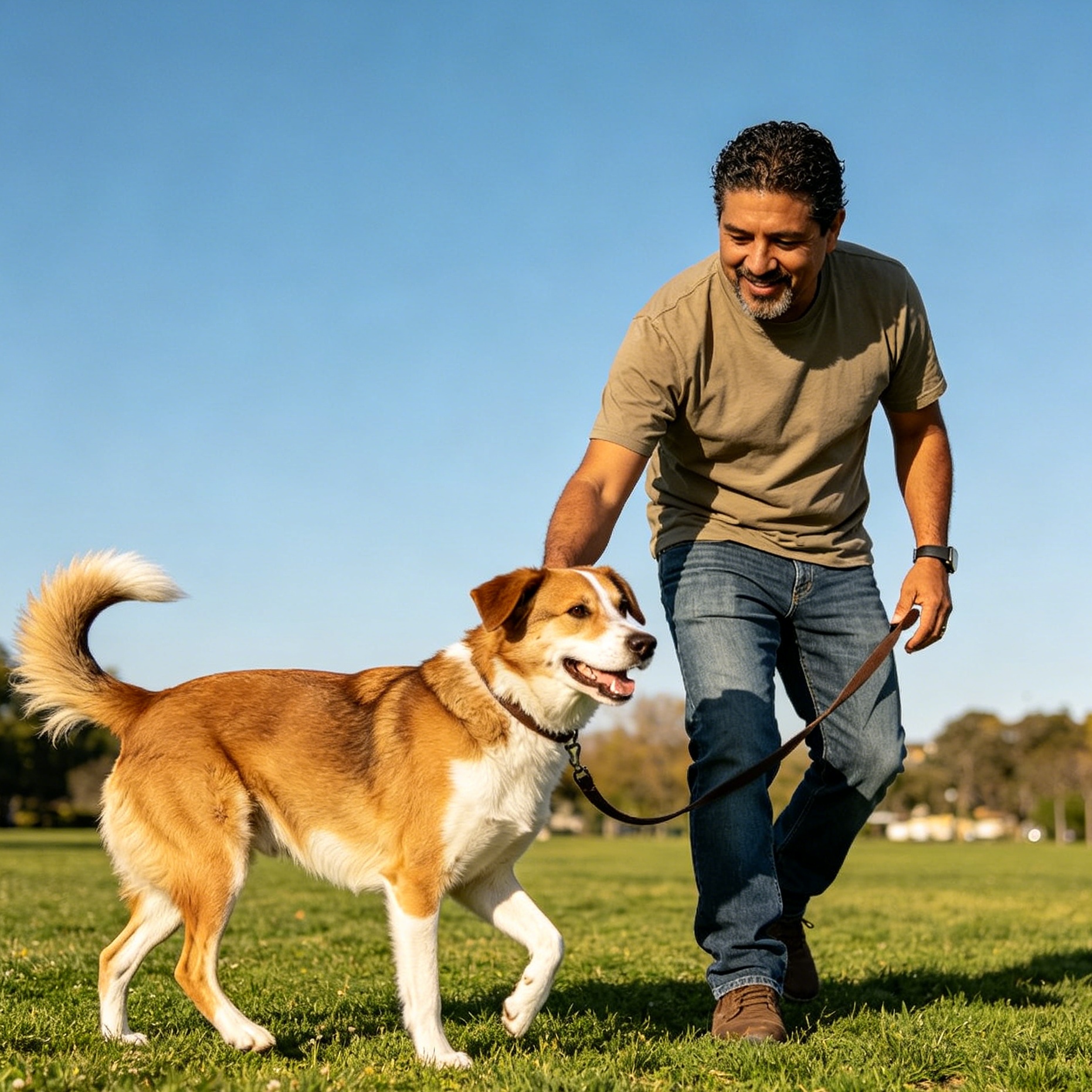
An image prompt is a textual description provided to an Artificial Intelligence (AI) model, such as Midjourney, DALL-E 3, or Adobe Firefly, to generate a corresponding visual output. It serves as the primary bridge between human intent and machine execution. At its simplest, an image prompt can be a single noun; at its most complex, it is a multi-layered set of instructions encompassing subject matter, artistic style, lighting conditions, camera specifications, and emotional mood.
The effectiveness of an image prompt is measured by its "descriptive density"—how well the chosen words guide the AI to minimize randomness and maximize precision. Modern generative models do not simply "understand" words; they map tokens to latent space representations learned during training. Therefore, using specific terminology from photography, art history, and optics provides a more direct path to high-quality results.
The Structural Framework of an Effective Image Prompt
To move beyond trial and error, a structured approach to prompt engineering is necessary. High-quality results are rarely the product of a single word. Instead, they arise from a balanced formula that provides the model with enough context to fill in the details while maintaining the core subject.
A reliable framework for constructing these prompts includes five essential pillars:
- The Subject: The primary focus (person, object, animal, or landscape).
- Action and Setting: What the subject is doing and where it is located.
- Art Style and Medium: The aesthetic genre or the physical material the "art" is made of.
- Lighting and Atmosphere: The quality, direction, and color of light.
- Composition and Camera: The perspective, lens type, and framing of the shot.
By systematically addressing each of these pillars, an image prompt evolves from a vague idea into a precise blueprint.
Defining the Subject with Granular Detail
The subject is the foundation. However, simply saying "a dog" is often insufficient. AI models have been trained on billions of images, and "dog" represents a massive average of every breed and state imaginable. To control the output, the prompt must define the subject’s characteristics, textures, and physical state.
In our internal testing with the latest diffusion models, adding material-specific adjectives significantly reduces "artifacting" or anatomical errors. For instance, instead of "a futuristic robot," a more effective prompt would be: "A humanoid robot with a chassis made of brushed titanium and translucent carbon fiber, showing internal glowing blue circuitry."
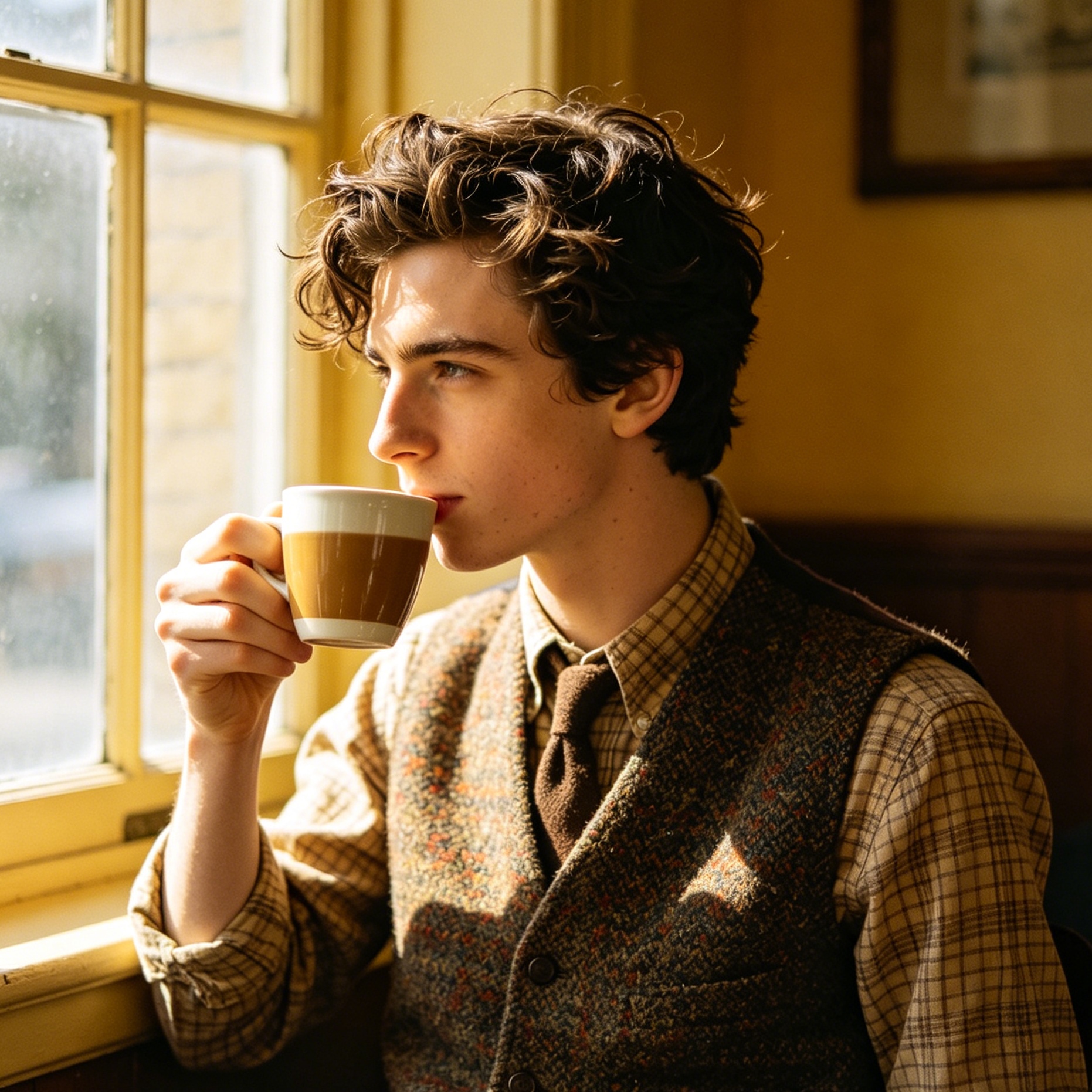
Specificity in the subject helps the model allocate its "attention" tokens correctly. When the subject is a person, professional prompters often specify age range, ethnic features, clothing textures (e.g., "knitted wool" vs. "patent leather"), and facial expressions (e.g., "pensive gaze," "stoic expression").
The Science of Lighting and Mood
Lighting is perhaps the most powerful tool for shaping the emotional resonance of an AI-generated image. In photography and cinematography, light defines form and depth. The same principle applies to image prompts.
Cinematic Lighting Techniques
Using cinematic terms directs the AI to simulate specific ray-tracing behaviors.
- Rembrandt Lighting: This creates a small inverted triangle of light on the subject's cheek, often used in portraits to create a sense of mystery and classical drama.
- Volumetric Fog: This adds "god rays" or visible beams of light passing through haze. It is essential for fantasy landscapes or noir-style cityscapes.
- Golden Hour vs. Blue Hour: "Golden hour" provides warm, soft, low-angle light typical of sunset, while "blue hour" provides a cool, ethereal, and tranquil atmosphere just after the sun disappears.
Artificial and Studio Lighting
For product photography or clean portraits, studio-specific terms are required.
- High-key Lighting: This results in bright, airy images with very few shadows, common in commercial photography.
- Backlighting (Rim Light): This places the light source behind the subject, creating a thin halo of light around the edges. It is highly effective for separating the subject from a dark background.
- Global Illumination: A term borrowed from 3D rendering, it tells the AI to calculate how light bounces off surfaces, resulting in more realistic shadows and reflections.
Mastering Composition and Camera Specifications
One of the most common mistakes in writing an image prompt is leaving the "camera" to chance. By default, most AI models favor a medium shot at eye level. To achieve a professional look, one must specify the lens, the angle, and the depth of field.
Perspective and Angles
The angle of the shot dictates how the viewer perceives the subject.
- Bird’s-eye View: Shot from directly above, useful for showing scale in architecture or landscapes.
- Low Angle (Hero Shot): Looking up at the subject to make them appear powerful, majestic, or intimidating.
- Dutch Angle: Tilting the camera to create a sense of unease, tension, or frantic movement.
Lens and Depth of Field
AI models are remarkably good at simulating optical physics if given the right keywords.
- 85mm Lens: The gold standard for portraits. It creates a natural compression of facial features and a beautiful "bokeh" (background blur).
- Wide-angle 14mm Lens: Ideal for capturing vast interiors or expansive mountain ranges, though it can introduce slight distortion at the edges.
- Macro Lens: Specifically used for extreme close-ups of insects, flowers, or textures, revealing details invisible to the naked eye.
- Shallow Depth of Field: This instruction forces the AI to focus sharply on the subject while blurring the foreground and background, creating a professional photographic feel.
Art Styles and Aesthetic Genre Modifiers
The "Art Style" part of the image prompt defines the world-building logic of the image. AI models are proficient at blending genres, but they require a clear anchor point.
Realistic and Photorealistic Styles
If the goal is to mimic reality, terms like "Hyper-realistic," "8k resolution," and "Film grain" are common. However, the most effective prompts for realism often reference specific film stocks. For example, "Shot on Kodak Portra 400" or "Fujifilm Velvia" will tell the AI to adopt specific color palettes and grain structures associated with those physical films.
Illustrative and Digital Art Styles
- Cyberpunk: Characterized by neon lights, rain-slicked streets, and high-tech/low-life aesthetics.
- Minimalist: Focuses on clean lines, negative space, and a limited color palette.
- Ukiyo-e: Traditional Japanese woodblock print style, featuring bold outlines and flat colors.
- Synthwave: 1980s retro-futurism with vibrant purples, pinks, and digital grids.
When exploring art styles, it is often helpful to describe the medium rather than just the style. For example, "oil painting with heavy impasto strokes" provides more tactile information to the AI than just "painting."
How Specificity Transforms Results: A Practical Comparison
To understand the impact of language, consider the evolution of a single concept.
- Base Prompt: "A dragon in a forest."
- Result: A generic, often cartoonish dragon standing among green trees. The lighting is flat, and the composition is a standard wide shot.
- Improved Prompt: "A cinematic wide shot of a magnificent dragon with iridescent emerald scales perched atop an ancient, moss-covered tree in an enchanted forest."
- Result: The subject is now defined by material (iridescent scales) and state (perched). The environment has specific textures (moss-covered).
- Master-level Prompt: "A moody, cinematic film still of an ancient dragon with glowing amber eyes and cracked obsidian scales, resting in a dense redwood forest. Soft, volumetric sunlight filtering through the canopy, dust motes dancing in the air. Shot on 35mm lens, f/2.8 for shallow depth of field, hyper-realistic textures, 8k resolution, dark fantasy aesthetic."
- Result: This prompt controls the lighting (volumetric), the camera (35mm f/2.8), and even the atmospheric details (dust motes). The resulting image will look like a frame from a high-budget feature film.
The Role of Negative Prompts and Parameters
While most of an image prompt is dedicated to what you want, sophisticated users also control what they don't want.
Negative Prompts are a secondary set of instructions used to steer the AI away from common pitfalls. Standard negative prompts often include "extra fingers," "blurry," "distorted anatomy," or "watermark." By explicitly listing these, the model’s generation process penalizes those features during the diffusion steps.
Technical Parameters also play a crucial role. For example, in Midjourney:
- Aspect Ratio (
--ar): Changing the canvas from a square (1:1) to a cinematic widescreen (21:9) or a portrait (9:16) for social media. - Stylize (
--s): Controlling how much the AI applies its own artistic flair versus following the prompt literally. - Chaos (
--c): Increasing the variation between the initial four images generated. - Image Weight (
--iw): When using an image as a prompt (Image-to-Image), this parameter determines how much the AI should rely on the reference image versus the new text instructions.
Using Images as Prompts (Image-to-Image)
Beyond text, many creators use existing images to guide the AI. This is known as an image prompt in a literal sense. By providing a URL or uploading a file, the AI analyzes the "latent features"—the colors, composition, and shapes—and uses them as a starting point.
When combining an image prompt with a text prompt, the text should describe the desired changes or the specific details you want to keep. For instance, if you provide a photo of a mountain range and add the text "in the style of a futuristic neon city," the AI will attempt to map the geometry of the mountains onto the structures of the city.
Advanced Strategies for Prompt Refinement
Writing the perfect image prompt is an iterative process. It is rare to get the exact desired result on the first attempt. Professional prompt engineers typically follow a three-step cycle:
- The Foundation: Start with the core subject and a basic style. Generate a set of images to see how the AI interprets the basic concept.
- The Layering: Add lighting, camera angles, and specific material descriptions. If the AI is missing a certain color, increase the emphasis on that color.
- The Optimization: Use specific technical parameters to lock in the aspect ratio and stylization level. If the image is "too messy," simplify the language. If it is "too plain," add more descriptive adjectives.
It is a common misconception that longer prompts are always better. In reality, most models have a token limit (often around 75 to 480 tokens). Once this limit is exceeded, the AI begins to lose track of the earlier instructions. The goal is to be concise yet specific.
Why Contextual Specificity Matters for AI Models
AI models do not possess a conscious imagination; they are statistical engines. When a prompt is vague, the model fills the gaps with the most statistically probable patterns found in its training data. This is why "a house" usually looks like a generic suburban home.
Contextual specificity forces the AI to look for less common patterns. By specifying that the house is "an Icelandic turf house during a blizzard," you are forcing the model to access a much more specific and interesting subset of its training data. This is the secret to creating images that stand out and look unique.
The Future of Image Prompting
As models evolve, they are becoming better at understanding "natural language." We are moving away from comma-separated "tag clouds" (e.g., "dragon, forest, cinematic, 8k") toward full, descriptive sentences. Modern models like DALL-E 3 and Gemini’s Imagen series are designed to handle complex logic, such as "a red ball on top of a blue cube, which is sitting on a wooden table."
However, even as models get smarter, the core principles of art and photography will remain the same. A user who understands how a 50mm lens works or what "Chiaroscuro" means will always have a significant advantage over a user who relies on generic terms.
Summary
Mastering the image prompt is about learning a new language—a hybrid of art history, photography, and technical engineering. By focusing on the subject, setting, style, lighting, and composition, any creator can significantly improve the quality and consistency of their AI-generated visuals. The most important lesson is to be specific: don't just ask for a "beautiful sunset"; ask for "golden hour light reflecting off damp cobblestone streets in a 19th-century Parisian alleyway."
FAQ
What is the most important part of an image prompt? The subject is the most important part, as it defines what the AI will build first. However, the "Art Style" is what gives the image its character and professional finish.
How long should an image prompt be? A good length is typically between 30 and 70 words. Anything shorter might be too vague, and anything much longer might lead to the AI ignoring some of your instructions due to token limits.
Can I use an image prompt to change my own photos? Yes. By using your photo as an "image prompt" (Image-to-Image) and adding text instructions, you can ask the AI to change the style, lighting, or background of your original image while keeping the basic structure intact.
Do AI models understand grammar? While newer models are better at natural language, they still respond most strongly to "keywords." It is often better to use descriptive phrases than complex sentence structures.
Why does my AI image have weird artifacts like extra fingers? This is a common issue with diffusion models. It usually happens when the prompt is too vague or when the model is trying to blend too many conflicting styles. Using negative prompts and specifying "anatomically correct" can help, though the models themselves are also improving in this area.
What is a "seed" in image prompting? A seed is a number that determines the initial "noise" from which an image is generated. If you use the same prompt and the same seed, you will get the exact same image. This is useful for making small, iterative changes to a design.
-
Topic: AI image prompt examples - Adobe Fireflyhttps://www.adobe.com/hk_en/products/firefly/ai-generated-examples/image-prompts.html
-
Topic: Generate images using Imagen | Gemini API | Google AI for Developershttps://ai.google.dev/gemini-api/docs/imagen?authuser=3
-
Topic: Image Prompts – Midjourneyhttps://docs.midjourney.com/hc/en-us/articles/32040250122381-Image-Prompts#:~:text=Using%20Image%20Prompts,-On%20Web&text=icon%20in%20the%20Imagine%20bar,it%20as%20an%20Image%20Prompt.