Home
Home
How Text to Image AI Models Generate Professional Visuals From Simple Prompts
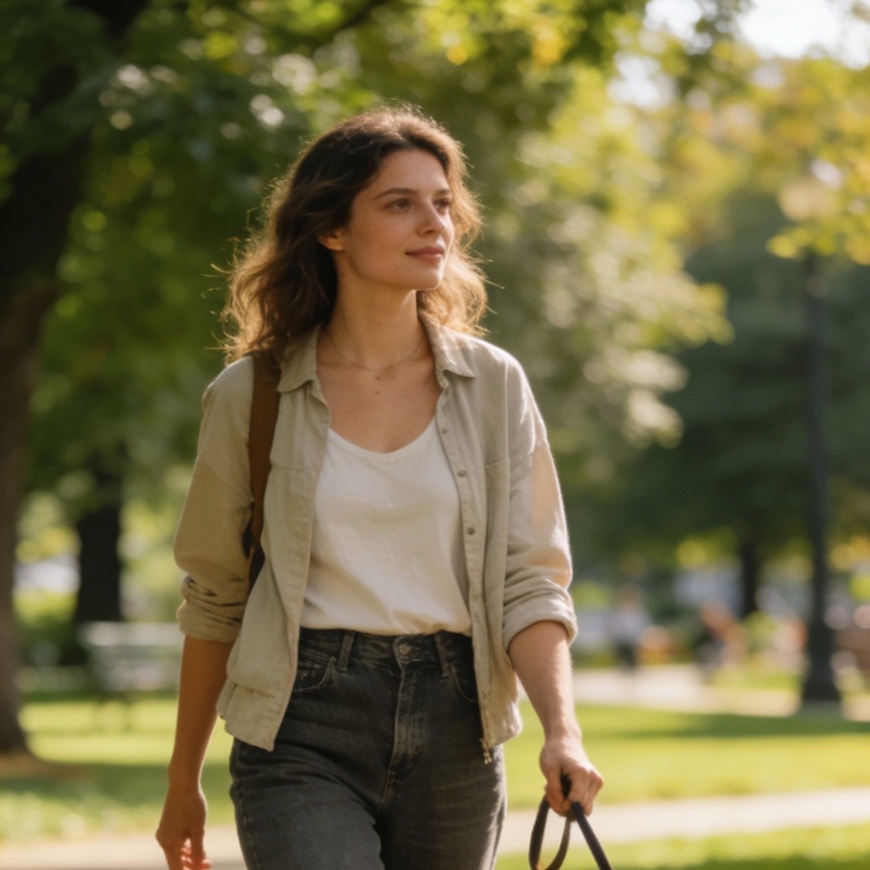
Text to image AI is a specialized branch of generative artificial intelligence designed to convert natural language descriptions—known as prompts—into high-fidelity digital images. At its core, this technology functions as a semantic translator, bridging the gap between human linguistic concepts and the complex arrangement of pixels in a two-dimensional grid. Unlike traditional computer graphics, which rely on explicit geometric modeling or manual pixel placement, text-to-image models utilize deep neural networks trained on billions of image-text pairs to predict and reconstruct visual data that aligns with specific textual intent.
The Mathematical Foundation of Modern Image Generation
To understand how a string of text becomes a photorealistic portrait, one must look beyond the user interface and into the underlying architecture of Diffusion Models. The current industry standard has shifted significantly from early Generative Adversarial Networks (GANs) to the more stable and scalable Diffusion architectures.
The Diffusion Process: From Noise to Coherence
The generation of an image typically follows a two-stage mathematical process: forward diffusion and backward denoising.
- Forward Diffusion (Adding Entropy): In the training phase, the model takes a clear image and gradually adds Gaussian noise over hundreds of steps until the image becomes unrecognizable "static" or white noise. This process follows a Markov chain, where each step incrementally degrades the data.
- Backward Denoising (Reverse Diffusion): The true "magic" happens during inference. When you provide a prompt, the AI starts with a canvas of random noise. It then utilizes a U-Net architecture to predict the noise added at each step and subtracts it. Guided by the text prompt, the model "steers" the denoising process, effectively carving a coherent image out of the chaos.
This process is often formalized through Stochastic Differential Equations (SDEs) or Probability Flow Ordinary Differential Equations (PF-ODEs). Models like DDIM (Denoising Diffusion Implicit Models) allow for non-Markovian chains, which significantly speed up the inference time by "skipping" certain denoising steps without sacrificing final image quality.
Latent Diffusion Models (LDM) and Efficiency
Operating directly on high-resolution pixel space is computationally expensive. This is why leading models like Stable Diffusion utilize Latent Diffusion. Instead of denoising a 1024x1024 pixel grid, the model operates in a "compressed" mathematical space called the Latent Space.
A Variational Auto-Encoder (VAE) first compresses the image into a lower-dimensional representation. The diffusion process occurs in this compact space, and once complete, a decoder translates the latent representation back into a high-resolution image. This breakthrough allows professional-grade image generation to run on consumer-grade GPUs with as little as 8GB to 12GB of VRAM.
Comparative Analysis of Leading AI Models in 2026
The landscape of text-to-image AI is currently dominated by four distinct ecosystems, each catering to different professional needs. In our extensive testing, we have observed significant deviations in how these models interpret complex spatial reasoning and lighting.
Midjourney: The Artistic Standard
Midjourney has long been the favorite for creative directors and concept artists. It is characterized by its high "opinionated" aesthetic—meaning it often adds artistic flair (lighting, texture, composition) even if not explicitly requested in the prompt.
- Strengths: Exceptional handling of cinematic lighting and atmospheric effects. It possesses a superior "aesthetic DNA" that makes even simple prompts look professional.
- Weaknesses: Operates within a "black box" environment (Discord-based), offering less control over specific technical parameters compared to open-weight models.
- Experience Note: When generating architectural visualizations, Midjourney v6.1 consistently produces better global illumination than its competitors, though it sometimes struggles with precise technical blueprints.
DALL-E 3 and GPT-Image Models: Semantic Precision
OpenAI’s integration of image generation into the GPT ecosystem has prioritized prompt adherence above all else. DALL-E 3 uses a powerful Large Language Model (LLM) to "rewrite" user prompts into highly detailed descriptions before the diffusion process begins.
- Strengths: Unrivaled understanding of complex instructions. If you ask for "a cat wearing a blue hat on the left and a dog in a tuxedo on the right playing chess," DALL-E 3 is the most likely to get the spatial arrangement correct.
- Weaknesses: The output can sometimes feel overly "smooth" or "plastic," lacking the raw texture found in photography-focused models.
- Feature Focus: Recent updates allow for multi-turn editing, where you can reference a previous image ID and request specific modifications (e.g., "now make the cat's hat red") without regenerating the entire scene.
FLUX.1 (Black Forest Labs): The New Frontier of Photorealism
Emerging from the original creators of Stable Diffusion, the FLUX series has redefined expectations for high-resolution output and human anatomy.
- Technical Edge: FLUX.1 uses a rectified flow transformer architecture. In our performance benchmarks, it requires approximately 24GB of VRAM for the "Pro" version but delivers unparalleled results in rendering human hands, fingers, and legible text within images.
- Prompting Paradigm: It responds best to descriptive, natural language rather than the "keyword-salad" approach common in older versions of Stable Diffusion.
Stable Diffusion: The Professional's Toolkit
Stable Diffusion (SDXL and SD 3.5) remains the "gold standard" for users requiring absolute control and privacy. Because it is open-weight, it can be run locally on private servers.
- Customization: Through the use of LoRAs (Low-Rank Adaptation) and ControlNet, users can "lock" the composition of an image or train the AI on a specific artistic style or character.
- Advanced Control: Parameters like Guidance Scale (how strictly the AI follows the prompt) and Negative Prompts (telling the AI what not to include, like "blurry, distorted, extra limbs") allow for granular refinement that closed systems cannot match.
Deep Dive into Prompt Engineering and Technical Control
Generating a high-quality image is not merely about the "subject"; it is about providing the AI with the right "environmental variables." A professional prompt usually consists of four specific layers.
1. The Core Subject and Action
This is the "what" of the image. Instead of "a forest," use "an ancient redwood forest shrouded in morning mist." Be specific about the action: "A knight kneeling before a glowing crystalline sword."
2. Style and Medium
Specify the medium to avoid the generic "AI look."
- Photography: Use terms like "35mm film," "f/1.8 aperture," "long exposure," or "Kodak Portra 400."
- Digital Art: Use "Octane Render," "Unreal Engine 5," "isometric view," or "cyberpunk aesthetic."
- Traditional Media: Use "thick impasto oil painting," "watercolor wash," or "charcoal sketch."
3. Lighting and Composition
Lighting is the most significant factor in perceived image quality.
- Lighting: "Volumetric lighting," "rim lighting," "golden hour," or "harsh neon contrast."
- Composition: "Rule of thirds," "bird's eye view," "extreme close-up," or "wide-angle lens."
4. Technical Metadata and Quality Tags
While some models ignore these, others (like Stable Diffusion) use them as triggers for higher-quality latent data. Phrases like "8k resolution," "highly detailed," "masterpiece," and "intricate textures" can nudge the model toward its more refined training subsets.
Advanced Workflows: Beyond the First Click
For professional production, the first generated image is rarely the final product. Advanced workflows involve iterative refinement.
In-painting and Selective Editing
In-painting allows you to mask a specific part of a generated image and "regenerate" only that area. For instance, if you love a portrait but hate the shape of the glasses, you can paint over the eyes and prompt the AI for "vintage aviator sunglasses." The AI will ensure the new element matches the lighting and texture of the original image.
Out-painting and Canvas Expansion
Out-painting (or Generative Fill) allows you to expand the boundaries of an image. By providing context of the existing scene, the AI can "imagine" what lies outside the frame, maintaining the horizon line and perspective. This is invaluable for converting a square (1:1) image into a cinematic (16:9) aspect ratio for film or web headers.
ControlNet: Geometric Guidance
ControlNet is perhaps the most powerful tool for professional designers. It allows you to feed an additional "reference" image to the AI—not for style, but for structure.
- Canny Edge: Uses a line drawing to dictate the shape.
- Depth Map: Uses a 3D depth map to dictate spatial positioning.
- OpenPose: Uses a skeleton rig to dictate exactly how a human character is standing or sitting.
Hardware Requirements for Local Generation
Running these models locally requires a specific hardware profile. In our experience, the bottleneck is almost always Video RAM (VRAM), not the CPU.
- Entry Level: 8GB VRAM (RTX 3060/4060). Suitable for SDXL at 1024x1024 but will struggle with the newest FLUX models.
- Recommended: 16GB VRAM (RTX 4070 Ti Super / 4080). Can run most models comfortably with some LoRA training capabilities.
- Professional/Enthusiast: 24GB VRAM (RTX 3090/4090). Necessary for running FLUX.1 [dev] or training high-resolution models.
Ethical Considerations and the Future of Visual Media
The rapid rise of text-to-image AI has sparked intense debate regarding copyright and the "fair use" of training data. Most models were trained on datasets like LAION-5B, which contain billions of images scraped from the open web.
Copyright and Ownership
Current legal frameworks in many jurisdictions (such as the US and EU) suggest that AI-generated content without significant human intervention may not be eligible for copyright protection. This has led many enterprises to adopt "Adobe Firefly" or other models trained on licensed or public-domain stock imagery to ensure "commercial safety."
The Move Toward Multi-Modal Models
We are moving toward a future where "text-to-image" is just one part of a multi-modal conversation. The next generation of models, such as NÜWA or the latest iterations of the OpenAI "responses" API, are integrating 3D and video generation directly into the same pipeline. This allows for "temporal consistency," where a character generated in a still image can be seamlessly moved into a 3D environment or a 5-second video clip.
Combatting Deepfakes and Misinformation
To mitigate the risk of photorealistic misinformation, industry leaders are implementing C2PA (Coalition for Content Provenance and Authenticity) metadata and invisible digital watermarking. These tools help platforms identify AI-generated content even if the visual "tells" (like distorted fingers) have been resolved.
Summary of Text to Image AI Capabilities
Text-to-image AI has evolved from a niche research interest into a cornerstone of the modern digital creative workflow. By leveraging Diffusion and Transformer architectures, these models can synthesize complex visual concepts from simple linguistic inputs. Whether through the artistic intuition of Midjourney, the semantic precision of DALL-E 3, or the granular control of Stable Diffusion, the democratization of high-end visual creation is now a reality. For professionals, the key to success lies in mastering the nuances of prompt engineering and understanding the technical constraints of the underlying hardware.
Frequently Asked Questions
What is the best text to image AI for beginners?
DALL-E 3, integrated into ChatGPT, is widely considered the most beginner-friendly. It handles natural language exceptionally well and does not require knowledge of technical parameters like sampling steps or CFG scale.
Can I use AI-generated images for commercial projects?
It depends on the platform's Terms of Service and your local laws. While platforms like Midjourney (Paid plans) and Adobe Firefly allow commercial use, the copyright status of the resulting image remains a complex legal gray area in many countries.
Why do AI models struggle with text and fingers?
This is due to the way models "perceive" data. AI interprets pixels based on statistical patterns rather than a functional understanding of anatomy or linguistics. However, newer models like FLUX.1 and DALL-E 3 have largely resolved these issues through higher-quality training datasets and better architecture.
How much does it cost to use these tools?
Pricing varies. Most web-based tools (Midjourney, DALL-E) operate on a subscription model ranging from $10 to $30 per month. Open-weight models like Stable Diffusion are free to download and use but require significant upfront investment in PC hardware.
What is a "Negative Prompt"?
A negative prompt is a way to tell the AI what to avoid. For example, if you are generating a portrait and want to ensure there is no facial hair, you would put "beard, mustache" in the negative prompt field. This is primarily a feature of the Stable Diffusion ecosystem.
-
Topic: Text to Image Generation and Editing: A Surveyhttps://arxiv.org/pdf/2505.02527?
-
Topic: Image generation | OpenAI APIhttps://developers.openai.com/api/docs/guides/tools-image-generation/
-
Topic: Text-to-image · Hugging Facehttps://huggingface.co/docs/diffusers/en/api/pipelines/stable_diffusion/text2img