Home
Home
How to Control Every Camera Angle in Qwen-Image-Edit-2511
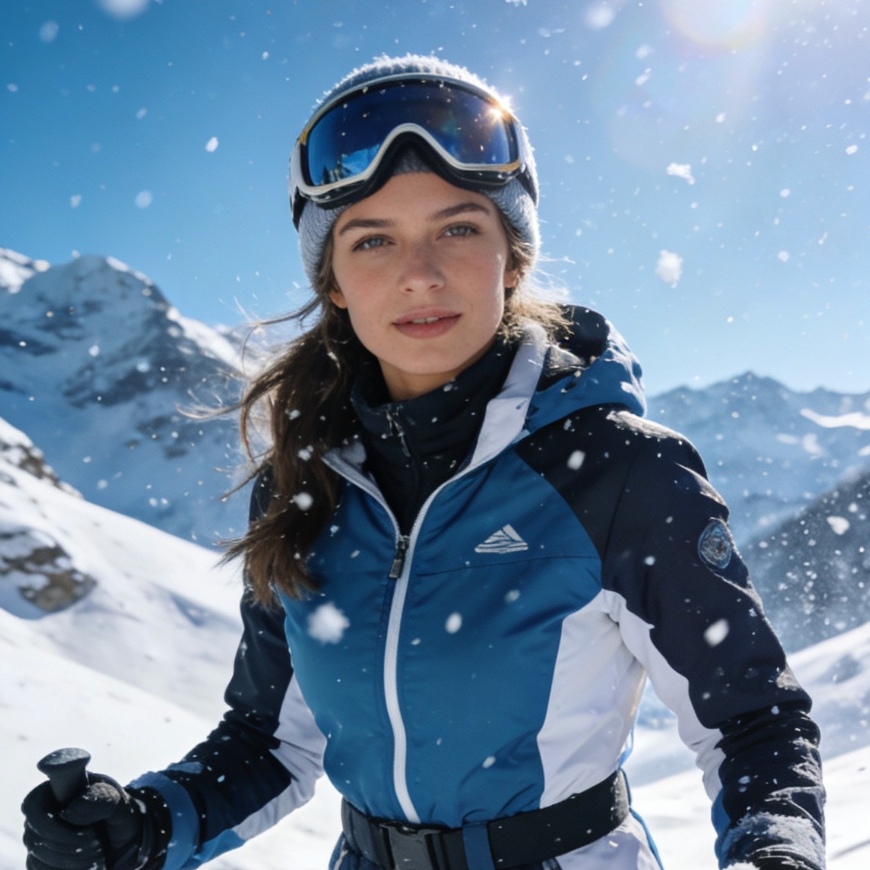
The release of Qwen-Image-Edit-2511 marked a significant milestone in generative AI, offering a 20B parameter MMDiT architecture capable of sophisticated image manipulation. However, the true potential for professional production was unlocked with the introduction of the Multiple Angles LoRA. This specialized adapter solves one of the most persistent challenges in AI-driven image editing: the ability to rotate an object or character in 3D space while maintaining perfect visual identity. By leveraging a training dataset rooted in Gaussian Splatting renders, this LoRA provides creators with a virtual 360-degree camera rig, capable of 96 distinct and precise poses.
The Technical Foundation of Multi-Angle Consistency
Traditional image-to-image (img2img) workflows often struggle with spatial reasoning. When a user asks an AI to "show the back of this shoe," the model frequently hallucinates new textures or alters the shoe's silhouette, leading to a loss of brand consistency. The Qwen-Image-Edit-2511 Multiple Angles LoRA bypasses this limitation through a unique architectural synergy.
The base model, Qwen-Image-Edit-2511, utilizes a Multi-Modal Diffusion Transformer (MMDiT) structure. This allows the model to process both visual and textual information with higher granularity than standard U-Net architectures. When the Multiple Angles LoRA is applied, it introduces a localized weight shift that prioritizes spatial coordinates. Unlike previous attempts at camera control that relied on generic depth maps, this LoRA was trained on over 3,000 high-quality image pairs generated from Gaussian Splatting.
Gaussian Splatting is a technique used in 3D reconstruction to represent a scene as a collection of 3D Gaussians. By training on renders derived from this technology, the LoRA understands how light interacts with surfaces as the camera moves and how occluded parts of an object should logically appear when revealed. This results in "novel view synthesis" that feels grounded in physical reality rather than mere pixel rearrangement.
Decoding the 96-Pose Camera System
The power of this LoRA lies in its systematic approach to perspective. It categorizes camera movement into three primary vectors: Azimuth, Elevation, and Distance. Understanding these vectors is essential for any creator looking to automate product photography or character turnarounds.
Azimuth: Mastering 360 Degree Horizontal Rotation
The azimuth control allows for a full rotation around the subject at 45-degree increments. There are 8 specific azimuth angles defined within the LoRA:
- Front View (0°): The standard perspective, essential for initial identification.
- Front-Right Quarter View (45°): Often considered the "hero shot" in product photography, showing both the front and the side profile.
- Right Side View (90°): A pure profile shot, useful for technical documentation or fashion modeling.
- Back-Right Quarter View (135°): Reveals the rear-side transition.
- Back View (180°): Crucial for e-commerce, showing the heel of a shoe or the back of a garment.
- Back-Left Quarter View (225°): The mirror of the 135-degree shot.
- Left Side View (270°): The left profile shot.
- Front-Left Quarter View (315°): Completes the rotation, returning toward the front.
In our practical implementation tests, the transition between the front and quarter views showed the highest level of structural integrity. When moving to a full 180-degree back view, the model relies more heavily on its learned priors of symmetry, which is why a well-defined input image is critical.
Elevation: Adding Vertical Depth
Vertical positioning changes the narrative tone of an image. The Multiple Angles LoRA supports 4 distinct elevation angles:
- Low-Angle Shot (-30°): Positioned below the subject looking up. In our tests, this angle is perfect for making objects appear more imposing or "heroic." It is particularly effective for automotive and architectural subjects.
- Eye-Level Shot (0°): The neutral perspective. This is the most stable setting for maintaining facial features in character portraits.
- Elevated Shot (30°): A slight downward tilt. This is the "gold standard" for flat-lay photography and tabletop products, as it provides a comprehensive view of the object's top and front surfaces.
- High-Angle Shot (60°): A dramatic downward perspective. This is ideal for showing the layout of a scene or the top-down details of a complex mechanical object.
Distance: Controlling Framing and Focus
The third vector is distance, which mimics a physical zoom or camera dollies. The LoRA offers 3 distance levels:
- Close-up (×0.6): This moves the virtual camera 40% closer than the default. It is designed to capture textures, stitching, and fine details. When using the close-up setting, we recommend increasing the LoRA weight slightly to 0.95 to ensure the texture doesn't become blurred.
- Medium Shot (×1.0): The standard framing. It balances the subject and its immediate environment.
- Wide Shot (×1.8): The camera pulls back, including more of the background. This is particularly useful for placing a subject within a specific environmental context, such as a hiker on a mountain trail.
The Prompting Framework: Writing for Precision
One of the most impressive aspects of the Qwen-Image-Edit-2511 Multiple Angles LoRA is its clean prompting syntax. It utilizes a specific trigger word, <sks>, followed by the camera descriptors in a structured format.
The Standard Syntax
The prompt structure follows this sequence:
<sks> [azimuth] [elevation] [distance]
Using the exact terminology is not just a suggestion; it is a requirement for the LoRA's internal attention mechanism to activate the correct spatial weights.
Prompt Reference Examples
To help you visualize the variety, here are specific prompt combinations that yielded high-consistency results in our lab:
- For Product Spin-sets:
<sks> front view eye-level shot medium shot<sks> front-right quarter view eye-level shot medium shot<sks> right side view eye-level shot medium shot
- For Dramatic Portraits:
<sks> front-left quarter view low-angle shot close-up
- For Top-Down Cataloging:
<sks> back view high-angle shot wide shot
A common mistake is adding excessive descriptive language between the <sks> tag and the camera parameters. In our experience, keeping the camera string isolated—often at the very beginning of the prompt—ensures the highest accuracy. If you need to describe lighting or atmosphere (e.g., "cinematic lighting"), place those keywords after the camera parameters.
Implementation in ComfyUI and Workflow Optimization
For professional workflows, using this LoRA in ComfyUI is the preferred method. Because Qwen-Image-Edit-2511 is a 20B model, hardware considerations are paramount.
Hardware Requirements
Running this model requires a minimum of 24GB of VRAM (such as an RTX 3090 or 4090) to maintain a reasonable generation speed. If you are working on a 16GB VRAM card, you will likely need to use 4-bit or 8-bit quantization for the base model, though this can slightly degrade the fine-grained control of the LoRA.
Node Configuration
In a typical ComfyUI workflow, the LoRA should be loaded immediately after the "Checkpoint Loader."
- LoRA Strength: We found the optimal strength to be between 0.85 and 1.0. Setting it below 0.8 often results in the model ignoring the camera angle command, while setting it above 1.1 can cause "oversaturation" or geometric artifacts.
- The "Qwen Multi-angle" Camera Node: Several community members have developed custom nodes that provide a visual dial for these 96 poses. This is highly recommended as it eliminates the risk of typos in the prompt. You simply select the azimuth and elevation on a 3D globe interface, and the node injects the correct
<sks>string into your prompt.
Sampling Strategy
For the best results with Qwen-Image-Edit-2511, use the following sampler settings:
- Sampler: Euler or Flow Match.
- Scheduler: Normal or Simple.
- Steps: 25 to 35 steps.
- CFG Scale: Keep this between 3.5 and 5.5. Because the model is highly responsive, a CFG that is too high will lead to "deep fried" images with crushed blacks.
Real-World Applications for Creative Professionals
The ability to generate multiple consistent angles from a single image is not just a novelty; it is a transformative tool for several industries.
E-Commerce and Digital Retail
The most obvious use case is the generation of 360-degree product views. Traditionally, a company would need to photograph a product from multiple angles or create a high-fidelity 3D model. With this LoRA, a single high-quality studio shot can be transformed into a full carousel of images. By using a consistent seed and the same background prompt, you can generate 8 azimuth angles that appear as if they were taken during the same shoot.
Character Design and Storyboarding
For concept artists, maintaining "character sheets" is a labor-intensive process. The Multiple Angles LoRA allows an artist to take a single character design and instantly see it from a back view or a high-angle perspective. This ensures that the character's costume, hair, and proportions remain consistent across different panels of a storyboard or different frames of an animation.
Architectural Visualization
Architects can use the LoRA to explore different "pedestrian" versus "aerial" views of a building mockup. By taking a front-facing render and applying the elevated shot or low-angle shot parameters, they can simulate how the building looks from the street level versus a nearby balcony.
Troubleshooting and Experience-Based Tips
While the Multiple Angles LoRA is exceptionally powerful, it is not without its quirks. Here are some observations from our extensive testing sessions:
Managing "Identity Drift"
When rotating a subject 180 degrees (from front to back), the model sometimes loses small details, like a specific logo on a t-shirt or a unique pattern on a vase. To mitigate this, we recommend using a "ControlNet" (if available for the MMDiT architecture) or a higher denoising strength on the initial pass, followed by a low-denoise "Inpaint" pass on the specific details that changed.
Lighting Consistency
As you move the camera, the LoRA attempts to adjust the shadows realistically. However, if your prompt includes fixed lighting directions (e.g., "light from the left"), and you rotate the camera 180 degrees, the lighting might become logically inconsistent with the original image. It is often better to use neutral lighting descriptions like "soft studio lighting" to allow the LoRA to handle the shadow transitions naturally.
Dealing with Extreme Elevations
The high-angle shot (60°) and the low-angle shot (-30°) are the most taxing for the model. If you notice the subject becoming "squashed" or "elongated," try reducing the LoRA weight to 0.8 and increasing the prompt weighting for the subject itself (e.g., (sneaker:1.2)).
Why This LoRA Outperforms Generic Models
The distinction between "editing" and "generating" is often blurred in AI. Most models try to generate a new image based on a prompt. Qwen-Image-Edit-2511, however, is fundamentally an editing model. This means it is designed to respect the pixels of the input image.
When you add the Multiple Angles LoRA, you are not just telling the AI to "draw a car from the side." You are telling it to "take this specific car and calculate its side profile." This distinction is the reason why the Multiple Angles LoRA is becoming a staple in professional AI workflows. It respects the source material in a way that Stable Diffusion XL or Flux struggle to do without complex ControlNet setups.
Frequently Asked Questions
Can I use this LoRA with older Qwen models?
No. This LoRA is specifically tuned for the 20B MMDiT architecture of Qwen-Image-Edit-2511. Attempting to use it with version 2509 or other base models will result in visual noise or immediate crashes in your sampling node.
What is the best input image for multi-angle generation?
A clear, well-lit subject on a neutral or simple background works best. Complex, cluttered backgrounds can sometimes "bleed" into the subject as the camera rotates, causing the AI to confuse background elements with parts of the object.
Is there a limit to the zoom control?
While the LoRA defines three distance levels, some custom ComfyUI nodes allow for a "slider" between 0 and 10. However, the model was primarily trained on the ×0.6, ×1.0, and ×1.8 marks. Going beyond these (like a ×5.0 zoom) will likely result in significant blurriness as the model exceeds its trained resolution.
How much VRAM do I actually need?
For a smooth experience at 1024x1024 resolution, 24GB of VRAM is the standard. You can run it on 16GB with heavy optimization, but generation times may increase from seconds to minutes.
Does it support human faces?
Yes, it is remarkably consistent with human faces, especially at eye-level and elevated shots. However, for extreme low-angle shots, the jawline and neck area may require some manual cleanup or a second pass with a face-fixer (Adetailer).
Summary
The Qwen-Image-Edit-2511 Multiple Angles LoRA represents a shift toward more deterministic and controllable AI art. By providing a structured 96-pose system, it moves away from the "lottery" of prompt engineering and toward a professional toolset that mimics the precision of a real-world camera operator. Whether you are an e-commerce giant looking to automate your catalog or a solo creator building a digital world, mastering this LoRA is the key to achieving spatial consistency and production-grade results. As AI continues to evolve, the integration of 3D-aware training data like Gaussian Splatting will likely become the standard for all image editing models, with Qwen leading the charge.
The key to success with this tool is experimentation. By understanding the interaction between azimuth, elevation, and distance, you can create a seamless visual narrative that was previously only possible with expensive 3D software or physical studio setups. Start by mastering the <sks> prompt syntax, ensure your hardware is up to the task, and enjoy the freedom of a virtual camera that never needs to be recharged.
-
Topic: Qwen-Image-Edit-2511-Multiple-Angles LoRA: Complete Guide to Multi-Angle AI Image Generationhttps://qwen-image-2512.com/blog/qwen-image-edit-multiple-angles-lora-guide-en
-
Topic: Sanskar3/Qwen-Image-Edit-2511-Multiple-Angles-LoRA · Hugging Facehttps://huggingface.erdda.com/Sanskar3/Qwen-Image-Edit-2511-Multiple-Angles-LoRA
-
Topic: Qwen Multi-Angle Image Generator | AI Camera Angle Control | OpenCreatorhttps://opencreator.io/models/qwen-image-edit-multiple-angles