Home
Home
How to Create High Quality AI Pictures With Precise Prompts
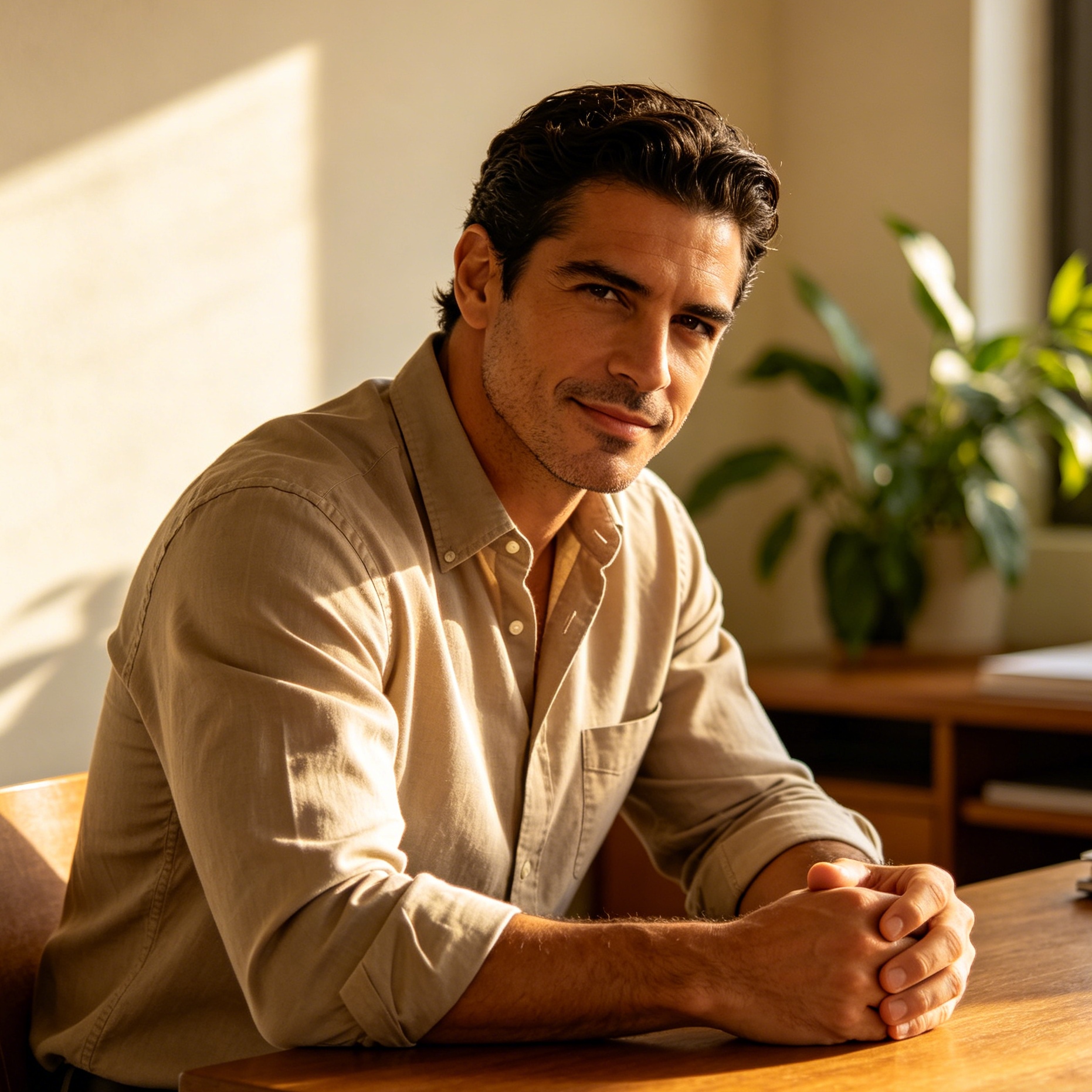
Creating AI pictures has evolved from a niche experimental hobby into a mainstream creative powerhouse. Whether you are an enthusiast exploring digital art for the first time or a professional designer looking to accelerate your workflow, the process is fundamentally about bridging the gap between human imagination and machine execution. To consistently produce high-quality results, one must move beyond simple one-word commands and master the systematic approach to prompting, tool selection, and iterative refinement.
The Mechanics Behind AI Image Generation
Understanding how these systems function is the first step toward mastering them. Most modern AI image generators, including Midjourney, DALL-E 3, and Stable Diffusion, are built upon a technology known as Diffusion Models. Unlike traditional software that might "stitch together" existing fragments of images, a diffusion model creates something entirely new.
The process begins with "noise"—a canvas of random pixels that looks like television static. During the training phase, the AI learns to associate specific descriptive text with visual patterns by looking at billions of image-caption pairs. When you provide a prompt, the AI starts with that static and systematically "denoises" it. It removes pixels that don't belong and adds pixels that do, guided by the mathematical probability that your text description matches the emerging visual structure.
This is why AI can sometimes struggle with specific details like the number of fingers on a hand or the exact spelling of text; it is not "seeing" the image as a coherent object but as a highly complex set of probabilistic patterns. Mastering the creation of AI pictures requires learning how to provide the right "guideposts" for these patterns.
Selecting the Best Tool for Your Creative Goals
The landscape of AI art is fragmented into various tools, each tailored to specific user needs. Choosing the right platform is as important as the prompt itself.
Midjourney: The Aesthetic Powerhouse
For those seeking the highest level of artistic flair and "out-of-the-box" beauty, Midjourney remains the leader. It operates primarily through Discord, though a dedicated web interface is now available for heavy users. In our testing, Midjourney v6 demonstrates a superior understanding of cinematic lighting and photographic textures compared to its competitors. It is particularly effective for concept art, architectural visualization, and stylized portraits. However, it requires a subscription and lacks a free tier for extensive use.
DALL-E 3 (via ChatGPT): The Natural Language King
OpenAI’s DALL-E 3 is integrated directly into ChatGPT Plus. Its greatest strength is its ability to follow complex, multi-layered instructions without requiring technical "prompt engineering" jargon. If you describe a specific scene with three different characters doing three different things, DALL-E 3 is the most likely to get the composition right on the first try. It also features a "Revised Prompt" system where the underlying model expands your simple input into a detailed descriptive paragraph to ensure the generator has enough context.
Adobe Firefly: The Professional Workflow Choice
Adobe Firefly is built with commercial safety as a priority. Unlike models trained on scraped internet data, Firefly is trained on Adobe Stock images and public domain content. This makes it the preferred choice for corporate environments where copyright infringement is a major risk. Furthermore, its integration into Photoshop via "Generative Fill" allows for seamless editing, where users can expand borders (outpainting) or replace specific elements of a photo with simple text commands.
FLUX and Stable Diffusion: The Open Source Controllers
For power users who want absolute control, local models like FLUX.1 [dev] or Stable Diffusion are the standard. These require significant hardware—specifically, a GPU with high VRAM (at least 12-16GB for basic operation, though 24GB is ideal for Flux). The advantage here is the ability to use LoRAs (Low-Rank Adaptation) to train the AI on specific faces, styles, or objects, ensuring consistency across a series of images that cloud-based tools cannot yet match.
The Anatomy of a Perfect Image Prompt
A prompt is more than a description; it is a set of instructions. High-quality AI pictures are rarely the result of a lucky guess. They are built using a structured framework.
The Core Subject
Be specific about what is in the frame. Instead of "a dog," try "a weathered senior Golden Retriever with a gentle expression." The more descriptive the subject, the less the AI has to guess, which reduces the chance of generic or unwanted results.
Context and Action
What is happening in the scene? Is the subject sitting, running, or interacting with something? "A senior Golden Retriever sitting on a sun-drenched porch" provides a much clearer narrative than just a portrait.
Medium and Artistic Style
This tells the AI what "kind" of art to make. Common styles include:
- Photography: Use terms like "35mm film photography," "National Geographic style," or "street photography."
- Digital Illustration: Mention specific platforms or styles like "ArtStation trend," "concept art," or "vector illustration."
- Traditional Art: Specify mediums such as "oil on canvas," "watercolor," "charcoal sketch," or "impasto."
Lighting and Atmosphere
Lighting defines the mood. In professional AI prompting, we often use specific photography terms. "Golden hour" produces warm, long shadows; "Rim lighting" creates a glow around the edges of the subject; "Cinematic lighting" introduces high contrast and drama.
Composition and Camera Specs
Advanced users simulate real camera hardware to achieve specific looks.
- Wide Angle: Use "14mm lens" for expansive landscapes.
- Portrait/Bokeh: Use "85mm lens, f/1.8" to blur the background and focus on the subject's face.
- Birds-eye view: For a top-down perspective.
- Rule of Thirds: To guide the AI on where to place the subject within the frame.
The Contrast Experiment: Bad vs. Good Prompting
- Bad Prompt: "An astronaut on the moon."
- Good Prompt: "A high-detail cinematic shot of an astronaut standing on the desolate lunar surface, looking at the distant blue Earth. Reflections of the stars in the gold-tinted visor. Harsh sunlight creating deep shadows, lunar dust particles floating in the air, 70mm IMAX photography, hyper-realistic, 8k resolution."
The second prompt provides a clear roadmap for the diffusion model, resulting in an image with depth, texture, and emotional resonance.
Advanced Techniques for Refining AI Art
Once the initial image is generated, the process is far from over. Professional AI artists use several techniques to polish their work.
Negative Prompting
Many tools allow you to specify what you don't want. This is crucial for avoiding common AI artifacts. Common negative prompts include: "blurry, distorted, extra limbs, mutated hands, text, watermark, low resolution, cartoonish (when seeking realism)."
Inpainting and Outpainting
Inpainting allows you to highlight a specific area of an image and regenerate only that part. If you love an AI-generated portrait but the person is wearing a hat you don't like, you can mask the hat and prompt the AI to replace it with "flowing hair." Outpainting, on the other hand, expands the canvas. You can take a square portrait and extend it into a wide-screen cinematic landscape, with the AI intelligently filling in the new background.
Image-to-Image (Img2Img)
This technique involves uploading a reference image and a text prompt. The AI uses the composition and color palette of your upload as a foundation. This is the most effective way to maintain "visual consistency" when creating a series of pictures. For example, you can upload a rough sketch of a building and prompt the AI to "turn this into a photorealistic skyscraper at night."
Multi-Turn Editing
With models like DALL-E 3, you can talk to the AI to refine results. Instead of starting a new prompt, you can say: "Make the lighting moodier" or "Add a red bird to the tree in the background." This conversational approach allows for a more natural creative flow, similar to working with a human illustrator.
Navigating the Ethics and Copyright of AI Generated Visuals
The rapid rise of AI pictures has created a complex legal and ethical landscape. As of mid-2024, the legal consensus in several jurisdictions, including the United States, is that AI-generated content without significant human intervention cannot be copyrighted. This means that while you can use the images, you might not "own" them in the traditional sense, and others could theoretically use them without your permission.
Commercial Safety
If you are creating AI pictures for a business, it is vital to understand the training data of the tool you are using. Tools like Adobe Firefly and Getty Images' AI are trained on licensed datasets, offering a layer of indemnity against copyright claims. Conversely, images generated on models trained on "the open web" carry a higher risk of reproducing copyrighted styles or characters.
Deepfakes and Misinformation
Responsible use is the cornerstone of the AI community. Generating realistic images of real people—especially public figures—without their consent is increasingly restricted by major platforms. When creating AI pictures, it is a best practice to avoid using the names of living artists or specific individuals in prompts to prevent the creation of misleading or infringing content.
Conclusion
Creating AI pictures is a skill that blends technical precision with creative vision. The journey begins with choosing the right tool—be it the artistic depth of Midjourney, the ease of DALL-E 3, or the commercial safety of Adobe Firefly. By mastering the structure of prompt engineering—focusing on subject, style, lighting, and composition—anyone can move from generating random visuals to intentional art.
The future of this medium lies in the iterative process: using inpainting to fix details, outpainting to expand worlds, and multi-turn conversations to fine-tune the creative output. As the technology continues to evolve, the most valuable asset remains the human ability to curate, direct, and imbue these machine-generated pixels with meaning.
FAQ
What is the best free AI image generator?
While many professional tools require a subscription, Microsoft Designer (formerly Bing Image Creator) offers free access to the DALL-E 3 model. Canva also provides a generous free tier for its integrated AI design tools.
How can I make AI images look more realistic?
To achieve photorealism, use specific camera settings in your prompts, such as "f/2.8 aperture," "ISO 100," and "shutter speed 1/1000." Additionally, mention specific film stocks like "Kodak Portra 400" or "Fujifilm Superia" to give the image a natural, non-digital texture.
Does AI struggle with hands and text?
Yes, because diffusion models work on probabilistic patterns rather than structural understanding. However, newer models like FLUX.1 and DALL-E 3 have significantly improved in these areas. For text, tools like Ideogram are currently considered the market leaders.
Can I sell the AI pictures I create?
This depends on the Terms of Service (ToS) of the tool you used. Most paid subscriptions (like Midjourney Pro or ChatGPT Plus) grant you commercial rights to the output, but you should always verify the current legal status of AI copyright in your specific country.
What hardware do I need to run AI image generators locally?
To run models like Stable Diffusion or FLUX locally, you need a PC with an NVIDIA GPU. For a smooth experience, a minimum of 8GB VRAM is required for SDXL models, while 16GB to 24GB is recommended for high-resolution generation and training.
-
Topic: Image generation | OpenAI APIhttps://developers.openai.com/api/docs/guides/tools-image-generation/
-
Topic: Free AI Art Generator: Create Art Online - Adobe Fireflyhttps://www.adobe.com/products/firefly/features/ai-art-generator.html
-
Topic: AI art - Wikipediahttps://en.wikipedia.org/wiki/AI_art