Home
Home
How to Create High-Quality AI Photos With the Best Modern Generators
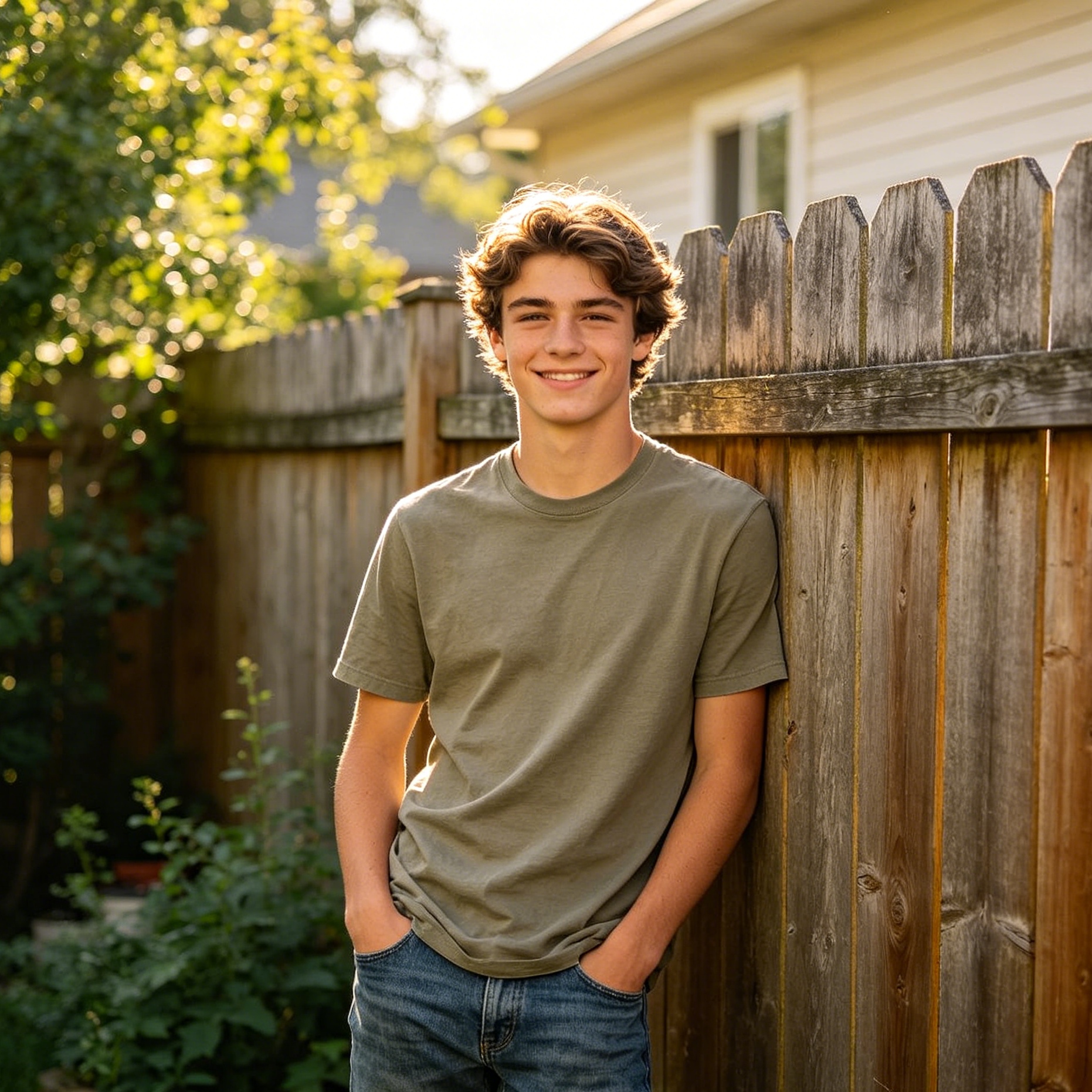
Artificial intelligence has fundamentally transformed the process of creating visual content. The ability to generate hyper-realistic photos, intricate illustrations, and professional-grade marketing assets from simple text descriptions—known as prompts—is no longer a futuristic concept but a standard industry tool. However, achieving professional results requires more than just typing a few words into a search box. It involves understanding the unique logic of different AI models, mastering the syntax of prompt engineering, and utilizing advanced control parameters to refine the final output.
The current landscape of AI image generation is dominated by several key players, each offering distinct advantages depending on whether the priority is artistic flair, technical precision, or commercial safety.
Evaluating Leading AI Image Generation Platforms
Choosing the right tool is the first step in successful photo generation. Each platform is built on different architectures, leading to varied visual outputs and user experiences.
Midjourney: The Artistic Gold Standard
Midjourney remains the preferred choice for creative professionals seeking the highest level of aesthetic quality and photorealism. Unlike most other tools, Midjourney operates primarily through Discord, which, while unconventional, offers a community-driven environment for learning and inspiration.
In our practical application, Midjourney v6 has demonstrated an unparalleled ability to render complex lighting environments and organic textures. For instance, when generating portraits, the model excels at capturing "micro-details" such as skin pores, stray hairs, and the subtle reflection of light in the eyes. Key features like the --stylize parameter allow users to control how much of the model's internal aesthetic is applied, while --sref (Style Reference) enables consistent visual branding across multiple generations.
DALL-E 3: The Leader in Prompt Adherence
Integrated directly into ChatGPT, DALL-E 3 is perhaps the most accessible and intuitive generator available today. Its primary strength lies in its "reasoning" capabilities. DALL-E 3 understands complex, multi-layered instructions that often baffle other models.
If a project requires specific text to be rendered inside an image—such as a storefront sign or a book cover—DALL-E 3 is consistently more reliable. It translates conversational language into precise visual elements without requiring the user to learn complex shorthand or technical jargon. However, compared to Midjourney, its output can sometimes feel more "illustrated" and less "photographic," requiring more detailed descriptions of camera settings to achieve true realism.
Stable Diffusion: The Power of Open-Source Customization
For users who require total control and privacy, Stable Diffusion (specifically SDXL and the newer Flux models) is the definitive solution. As an open-source model, it can be run locally on a user's hardware, provided they have sufficient VRAM (typically 12GB to 24GB for optimal performance).
The real power of Stable Diffusion lies in its ecosystem. Through techniques like LoRA (Low-Rank Adaptation) and ControlNet, users can train the AI on specific faces, products, or architectural styles. This allows for a level of consistency that is difficult to achieve on closed platforms. You can dictate the exact pose of a subject or the structural layout of a room, making it an essential tool for technical illustrators and game designers.
Adobe Firefly: The Professional Choice for Commercial Safety
Adobe Firefly addresses the most significant concern in corporate environments: copyright and commercial liability. Firefly is trained exclusively on licensed content from Adobe Stock and public domain assets.
From a workflow perspective, Firefly’s greatest advantage is its deep integration with the Creative Cloud suite. Features like "Generative Fill" in Photoshop allow photographers to extend landscapes or swap clothing on a model with a single click. While its raw creative output may occasionally be less daring than Midjourney, its guarantee of commercial safety makes it the industry standard for advertising and corporate design.
Google Imagen and Gemini: High-Fidelity Enterprise Solutions
Google’s Imagen models, available through the Gemini API, represent the cutting edge of high-fidelity generation. Models like Imagen 4.0 are optimized for speed and volume, making them ideal for developers building integrated AI applications.
Google’s approach emphasizes "Search Grounding," where the model can use real-world information to inform its visual outputs. Additionally, all images generated via Google’s enterprise tools include SynthID, an invisible, imperceptible watermark that identifies the content as AI-generated. This is a critical feature for maintaining transparency and combatting misinformation in the digital age.
The Core Pillars of Prompt Engineering
A prompt is the bridge between a human concept and an AI’s execution. To generate a high-quality photo, a prompt should be structured logically, moving from the broad subject to the technical specifics.
A Professional Prompt Formula
A highly effective prompt typically follows this structural hierarchy:
[Subject] + [Action/Context] + [Environment/Background] + [Lighting/Color] + [Camera/Technical Settings]
For example, a basic prompt like "a dog in a park" will yield a generic, likely unpolished result. A professional-grade prompt would look like this:
"A sleek Doberman Pinscher running through a dense pine forest during the blue hour, mist rising from the damp ground, cool cinematic tones, shot on a Sony A7R IV, 35mm lens, f/1.8 aperture, motion blur on the legs, highly detailed fur texture, 8k resolution."
Defining Subject and Action
The subject must be described with specific adjectives. Instead of "a woman," use "an elderly craftswoman with weathered hands." Specificity helps the AI narrow down its vast library of associations. The action should be dynamic; verbs like "sprinting," "contemplating," or "shattering" provide the model with better cues for composition and energy.
Environmental Context
The background is just as important as the subject. You must decide if the environment should be in sharp focus or blurred (bokeh). Describing the weather, the time of day, or the specific architectural style (e.g., "brutalist concrete," "Victorian parlor") provides the necessary "world-building" for the AI to create a coherent scene.
Mastering Lighting and Mood
Lighting is the secret to photorealism. AI models respond exceptionally well to cinematic lighting terms. Common modifiers include:
- Golden Hour: Warm, directional light with long shadows.
- Volumetric Lighting: Light beams visible through fog or dust.
- Rembrandt Lighting: A classic portrait setup that creates a small triangle of light on the shadowed cheek.
- Neon Noir: High contrast with saturated blues and pinks.
Technical Camera Settings
To make an AI image look like a real photo, you must speak the language of photography. Referencing specific hardware and settings forces the AI to simulate the optical characteristics of real lenses:
- 85mm or 100mm: Best for portraits with a shallow depth of field.
- 14mm or 24mm: Ideal for wide-angle landscapes or architectural shots.
- f/1.2 or f/1.8: Instructs the AI to blur the background significantly.
- Fast Shutter Speed (1/1000s): Freezes motion.
Advanced Concepts for Precise Control
Beyond the text prompt, several technical parameters allow for professional-level refinement of AI photos.
Aspect Ratio Management
By default, most AI generators produce square (1:1) images. However, the composition of a photo is heavily influenced by its dimensions.
- 16:9: Best for cinematic stills and website headers.
- 9:16: Ideal for mobile content like TikTok or Instagram Stories.
- 4:3: A classic photography ratio.
In Midjourney, this is controlled by the --ar suffix. In Google’s Imagen, it is a configuration parameter within the API call.
The Role of Negative Prompting
Negative prompting is the process of telling the AI what not to include. This is crucial for avoiding common AI artifacts. A standard "negative pack" used by professional creators often includes terms like:
- "blurry, distorted hands, extra fingers, low resolution, watermark, text, grainy, cartoonish, anatomical nonsense."
Stable Diffusion and DALL-E 3 (via specific instructions) allow for extensive negative prompting to ensure the final image remains clean and professional.
Seed Management for Consistency
Every AI-generated image is assigned a "Seed"—a long string of numbers that serves as the starting point for the noise generation process. If you generate an image you like but want to make a minor change (e.g., change the color of a shirt), you must use the same Seed. By keeping the Seed constant and only changing a small part of the text prompt, you can maintain visual consistency across a series of photos.
Upscaling and Post-Processing
Most AI models generate images at a resolution of roughly 1024x1024 pixels. While sufficient for social media, this is inadequate for print or high-definition displays.
- Generative Upscaling: Tools like Magnific AI or Midjourney’s internal upscalers don't just enlarge the image; they add new, logically consistent details as they increase the resolution.
- SynthID and Metadata: For professional usage, ensuring that the generated photo contains appropriate metadata regarding its AI origin is becoming a legal and ethical requirement in many jurisdictions.
Ethical and Commercial Considerations
As AI photos become indistinguishable from traditional photography, the industry is moving toward stricter transparency standards.
- Commercial Licensing: Always verify the training data of the tool you are using. While Stable Diffusion is versatile, using it for commercial products can be legally complex depending on the "checkpoints" used. Adobe Firefly remains the safest bet for commercial work.
- Facial Details and Person Generation: Many enterprise-level tools like Google’s Imagen offer settings to block the generation of children or specific types of imagery to ensure safety and compliance.
- Watermarking: The integration of digital signatures like SynthID helps in tracking the provenance of an image, which is vital for news organizations and large-scale digital publishers.
Summary of Photo Generation Strategies
Generating professional photos with AI is an iterative process. It begins with selecting a model that matches the desired output style—Midjourney for art, DALL-E 3 for logic, or Firefly for commerce. From there, the creator must build a descriptive prompt that includes not just the subject, but the lighting, lens type, and environmental context. Finally, using advanced tools like seed management, negative prompts, and generative upscaling allows for the refinement of a raw AI output into a masterpiece.
FAQ
What is the best AI tool for generating photorealistic portraits? Midjourney v6 is widely considered the leader in photorealism, especially for human features and textures. However, Stable Diffusion (Flux) offers more control if you need to replicate a specific person's likeness through training.
How do I avoid "AI hands" and distorted limbs? Use negative prompts like "extra fingers" or "deformed limbs." Additionally, newer models like DALL-E 3 and Midjourney v6 have significantly improved their understanding of human anatomy, making these errors less common.
Can I use AI-generated photos for my business? Yes, but you should use a tool designed for commercial safety, such as Adobe Firefly, which ensures that the training data does not infringe on existing copyrights.
What does the "Seed" number do in AI image generation? The seed is a unique identifier for the initial noise pattern used to create an image. Using the same seed allows you to regenerate the same basic composition, making it easier to make small, iterative changes.
How long should a prompt be for the best results? While short prompts work, professional results usually come from prompts between 30 and 60 words that include specific details about lighting, camera settings, and background elements.
-
Topic: Generate images using Imagen | Gemini API | Google AI for Developershttps://ai.google.dev/gemini-api/docs/imagen?authuser=0
-
Topic: Free AI text to image generator for creating stunning visuals.https://www.adobe.com/products/firefly/features/text-to-image.html
-
Topic: Gemini API | Google AI for Developershttps://ai.google.dev/gemini-api/docs/image-generation#:~:text=The%20Gemini%20API%20provides%20access,distracting%20artifacts%20than%20previous%20models