Home
Home
How to Generate Professional Quality AI Creation Images in Minutes
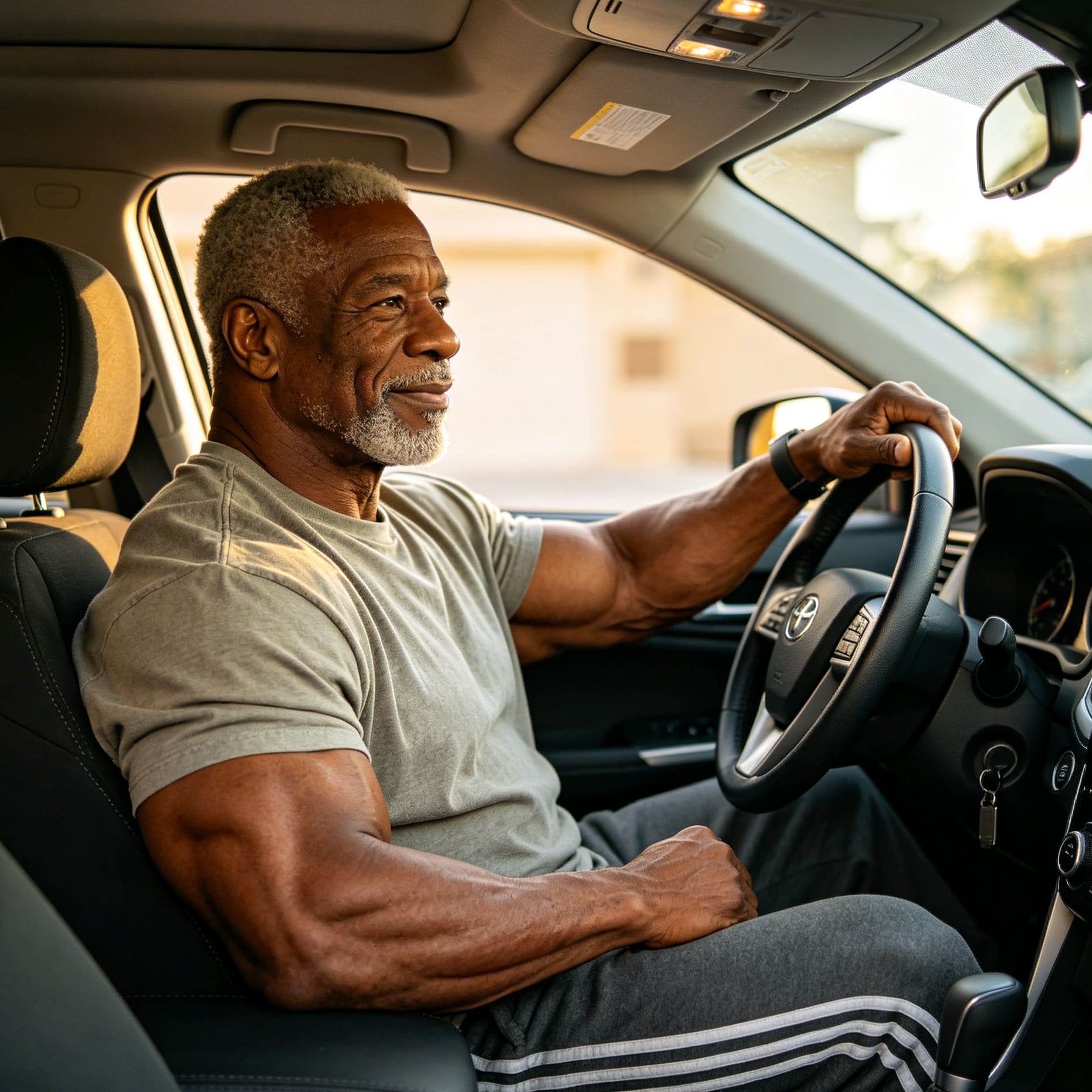
Creation images in the modern digital era are no longer limited to the work of human hands using traditional brushes or cameras. Today, this term primarily refers to visuals generated by Artificial Intelligence (AI) using text-to-image diffusion models. These tools allow anyone to transform a descriptive sentence into a high-resolution, photorealistic, or artistically complex image within seconds. The most effective way to produce professional-grade creation images is to utilize platforms like Midjourney for artistic flair, DALL-E 3 for precision in following instructions, or Flux.1 for unmatched realism and text rendering.
Understanding the Technology Behind AI Creation Images
The rapid rise of AI art is powered by a specific class of machine learning known as Diffusion Models. Unlike older generative models that tried to copy-paste parts of existing images, diffusion models work through a process of refined de-noising.
How Diffusion Models Work
The process begins with pure Gaussian noise—essentially digital "static." The AI has been trained on billions of image-text pairs to understand what specific objects, textures, and lighting patterns look like. When a user enters a prompt, the model starts with the noise and, step by step, removes the parts that don't match the description until a coherent image emerges from the chaos. This is why the initial stages of an image generation often look like a blurry smudge that gradually sharpens into a masterpiece.
The Role of Latent Space
To make this process computationally efficient, the AI doesn't work with the full resolution of pixels immediately. Instead, it operates in a "Latent Space"—a compressed mathematical representation of visual concepts. In this space, the AI can manipulate abstract ideas like "Victorian style" or "cyberpunk lighting" as coordinates before a "decoder" converts that mathematical data back into the pixels that humans can see.
Top Platforms for Image Creation in 2025
Choosing the right tool is the most critical decision in the creative workflow. Each platform has a distinct "DNA" that influences the final aesthetic of the creation images.
Midjourney: The Artistic Gold Standard
Midjourney remains the preferred choice for professional designers who prioritize aesthetics over literal prompt adherence. It excels at creating "vibe-heavy" images with rich textures and cinematic lighting.
- Best For: Concept art, mood boards, editorial photography, and stylized illustrations.
- Experience Tip: In our testing, Midjourney v6.1 handles complex lighting better than any other model. Using the
--stylizeparameter (from 0 to 1000) allows you to control how much artistic liberty the AI takes. A higher value usually results in a more "beautiful" but less "accurate" image relative to your prompt. - Key Advantage: The community-driven nature of the Discord interface allows for constant inspiration from other creators.
DALL-E 3: Precision and Ease of Use
Integrated directly into ChatGPT, DALL-E 3 is the most accessible tool for beginners. Its greatest strength is its ability to follow long, complex instructions without dropping details.
- Best For: Illustrating specific scenarios, creating marketing assets with precise requirements, and users who prefer a conversational interface.
- Key Advantage: It understands spatial relationships (e.g., "the cat is to the left of the blue vase") much better than the base versions of Stable Diffusion.
Flux.1: The New King of Realism and Text
Flux.1 has recently disrupted the market by offering a level of realism that rivals high-end photography. More importantly, it has solved one of the oldest problems in AI creation images: rendering legible text.
- Best For: Hyper-realistic portraits, product mockups containing text, and high-fidelity textures.
- Experience Tip: When generating images of people with Flux.1, the skin texture is remarkably lifelike, avoiding the "plastic" look common in older AI models. It requires significant VRAM for local execution (typically 24GB for the 'Dev' version), so cloud-based APIs are recommended for most users.
Stable Diffusion: The Professional's Sandbox
For those who want total control, Stable Diffusion (specifically SDXL and the newer SD3) offers an open-source environment where every parameter can be tweaked.
- Best For: Local hosting, custom model training, and integration into professional pipelines using ComfyUI.
- Hardware Requirement: To run SDXL locally with acceptable speeds, a GPU with at least 8GB to 12GB of VRAM (such as an RTX 3060 or better) is essential.
How to Write Effective Image Prompts
The quality of the output is directly proportional to the quality of the input. A vague prompt like "a beautiful landscape" will yield a generic result. A structured prompt, however, guides the AI toward a specific vision.
The Anatomy of a Winning Prompt
A professional prompt for creation images should follow a specific hierarchy:
- Subject: The main focus (e.g., "A weathered mountain climber").
- Action/Context: What is happening (e.g., "reaching the summit during a blizzard").
- Environment: The background and setting (e.g., "Jagged peaks of the Himalayas, swirling snow").
- Lighting: The mood (e.g., "Golden hour light piercing through clouds, high contrast").
- Style/Medium: The technical execution (e.g., "National Geographic photography, 35mm lens, f/2.8, hyper-realistic").
- Technical Parameters: Resolution and aspect ratio (e.g., "--ar 16:9").
Advanced Prompting Techniques
- Negative Prompting: In tools like Stable Diffusion, you can explicitly tell the AI what not to include (e.g., "no blurry edges, no distorted hands, no watermark").
- Weighting: Many models allow you to emphasize certain words. In Midjourney, using
::2after a word gives it double the importance in the generation process. - Multi-Prompting: Breaking a prompt into two distinct parts to blend concepts, such as
Space::1 Explorer::1to ensure the AI considers both concepts equally rather than just making a "Space Explorer."
Advanced Workflows for High-End Creation
Generating a single image is often just the beginning. Professional creators use several post-processing techniques to perfect their work.
Inpainting and Outpainting
- Inpainting: This allows you to select a specific area of a generated image—like a person's face or an object on a table—and regenerate only that part. It is essential for fixing small errors like extra fingers or awkward expressions.
- Outpainting (Generative Fill): This technique extends the canvas beyond the original borders of the image. It uses the existing context to "imagine" what the rest of the scene looks like, which is perfect for turning a portrait into a landscape.
Using LoRAs for Consistent Style
Low-Rank Adaptation (LoRA) is a technique used with Stable Diffusion to "teach" the AI a specific character or art style. If you are creating a series of images for a brand, you can train a LoRA on your brand's aesthetic to ensure that every creation image you generate looks like it belongs to the same collection.
Upscaling and Enhancement
Most AI models generate images at roughly 1024x1024 pixels. For print or high-resolution web use, upscaling is necessary. Tools like Topaz Photo AI or the built-in "Creative Upscalers" in Midjourney can increase resolution by 4x or even 8x while adding realistic details that weren't in the original low-res version.
The Technical Requirements for Local AI Creation
While cloud services are convenient, many professionals prefer running AI locally for privacy and cost-efficiency.
GPU Power: The Engine of AI
The Graphics Processing Unit (GPU) is the most critical component. AI image generation relies on CUDA cores (Nvidia) or Stream Processors (AMD). Nvidia is currently the industry standard due to the widespread support for its CUDA software library.
- Minimum: 8GB VRAM (RTX 3060) - Suitable for basic 512x512 or 1024x1024 generations.
- Recommended: 16GB VRAM (RTX 4070 Ti Super) - Ideal for SDXL and heavy Inpainting.
- Professional: 24GB VRAM (RTX 3090 / 4090) - Required for training models and running large Flux.1 checkpoints locally.
Software Environments
Operating systems like Windows and Linux are preferred. Most professional local workflows use ComfyUI, a node-based interface that allows for complex pipelines, or Automatic1111, which is more user-friendly but less flexible for advanced tasks.
Ethical and Legal Considerations of AI Images
As the field of AI creation images matures, several legal and ethical questions have come to the forefront.
Copyright and Ownership
In many jurisdictions, including the United States, images created solely by AI prompts are not currently eligible for copyright protection because they lack "human authorship." However, if a human significantly modifies the AI output using Photoshop or other tools, the resulting work may be copyrightable.
The Training Data Debate
The ethics of AI art often center on the training data. Most large models were trained on images scraped from the internet without the explicit consent of the original artists. This has led to ongoing litigation. In response, some platforms like Adobe Firefly are trained only on licensed or public-domain imagery, offering a "commercially safe" alternative for enterprise users.
Deepfakes and Misinformation
The ability to create hyper-realistic images of real people and events carries the risk of spreading misinformation. Responsible creators should always disclose when an image is AI-generated, especially if it depicts realistic scenes that could be mistaken for news.
Common Use Cases for Professional Creation Images
How are businesses and individuals actually using these tools?
- Marketing and Advertising: Creating high-end product photography without the need for a physical studio or expensive equipment.
- Social Media Content: Generating eye-catching visuals for Instagram, LinkedIn, and YouTube thumbnails that stand out in crowded feeds.
- Architecture and Interior Design: Visualizing room layouts and building exteriors based on simple sketches.
- Game Development: Creating concept art, textures, and UI elements at a fraction of the traditional cost and time.
- Personal Creativity: Allowing non-artists to express complex visual ideas for storytelling, role-playing games, or home decor.
Troubleshooting Common Issues in AI Images
Even with the best tools, things can go wrong. Here is how to handle common artifacts:
Fixing Distorted Hands and Limbs
Hands have historically been the "Achilles' heel" of AI. To fix this, use a dedicated Inpainting model. Mask the hand, set the denoising strength to about 0.45, and use a prompt like "perfectly detailed human hand, five fingers."
Removing "AI Hallucinations"
Sometimes the AI adds extra objects or weird textures. Using a "Negative Prompt" with terms like extra limbs, floating objects, blurry, low quality helps keep the model on track. Alternatively, use a "ControlNet" in Stable Diffusion to lock the composition to a specific edge map or depth map, preventing the AI from straying too far from your intended structure.
Improving Text Legibility
If you aren't using Flux.1, getting text right is difficult. The best workflow is to generate the image without text, then use a tool like Photoshop or Canva to add typography. If you must use AI for text, put the text in quotation marks in your prompt (e.g., a neon sign that says "OPEN") and use a model known for text adherence.
Summary of the Creation Image Ecosystem
The landscape of AI creation images is evolving at a breakneck pace. What was impossible six months ago—such as rendering text or maintaining character consistency—is now a standard feature. By mastering prompt engineering, choosing the right tool for the specific job, and understanding the hardware requirements for local control, creators can unlock a level of productivity that was previously unimaginable. Whether you are a professional designer looking to speed up your workflow or a hobbyist exploring the boundaries of digital art, AI tools offer a limitless canvas for your imagination.
Frequently Asked Questions (FAQ)
What is the best free AI image creator?
Currently, Microsoft Designer (powered by DALL-E 3) and SeaArt.ai offer robust free tiers. Additionally, Stable Diffusion is free if you have the hardware to run it locally.
Can AI-generated images be used for commercial purposes?
It depends on the platform's terms of service. Midjourney (paid plans) and Adobe Firefly allow commercial use. However, remember that the copyright status of the images remains a complex legal area.
How do I get consistent characters in different images?
The most effective method is using a LoRA (Low-Rank Adaptation) in Stable Diffusion or the Character Reference (--cref) feature in Midjourney. These tools allow the AI to "remember" the specific features of a person or object across multiple generations.
Is AI image generation the same as "stealing" art?
This is a subject of intense debate. While the AI does not "copy-paste" art, it learns patterns from existing work. Many argue that this is similar to how human artists learn by studying the masters, while others believe it is a violation of intellectual property.
What is the difference between a prompt and a seed?
A prompt is the text description you provide. A seed is a random number that determines the initial noise pattern. If you use the same prompt and the same seed, you will get the exact same image every time. This is useful for making small adjustments to a design without changing the entire composition.
Which AI tool is best for photorealism?
As of late 2024 and early 2025, Flux.1 and Midjourney v6 are widely considered the leaders in hyper-photorealistic output, especially regarding skin texture and lighting.
How long does it take to generate an image?
Depending on the model and hardware, it typically takes between 10 seconds and 2 minutes to generate a standard 1024x1024 image.
Can I turn my own photos into AI art?
Yes, using a process called Image-to-Image (Img2Img). You upload a reference photo, and the AI uses its structure, colors, and composition to create a new version based on your text prompt.
-
Topic: Divine Creation Stock Illustrations – 9,472 Divine Creation Stock Illustrations, Vectors & Clipart - Dreamstimehttps://www.dreamstime.com/illustration/divine-creation.html
-
Topic: Creation Narrative Stock Illustrations – 3,230 Creation Narrative Stock Illustrations, Vectors & Clipart - Dreamstimehttps://www.dreamstime.com/illustration/creation-narrative.html
-
Topic: Free Inventive Creation Images | Download at StockCakehttps://stockcake.com/s/inventive-creation/7