Home
Home
How to Master Chat and Pics Integration for Smarter AI Conversations
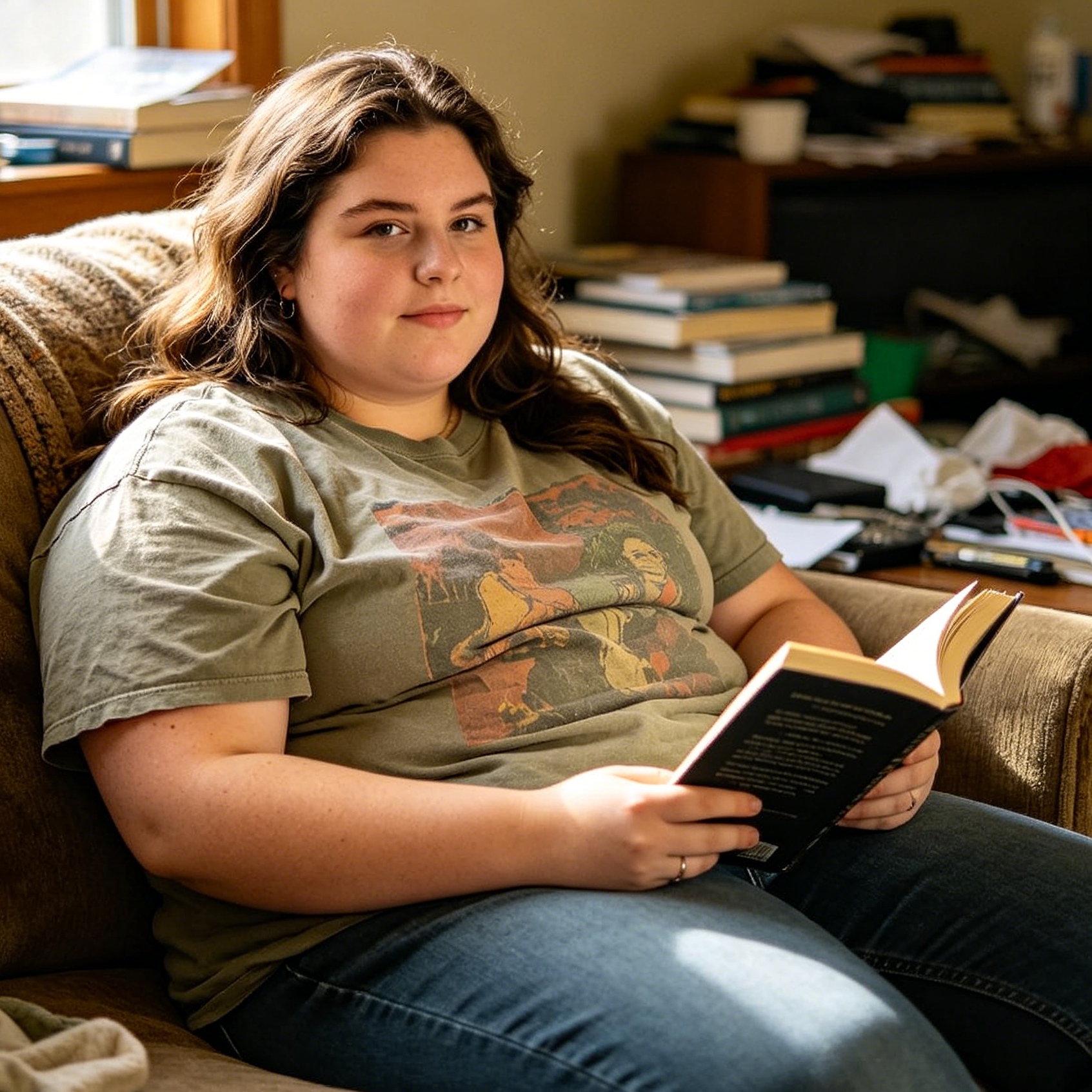
The evolution of artificial intelligence has moved far beyond simple text exchanges. Modern AI systems now possess multimodal capabilities, meaning they can process, understand, and generate visual information just as fluently as written language. The phrase "chat and pics" refers to this synergy—a workflow where users can upload images to an AI to gain insights or provide textual descriptions to receive high-quality visuals. This integration transforms a chatbot from a text-based assistant into a visual expert capable of analyzing complex diagrams, identifying real-world objects, and assisting in creative design.
Integrating pictures into a chat interface is not just about aesthetics; it is about providing context that words often fail to capture. Whether it is a developer sharing a screenshot of an error log or a traveler asking for a translation of a foreign street sign, the ability to combine visual inputs with conversational AI is a fundamental shift in digital productivity.
The Two Pillars of Chat and Pics in AI
To fully utilize these features, it is essential to distinguish between the two primary ways AI handles visual content: vision-language processing and generative imaging.
1. Visual Analysis: How AI "Sees" Your Pictures
Visual analysis occurs when a user uploads a photo, screenshot, or document to the chat. Leading models like GPT-4o, Claude 3.5 Sonnet, and Gemini Pro 1.5 use neural networks to break down an image into tokens, similar to how they process words.
- Object Recognition: The AI identifies individual elements within a frame, such as furniture, plants, or specific hardware components.
- OCR (Optical Character Recognition): This is the ability to read and extract text from images, including handwritten notes or dense technical manuals.
- Contextual Understanding: Beyond just seeing a "dog," the AI understands if the dog looks distressed or if it is a specific breed, providing deeper layers of meaning.
2. Image Generation: How AI "Draws" Your Descriptions
The other side of the "chat and pics" coin is the generation of new visuals based on text prompts. Tools like DALL-E 3 (integrated into ChatGPT) or Midjourney (often used via Discord chat) allow users to iterate on visual concepts through conversation.
- Iterative Design: You can start with a broad request and then "chat" with the AI to refine the colors, lighting, or composition of the picture it just created.
- Style Emulation: By describing specific artistic movements or photographic techniques, users can guide the AI to produce results that fit a particular brand or aesthetic.
Practical Use Cases for Chat and Pics Interactions
Understanding the theoretical capabilities of multimodal AI is the first step, but the real value lies in practical application. Here are several scenarios where combining chat and pictures significantly enhances output.
Troubleshooting and Technical Support
One of the most effective ways to use chat and pics is for technical problem-solving. Instead of trying to describe a complex wiring setup or a cryptic software error, a user can simply take a photo.
In our internal tests using Claude 3.5 Sonnet, we found that providing a high-resolution photo of a server rack allowed the AI to identify a misaligned cable that a human technician had missed. The AI was able to point to the specific port and provide step-by-step instructions for re-seating the connection.
Academic Research and Document Analysis
Students and researchers often deal with complex charts and historical documents. By uploading a screenshot of a data visualization, a user can ask the AI to "Explain the trend shown in the Y-axis between 2010 and 2020."
The AI does not just read the numbers; it interprets the correlation. For instance, it can cross-reference the visual data in the picture with its internal knowledge base to suggest potential socioeconomic reasons for a depicted decline or growth.
Interior Design and Spatial Planning
For homeowners or designers, the "chat and pics" workflow allows for rapid prototyping. A user can upload a photo of an empty living room and prompt the AI: "Suggest a minimalist layout for this space using mid-century modern furniture, and keep the existing window placement in mind."
The AI can then analyze the dimensions and lighting of the room to provide a textual plan or even generate a mock-up image showing how the new furniture would look in that specific environment.
Advanced Strategies for Image Prompting and Analysis
To get the most out of these AI tools, users must learn the art of "multimodal prompting." This involves being specific about both the visual and the textual context.
Effective Vision Prompting (Uploading Pictures)
When asking an AI to analyze a picture, follow these guidelines for better accuracy:
- Use Markup Tools: Before uploading, use your phone’s photo editor to circle the specific area you want the AI to focus on. This reduces "noise" and helps the model prioritize the correct pixels.
- Provide Scale: If you are asking about the size of an object, place a common item like a coin or a pen next to it in the photo.
- Specify the Output Format: Instead of saying "What is this?", say "Identify the components in this photo and list them in a bulleted table with their estimated functions."
Expert Generative Prompting (Creating Pictures)
When asking an AI to create a picture, the dialogue should be a back-and-forth process.
- The Initial Prompt: "Create an atmospheric photo of a futuristic library."
- The Chat Refinement: "That’s good, but make the lighting warmer, add more floating holographic screens, and ensure the architectural style is Neo-Gothic."
This iterative approach is where the "chat" truly empowers the "pics."
Technical Limitations to Keep in Mind
While AI has come a long way, it is not infallible. Users should be aware of the "blind spots" in current multimodal technology.
Spatial Reasoning Challenges
AI models often struggle with precise spatial localization. For example, if you ask an AI to "Count the number of blue marbles in this jar of 500 mixed marbles," the count will likely be an approximation rather than an exact figure. The models are better at identifying what is in a photo rather than exactly where every single instance is located.
Text Rendering in Images
When generating pictures, AI often struggles with spelling. If you ask for a sign that says "Welcome to New York," the AI might render it as "Welcmme to New Yrok." While newer models are improving in this area, it remains a common point of failure.
Medical and High-Stakes Diagnostics
It is critical to note that "chat and pics" features should never be used for medical diagnosis. While an AI might correctly identify a common rash, it is prone to hallucinations and lacks the specialized training of a medical professional. Using AI for interpreting CT scans or X-rays is dangerous and explicitly discouraged by developers like OpenAI and Google.
Privacy, Safety, and Data Handling
When you engage in "chat and pics," you are sending visual data to a remote server. Understanding the privacy implications is paramount.
Metadata Concerns
Photos often contain EXIF data, which includes the GPS coordinates of where the photo was taken, the time, and the device used. Most major AI platforms claim to strip this data upon upload, but for maximum security, users should manually remove metadata before sharing photos of their home or workplace.
Consent and Personal Data
Sharing photos of other people without their consent violates most AI platforms' terms of service. Furthermore, most modern AI models have "guardrails" that prevent them from identifying specific private individuals in photos to prevent stalking or harassment.
Training Data Usage
By default, some AI providers may use the images you upload to train future versions of their models. If you are using these tools for business purposes, ensure you are on a "Team" or "Enterprise" plan, as these typically offer data privacy guarantees that prevent your pictures from being used for training.
Comparison of Leading "Chat and Pics" Platforms
| Feature | ChatGPT (GPT-4o) | Claude 3.5 Sonnet | Google Gemini |
|---|---|---|---|
| Image Analysis | Excellent; high OCR accuracy | Superior at complex diagrams | Good integration with Google Lens |
| Image Generation | Integrated DALL-E 3 | No native generation (text-only) | Integrated Imagen 3 |
| File Limits | 20MB per image | 30MB per image | Up to 100 images per chat |
| Best For | Casual use & creative work | Coding & technical analysis | Research & Google ecosystem users |
What is a "Chat and Pics" AI?
An AI with "chat and pics" capabilities is a multimodal system that can process both text and visual inputs simultaneously. This allows users to engage in a dialogue about an image, asking follow-up questions or requesting modifications to a visual scene.
How do I upload a picture to an AI chat?
Most interfaces feature a "+" icon or a paperclip icon in the message bar. Clicking this allows you to select a file from your device, take a photo directly using your camera, or drag and drop an image file into the conversation window.
Can AI read handwriting from a photo?
Yes, modern vision models are remarkably proficient at Optical Character Recognition (OCR). They can often transcribe messy handwritten notes, provided the lighting is clear and the resolution is high enough to distinguish the strokes.
Why can't the AI identify the person in my photo?
To protect privacy and prevent misuse, most AI companies have implemented safety filters that block the model from performing facial recognition on private individuals. It can generally identify public figures (like celebrities or politicians) but will refuse to name a person from a random snapshot.
Conclusion
The integration of chat and pics represents the next frontier of human-computer interaction. By moving away from text-only limitations, users can leverage AI as a pair of "digital eyes" that can read, analyze, and create in ways that were previously impossible. Whether you are using visual AI to debug code, study complex historical charts, or generate artistic concepts, the key to success lies in providing clear context and engaging in an iterative, conversational process. As models continue to evolve, the boundary between what we see and what the AI understands will only become thinner, making "chat and pics" an indispensable part of the modern digital toolkit.
-
Topic: ChatGPT Image Inputs FAQ | OpenAI Help Centerhttps://help.openai.com/en/articles/8400551-chatgpt-image-inputs-faq?lang=uk&topic=business
-
Topic: Free Random Text Chat with Picture Sharing - Best Sites (2026)https://www.bestchatroomsites.com/free-random-text-chat-with-picture-sharing/
-
Topic: App Text and Picture Chat – App Storehttps://apps.apple.com/pt/app/text-and-picture-chat/id6757152188