Home
Latest AI Tools News 2026: How Autonomous Agents and GPT-5.6 Are Changing Work
As of late 2026, the AI landscape has transitioned from assistive "chatbots" to autonomous execution systems . Major updates include OpenAI's GPT-5.6 Sol family, Google's Gemini 3.6 Flash , and a significant shift toward consumption-based pricing . Organizations are now focusing on "Model Routing" to optimize costs and navigating the newly enforced transparency mandates of the EU AI Act .
The state of artificial intelligence in the third quarter of 2026 is no longer defined by the novelty of "chatting" with a machine. Instead, the industry has entered the Agentic Era , where AI systems are valued for their ability to execute complex, multi-step workflows with minimal human intervention. Following the major releases in July and August 2026, the focus has shifted from simple text generation to autonomous problem-solving across software engineering, research, and enterprise operations.
This transition is supported by a significant advancement in model architectures, moving away from monolithic systems toward specialized multi-agent environments. According to recent industry analysis, the defining trend of the year is the integration of "Planner" and "Executor" agents that work in sync to complete tasks that previously required dozens of manual prompts. As we look at the latest AI tools news, it is evident that the tools we use today are becoming teammates rather than just software utilities.
What Are the Biggest AI Tool Trends in Late 2026?
The Rise of Autonomous Execution Systems
The "Copilot" era of 2023-2025 has matured into the "Agentic Workflow" standard. In late 2026, an autonomous execution system typically consists of four distinct layers: a Planner (which breaks down the goal), a Researcher (which gathers real-time data), Memory (which maintains context over long durations), and Execution agents (which interact with APIs and codebases). This architecture allows AI to handle projects like "refactor this entire legacy database" or "launch a multi-channel marketing campaign" without constant hand-holding.
The Shift Toward Consumption-Based Pricing
One of the most notable shifts in the 2026 market is the decline of the traditional "per-seat" subscription model. Leading providers like OpenAI and Anthropic have largely transitioned to consumption-based task billing or "Copilot Credits." Instead of paying a flat $30 monthly fee, enterprises now pay based on the complexity and resource intensity of the tasks performed. This allows companies to scale their AI usage more precisely, paying cents for simple queries and higher rates for deep reasoning tasks involving frontier models.
Hardware Efficiency and the Quantum Milestone
On the infrastructure side, 2026 has seen a major breakthrough in how AI interacts with hardware. IBM's 2026 report highlights a significant milestone where quantum computing has begun to outperform classical methods in specific complex challenges, particularly in drug discovery and materials science. Simultaneously, efficiency techniques like TurboQuant have reduced the memory requirements for running large models by up to six times, allowing high-performance agents to run on localized, edge-based hardware rather than relying solely on massive cloud clusters.
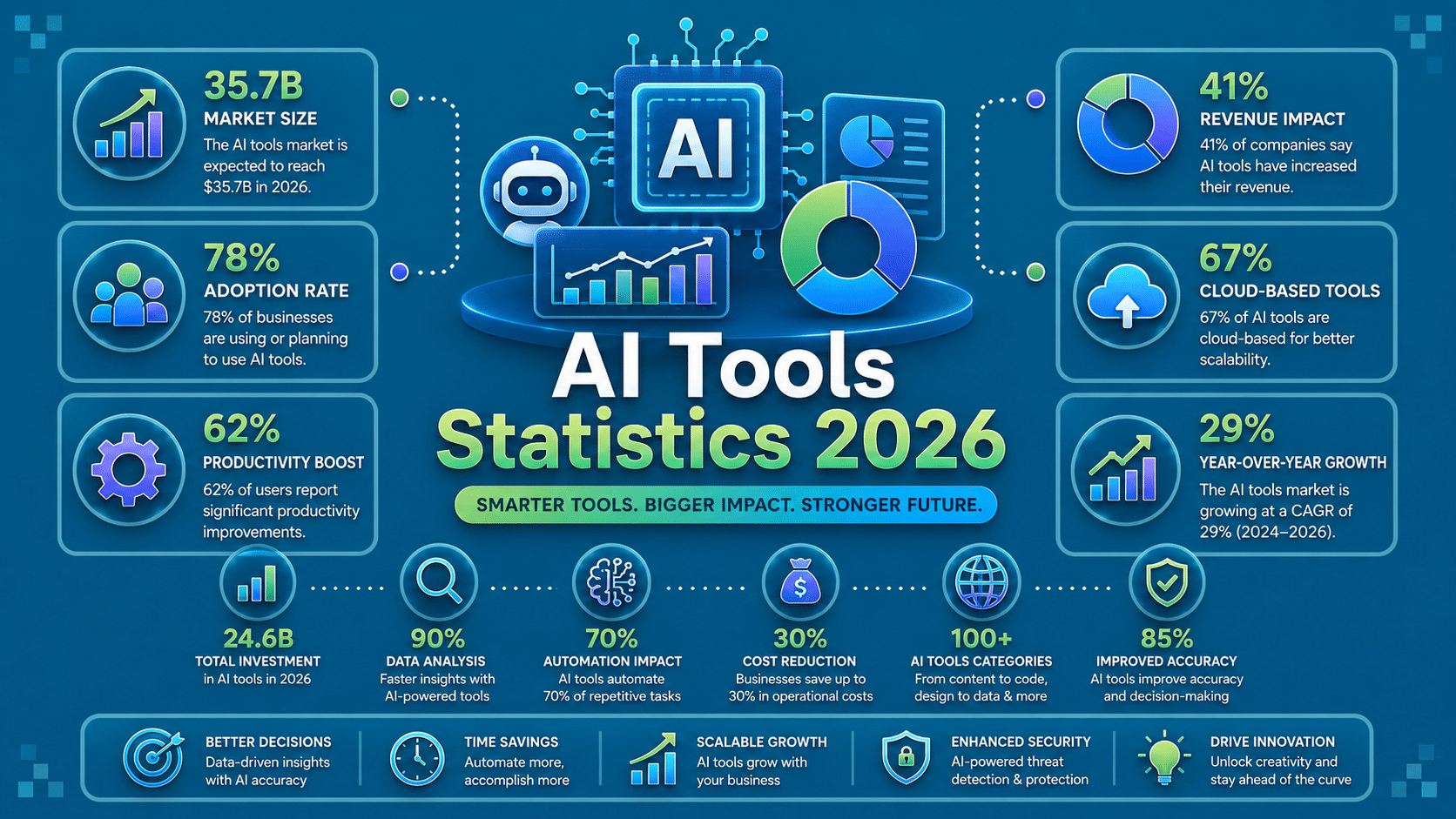
Image source: Panto AI
OpenAI News: The GPT-5.6 Family and the Sol Frontier Model
Understanding the New Naming Convention: Sol, Terra, and Luna
In July 2026, OpenAI moved away from simple version numbers to a utility-based naming convention for the GPT-5.6 family. This change reflects the reality that users now choose models based on "Reasoning Tiers" rather than just "the newest version."
- Sol: The frontier model designed for high-level reasoning, complex coding, and scientific discovery.
- Terra: A balanced model optimized for enterprise workflows, offering a mix of speed and intelligence.
- Luna: A high-speed, low-cost model intended for simple sub-tasks and high-volume data processing.
Performance Benchmarks: Sol Pro vs. The World
The technical specifications for GPT-5.6 Sol Pro have set a high standard for the industry. In the SWE-Bench Pro evaluation, which tests an AI's ability to resolve real-world software issues, Sol Pro achieved a score of 64.6%. Furthermore, it reached 94.6% on the GPQA Diamond benchmark, a test involving high-level expertise in biology, physics, and chemistry. These scores indicate that Sol is among the most capable reasoning engines currently available to the public.
Google and Anthropic Updates: Gemini 3.6 and Fable 5
Google Gemini 3.6 Flash and the Quest for Low Latency
Google's July 2026 announcement focused heavily on Gemini 3.6 Flash and its variants, 3.5 Flash-Lite and 3.5 Flash Cyber. Google has prioritized token efficiency and low latency, making Gemini 3.6 a top choice for "Edge AI" applications where immediate response times are critical. According to Google's latest technical updates , these models are particularly effective for scaling autonomous agents that need to process thousands of small interactions per second without incurring massive costs.
Anthropic’s Fable 5 and the US Export Control Impact
Anthropic released Fable 5 and Opus 5 earlier this year, though the roadmap faced a brief hurdle in Q2 due to a US export-control directive that temporarily limited the distribution of high-compute models. Despite this, Opus 5 remains a strong contender in the market, particularly for users who prioritize safety and steerability. Anthropic has also introduced a "Task Budget" feature, which allows users to set hard caps on how much an autonomous agent can spend on a specific project, addressing the growing concern of "runaway agents" in enterprise environments.
| Model Name | Primary Use Case | Reasoning Score (GPQA) | Cost per 1M Tokens (Input) |
|---|---|---|---|
| GPT-5.6 Sol Pro | Complex Reasoning / R&D | 94.6% | $5.00 |
| Gemini 3.6 Flash | Low Latency / Edge AI | 82.1% | $0.10 |
| Anthropic Opus 5 | Safety-Critical / Creative | 91.4% | $4.50 |
| GPT-5.6 Luna | High-Volume Sub-tasks | 74.2% | $0.05 |
How to Use Model Routing to Cut Your AI Costs by 50%
The Strategy of the Cursor Router
As models have become more specialized, the "one-size-fits-all" approach to AI has become financially unsustainable for many businesses. Model Routing is the practice of using a lightweight "router" agent to analyze an incoming request and send it to the most cost-effective model capable of handling it. For example, a request to "fix a typo" should never be sent to a frontier model like Sol Pro; instead, the router sends it to Luna or Gemini Flash. Implementing a routing strategy, such as the one popularized by the Cursor Router , has been shown to save organizations between 30% and 50% in operational costs.
Setting Up Task Budgets for Autonomous Agents
With the rise of autonomous agents that can run for hours or days, the risk of a "runaway agent" exhausting a company's API credits is real. In 2026, the most effective tools include built-in Task Budgets . This allows a manager to say, "You have $10 to research this topic; if you haven't finished by then, stop and report your progress." This level of governance is essential for maintaining fiscal responsibility in an era where AI can spend money as easily as it can generate text.
The New Role of the AI Composer in the Modern Workforce
Moving from Doer to Creative Director
The job market in 2026 is witnessing the emergence of the AI Composer . As noted by IBM's Chris Hay , the role of the professional is shifting from being a "doer" (writing the code, creating the copy) to being a "creative director" or "composer." Much like a music producer orchestrates different instruments and talents, the AI Composer orchestrates specialized agents to achieve a goal. This requires a deep understanding of how to chain agents together and verify their outputs rather than performing the labor themselves.
Essential Skills for 2026: Analytical Thinking and Resilience
While AI handles the execution, human oversight has become more critical than ever. The World Economic Forum reports that while 92 million roles may be displaced by 2030, 170 million new roles are being created, resulting in a net increase of 78 million AI-related positions. The most valuable skills in this new economy are analytical thinking (to debug agent logic) and resilience (to adapt as models and tools evolve). The ability to manage a "digital workforce" of agents is now a core competency for managers across all sectors.

Image source: KAI-COM
Infrastructure Breakthroughs: TurboQuant and LLMWikis
TurboQuant: Solving the Memory Bottleneck
One of the most significant technical advancements of early 2026 was the development of TurboQuant by Google Research. This technique achieves a 6x reduction in KV cache memory requirements. In practical terms, this means that models can maintain much larger context windows (the amount of information they can "remember" at once) without requiring a proportional increase in expensive GPU memory. This has made it possible for small businesses to run highly capable agents on consumer-grade hardware, democratizing access to advanced AI.
Building Your Personal Knowledge Infrastructure
The way we store information is also changing. The "LLMWiki" pattern, popularized by researchers like Andrej Karpathy, involves moving away from fragmented folders and documents toward AI-native graph-based knowledge systems . Instead of searching for a file, you interact with a "Wiki" that understands the relationships between your data points. This infrastructure makes it significantly easier for autonomous agents to find the exact context they need to perform a task accurately, reducing hallucinations and improving output quality.
Security and Governance: Navigating the EU AI Act in 2026
Article 50 and the Transparency Mandate
As of August 2, 2026, Article 50 of the EU AI Act is officially in force. This mandate requires that any synthetic content—whether text, image, or video—must be clearly labeled as AI-generated if it serves users within the European Union. For tool providers and businesses, this means implementing robust watermarking and metadata standards. Failure to comply can result in significant fines, making transparency a top priority for any organization deploying AI tools globally.
Preventing Double Agents in Your Network
Microsoft has introduced the Agent Identity framework to combat the rise of "double agents"—AI systems that may carry unchecked security risks or be manipulated by external prompts to leak data. By assigning a unique, verifiable identity to every autonomous agent in a network, companies can track exactly what an agent is doing, what data it has accessed, and who authorized its actions. This "Zero Trust" approach to AI security is becoming the standard for enterprise deployments.
The Shadow AI Crisis
Despite the advancements in governance, many organizations are struggling with a "Shadow AI" crisis. According to DataNorth's 2026 report , the rapid expansion of unsanctioned AI tools has led to an increase in data leaks. Employees often use unauthorized agents to speed up their work, inadvertently exposing sensitive intellectual property to public models. Auditing these tools and providing sanctioned, secure alternatives is a critical task for IT departments in the current year.
Frequently Asked Questions
While "best" depends on your specific needs, Agent 365 and specialized coding agents like AlphaEvolve rank among the top choices for small businesses. These tools offer a balance of ease of use and powerful execution capabilities. For those on a budget, using a model router with GPT-5.6 Luna or Gemini 3.6 Flash provides a highly cost-effective way to automate repetitive tasks without the high overhead of frontier models.
Costs have shifted to a consumption-based model. For a small team, you might spend between $50 and $200 per month on "Copilot Credits," depending on the volume of tasks. High-reasoning tasks using models like Sol Pro cost approximately $5.00 per 1 million input tokens, while routine sub-tasks using Luna cost as little as $0.05 per 1 million tokens. Implementing a routing strategy is the most effective way to keep these costs manageable.
As of September 2026, OpenAI has focused its efforts on the GPT-5.6 "Sol" family rather than a jump to version 6. The industry has moved toward incremental "reasoning tier" updates rather than massive, monolithic version leaps. This allows for more stable enterprise deployments while still providing significant advancements in intelligence and efficiency every few months.
A chatbot is designed for suggestion —it provides information or drafts text based on a prompt. An autonomous execution system is designed for action —it can use tools, access APIs, and work through a multi-step plan to achieve a goal. For example, a chatbot might tell you how to book a flight, whereas an autonomous agent will find the flight, check your calendar, and handle the booking process itself.
The EU AI Act applies to any tool that serves users in the EU, regardless of where the company is based. The most immediate impact is the Article 50 Transparency Mandate , which requires clear labeling of AI-generated content. US companies must ensure their tools include these disclosures and adhere to data governance standards if they wish to operate in the European market.
Final Thoughts: Your 2026 AI Checklist
The transition to autonomous systems marks a significant step forward in how we interact with technology. To stay competitive in late 2026, consider these key takeaways:
- Audit your subscriptions: Move away from "per-seat" models toward consumption-based alternatives to save on costs.
- Implement Model Routing: Use a router to send simple tasks to low-cost models like Luna or Flash, reserving Sol for complex reasoning.
- Train for Orchestration: Shift staff training from basic prompting to "AI Composer" workflows that focus on managing multiple agents.
- Ensure Compliance: Verify that all synthetic content is labeled according to Article 50 of the EU AI Act.
- Secure Your Agents: Adopt an "Agent Identity" framework to prevent unauthorized data access within your network.
- Build Knowledge Graphs: Transition from folders to AI-native knowledge systems (LLMWikis) to improve agent accuracy.
The bottom line for 2026 is that AI has stopped being a tool for suggestion and has become a teammate for execution.
Start by auditing your current AI spend and identifying three repetitive tasks that can be transitioned to an autonomous agent today.