Home
Home
Mastering Narrative Prompting for High Quality Image Generation in Google Gemini

The landscape of generative artificial intelligence has shifted from mere novelty to professional-grade asset creation. Within this evolution, Google Gemini has emerged as a powerhouse, particularly with its latest Gemini 3.1 Flash and Pro Image models (internally referred to as the Nano Banana series). Unlike early diffusion models that relied heavily on "keyword stuffing"—a chaotic mix of comma-separated tags like "4k, trending on ArtStation, hyperrealistic"—Gemini demands a more sophisticated approach. This approach is rooted in narrative prompting.
To generate high-quality photos in Gemini, one must stop thinking like a search engine user and start thinking like a film director or a professional photographer. Because Gemini is built on a native multimodal architecture, it processes text and visual concepts in a unified step. This means it understands grammar, context, and the relationship between objects far better than its predecessors.
The Fundamental Shift from Keywords to Narrative Descriptions
Most users coming from other platforms are accustomed to writing prompts like "Cyberpunk city, rain, neon lights, 8k, highly detailed." While Gemini can interpret this, it rarely produces the model's peak performance using such a fragmented style. The core strength of Gemini’s image engine lies in its deep language understanding.
In our testing across thousands of generations, a narrative, descriptive paragraph consistently outperforms a list of disconnected words. Gemini looks for the "story" within the prompt. Instead of listing "rain," describe how the rain interacts with the environment. For example, "A torrential downpour in a futuristic Tokyo alleyway, where the raindrops create rhythmic ripples in oily puddles that reflect flickering magenta neon signs." This narrative provides the AI with context regarding physics, reflection, and mood, leading to a much more coherent and aesthetically pleasing output.
Why Context Matters in Multimodal Models
The native multimodality of Gemini 3.1 allows it to perform logical reasoning about image content. If you describe a person sitting by a window at sunset, Gemini doesn't just "paste" a sunset background; it understands that the orange light should cast a specific shadow across the person’s face and create a rim-light effect on their hair. This level of physical accuracy is best triggered by full sentences that establish the relationship between the subject and the light source.
The Core Framework of an Effective Gemini Image Prompt
To build a high-performance prompt, you should follow a structured yet fluid framework. Think of it as a set of instructions for a world-class artist. A robust Gemini prompt generally consists of six essential building blocks.
1. The Subject: Beyond Generic Nouns
The subject is the anchor of your image. Avoid being vague. Instead of "a dog," specify the breed, age, and condition. "A battle-worn Siberian Husky with one blue eye and one brown eye" provides much more for the AI to work with than "a husky."
2. Action and Pose: Defining the Energy
What is the subject doing? The action dictates the composition and the "shutter speed" the AI simulates. A subject "sprinting through a field of tall grass with ears pinned back" creates a sense of motion blur and urgency that a "standing dog" simply cannot match.
3. Environment and Background: Creating the Stage
The background should never be an afterthought. It sets the scale and the color palette. Describe the atmosphere—is it dusty, sterile, overgrown, or ethereal? "A sun-drenched, rustic ceramic workshop in Kyoto, with shelves filled with unfinished clay pots and dust motes dancing in the light" provides a rich tapestry of textures for the model to render.
4. Art Style and Aesthetic
Gemini is incredibly versatile, capable of everything from oil paintings to minimalist vector art. If you want photorealism, state it explicitly, but you can also evoke specific eras or movements, such as "1970s Kodachrome film aesthetic" or "Bauhaus-inspired architectural visualization."
5. Lighting and Mood: The Secret of Professional Quality
Lighting is the difference between a flat, "AI-looking" image and a masterpiece. Use specific lighting terminology:
- Golden Hour: Soft, warm, directional light.
- Volumetric Lighting: Light rays visible through fog or dust (the "God ray" effect).
- Rembrandt Lighting: A classic portrait setup creating a small triangle of light on the shadowed cheek.
- Cyberpunk Neon: High-contrast, saturated blues and pinks with deep shadows.
6. Composition and Framing: The Camera Lens
Tell the AI where the camera is.
- Wide-Angle Shot (14mm - 24mm): Great for landscapes and making spaces feel vast.
- Portrait Lens (85mm - 135mm): Ideal for people, creating a shallow depth of field where the background is a creamy blur (bokeh).
- Macro Photography: For extreme close-ups of textures like insects or jewelry.
- Birds-Eye View: For a top-down, architectural, or map-like perspective.
Technical Photography Terms that Transform Gemini Outputs
To truly master Gemini AI photo prompts, you must speak the language of photography. The model has been trained on vast datasets of professional imagery, and it responds with remarkable precision to technical descriptors.
Controlling Depth of Field
If your images feel too "busy," you likely need to control the depth of field. Use the term "shallow depth of field" to isolate your subject. In our practical application, specifying an "f/1.8 aperture" often signals the model to render a sophisticated background blur that mimics high-end glass lenses. Conversely, for a landscape, use "deep focus" or "f/11 aperture" to ensure everything from the foreground pebbles to the distant mountains remains sharp.
Understanding Sensor and Film Stock Emulation
Gemini can simulate the "grain" and "color science" of specific cameras. If you are looking for a nostalgic, gritty look, try adding "shot on 35mm grainy film" or "Polaroid 600 aesthetic." For ultra-modern commercial looks, use "shot on a high-resolution medium format camera like a Hasselblad, ultra-sharp details, 8k resolution."
Mastering Textures and Materials
The Gemini 3.1 Pro model is particularly adept at rendering PBR (Physically Based Rendering) materials. When describing objects, mention their surface quality:
- Matte: Non-reflective, soft.
- Anodized Aluminum: Smooth, metallic, with a specific sheen.
- Iridescent: Color-shifting, like a soap bubble or oil slick.
- Tactile 3D: Great for icons and stickers, making them look touchable.
Industry Specific Prompt Templates and Case Studies
To provide immediate value, let’s look at how these principles apply to real-world industries. Each of these templates is designed to leverage Gemini's narrative strengths.
1. E-commerce and Product Photography
For product shots, the goal is cleanliness and "high-end" appeal. You need to describe the lighting setup as if you were in a studio.
- Prompt Template: "A high-resolution, studio-lit product photograph of a [Product Description] placed on a [Surface Material]. The lighting is a three-point softbox setup designed to create soft, diffused highlights and eliminate harsh shadows. The camera angle is a 45-degree isometric shot to showcase the product's clean lines. Ultra-realistic, 8k resolution, sharp focus on [Specific Feature]."
- Example: "A high-resolution, studio-lit product photograph of a minimalist matte black ceramic coffee mug, presented on a polished concrete surface. The lighting is a three-point softbox setup designed to create soft, diffused highlights. The camera angle is a slightly elevated 45-degree shot. Ultra-realistic, with sharp focus on the steam rising from the coffee. Square image."
2. Architectural Visualization and Interior Design
Architecture requires a focus on light, scale, and the relationship between the built environment and nature.
- Prompt Template: "A wide-angle architectural photograph of a [Building Type] during [Time of Day]. The structure features [Materials like Glass, Concrete, Wood] and is integrated into a [Landscape]. The lighting emphasizes the [Shadows/Transparency/Texture]. Captured with a tilt-shift lens to ensure perfectly vertical lines."
- Example: "A wide-angle architectural photograph of a brutalist concrete villa nestled in a lush tropical jungle at dusk. Huge floor-to-ceiling glass windows reveal a warm, glowing interior with mid-century modern furniture. The exterior concrete has a damp, weathered texture. The lighting is a mix of the cool blue twilight and the warm orange interior spill. Tilt-shift lens, professional architectural magazine style."
3. Character Design and Portraiture
When generating people, avoiding the "uncanny valley" requires focusing on skin texture and eye detail.
- Prompt Template: "A cinematic, photorealistic close-up portrait of a [Description of Person]. Focus on the fine details of the skin, such as [Pores/Wrinkles/Freckles]. The eyes should be sharp and reflective, showing a faint reflection of the [Environment]. Shot on an 85mm lens, f/1.2, resulting in a soft bokeh background."
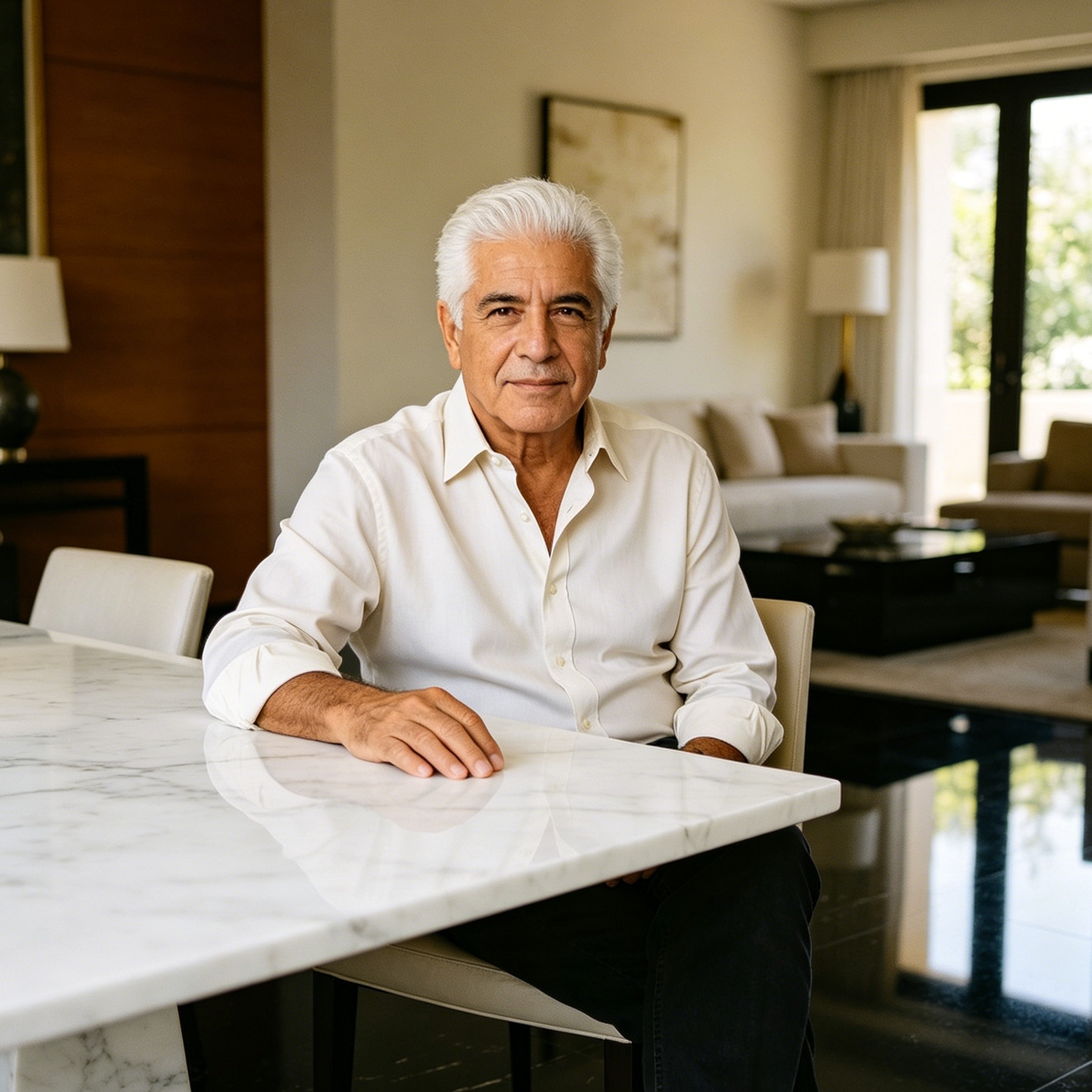
- Example: "A cinematic, photorealistic close-up portrait of an elderly sea captain with a weathered face, deep-set wrinkles, and a salt-and-pepper beard. His eyes are a piercing blue, reflecting the vast ocean in front of him. He is wearing a heavy navy wool turtleneck. The lighting is the harsh, dramatic side-lighting of a storm brewing. 85mm lens, high detail, every pore and hair visible."
4. UI/UX and App Prototyping
Gemini is unique in its ability to render legible text and clean UI layouts, a feature often referred to as "Nano Banana 2" capabilities.
- Prompt Template: "A high-fidelity UI mockup for a [Type of App] displayed on a [Device]. The design is [Style like Minimalist/Neumorphic/Material]. The color palette is [Colors]. At the top, a clear heading reads '[Specific Text]'. The layout includes [Features like Search Bar, Profile Icon, Grid of Cards]."
- Example: "A high-fidelity UI mockup for a meditation app called 'Serene' displayed on a modern smartphone. The design is minimalist with a soft pastel green and cream color palette. The main screen shows a large circular button that says 'Start Breathing' in a clean sans-serif font. Below it, a row of icons representing 'Sleep', 'Focus', and 'Anxiety'. The background of the app is a subtle, blurry gradient of a forest."
Advanced Iteration and Conversational Editing Techniques
One of the most powerful features of Gemini is its ability to refine images through conversation. You don't have to get the prompt perfect on the first try. In fact, the most professional results often come from 3-4 rounds of iterative feedback.
The Power of "Keep the Same, But..."
If Gemini generates a character you love but the background is wrong, do not start over. Use a follow-up prompt:
- "Keep the character's pose, face, and outfit exactly the same, but change the background from a forest to a bustling, neon-lit cyberpunk street at night. Maintain the same lighting color on the skin."
Adding and Removing Elements
Gemini's multimodal nature allows it to understand spatial relationships during edits:
- "Add a small, robotic cat sitting on the table next to the coffee cup. Ensure the cat's shadow matches the direction of the existing lamp light."
- "Remove the person in the background and fill the space with a large, leafy monstera plant that matches the room's aesthetic."
Style Transfer and Composition
You can even upload your own photos and ask Gemini to apply a style or compose a new scene based on them. This is the "Image + Text-to-Image" workflow. For instance, you could upload a photo of your living room and prompt: "Redesign this room in a Japandi style, replacing the sofa with a low-profile wooden bench and adding a large circular paper lantern."
Understanding the Gemini Image Model Ecosystem
To optimize your prompt, it helps to know which model is processing your request. Google typically offers different tiers of the "Nano Banana" image engine:
- Gemini 3.1 Flash Image: Optimized for speed and high-volume tasks. It is excellent for quick iterations, stickers, and simple social media assets.
- Gemini 3 Pro Image: The professional-grade model. It has "thinking" capabilities, allowing it to follow extremely complex, multi-layered instructions. If your prompt is longer than 200 words or involves precise text rendering, this is the engine you want.
- SynthID Watermarking: It is important to note that all images generated by Gemini models include SynthID, an invisible, imperceptible watermark that identifies the content as AI-generated for safety and transparency.
Troubleshooting Common Gemini Prompt Issues
Even with a great framework, you may encounter obstacles. Here is how to navigate them:
Problem: "The image looks too fake or plastic."
- Solution: Increase the "texture" descriptions. Mention "film grain," "subsurface scattering on the skin," or "imperfections like dust and scratches." AI tends toward perfection; humanizing the subject with flaws makes it look more real.
Problem: "The text in the image is garbled."
- Solution: Use Gemini 3 Pro. When prompting for text, put the text in quotation marks and be very specific about the font style. Example: "Render the word 'JOURNEY' in a bold, wide-spaced serif font with a gold metallic texture."
Problem: "The hands or limbs look unnatural."
- Solution: Specify a framing that avoids complex hand positions, or explicitly describe the hand's action. "The subject's hands are resting flat on the table, fingers spread naturally," provides the AI with a clearer skeletal map than leaving it to chance.
Problem: "The AI refuses to generate the image."
- Solution: Check for "negative phrasing" or sensitive terms. Gemini prefers positive instructions. Instead of "no cars," say "an empty, quiet street." Also, ensure your prompt complies with safety guidelines regarding real public figures or harmful content.
Conclusion
Mastering Gemini AI photo prompts is a journey from simple keywords to rich, cinematic storytelling. By leveraging the model's native multimodality, you can create images that aren't just visually stunning, but logically and physically coherent. Remember to describe the scene as a narrative, use technical photography terms to guide the "camera," and don't hesitate to use the conversational nature of Gemini to refine your vision through multiple iterations. Whether you are building a product mockup, a character for a story, or a professional UI prototype, the key lies in the specificity of your narrative and your understanding of the light, the lens, and the story.
FAQ
What is the best aspect ratio for Gemini images? Gemini is flexible with aspect ratios. For social media, use "Vertical 9:16." For cinematic shots, use "Widescreen 16:9" or "Ultra-wide 21:9." For professional photography, "3:2" or "4:5" are standard.
Can Gemini generate text inside images accurately? Yes, especially the Gemini 3 Pro model. It is significantly better than previous versions at rendering specific words, making it ideal for logos, book covers, and posters.
How do I maintain character consistency in Gemini? The most effective way is to use a reference image of your character and use the "Image + Text" prompt. Describe the character's unique traits (e.g., "the man with the specific scar on his left cheek") in every follow-up prompt to keep the AI focused on those details.
Does Gemini understand lighting types? Absolutely. It understands technical terms like "rim lighting," "chiaroscuro," "softbox diffusion," and "neon glow." Using these terms is the fastest way to improve the professional quality of your outputs.
-
Topic: How to prompt Gemini 2.5 Flash Image Generation for the best results - Google Developers Bloghttps://developers.googleblog.com/es/how-to-prompt-gemini-2-5-flash-image-generation-for-the-best-results/
-
Topic: Gemini API | Google AI for Developershttps://ai.google.dev/gemini-api/docs/image-generation?authuser=00
-
Topic: gemini api | google ai for developershttps://ai.google.dev/gemini-api/docs/image-generation?authuser=09&hl=zh-cn