Home
Home
The New Science of Generating High Fidelity Images From Text
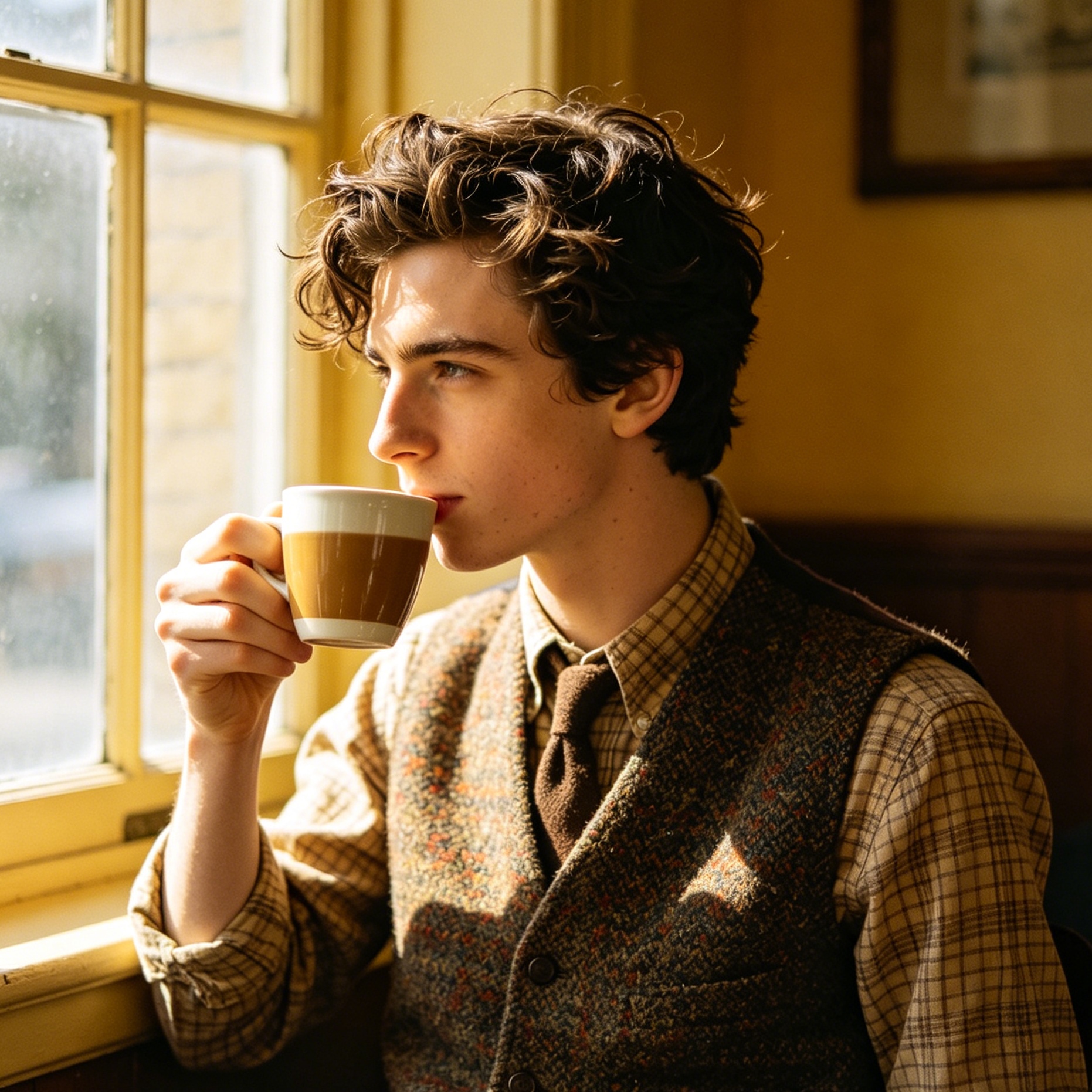
Text-to-image technology has shifted from a digital curiosity into a cornerstone of the modern creative economy. What started as blurry, fever-dream interpretations of short phrases has evolved into a sophisticated discipline capable of producing photorealistic portraits, intricate architectural visualizations, and complex graphic designs in seconds. At its core, this technology allows a user to input a text description (a prompt) and receive a high-resolution image generated by an artificial intelligence model that understands the relationship between language and visual pixels.
Understanding the Engine: How Diffusion Models Transform Noise into Art
To master the art of generating images from text, one must first understand the underlying architecture. The current gold standard in this field is the Diffusion Model. Unlike previous iterations of AI, such as Generative Adversarial Networks (GANs), diffusion models operate on a principle inspired by thermodynamics.
The process begins with "forward diffusion," where an image is systematically destroyed by adding Gaussian noise until it becomes a meaningless field of static. The AI model is trained to reverse this process. During the "reverse diffusion" stage, the model looks at a field of random noise and, guided by the text prompt provided by the user, predicts how to subtract that noise to reveal a coherent image.
In our internal testing of various checkpoints, we have observed that the quality of the final output depends heavily on the model's ability to interpret "latent space." Latent space is a multi-dimensional mathematical map where similar concepts are clustered together. When you type "a cat in a space suit," the AI navigates the coordinates between "feline features," "textiles," and "celestial backgrounds" to synthesize something entirely new.
The Titan Comparison: Which Tool Should You Use?
Choosing the right tool is no longer just about which one is "best," but which one fits your specific creative workflow. The landscape is currently dominated by four distinct philosophies.
Midjourney: The Aesthetic Powerhouse
Midjourney remains the undisputed leader for users seeking artistic flair and "cinematic" quality. In our practical application, Midjourney v6.1 demonstrates an unparalleled understanding of lighting, particularly global illumination and sub-surface scattering on skin textures.
- Best for: High-end illustrations, concept art, and photorealistic photography.
- Pros: Exceptional out-of-the-box aesthetics; requires less prompt engineering for beautiful results.
- Cons: Operates primarily through Discord (though a web version is scaling); closed-source ecosystem.
Flux.1: The New King of Detail and Typography
Developed by Black Forest Labs, Flux.1 has disrupted the market by solving the two oldest problems in AI generation: human hands and text rendering. In head-to-head comparisons, Flux.1 (especially the Pro and Dev versions) can render complex sentences inside an image without the "gibberish" characters common in older models.
- Technical Requirement: Running Flux.1 Dev locally typically requires at least 24GB of VRAM for smooth performance.
- Best for: Graphic design involving text, posters, and hyper-realistic human anatomy.
DALL-E 3: The King of Prompt Adherence
Integrated directly into ChatGPT, DALL-E 3 is the most "intelligent" model. It excels at following complex, multi-layered instructions. If you ask for "a red ball on a blue cube next to a green pyramid with a specific shadows falling to the left," DALL-E 3 is more likely to get the spatial logic correct than its competitors.
- Best for: Beginners and users who want to use natural language rather than complex technical tags.
Stable Diffusion (SDXL / SD 1.5): The Open Source Standard
Stable Diffusion is the tool of choice for professionals who need total control. Because it can be installed locally, users can employ extensions like ControlNet to dictate the exact pose of a character or LoRA to train the AI on a specific person or art style.
The Corporate Integration: Adobe Firefly and Google Imagen
While independent models dominate social media, two tech giants have built ecosystems designed for enterprise-grade reliability and legal safety.
Adobe Firefly: Commercial Safety First
Adobe Firefly is unique because it is trained exclusively on Adobe Stock images and public domain content. This addresses the "ethical gray area" of AI, ensuring that a brand can use generated images in a global marketing campaign without fear of copyright infringement. Its integration into Photoshop (Generative Fill) allows designers to expand canvases or change outfits on models with a single click.
Google Imagen 4.0
Google’s latest iteration, Imagen 4, focuses on "grounding" and high-fidelity detail. Through the Gemini API, developers can access Imagen to generate 4K resolution images that feature advanced localized details. A key feature of Google’s approach is the inclusion of SynthID, an invisible, imperceptible watermark that identifies the image as AI-generated, aiding in digital transparency.
The Rise of Localized Models: The Chinese AI Frontier
The text-to-image market in China has developed a unique trajectory, focusing on bilingual understanding and specific cultural aesthetics.
- Jimeng (ByteDance): Formerly known as Faceu, this tool has become a favorite for social media creators. It offers high-quality video and image generation with a deep understanding of Chinese cultural nuances and slang.
- Tongyi Wanxiang (Alibaba): A robust enterprise solution that excels in commercial design and 3D rendering styles.
- Wenxin Yige (Baidu): Leveraging the Ernie Bot ecosystem, it is perhaps the most proficient at interpreting classical Chinese poetry and converting it into traditional ink-wash or modern digital art styles.
Mastering Prompt Engineering: A Blueprint for Professional Results
A prompt is more than a sentence; it is a set of coordinates. To move beyond average results, professional creators use a structured formula. Based on our experience, the most effective structure is:
[Core Subject] + [Action/State] + [Environment/Context] + [Artistic Medium/Style] + [Lighting/Perspective] + [Technical Parameters]
Breakdown of the Formula:
- Core Subject: Be specific. Instead of "a dog," use "a rugged Siberian Husky with piercing blue eyes."
- Action/State: "Running through deep snow" or "sleeping in a sunbeam."
- Environment: "In a dense pine forest during a blizzard" or "inside a minimalist Tokyo apartment."
- Artistic Medium: This defines the "DNA" of the image. "Oil painting on canvas," "35mm film photography," "Isometric 3D render," or "Cyberpunk digital illustration."
- Lighting/Perspective: "Golden hour," "Cinematic rim lighting," "Wide-angle lens," or "Macro photography."
- Technical Parameters: For Midjourney, this includes
--ar 16:9(aspect ratio) or--stylize 250.
Example Evolution of a Prompt:
- Basic: "A futuristic city."
- Improved: "A futuristic city with flying cars and neon lights, rainy weather."
- Professional: "Hyper-realistic aerial view of a Neo-Tokyo metropolis in 2077, rain-slicked streets reflecting vibrant magenta and cyan neon signs, cinematic bokeh, shot on Arri Alexa, 8k resolution, highly detailed architectural textures, volumetric fog."
What are the Advanced Techniques in AI Image Generation?
Once you have mastered basic prompting, the next step is controlling the output through technical modifiers.
ControlNet: Directing the AI
ControlNet is an extension for Stable Diffusion that allows you to use an external image as a "structural guide." By providing a "depth map" or a "Canny edge" (a line drawing), you can force the AI to keep the exact composition of a room or the specific pose of a person while changing the style or the subject.
LoRA (Low-Rank Adaptation)
LoRA is a method for "fine-tuning" a large model on a small dataset. If you have 20 photos of a specific product or a unique art style, you can train a LoRA file (usually only 50MB to 100MB) and "plug it into" a base model like SDXL. This allows for unparalleled consistency across a series of images.
Inpainting and Outpainting
- Inpainting: Selecting a specific area of an image (like a person's face or a hand) and asking the AI to regenerate only that section. This is vital for fixing the "sixth finger" issue or changing a character's expression.
- Outpainting: Expanding the borders of an image. If you have a portrait but need it to be a landscape for a website header, outpainting uses the existing pixels as a reference to imagine what lies beyond the frame.
The Typography Revolution: Why AI Can Finally Write
For years, AI-generated images were famous for their "alien text." However, 2024 marked a turning point. Models like Flux.1 and DALL-E 3 now utilize T5-XXL encoders (Text-to-Text Transfer Transformer). These encoders allow the model to understand the spelling and spacing of words as distinct concepts from the visual art itself.
In our workflow tests, we found that to get the best text results, you should put the desired text in quotation marks within your prompt. For example: A vintage neon sign in a desert diner that says "STOP AND EAT", cinematic photography. Flux.1 will render this perfectly nearly 95% of the time, whereas older models would have rendered "STP ND ET" or random scribbles.
Ethical Considerations and Digital Provenance
As the boundary between reality and generated content blurs, ethical frameworks are catching up.
- Copyright: In many jurisdictions, AI-generated images without significant human intervention cannot be copyrighted. This makes them risky for logo design but excellent for mood boards and temporary marketing assets.
- Deepfakes: Responsible platforms have implemented strict filters to prevent the generation of real people in compromising or misleading situations.
- Detection: Tools like Google’s SynthID and the C2PA standard (supported by Adobe and Microsoft) are becoming mandatory. These embed metadata into the image file that tracks its origin, ensuring that users can verify whether an image was captured by a lens or computed by a silicon chip.
Conclusion
Text-to-image technology has matured into a multi-faceted toolset that rewards both creative vision and technical precision. Whether you are using the artistic intuition of Midjourney, the open-source flexibility of Stable Diffusion, or the typographic precision of Flux.1, the barrier between imagination and visual reality has never been thinner. The key to success lies in the iterative process: starting with a strong conceptual prompt, refining it through style modifiers, and using advanced tools like Inpainting to polish the final result.
FAQ
What is the best free AI image generator? Currently, DALL-E 3 (via Microsoft Copilot) and the "Schnell" version of Flux.1 (available on various open-source hosting platforms) offer the highest quality for free.
Can I use AI-generated images for my business? Yes, but with caveats. Using Adobe Firefly is the safest route for commercial projects due to its training data transparency. For other models, you should consult local copyright laws regarding the ownership of AI-created works.
How do I fix messed up hands in AI images? Use "Inpainting" tools to highlight the hand and re-prompt specifically for that area, or switch to a more modern model like Flux.1, which handles anatomy much more accurately than older versions.
What is a negative prompt? A negative prompt tells the AI what not to include. Common negative prompts include "blurry, low resolution, extra fingers, deformed, text, watermark." (Note: DALL-E 3 does not use negative prompts; it relies on natural language descriptions of what you want).
-
Topic: ADOBE FIREFLY PROMPT GUIDEhttps://business.adobe.com/content/dam/dx/us/en/resources/sdk/mastering-text-to-image-prompts/mastering-text-to-image-prompts.pdf
-
Topic: gemini generate content api ( legacy ) | google ai for developershttps://ai.google.dev/gemini-api/docs/generate-content/image-generation?hl=zh-cn
-
Topic: 使用 imagen 生成 图片 | gemini api | google ai for developershttps://ai.google.dev/gemini-api/docs/imagen?hl=zh-tw