Home
Home
The Professional Formula for Generating Photorealistic Images With ChatGPT
Achieving true photorealism in AI-generated imagery is the "holy grail" for many creators. While ChatGPT, powered by DALL-E 3, has become incredibly intuitive, many users still struggle with images that look "too smooth," "plastic," or distinctly "AI-generated." The secret to bridging the gap between a digital illustration and a professional photograph lies not in luck, but in a structured, technical approach to prompting.
To get the most out of ChatGPT for photography, one must stop treating the AI as a general illustrator and start directing it as a professional cinematographer. This requires a deep understanding of how light, optics, and texture interact within the model’s latent space.
The Anatomy of a High-End Photo Prompt
A common mistake is writing a prompt like "a photo of a woman in a forest." This gives the AI too much creative freedom, often leading to a generic, filtered look. Instead, a professional-grade prompt follows a specific modular formula.
The Six-Element Formula
- The Subject: Who or what is the focus? (Be specific about age, clothing, and expression).
- Action and Context: What is happening? (Is the subject moving, looking at the lens, or interacting with an object?)
- Environment and Background: Where is this taking place? (Define the architecture, the flora, or the urban density).
- Lighting and Atmosphere: This is the most critical element for realism. (Define the source, color, and intensity of light).
- Camera and Optics: Specify the "hardware." (Lens focal length, aperture, and camera brand characteristics).
- Style and Technical Finish: Define the "film stock" or post-processing. (Film grain, color grading, or specific resolution markers).
By layering these elements, you transform a simple request into a precise set of instructions that the AI can execute with high fidelity.
Mastering Light: The Soul of Photorealism
Lighting is the difference between a flat image and one that has depth and emotion. In our testing, ChatGPT responds exceptionally well to technical lighting terms used in the film industry.
Directional and Quality-Based Lighting
Instead of using vague adjectives like "beautiful," use these specific terms to control the mood:
- Rembrandt Lighting: Creates a small inverted triangle of light on the subject's cheek, offering a moody, classic portrait feel.
- Golden Hour: The soft, warm light shortly after sunrise or before sunset. This adds a natural glow and long, soft shadows.
- Volumetric Lighting (God Rays): Visible beams of light shining through dust, mist, or clouds. Perfect for cinematic forest or cathedral shots.
- Rim Lighting: Light placed behind the subject to create a glowing outline, separating them from a dark background.
- High-Key vs. Low-Key: High-key is bright and airy (ideal for commercial/product shots), while low-key is dark and dramatic (ideal for noir or fine art).
Practical Application
Compare these two prompts:
- Basic: "A photo of a man in a room with light coming through the window."
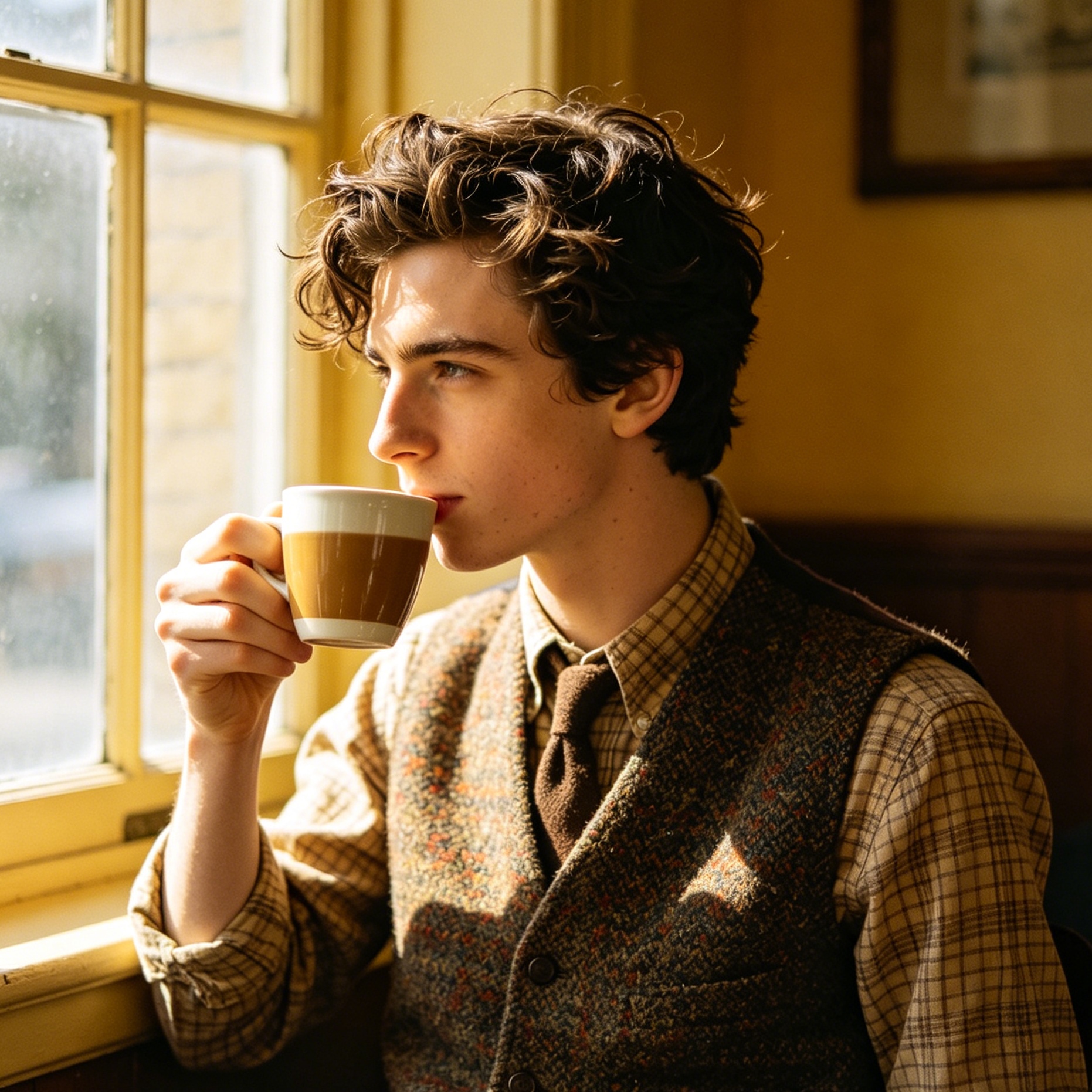
- Professional: "A moody low-key portrait of a man sitting in a dark study. Strong chiaroscuro lighting with a single volumetric beam of light hitting his face from a high window. Soft dust particles visible in the light beam."
The second prompt forces the AI to calculate shadows and particle physics more accurately, resulting in a much more realistic output.
Optical Precision: Lenses and Apertures
Professional photographers choose their lenses for a reason. AI models like DALL-E 3 are trained on vast datasets of tagged photography, meaning they understand the visual characteristics associated with specific focal lengths.
Choosing the Right Focal Length
- Wide-Angle (14mm to 24mm): Excellent for landscapes and architecture. It creates a sense of scale but can distort edges. Use this when you want an epic, expansive feeling.
- The "Human Eye" (35mm to 50mm): The 35mm lens is the gold standard for street photography and documentary-style shots. It feels "real" and grounded.
- Portrait Lenses (85mm to 135mm): These lenses compress facial features and create beautiful background blur (bokeh). If you want a professional headshot, always specify an 85mm lens.
- Macro Lenses: Essential for close-ups of insects, flowers, or textures. Specify "Macro photography" to tell the AI to shift its focus distance to centimeters.
Understanding Aperture (The f-stop)
The aperture controls the depth of field. If you want that creamy, blurred background seen in high-end photography, you must specify a wide aperture.
- f/1.8 or f/2.8: Shallow depth of field. The subject is sharp, and the background is a soft blur.
- f/8 or f/11: Deep depth of field. Everything from the foreground to the background is in sharp focus. This is standard for landscape photography.
The "Camera Body" Effect
While AI doesn't actually use a camera, mentioning specific systems can nudge the style:
- Hasselblad / Phase One: Suggests extremely high detail and professional studio quality.
- Leica M10: Often yields a specific "street photography" aesthetic with high contrast and sharp optics.
- Fujifilm: Tends to produce specific color science reminiscent of classic film simulations.
Textures, Grain, and Post-Processing
The "plastic" look of AI often comes from a lack of noise and imperfection. Real photos have grain, chromatic aberration, and texture.
Power Keywords for Texture
To break the AI smoothness, incorporate these terms:
- Kodak Portra 400 or Fujifilm Superia: These are famous film stocks. Adding them tells the AI to apply specific color palettes and natural grain.
- Raw Texture: Mentioning "visible skin pores," "fine fabric weave," or "weathered wood grain" forces the model to render higher-frequency details.
- Subsurface Scattering: This is a technical term for how light penetrates translucent surfaces like human skin or marble. It is essential for realistic portraits.
- Film Grain / ISO Noise: A subtle amount of grain makes an image feel like it was captured on a physical medium rather than rendered by a GPU.
Category-Specific Prompt Strategies
Let's look at how to apply these theories to the most common photography niches.
1. Professional Corporate Portraiture
The goal here is clean, trustworthy, and high-end.
- The Prompt: "A professional executive headshot of a woman in her 40s wearing a tailored charcoal blazer. Captured on a Hasselblad with an 85mm lens at f/2.8. Soft studio softbox lighting with a subtle catchlight in the eyes. Background is a softly blurred modern office interior. Neutral color grading, high detail, photorealistic skin textures."
2. Cinematic Street Photography
This requires motion, atmosphere, and a "candid" feel.
- The Prompt: "A candid street photograph taken in Tokyo at night during a heavy rainstorm. A person in a yellow raincoat is crossing a street, their reflection visible in the wet asphalt. Neon signs in the background creating cinematic bokeh. Shot on a 35mm Leica lens, high contrast, grainy film aesthetic, moody teal and orange color grading."
3. National Geographic Style Landscape
Here, scale and timing are everything.
- The Prompt: "A breathtaking wide-angle landscape of the Faroe Islands. Jagged green cliffs meeting a dark, crashing ocean. Golden hour sunlight breaking through heavy storm clouds. Shot on a 14mm wide-angle lens at f/11 for maximum sharpness. Long exposure effect on the water to create a misty texture. 8k resolution, hyper-detailed, National Geographic style."
4. Macro Food and Product Photography
Focus on texture and sensory appeal.
- The Prompt: "Extreme macro photography of a single ripe strawberry falling into a splash of cream. High-speed photography capturing frozen droplets of liquid. Bright, airy studio lighting. Shallow depth of field with focus sharp on the strawberry seeds. Vibrant colors, commercial food photography style, high-end editorial quality."
Using ChatGPT as a Prompt Engineer for Other Tools
Sometimes you aren't using DALL-E 3 directly; you are using ChatGPT to write prompts for Midjourney or Stable Diffusion. In this case, your interaction with ChatGPT should be collaborative.
The "Expert Prompt Creator" Method
Instead of asking for a prompt, tell ChatGPT to act as a prompt engineer. Use a meta-prompt like this:
"I want you to act as a professional AI Prompt Engineer for Midjourney. I will give you a basic idea, and you will expand it into a detailed, technical prompt. Use technical photography terms, specify lenses, lighting, and film stocks. My first idea is: [Insert Idea]."
This method allows you to leverage ChatGPT’s linguistic capabilities to bridge the gap between your creative vision and the technical requirements of high-end image generators.
Refining and Editing the Results
ChatGPT now offers the ability to edit specific parts of a generated image. This is a game-changer for photography.
How to Iterate Effectively
- Start Broad: Get the composition right first.
- Use the Selection Tool: If you love the photo but hate the hat the subject is wearing, select the hat and type "change to a professional leather camera bag."
- Adjust Lighting Post-Generation: If the image is too bright, ask ChatGPT: "Keep the composition identical, but change the lighting to a moody sunset with long shadows."
- Preserve Identity: When asking for variations, explicitly state "Preserve the facial features and hairstyle of the person in the original image."
The Ethical and Creative Considerations
While generating photos with ChatGPT is powerful, it's important to aim for originality. Instead of asking the AI to "mimic the style of [Specific Photographer]," which can lead to copyright concerns and derivative work, describe the elements of that style.
Describe the lighting, the color palette, and the framing techniques. This results in a unique piece of art that carries the essence of professional photography without being a direct imitation.
Conclusion
Mastering ChatGPT prompts for photos is about moving from "what" to "how." By focusing on the technical aspects of photography—lenses, lighting, f-stops, and film stocks—you provide the AI with the necessary guardrails to produce realistic results. Remember that the prompt is a conversation; use the formula as a starting point, then iterate, refine, and edit until the digital image carries the weight and texture of a real-world photograph.
Frequently Asked Questions (FAQ)
What is the best camera lens to mention for portraits in ChatGPT?
For most portraits, the 85mm lens is ideal. It provides a natural perspective on human faces and creates a beautiful background blur (bokeh) that makes the subject pop.
Why do my AI photos look like cartoons or plastic?
This usually happens because the prompt is too simple or lacks "noise" keywords. To fix this, add terms like "film grain," "skin pores," "raw texture," or specify a film stock like "Kodak Portra 400."
Can ChatGPT generate images in specific aspect ratios?
Yes. You can ask ChatGPT to "Make this image in a 16:9 widescreen ratio" or "Change this to a 9:16 vertical ratio for a phone screen." If you are using ChatGPT to write prompts for Midjourney, you should add the parameter --ar 16:9 at the end of the prompt.
How do I get consistent characters in multiple photos?
Consistency is a challenge in AI. The best way to achieve it in ChatGPT is to use a very detailed description of the character (age, eye color, specific clothing, hair texture) and use the "Selection" and "Edit" tools to change the background or action while keeping the character's core features anchored.
Is there a limit to how long a prompt should be?
While DALL-E 3 is good at following long instructions, it can sometimes get confused if there are too many conflicting details. Aim for 2-4 descriptive sentences that cover the subject, lighting, and camera settings. Quality of description matters more than quantity of words.
-
Topic: Image generation | ChatGPT Learnhttps://learn.chatgpt.com/docs/image-generation
-
Topic: July 2026 (Theme: Perspective) — ChatGPT / API Image Generative Art Gallery, Prompt Tips, and Help - Page 129 - Community - OpenAI Developer Communityhttps://community.openai.com/t/july-2026-theme-perspective-chatgpt-api-image-generative-art-gallery-prompt-tips-and-help/1378298?page=129
-
Topic: 50+ Best ChatGPT Photo & Image Effect Prompts in 2026 [Copy & Paste]https://www.template.net/business/chatgpt-photo-effect-prompts/