Home
Home
Master the Layered Prompt Strategy for Photorealistic ChatGPT Images
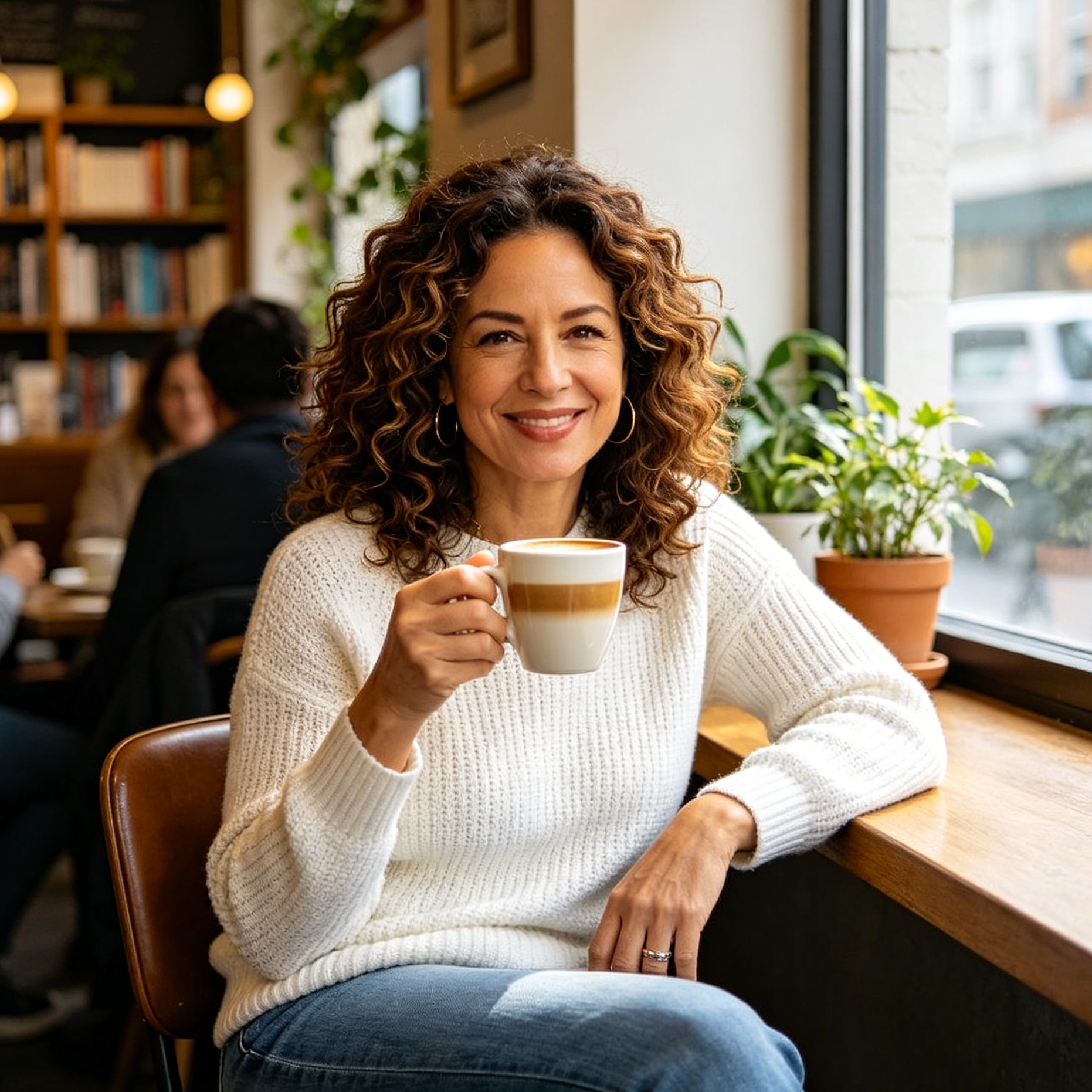
Artificial intelligence has evolved past the stage of creating surrealist digital art. Today, the most sought-after skill is generating images that are indistinguishable from professional photography. Achieving this level of realism in ChatGPT (powered by DALL-E 3) requires moving beyond simple descriptions. To create high-fidelity photos, one must adopt a professional photographer’s mindset, layering technical specifications onto creative subjects.
The difference between a "plastic-looking" AI generation and a breathtaking photorealistic image lies in the prompt's structure. By using a layered framework, the AI is guided to prioritize textures, light physics, and optical realities.
The Foundation of the Perfect Photo Prompt
A high-quality photo prompt functions like a production brief. Instead of a single sentence, it uses a logical sequence to build the visual world. The most effective formula follows this hierarchy:
[Primary Subject] + [Action or Context] + [Environmental Setting] + [Lighting & Atmosphere] + [Camera & Technical Specifications]
Each layer provides a specific set of instructions that narrows the AI’s creative variance, forcing it to adhere to the laws of optics and physical reality.
Layer 1: Defining the Subject with Precision
In AI photography, "a man" or "a cat" is insufficient. Generic subjects lead to generic outputs. Realism is born from imperfections and specific characteristics.
When defining the subject, focus on:
- Micro-details: Mention skin texture, freckles, stray hairs, or the specific weave of a fabric.
- Materials: Instead of "wearing a shirt," specify "a weathered linen shirt with visible stitching."
- Biological Realism: Request "fine skin pores," "natural eye reflections," or "slight perspiration" to break the artificial smoothness often seen in AI models.
Example Improvement:
- Basic: A portrait of an old fisherman.
- Photorealistic: A close-up portrait of a 70-year-old Greek fisherman, skin weathered by salt and sun, deep wrinkles around the eyes, wearing a heavy wool turtleneck sweater with pilling texture.
Layer 2: The Environmental Context and Depth
The background should never be an afterthought. In professional photography, the environment provides the "story" and dictates how light interacts with the subject.
To create depth, specify the relationship between the foreground and background:
- Spatial Awareness: Use terms like "in the far distance," "framed by," or "perched upon."
- Atmospheric Elements: Introduce dust motes, mist, rain, or falling leaves. These elements interact with light to create a sense of three-dimensional space.
- Background Detail: Rather than "in a city," describe "a rain-slicked Tokyo alleyway at 2 AM, neon signs reflecting in puddles of water."
Layer 3: The Physics of Lighting and Mood
Light is the single most important factor in photography. ChatGPT understands specific lighting terminology and how these terms should affect shadows and highlights.
Key lighting styles to incorporate:
- Golden Hour: Provides soft, warm, directional light that is universally flattering for landscapes and portraits.
- Cinematic Chiaroscuro: Creates high contrast between light and dark, perfect for moody, dramatic portraits.
- Soft Diffused Light: Mimics an overcast day or a professional softbox, eliminating harsh shadows for a clean, editorial look.
- Volumetric Lighting: Also known as "God rays," this adds a sense of grandeur and tangibility to the air.
- Rim Lighting: Places a thin line of light around the edges of the subject, separating them from a dark background.
Layer 4: Technical Camera Specifications
This is where many users fail. By giving ChatGPT specific camera settings, you are instructing it to simulate the optical properties of real lenses.
Lens Selection and Focal Length
- 35mm Lens: The classic "storyteller" lens. It provides a wide field of view similar to the human eye, ideal for street photography and environmental portraits.
- 85mm Lens: The gold standard for portraits. It creates a beautiful compression of facial features and a shallow depth of field.
- Macro Lens: Used for extreme close-ups of insects, eyes, or textures, revealing details invisible to the naked eye.
- Wide-Angle (14mm - 24mm): Essential for architecture and sweeping landscapes.
Aperture and Depth of Field
- f/1.8 or f/2.8: Use these to create "Bokeh"—a creamy, blurred background that makes the subject pop.
- f/11 or f/16: Use these for landscapes where you want every detail from the foreground to the horizon to be in sharp focus.
Film Stocks and Color Grading
- Kodak Portra 400: Known for warm skin tones and fine grain.
- Fujifilm Velvia: Known for high saturation and vibrant landscapes.
- Monochrome / Tri-X 400: For high-contrast, gritty black-and-white photography.
The "Realism Toolkit": Essential Magic Keywords
Adding these specific terms to the end of a prompt helps the AI focus on high-fidelity rendering:
- Texture: "Pellicular texture," "gritty realism," "tactile fabric," "imperfections."
- Rendering: "Ray tracing," "global illumination," "ambient occlusion," "8k resolution."
- Optics: "Lens flare," "chromatic aberration (subtle)," "motion blur," "sharp focus on the iris."
Niche-Specific Prompt Blueprints
1. High-Fashion Editorial Portrait
"Full-body editorial fashion photography of a model standing in a brutalist concrete courtyard. Wearing an oversized avant-garde metallic silk gown. Harsh midday sun creating sharp, dramatic shadows. Shot on Hasselblad H6D, 80mm lens, f/4. High-contrast color grading, vivid textures, skin pores visible, 8k resolution."
2. National Geographic Style Landscape
"A wide-angle landscape shot of the Faroe Islands cliffs during a storm. Dark basalt rocks, crashing white waves, heavy mist clinging to the green moss. Moody atmosphere, dramatic overcast lighting. Shot on Phase One XF, 35mm lens, f/11, long exposure to blur the water slightly, hyper-realistic, intricate botanical details."
3. Professional Product Photography
"Macro photography of a luxury watch placed on a dark obsidian stone. Water droplets on the watch face, soft studio rim lighting highlighting the metallic edges. Minimalist aesthetic, deep shadows, sharp focus on the internal gears, 100mm macro lens, f/2.8. Clean commercial look."
4. Candid Street Photography
"A candid street shot of an elderly man reading a newspaper at a Parisian cafe. Steam rising from a coffee cup, blurred pedestrians in the background. Natural morning light, 35mm lens, f/2.8, slight film grain, Kodak Portra 400 aesthetic, authentic human emotion."
Iterative Refinement: Talking to the AI
One of the greatest strengths of ChatGPT is its ability to refine images through conversation. If the first result isn't perfect, do not start over. Instead, provide corrective feedback.
- Adjusting Composition: "This is great, but move the camera lower to a bird's-eye view."
- Modifying Light: "The scene is too bright. Make the lighting moodier with deep shadows and a single light source from the left."
- Adding Detail: "Keep everything the same, but add fine raindrops on the window pane and make the subject’s expression more contemplative."
- Consistency: "Using the same subject from the previous image, change the setting to a snowy forest at twilight."
Avoiding Common AI Pitfalls
Even with great prompts, AI can sometimes produce "uncanny valley" results. Here is how to fix them:
- Over-smoothing: If the skin looks like plastic, add "heavy film grain" or "raw, unedited photo" to the prompt.
- Anatomical Errors: DALL-E 3 is generally good with hands, but if they look off, try prompts that involve the subject "holding" an object or "tucking hands into pockets" to simplify the geometry.
- Proportion Issues: If the subject looks distorted, specify the shot type (e.g., "Full-body shot" vs. "Medium shot") to give the AI a better sense of scale.
Conclusion
Mastering ChatGPT photo prompts is a journey of blending creative vision with technical knowledge. By using the layered prompt strategy—Subject, Context, Environment, Lighting, and Camera Settings—you transition from a casual user to a prompt engineer capable of producing professional-grade visuals. Remember that the "magic" lies in the details: the dust in the air, the texture of the skin, and the specific focal length of the virtual lens. With these tools, the boundary between the generated and the real effectively disappears.
FAQ
How do I get ChatGPT to stop making everything look like a painting?
Ensure you include specific camera models (like Canon EOS R5) and lens types (like 50mm f/1.2). Avoid words like "beautiful," "artistic," or "stunning," as these often trigger a stylized, painterly output. Stick to technical, descriptive terms.
Can I specify the aspect ratio for my photos?
Yes. You can ask ChatGPT to "make the image 16:9 for widescreen" or "9:16 for a vertical phone wallpaper." While DALL-E 3 handles this automatically when asked, being explicit helps maintain the composition.
Why do the eyes sometimes look fake in AI photos?
Realism in eyes comes from "specular highlights" (reflections of light sources). Add "natural catchlights in the eyes" or "sharp focus on the iris with realistic reflections" to your prompt to improve the depth of the eyes.
Is it better to write long or short prompts for photos?
While OpenAI suggests that 1-3 sentences are often enough, for photorealism, longer prompts are usually superior. The additional length is used to specify technical details like aperture, lighting types, and textures that short prompts ignore.
How do I maintain the same person across different prompts?
ChatGPT does not have a "consistent character" button yet, but you can describe the subject with extreme detail (e.g., "A woman with a specific heart-shaped birthmark on her left cheek and a asymmetrical bob haircut"). Use the same detailed description in every prompt to keep the look as consistent as possible.
-
Topic: Creating images with ChatGPT | OpenAIhttps://openai.com/academy/image-generation/
-
Topic: July 2026 (Theme: Perspective) — ChatGPT / API Image Generative Art Gallery, Prompt Tips, and Help - Page 131 - Community - OpenAI Developer Communityhttps://community.openai.com/t/july-2026-theme-perspective-chatgpt-api-image-generative-art-gallery-prompt-tips-and-help/1378298?page=131
-
Topic: 50+ Best ChatGPT Photo & Image Effect Prompts in 2026 [Copy & Paste]https://www.template.net/business/chatgpt-photo-effect-prompts/