Home
Home
Mastering AI Photography Prompts for Professional Photorealistic Results
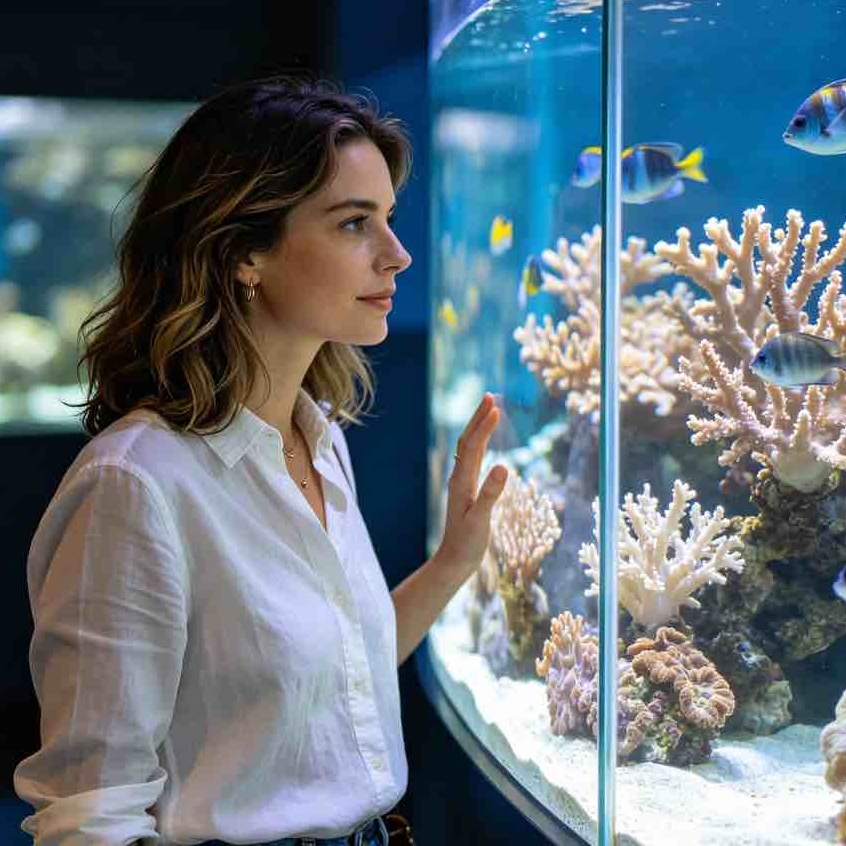
The transition from AI-generated "images" to AI-generated "photography" is defined by technical precision. While early generative models focused on artistic interpretation, modern engines like Midjourney v6, Flux.1, and DALL-E 3 are now capable of simulating the complex physics of light, glass, and film grain. To achieve professional results that are indistinguishable from real-world shots, one must move beyond descriptive adjectives and embrace the technical vocabulary of a cinematographer.
The Anatomy of a High-Fidelity Photography Prompt
A common mistake is using generic terms like "ultra-realistic" or "high resolution." Modern AI models respond far better to the underlying mechanics of photography. A professional-grade prompt follows a structural hierarchy that mimics a real photoshoot setup.
The Golden Formula for AI Realism
To ensure the AI understands the spatial and optical requirements of a shot, use the following structure: [Subject Details] + [Action/Narrative Context] + [Environment/Setting] + [Lighting & Atmospheric Conditions] + [Camera & Lens Specifications] + [Film Stock & Color Science]
This formula forces the model to calculate depth of field, light bounce, and texture density in a way that aligns with physical reality.
Understanding Optical Mechanics in AI Prompting
The most critical factor in professional AI photography is the lens specification. Each focal length dictates a specific perspective and emotional tone.
Wide-Angle Perspective (14mm to 35mm)
Wide-angle prompts are essential for landscape, interior, and environmental street photography. When you specify a 24mm lens, the AI introduces subtle barrel distortion and deep depth of field, ensuring both the foreground and background remain sharp.
- Practical Use Case: "Wide-angle shot of a minimalist brutalist living room, 24mm lens, sharp focus, deep depth of field, natural light flooding through floor-to-ceiling windows."
The Standard/Human Eye View (50mm)
The 50mm lens, or the "Nifty Fifty," is perfect for documentary and street photography. It mimics human vision without distortion.
- Practical Use Case: "Street photography, a person reading a newspaper at a Parisian café, 50mm lens, f/2.8, candid moment, natural daylight, sharp textures on the paper."
Portraiture and Compression (85mm to 200mm)
Telephoto lenses compress the background, making it appear closer to the subject while creating smooth, creamy bokeh. Specifying an 85mm lens at f/1.2 is the industry standard for high-end fashion and editorial portraits.
- Practical Use Case: "Close-up portrait of an elderly fisherman, 85mm f/1.2 lens, extreme shallow depth of field, sharp focus on the weathered eyes, soft bokeh background, highly detailed skin pores."
The Science of Lighting and Atmosphere
Lighting is the "soul" of a photograph. In AI prompting, lighting defines the three-dimensionality of the subject.
Cinematic and Dramatic Lighting
- Chiaroscuro / Low-Key Lighting: Uses strong contrasts between light and dark to create a moody, mysterious atmosphere. Excellent for noir-style portraits.
- Rembrandt Lighting: Characterized by a small triangle of light on the subject's shadowed cheek, adding depth and a "classical" feel.
- Volumetric Fog/Tyndall Effect: When you need light rays to be visible (e.g., in a forest or a dusty room), these terms tell the AI to simulate light scattering through particles.
Time-Based Natural Light
- Golden Hour: Provides warm, long shadows and a soft glow.
- Blue Hour: Creates a cool, serene, and cinematic ambiance just before sunrise or after sunset.
- Overcast / Diffused Light: Eliminates harsh shadows, perfect for macro photography and soft beauty portraits.
Simulating Film Stocks and Texture
To escape the "plastic" look often associated with AI, you must specify the medium. Different film stocks carry unique color profiles and grain structures.
Popular Film Stocks for AI Implementation
- Kodak Portra 400: Known for warm skin tones and fine grain. It is the go-to for professional lifestyle photography.
- Fujifilm Velvia: High contrast and extremely vibrant colors, ideal for nature and landscapes.
- Ilford HP5: The gold standard for grainy, high-contrast black and white photography with a timeless documentary feel.
- Cinestill 800T: A cinematic film stock known for "halation"—the red glow around bright lights. Perfect for neon-lit night street photography.
Genre-Specific Prompt Libraries
1. High-End Editorial Portraiture
For professional portraits, focus on the micro-textures of the skin and the reflection in the eyes (catchlights).
- Prompt: "Editorial fashion portrait of a subject with freckles, wearing a silk emerald green blouse, shot on Hasselblad H6D, 100mm f/2.2, studio softbox lighting, catchlights in the eyes, Kodak Portra 160 color rendering, hyper-detailed skin texture, 8k resolution."
2. Candid Street Photography
The key here is motion blur and raw, unposed energy.
- Prompt: "Candid street photography, Tokyo Shibuya crossing at night during heavy rain, neon lights reflecting in puddles, motion blur on pedestrians, shot on Leica M11, 35mm lens, f/1.4, Cinestill 800T, cinematic halation, gritty atmosphere, high contrast."
3. Professional Product Photography
Product shots require clean backgrounds and controlled reflections.
- Prompt: "Commercial product shot of a luxury watch on a dark obsidian stone, water droplets on the glass, dramatic rim lighting, macro lens 100mm, f/8 for deep focus, crisp details, elegant shadows, neutral color palette."
4. Architectural and Interior Design
Focus on symmetry, vertical lines, and the interaction of light with materials.
- Prompt: "Interior photography of a modern Scandinavian kitchen, morning sunlight casting long shadows, oak wood textures, marble countertops, shot on a tilt-shift lens to preserve vertical lines, 24mm, f/11, clean highlights, airy and bright."
5. Macro Wildlife Photography
Highlight textures that the human eye often misses, like the scales of a reptile or the fuzz on a bee.
- Prompt: "Macro photography of a bright green tree frog’s eye, extreme close-up, 100mm macro lens, f/2.8, sharp detail on the iris and skin moisture, soft diffused natural light, vibrant colors, bokeh forest background."
Advanced Technical Parameters and Optimization
Beyond the text prompt, the "how" of the generation matters.
Aspect Ratios and Composition
Always define your aspect ratio based on the genre.
- Landscape:
--ar 16:9or--ar 3:2 - Portrait:
--ar 4:5or--ar 2:3 - Cinematic:
--ar 21:9
The Role of Negative Prompts
In models like Stable Diffusion, what you don't want is as important as what you do. To maintain realism, use a negative prompt to exclude "cartoon, 3d render, plastic skin, doll-like, airbrushed, oversaturated, deformed hands, extra fingers, blurry eyes."
Iterative Refinement
Realism is rarely achieved on the first try. In our testing, the most effective workflow involves:
- Initial Generation: Use the core formula.
- Vary (Region): If the face is perfect but the lighting is flat, re-run the prompt with "dramatic rim lighting" applied to the specific area.
- Upscaling: Use a "Creative Upscaler" to add high-frequency details like skin pores and fabric weaves that might be lost in the initial low-res pass.
Why Technical Prompts Outperform Generic Ones
A generic prompt like "a beautiful girl in a forest" gives the AI too much creative freedom. The model defaults to the most "average" representation in its dataset, which usually results in a generic, CGI-looking image.
By contrast, a technical prompt like "A portrait of a woman in a pine forest, shot on 85mm f/1.8, dappled sunlight through leaves, volumetric dust motes, Fujifilm Pro 400H style" forces the AI to look for specific patterns in its training data—patterns that were actually captured by real cameras. This alignment with real-world physics is the secret to high-end AI photography.
Conclusion
Mastering AI photography prompts is an exercise in learning the language of light and optics. By treating the AI as a professional camera rather than a magic box, you can control the output with surgical precision. Remember the golden formula: define the subject, set the scene, and then—most importantly—specify the lens, the light, and the film stock.
FAQ: Professional AI Photography
What is the best lens for AI portraits?
For professional portraits, the 85mm or 100mm lens is ideal. It provides a flattering compression of facial features and a beautiful shallow depth of field (bokeh) that makes the subject pop.
How do I stop AI images from looking like "plastic"?
Specify a film stock like "Kodak Portra 400" or add the term "film grain" and "skin texture." Avoid using words like "flawless" or "perfect," as these trigger the AI's tendency to over-smooth surfaces.
Does the order of words in a prompt matter?
Yes. Most AI models give higher weight to the words at the beginning of the prompt. Place your subject and primary lighting at the start, and technical specs like lens and aspect ratio at the end.
Can AI simulate specific camera brands?
To an extent. While AI doesn't literally "use" a camera, mentioning brands like "Leica," "Hasselblad," or "Canon EOS R5" acts as a style modifier, nudging the AI toward the color science and sharpness associated with those professional systems.
What is "Halation" in AI photography?
Halation is a red or orange glow that appears around bright light sources or high-contrast edges in film photography. It is a hallmark of Cinestill 800T and adds a distinct "analog" and cinematic feel to AI-generated night scenes.
-
Topic: The Portrait Prompt Library Volume 2 (Women’s Edition)https://munzer.ch/wp-content/uploads/2026/02/The-Portrait-Prompt-Library-Vol2_preview.pdf
-
Topic: AI image prompt examples - Adobe Fireflyhttps://www.adobe.com/uk/products/firefly/ai-generated-examples/image-prompts.html
-
Topic: AI Photography Prompts: how to create photorealistic AI Imageshttps://elements.envato.com/learn/ai-photography-prompts?srsltid=AfmBOopY0Oe6qWksN1Xdlvg9SZ5h2wcldr2Bg8LNzTJDxJU2XSabdKgt