Home
Home
The Rise of Playboi Carti AI Voice and the Technology Behind the Baby Voice
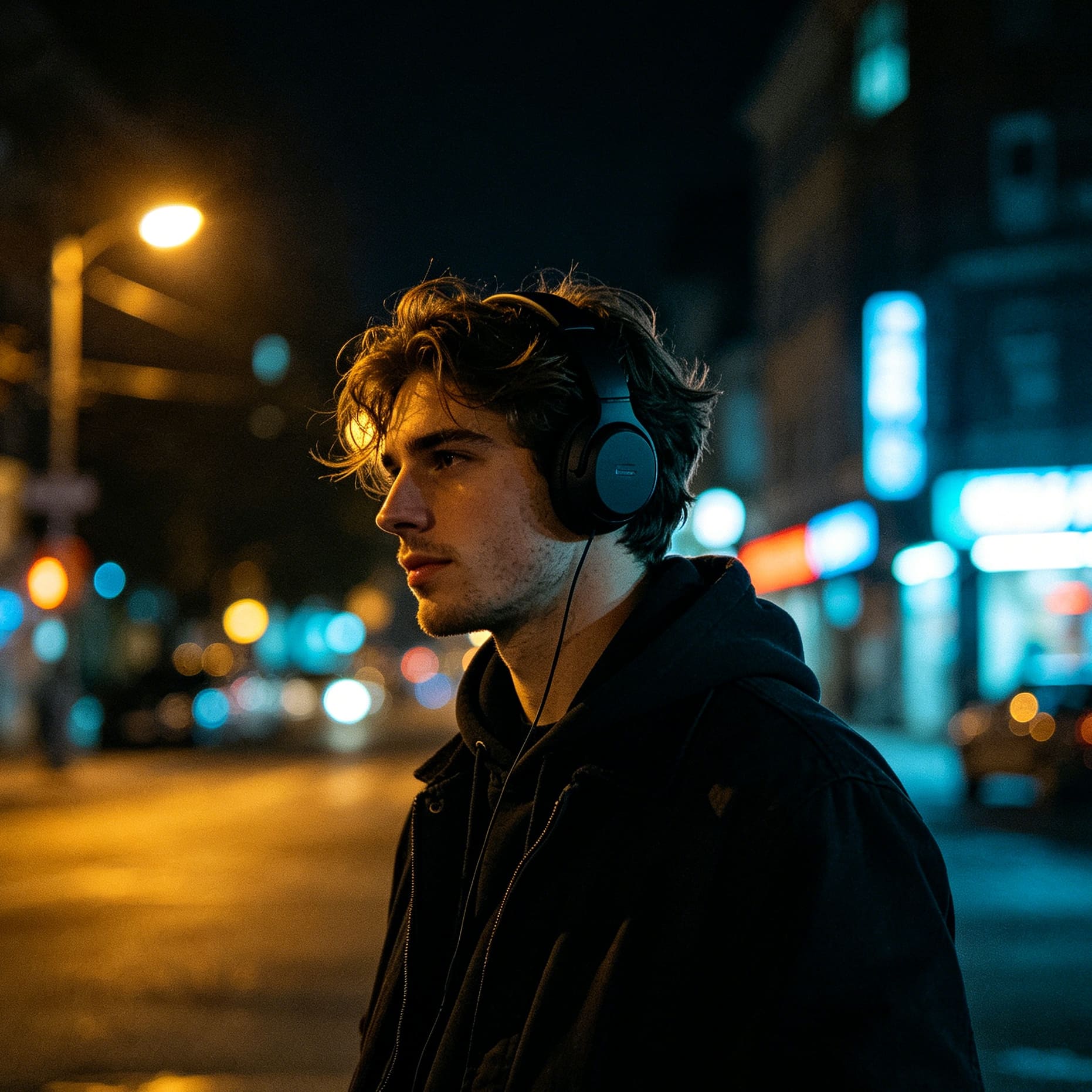
Playboi Carti's vocal presence is one of the most distinctive and polarizing forces in modern hip-hop. From the high-pitched, ethereal "baby voice" that defined the late 2010s to the gritty, subterranean deep tones of his current era, his voice functions more as a malleable instrument than a traditional medium for delivery. This sonic uniqueness has made "Playboi Carti AI voice" one of the most searched and utilized categories in the burgeoning world of artificial intelligence music production. These AI models use sophisticated machine learning to replicate the rapper’s cadence, breath patterns, and signature ad-libs, allowing creators to produce "AI covers" and experimental tracks that often blur the line between fan art and professional engineering.
Understanding the Sonic Profile of Playboi Carti
To understand why Playboi Carti is the primary target for AI voice cloning, one must analyze the complexity of his vocal performance. Unlike rappers who rely on lyrical clarity, Carti’s appeal lies in his texture and rhythm.
The Evolution from Baby Voice to Deep Voice
Early in his career, Carti experimented with a "baby voice"—a high-pitched, almost straining falsetto that defied the traditional hyper-masculine standards of trap music. This style required immense vocal control and specific studio processing. AI models trained on the Whole Lotta Red era must account for high-frequency resonances and a "breathier" delivery.
Conversely, the more recent "Deep Voice" era presents a different challenge for AI. This style involves a low-frequency, gravelly tone that often sounds as if it is being processed through a heavy vocal chain. AI generators must now toggle between these two personas, often requiring separate datasets to achieve authenticity for each specific era of his discography.
The Role of Ad-libs
A Playboi Carti track is incomplete without his rhythmic interjections—"Schyeah," "What," "Homicide," and "Bee." These are not just background noises; they are integral to the beat's percussion. AI models struggle most with these spontaneous outbursts because they lack the predictable structure of spoken words. Advanced RVC (Retrieval-based Voice Conversion) models are now being trained specifically on acapellas that include these ad-libs to ensure the synthesized output retains the "vibe" of a real Carti session.
The Technical Backbone: How RVC Models Work
The most common technology behind the high-quality Playboi Carti AI voices found online today is Retrieval-based Voice Conversion, or RVC. This is a deep-learning framework designed to provide high-fidelity voice conversion with relatively low computing requirements.
Training the Dataset
The quality of a Carti AI model is entirely dependent on the "dataset"—the collection of clean audio samples used to train the machine. To create a top-tier Carti model, producers often use "studio acapellas" where the beat has been surgically removed using AI stems-separation tools like UVR (Ultimate Vocal Remover).
For an RVC model to reach a "professional" standard, it typically needs 10 to 30 minutes of high-quality, dry (no reverb or delay) vocal audio. If the dataset includes background noise or heavy effects, the resulting AI voice will sound metallic or "crunchy."
The Importance of Epochs and Pitch Extraction
In the technical community, you will often see models labeled with "Epochs"—for example, "Playboi Carti WLR V2 [800 Epochs]." An epoch represents one full pass of the training data through the neural network. While a higher number of epochs generally leads to better mimicry, overtraining (overfitting) can make the voice sound robotic and inflexible.
Furthermore, pitch extraction algorithms like "RMVPE" or "Crepe" are used during the inference stage to ensure the AI follows the melody of the input vocal. Because Carti often jumps octaves, selecting the right pitch extraction method is crucial to preventing the "glitching" sounds common in lower-quality AI covers.
Evaluating Top Tools for Generating Playboi Carti AI Voice
Several platforms have emerged as leaders in providing accessible Playboi Carti AI voices. Based on technical performance and output quality, here is an analysis of the current landscape.
RVC WebUI and Hugging Face Models
For those with technical proficiency and a dedicated GPU (like an NVIDIA RTX 3060 or higher with at least 8GB of VRAM), running RVC locally via WebUI is the gold standard. Community-driven platforms like Hugging Face host various "weights" (pre-trained models) for Carti.
- The Experience: When testing a 1000-epoch model on a raw vocal input, the local RVC setup allows for "pitch shifting" and "index rate" adjustments. An index rate of 0.7 usually provides the best balance between the original performer's emotion and Carti's tone. The local setup is unrivaled for professionals who want to fine-tune the "f0" (fundamental frequency) to match a specific key.
Jammable (Formerly Voicify.ai)
Jammable has become the go-to platform for casual fans looking to create "AI Covers." It simplifies the RVC process into a browser-based interface.
- Performance Analysis: The Carti models on Jammable are generally trained on a mix of eras. While convenient, they often lack the "grit" found in specialized deep-voice models. However, for a quick "Carti singing a Taylor Swift song" parody, the conversion is surprisingly smooth and handles high-register notes without breaking the illusion.
HitPaw Voice Pea
This tool focuses on real-time voice changing, which is popular among streamers and gamers.
- Technical Insight: Real-time conversion is significantly harder than "offline" conversion because it requires low latency. While the HitPaw Carti filter provides the general "shape" of his voice, it often loses the subtle vocal fry and breathiness that make his performance believable. It is best used for entertainment rather than serious music production.
Kits.ai
Kits.ai positions itself as a tool for "AI-powered music collaboration." It offers high-quality, licensed-style models.
- Vocal Chain Integration: The advantage here is the built-in post-processing. A Playboi Carti voice requires a specific vocal chain—heavy compression, slight distortion, and wide reverb. Kits.ai allows users to apply these effects within the platform, making the "dry" AI output sound more like a finished record.
The Controversy: Does Playboi Carti Use AI Himself?
One of the most persistent rumors in the hip-hop community is whether Playboi Carti has integrated AI into his own official recording process. This debate reached a fever pitch with the release of tracks like "Timeless" and various leaked snippets.
The "Reference Track" Theory
In professional music production, artists often use "reference tracks"—demo recordings where a songwriter or producer lays down the initial melody and lyrics. Rumors suggest that Carti’s team may use AI filters to "convert" these reference tracks into Carti’s voice to see how a song might sound before he even enters the booth. This would allow him to "curate" his sound without spending hundreds of hours recording every idea.
Vocal Layering and AI Enhancement
Another theory posits that Carti uses AI to blend different vocal eras. For instance, he could record a verse in his current deep voice and use an AI model trained on his 2018 "Die Lit" era to layer a high-pitched harmony underneath. While his engineering team has historically denied these claims, the technical perfection of some recent vocal textures has kept the speculation alive.
Official Stance
To date, there has been no official confirmation from Playboi Carti or AWGE regarding the use of AI in his creative workflow. His supporters argue that his vocal shifts are the result of physical experimentation and elite engineering (using hardware like the Sony C800G microphone and Neve preamps) rather than algorithmic shortcuts.
Legal and Ethical Implications of Voice Cloning
The proliferation of Playboi Carti AI voices brings significant legal challenges, primarily concerning "Right of Publicity" and copyright law.
The "Likeness" Debate
Under current laws in many jurisdictions, a person’s voice is considered part of their "likeness." Using a celebrity's voice for commercial gain without their permission—such as creating an "AI Carti" song and putting it on Spotify—is a violation of their rights. This was famously highlighted by the "Heart on My Sleeve" incident involving AI voices of Drake and The Weeknd.
Copyright and Fair Use
While a non-commercial fan parody might fall under "fair use" in some contexts, the line is thin. Music labels are increasingly aggressive in issuing DMCA takedowns for AI-generated content. For creators, the safest route is to label content clearly as "AI-generated" and avoid monetization on platforms that share revenue with the artist.
The Impact on the Industry
If an AI can perfectly replicate a rapper's voice, what is the value of the artist? The consensus among industry veterans is that while AI can mimic the sound, it cannot mimic the intent or the cultural timing. Playboi Carti’s value isn’t just his voice; it’s his fashion, his mysterious persona, and his ability to dictate what is "cool." AI is a reactive tool, whereas Carti is a proactive creator.
Step-by-Step: How to Generate an Authentic Playboi Carti AI Voice
For those interested in experimenting with this technology for creative, non-commercial purposes, follow these steps to achieve the highest quality result.
Step 1: Source a High-Quality Input
The AI conversion is only as good as the input. If you want the AI to sound like Carti, you must perform with "Carti-like" energy. Use his rhythmic patterns and leave space for ad-libs. Recording a high-quality "dry" vocal (no background noise) is essential.
Step 2: Choose the Correct Model Era
Decide if you want the "Vamp/WLR" sound or the "Deep Voice/2024" sound. Search for models on community forums that specify the number of epochs (look for 500+) and ensure they use RVC v2, which offers better high-frequency response.
Step 3: Adjust Pitch and Inference Settings
- Pitch (f0): If you are a male with a deep voice trying to hit the "Baby Voice," you may need to shift the pitch up by +12 semitones.
- Index Rate: Set this between 0.5 and 0.7. This determines how much of the "AI's" character is applied to your vocal. Too high, and it sounds robotic; too low, and it sounds like the original speaker.
- Protect Voiceless Consonants: Set this to 0.33 to ensure that "S" and "T" sounds remain clear and don't turn into digital hiss.
Step 4: Post-Processing
Once you have the AI output, bring it into a DAW (Digital Audio Workstation) like FL Studio or Ableton. Apply a "Carti Vocal Chain":
- Auto-Tune: Set to a fast retune speed.
- Compression: Use a "soft-knee" compressor to level out the volume.
- EQ: Boost the "air" frequencies (10kHz+) for that ethereal feel.
Future Outlook of AI in the Carti Fandom
The relationship between Playboi Carti and AI is a microcosm of the future of the music industry. We are moving toward a world where "voice" is a software plugin. While this democratizes creativity, allowing a kid in his bedroom to hear what his lyrics would sound like coming from a superstar, it also necessitates a new framework for intellectual property.
In the coming years, we may see artists like Carti officially "renting" their AI voice models to fans for a fee, turning their sonic likeness into a licensed digital product. Until then, the community-driven RVC models continue to push the boundaries of what is possible in the "Opium" aesthetic.
Summary
The Playboi Carti AI voice phenomenon is a intersection of cutting-edge RVC technology and a unique vocal style that is perfectly suited for machine learning. Whether you are using tools like Jammable for fun or deep-diving into RVC WebUI for production, the key to a believable output lies in the quality of the dataset and the energy of the input performance. While rumors of Carti using AI himself remain unproven, the impact of these tools on fan culture and the music industry is undeniable.
FAQ
What is the best AI tool for Playboi Carti's voice?
For professional-grade music production, RVC (Retrieval-based Voice Conversion) running locally is the best. For ease of use and creating "AI Covers," Jammable is the most popular choice among fans.
Is using a Playboi Carti AI voice illegal?
Using it for personal, non-commercial projects is generally a legal gray area, but using it to monetize content or distribute songs on streaming platforms without permission is a violation of the artist's right of publicity and can lead to legal action.
How do I get the "Baby Voice" effect with AI?
You need to use a model specifically trained on Carti's 2019-2020 era (like Whole Lotta Red or Die Lit sessions) and ensure your input vocal is delivered with a higher pitch or shifted up +12 semitones during the AI inference process.
Can AI replicate Carti's ad-libs?
AI can replicate the sound of the ad-libs if they are included in the training data, but it cannot automatically place them in the correct rhythmic spots. The user must record the ad-libs themselves and then use the AI to convert the tone.
Why do some AI Carti voices sound robotic?
This is usually caused by a low-quality dataset, overtraining the model (too many epochs), or using a poor pitch extraction algorithm (like "Dio" instead of "RMVPE").
-
Topic: Playboi Carti AI Voice Generator - Rap Artist Voicehttps://nicevoice.org/ai-voice-generator/playboi-carti/
-
Topic: Playboi Carti (Die4Guy / Whole Lotta Red v3) [RVC v2] [800 Epochs] AI Voice Modelhttps://www.voice-models.com/model/9wb
-
Topic: Playboi Carti Ai Voice Generator - Nilesantahttps://nilesanta.com/playboi-carti-ai-voice-generator/