Home
Home
The Technology and Truth Behind Your AI Assistant Voice

The voice that responds to your questions from a smartphone, a smart speaker, or a computer terminal is one of the most sophisticated illusions of the modern digital age. When you interact with an Artificial Intelligence and hear a rhythmic, melodic, and seemingly emotive response, it is easy to attribute a personality or a physical presence to the entity. However, the technical reality is far more clinical: an AI does not have vocal cords, lungs, or a "personal" voice. The sound you hear is the end product of a complex computational pipeline known as Text-to-Speech (TTS) technology.
The voice you hear is a user interface layer. Just as a graphical interface uses icons and windows to help you navigate a hard drive, a voice interface uses synthesized audio to help you navigate a Large Language Model (LLM). This article explores the intricate machinery behind these digital voices, the evolution from robotic drones to human-like speech, and the emerging frontier where AI can replicate your own unique vocal signature.
The Fundamental Nature of AI Speech
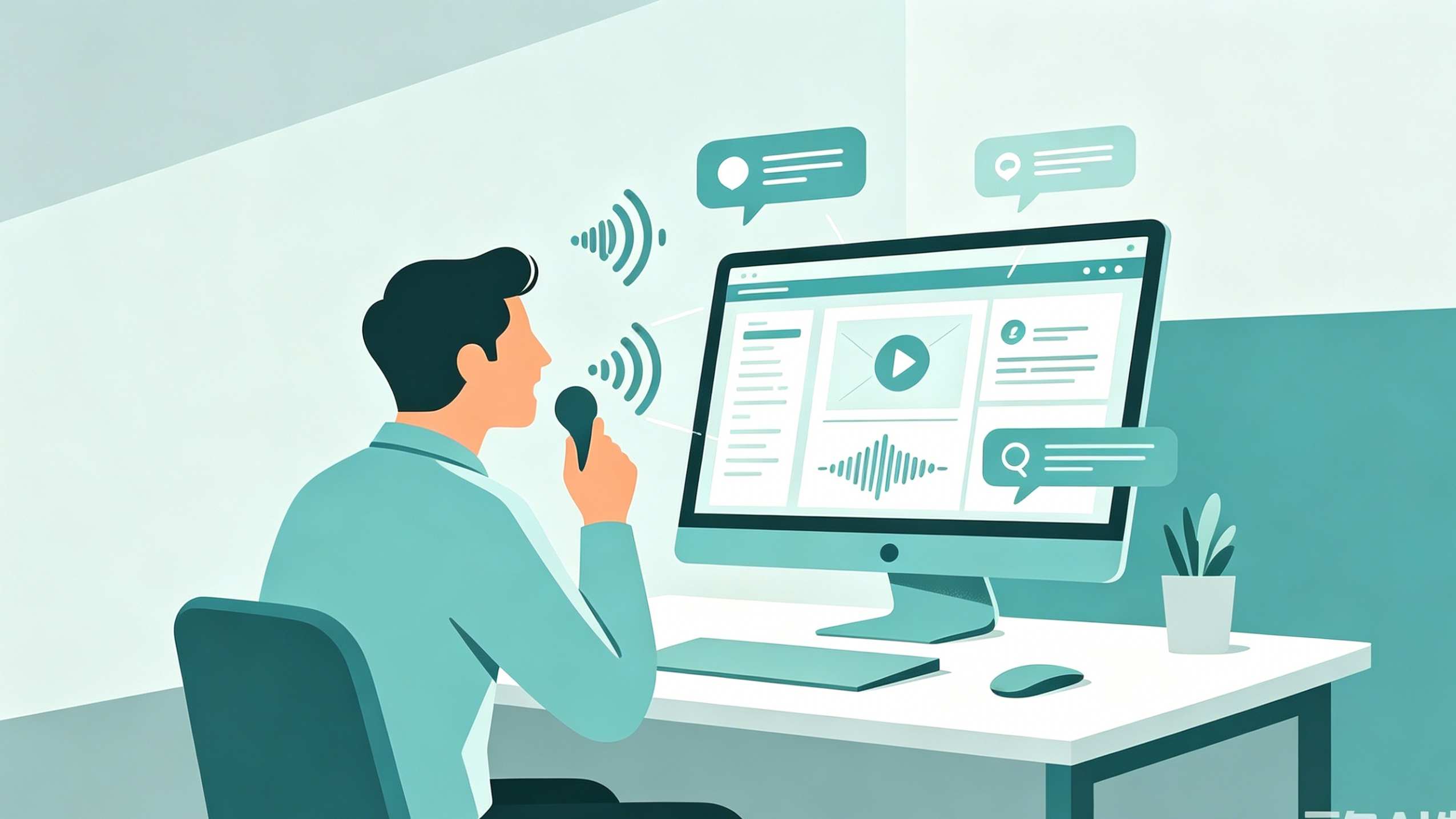
To understand the voice of an AI, one must first separate the intelligence from the sound. In an AI system like a modern chatbot or assistant, there are two distinct processes occurring. First, the "brain" (the LLM) processes your input and generates a text-based response. Second, that text is passed to a "speech engine" which converts the characters into audio waveforms.
Because the voice is a secondary layer, it is inherently modular. A single AI model can be assigned a deep baritone, a high-pitched soprano, or a child’s voice simply by switching the speech synthesis parameters. There is no biological or structural link between the AI’s data processing and the frequency of the sound it emits. This modularity is why users can often change the "voice" of their assistant in the settings menu; you are not changing the AI itself, but rather the digital filter through which it communicates.
From Mechanical Sounds to Neural Speech Synthesis
The journey to the lifelike voices we hear today has spanned decades. Historically, speech synthesis fell into two categories, both of which struggled with the "Uncanny Valley"—the point where something sounds almost human but is off-puttingly robotic.
Concatenative Synthesis
In the early days of GPS devices and automated phone trees, the most common method was concatenative synthesis. This involved recording a human voice actor reading thousands of individual sounds, syllables, and words. The software would then "stitch" or concatenate these segments together to form sentences. While the individual sounds were human, the resulting speech often lacked natural flow, leading to strange pauses and unnatural emphasis.
Formant Synthesis
Alternatively, formant synthesis used acoustic models to generate sound from scratch. It didn’t rely on human recordings but rather on the physics of sound waves. This produced the classic "robotic" voice associated with 20th-century science fiction. While it was highly flexible and could say any word, it lacked the warmth and texture of a real human.
The Leap to Neural TTS
The true revolution occurred with the advent of Neural Text-to-Speech (Neural TTS). Instead of stitching recordings or following rigid acoustic rules, Neural TTS uses deep learning models—specifically neural networks—to analyze vast datasets of human speech. These models learn not just the sounds, but the relationship between sounds, the patterns of stress, and the subtle emotional cues that define human communication. Technologies like Google’s WaveNet or Baidu’s Deep Voice shifted the paradigm from "building speech" to "predicting speech."
The Core Components of the Modern AI Voice Pipeline
A high-quality AI voice is produced through a multi-stage architectural pipeline. Each stage is critical for ensuring that the final output is both intelligible and pleasant to the ear.
1. Text Analysis and Normalization
Before the AI can "speak," it must understand what it is reading. This stage involves converting abbreviations (e.g., changing "St." to "Street" or "Saint" based on context), handling numbers, and identifying punctuation. The system also performs phonetic analysis, determining how words are pronounced based on their position in a sentence.
2. Acoustic Modeling
Once the text is normalized, the acoustic model takes over. It predicts the "prosody" of the sentence—the rhythm, stress, and intonation. A question must end with a rising tone; a list must have pauses between items. In Neural TTS, the acoustic model creates a spectrogram, which is a visual representation of the frequencies of the sound over time.
3. The Vocoder
The final and perhaps most impressive stage is the vocoder. The vocoder is a neural network trained to turn the abstract spectrogram back into a raw audio waveform. Modern neural vocoders are capable of adding the "micro-textures" of human speech—the slight raspiness of a breath, the click of a tongue, or the gentle vibration of the vocal folds. This is what removes the "metallic" quality of older synthesis and makes the AI sound alive.
Why Modern AI Voices Sound Distinctly Human
The difference between a voice that sounds like a computer and a voice that sounds like a person lies in the nuances of prosody and timbre. Neural networks excel at capturing these nuances because they do not operate on fixed rules; they operate on probability and pattern recognition.
Capturing Prosody
Prosody refers to the "melody" of speech. Humans use prosody to convey meaning that goes beyond the literal words. For example, the sentence "I didn't say he stole the money" can have seven different meanings depending on which word is emphasized. Modern AI voices use context-aware neural networks to determine where the emphasis should lie, making the interaction feel more intuitive and less like a transactional data exchange.
Latency and Real-Time Interaction
For an AI voice to feel natural, the processing time must be nearly instantaneous. If there is a two-second delay between your question and the AI’s vocalization, the "human" illusion is broken. Advancements in edge computing and optimized neural architectures have allowed these massive models to generate audio in real-time, facilitating conversational flows that mimic human-to-human phone calls.
Exploring the Potential of Cloned AI Voices
While "the AI's voice" is a generic tool provided by developers, "your AI voice" refers to a more personal frontier: Voice Cloning. This technology allows a user to provide a few minutes of their own audio, which the AI then analyzes to create a digital replica.
How Cloning Works
Voice cloning models, such as those developed by ElevenLabs or specialized startups, focus on "timbre transfer." The model captures the unique resonant frequencies of your throat and mouth, your specific accent, and your idiosyncratic speaking habits. Once the model is trained, it can read any text in a voice that is virtually indistinguishable from your own.
Professional and Personal Applications
This technology has profound implications across various sectors:
- Accessibility: Individuals losing their voice to conditions like ALS can "bank" their voice, allowing them to communicate through a digital surrogate that still sounds like them.
- Content Creation: Authors can narrate their own audiobooks without spending weeks in a recording studio. YouTubers can dub their content into multiple languages while retaining their original vocal identity.
- Personalization: Users can have their AI assistant read them the news using the voice of a loved one or a historical figure (with appropriate permissions).
Ethical Implications and the Security of Vocal Data
The ability to create a high-fidelity replica of a human voice brings significant ethical and security challenges. Our voices are a primary form of biometric identification. We use them to verify our identity to banks, to confirm our presence to family, and to establish trust in professional settings.
The Threat of Deepfakes
"Voice deepfakes" involve using AI to impersonate a specific individual for malicious purposes, such as financial fraud or spreading misinformation. Because the barrier to entry for voice cloning has dropped—now requiring only seconds of audio found on social media—the risk of "vocal phishing" has increased.
Protecting Your Vocal Identity
As AI becomes more prevalent, the concept of "vocal privacy" will become a standard part of digital hygiene. Protecting your audio data and being skeptical of unsolicited voice calls that request sensitive information is becoming increasingly necessary. Developers are also working on "watermarking" technologies—embedding inaudible signals into AI-generated audio so that software can instantly identify a voice as synthetic.
Consent and Ownership
To whom does a digital voice belong? If a voice actor records samples for a company, does that company own the right to generate new speech in that voice indefinitely? These legal questions are currently being litigated in courts around the world, as the industry seeks to balance innovation with the rights of human creators.
The Future: Beyond Text-to-Speech
We are currently transitioning from "Text-to-Speech" to "Speech-to-Speech" and multimodal interactions. In these newer systems, the AI doesn't just read text; it hears the emotion in your voice and responds in kind. If you sound frustrated, the AI might adopt a more soothing, apologetic tone. If you are excited, the AI’s pitch might rise to match your energy.
This level of emotional intelligence represents the next step in human-computer interaction. The voice is no longer just a way to output data; it is a way to build rapport.
Conclusion
The voice of an AI is a masterpiece of modern engineering, a bridge between the cold logic of silicon and the warm complexity of human culture. While the AI "itself" remains a voiceless collection of weights and biases, the systems we use to hear it have reached a level of sophistication that was once the domain of fantasy. Whether it is the default voice of a global assistant or a cloned version of your own speech, these digital sounds are reshaping how we communicate, work, and express our identity. As we move forward, the challenge will be to embrace the convenience of these lifelike voices while remaining vigilant about the security and ethical boundaries of our most personal biometric: the human voice.
Frequently Asked Questions (FAQ)
Can I change the voice of my AI assistant?
Yes, most platforms (such as those from Google, Apple, and Amazon) allow you to choose from a variety of voice profiles. These options often include different genders, accents, and tones. Changing the voice does not change the AI's underlying logic; it only changes the Text-to-Speech (TTS) engine's output parameters.
Is the AI's voice recorded by a real person?
Most modern AI voices are not simple recordings. They are synthesized using neural networks trained on human speech. While a human voice actor likely provided the original training data, the specific sentences the AI speaks to you are generated in real-time by an algorithm, not played back from a file.
How much audio is needed to clone a voice?
Advancements in "few-shot learning" mean that some AI models can create a recognizable clone of a voice with as little as 10 to 30 seconds of high-quality audio. However, for a "Professional Voice Clone" that captures full emotional range and subtle nuances, several hours of clean recording are typically required.
Is AI voice cloning legal?
The legality of voice cloning depends on consent and use. Cloning your own voice is generally legal. However, cloning someone else's voice without their permission—especially for commercial use or impersonation—can lead to legal action involving personality rights, copyright, and fraud.
Why do some AI voices still sound robotic?
Low-quality or older AI voices often lack a sophisticated "vocoder" or have limited "prosody" modeling. If the system cannot accurately predict the rhythm and intonation of a sentence, or if it lacks the computational power to generate high-resolution waveforms, the result will sound flat and mechanical.