Home
Home
Top AI Image Generators for 2026 Compared and Ranked
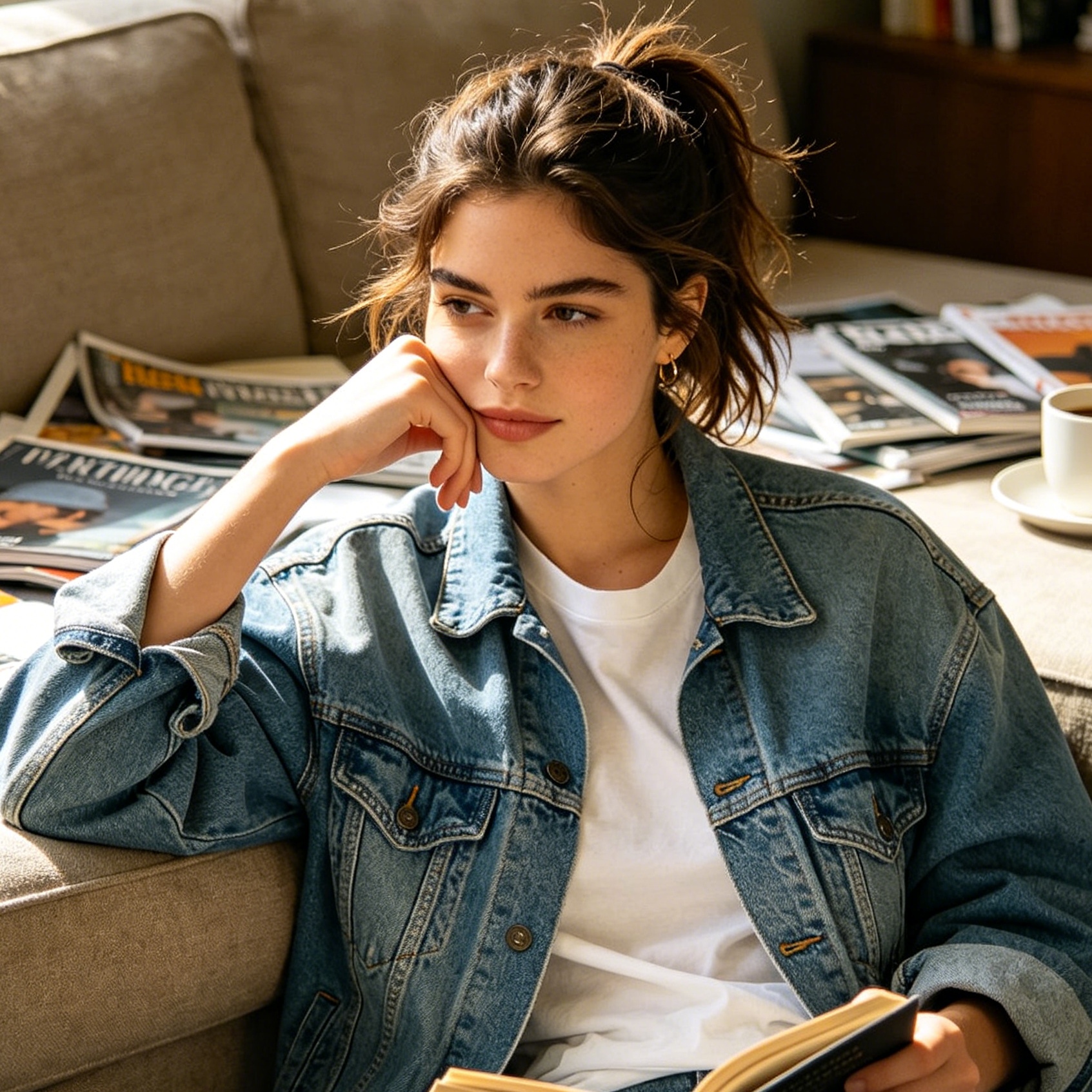
As of late 2026, the landscape of artificial intelligence image generation has transitioned from experimental curiosity to a cornerstone of professional creative workflows. The market is no longer dominated by a single player; instead, it has fractured into specialized ecosystems where the "best" tool depends entirely on whether a user prioritizes aesthetic flair, precise text rendering, photorealistic accuracy, or enterprise-grade legal safety.
In the current competitive arena, GPT Image 2 and Midjourney v8.1 represent the dual pinnacles of general performance and artistic output, while specialized models like Ideogram 3.0 and Flux 2 Pro have carved out dominant niches in typography and high-fidelity photography. This analysis provides a comprehensive comparison of the leading AI image generators based on extensive performance testing and market data.
Quick Comparison of Leading AI Image Tools
| Tool | Primary Strength | Best For | Typical Resolution |
|---|---|---|---|
| GPT Image 2 | Instruction Adherence | Complex scenes & logical accuracy | Up to 2K (Native) |
| Midjourney v8.1 | Artistic Aesthetics | Cinematic lighting & professional art | Up to 4K (HD Mode) |
| Ideogram 3.0 | Typography/Layout | Logos, posters, and signage | 1024 x 1024+ |
| Flux 2 Pro | Photorealism | Marketing photography & API usage | High Detail / 2K |
| Adobe Firefly | Commercial Safety | Enterprise workflows & vector assets | Print Ready |
| Stable Diffusion 3.5 | Total Control | Local hosting & custom training | Scalable |
| Google Gemini (Nano Banana) | Free Accessibility | Quick edits & identity preservation | 4K (Pro Tier) |
GPT Image 2: The Precision Leader in Prompt Adherence
GPT Image 2, developed by OpenAI, remains the highest-ranked model in blind-vote arenas for instruction following. In 2026, it is recognized as the go-to tool for users who need a machine that "listens" to every detail of a prompt without losing context.
Performance and Capabilities
In practical testing, GPT Image 2 excels in multi-subject scenes. When prompted with a request like "a blue cat wearing a red hat sitting on a green chair next to a yellow lamp," it achieves a near 100% accuracy rate in attribute binding—a task where older models often mixed colors and objects. Its integration with the broader GPT ecosystem allows for conversational editing, where users can simply say "make the lamp taller" rather than re-writing the entire prompt.
Key Advantages
- Logical Consistency: It understands spatial relationships (above, behind, inside) better than any competing model.
- Conversational Workflow: The ability to iterate on images through dialogue reduces the learning curve for non-professional designers.
- Text Integration: While Ideogram specializes in text, GPT Image 2 handles short to medium phrases with high reliability.
Considerations
The main trade-off is the "AI look." Images from GPT Image 2 often possess a characteristic smoothness that can feel less "soulful" or "artistic" compared to Midjourney, making it better suited for conceptual ideation than final artistic masterpieces.
Midjourney v8.1: The Gold Standard for Professional Aesthetics
Midjourney v8.1 solidified its position in June 2026 as the unrivaled king of aesthetic quality. While other models focus on logic, Midjourney focuses on the "feeling" of the light, the texture of the materials, and the composition of the frame.
Visual Quality and Speed
Version 8.1 has drastically improved rendering efficiency. A standard quality image now generates in approximately 4 seconds, while the HD mode, which outputs four times the resolution of previous versions, takes about 12 seconds. The model features advanced personalization profiles, allowing creators to train the AI on their specific style preferences over time.
The Power of Style Control
One of Midjourney's most significant advantages in 2026 is its deep suite of control parameters:
- Style References (--sref): Allows users to upload an image and force the AI to mimic its exact color palette and mood.
- Personalization: The model learns a user’s aesthetic tastes (e.g., preference for moody lighting or pastel colors) and applies them to future generations.
- Niji 7: A dedicated model for anime and illustrative styles that remains the best in its class.
Pricing and Access
Midjourney remains a paid-only service. The Basic plan starts at $10/month, while the $30/month Standard plan provides unlimited "relaxed" generations. For high-volume professional use, the $60/month Pro plan offers "Stealth Mode," keeping generated assets private from the public gallery.
Ideogram 3.0: Master of Typography and Graphic Design
For years, text was the Achilles' heel of AI image generation. Ideogram 3.0 has effectively solved this problem. It is currently the industry leader for projects involving logos, T-shirt designs, posters, and any visual that requires long, legible text.
Which AI generator has the best text rendering?
Ideogram 3.0 consistently outperforms both Midjourney and GPT Image 2 in text accuracy and font styling. It can render full sentences, specific font weights (bold, italic), and complex layouts like newspaper front pages or restaurant menus with zero spelling errors.
Strengths for Designers
- Font Control: Users can specify styles such as "retro 70s neon" or "minimalist Swiss sans-serif," and the model will execute the typography as part of the visual structure rather than an overlay.
- Design Layouts: It understands the hierarchy of information, placing headlines, subheadlines, and body text in logical positions.
- High Contrast: Ideal for vector-like graphics that need to be converted for print.
Flux 2 Pro: The Choice for Photorealism and API Builders
Released by Black Forest Labs, Flux 2 Pro has become the darling of the photography community and developers. It offers a sophisticated balance between high visual fidelity and a very competitive pricing structure.
Photorealistic Excellence
Flux 2 Pro is specifically tuned for realism. It avoids the "over-processed" look often found in AI art, instead producing images that look like they were shot on a DSLR with realistic skin textures, hair strands, and natural bokeh. In head-to-head comparisons, its ability to render human hands and joints in complex poses exceeds that of nearly all other cloud-based models.
API and Value
For businesses building their own apps, Flux 2 Pro is highly accessible. With per-image API pricing starting as low as $0.014 for its lighter models and $0.03 for the Pro version, it is significantly more affordable for high-volume production than the enterprise tiers of OpenAI or Google.
Adobe Firefly: The Enterprise Safety Standard
Adobe Firefly remains the preferred tool for corporate design teams and agencies. Unlike other models trained on broad web-scraped data, Firefly is trained on Adobe Stock images, openly licensed content, and public domain content.
Why does commercial safety matter for AI images?
For large brands, the risk of copyright infringement is a major barrier to AI adoption. Adobe Firefly provides "Commercial Safety," meaning Adobe offers legal indemnification for images generated through the tool (depending on the plan).
Workflow Integration
Firefly is not just a standalone generator; it is a feature set within Photoshop, Illustrator, and InDesign. Its "Generative Fill" and "Text to Vector" tools allow designers to expand canvases or create scalable graphics directly within their existing design software, making it the most efficient tool for professional asset manipulation.
Google Gemini and Nano Banana: The Best Free Frontier
Google’s "Nano Banana" model family, integrated into Gemini, represents the most powerful free option available in 2026. It allows users to access frontier-level quality without a high monthly subscription fee.
Identity Preservation and Versatility
The standout feature of Nano Banana Pro is "Identity Preservation." By uploading a few reference photos of a person, the model can generate that same person in different outfits, locations, and lighting conditions while maintaining a perfect likeness. This has made it a favorite for social media managers and creators of virtual influencers.
Accessibility Trade-offs
While Google provides a generous free tier, images generated on lower tiers often carry a visible watermark and an invisible SynthID marker. To remove these and access the highest resolutions (4K), users must subscribe to the $99.99/month Ultra plan.
Stable Diffusion 3.5: Privacy and Technical Control
For power users who refuse to rely on cloud-based services, Stable Diffusion 3.5 is the primary choice. Being an open-weight model, it can be run locally on a user's own hardware (provided they have sufficient VRAM, typically 24GB+ for the best results).
Customization and Fine-Tuning
The true strength of Stable Diffusion lies in its community-driven ecosystem. Users can download "LoRAs" (Low-Rank Adaptations) to teach the model very specific styles—from a particular comic book artist's style to the architectural look of a specific city. It is also the only major model that allows for "uncensored" generation, giving artists total creative freedom without the filters imposed by corporate cloud providers.
Comparing Key Performance Metrics
When selecting a tool, creators must evaluate three critical factors: speed, resolution, and cost.
Rendering Speed
In a professional environment, every second counts.
- Fastest: Midjourney v8.1 (Standard) and Flux 2 Klein (~3-5 seconds).
- Moderate: GPT Image 2 and Ideogram (~8-10 seconds).
- Slowest: Stable Diffusion 3.5 (depends on local hardware, often 15-30 seconds on mid-range GPUs).
Output Resolution
- Web Standard: GPT Image 2 and Ideogram (roughly 1K to 2K).
- Print/Professional: Midjourney v8.1 HD and Google Gemini Nano Banana Pro (4K native output).
- Scalable: Adobe Firefly (via Vector output) and Stable Diffusion (via AI upscalers).
Price Value Analysis
- Best for Budget: Google Gemini (Free Tier) and Craiyon (Unlimited basic generations).
- Best for APIs: Flux 2 ($0.014 per image).
- Best for Professional Value: Midjourney Standard ($30/mo for unlimited relaxed generations).
Workflow Integration: Which Tool Should You Choose?
The decision-making process should be driven by the final output requirement.
For Social Media and Marketing
Midjourney v8.1 is the winner. The cinematic quality and "wow factor" of its images are perfect for Instagram, X (Twitter), and Facebook advertising where visual engagement is the primary metric.
For Branding and Logo Design
Ideogram 3.0 is essential. The ability to generate a logo with perfectly centered, crisp text saves hours of manual work in vector software.
For Technical UI and Concept Art
GPT Image 2 is the best starting point. Its ability to follow complex scene descriptions allows concept artists to quickly visualize a script or a UI designer to mock up a website layout with specific elements in specific places.
For E-commerce
Google Gemini (Nano Banana) or specialized tools like Leonardo.ai are ideal. Their ability to swap backgrounds, change product colors, and maintain model consistency is perfectly suited for high-volume product listings.
Future Trends: What to Expect in 2027
As we look toward the next year, the gap between these tools is expected to close in terms of "raw quality." The next frontier is Video and 3D integration. We are already seeing Midjourney and Sora (OpenAI) experiment with "Image-to-Video" buttons that allow a generated still to be animated instantly. Furthermore, the move toward 4K native generation without the need for upscalers is becoming the new standard for the high-end market.
Summary of the 2026 AI Image Landscape
The AI image generator market in 2026 is a mature industry with clear winners in specific categories. GPT Image 2 is the logical powerhouse, Midjourney v8.1 is the aesthetic leader, and Ideogram 3.0 is the typography specialist. Flux 2 Pro offers the best balance for developers, while Adobe Firefly and Google Gemini provide safety and accessibility respectively.
For most creators, a combination of two tools—such as Midjourney for the art and Ideogram for the text—provides the most professional results. As models continue to evolve, the focus is shifting from "can it make a good image" to "can it fit into a professional production pipeline."
FAQ: Choosing the Right AI Image Generator
Which AI generator is the easiest for beginners?
GPT Image 2 via ChatGPT is widely considered the easiest for beginners. Its conversational interface allows you to describe what you want in plain English, and the AI handles the technical "prompt engineering" for you.
Is there a truly free AI image generator in 2026?
Yes, Google Gemini offers a robust free tier with access to its Nano Banana models, though images usually contain watermarks. Meta AI also provides high-quality free generation through its social platforms, though it lacks the deep editing controls of paid competitors.
Can I sell the images I generate with these tools?
It depends on the platform and your subscription tier. Adobe Firefly and Midjourney (on paid plans) generally grant commercial rights. However, some tools like Recraft or the free tiers of certain platforms may retain ownership or limit commercial usage. Always check the specific Terms of Service for your plan.
How do I get more realistic human faces in AI images?
Flux 2 Pro and Midjourney v8.1 currently lead the market in human anatomy and skin texture. Using specific photography keywords in your prompt—such as "shot on 35mm film," "f/1.8," or "high-resolution skin texture"—will further improve the results.
Which tool is best for creating consistent characters?
Google Gemini (Nano Banana Pro) and Midjourney (using the --cref parameter) are the top choices for character consistency. They allow you to use a reference photo to ensure the same person appears across multiple generations.
-
Topic: MDP: From Prompts to Profits: Using AI to increase sales Week 3: AI Creative Tools (Image and Video)https://themarketingcrowd.ie/wp-content/uploads/2026/03/TMC_Training_Summary_PromptsToProfits_Week3_Limerick_March2026.pdf
-
Topic: 9 Best AI Image Generators in 2026: Tested & Compared | ReviewAIhttps://reviewai.net/best/best-ai-image-generators/
-
Topic: 10 Best AI Image Generator Platforms in 2026: Features, Pricing & Comparisonhttps://www.hipwee.com/teknologi/best-ai-image-generator-platforms-in-2026/