Home
What Are the Most Important AI Tools Updates for Q3 2026?
As of September 2026, the AI landscape has shifted from static chatbots to autonomous agentic workflows . The most significant updates include OpenAI's transition to the GPT-5.6 family (Sol, Terra, Luna), Anthropic's introduction of the Fable 5 reasoning tier , and Google's deep integration of Gemini 3.6 into mobile hardware. Crucially, the EU AI Act became fully enforceable in August 2026, mandating strict transparency for synthetic content.
How the Big Three Models Have Evolved in Late 2026
The third quarter of 2026 marks a maturation phase for the primary frontier model providers. We are no longer seeing incremental improvements in chat interfaces; instead, the focus has pivoted toward specialized architectures designed for specific computational budgets and reasoning requirements. According to DataNorth's Q3 analysis , the market is now dominated by a tiered approach that balances raw intelligence with operational cost.
What Makes the OpenAI GPT-5.6 Sol Family Different?
OpenAI has officially moved away from the single-model release cycle. The GPT-5.6 family, released in July 2026, introduces a three-tier naming convention that helps enterprises manage their token spend more effectively. The tiers are categorized as follows:
- Sol (Frontier): The high-reasoning model designed for complex scientific discovery and advanced coding.
- Terra (Balanced): The standard model for daily productivity, offering a mix of speed and intelligence.
- Luna (Cost-efficient): A lightweight model optimized for high-volume, low-latency tasks like customer support and basic data entry.
A notable advancement in GPT-5.6 is its dual-mode architecture . Users can toggle between "Instant" mode for immediate responses and "Thinking" mode for multi-step reasoning. In benchmark testing, GPT-5.6 Sol achieved a score of 94.6% on GPQA Diamond and 64.6% on SWE-Bench Pro, positioning it as a top-tier choice for technical applications.
Why Anthropic Claude 5 Fable Is the New Standard for Reasoning
Anthropic continues to prioritize safety and nuanced communication. In Q3 2026, the release of Claude 5 Fable introduced a tier positioned above the traditional Opus model. Fable is specifically engineered for long-form creative thinking and complex legal or philosophical analysis. Many users find that Claude 5 Fable offers a more "human-like" partnership compared to its competitors, particularly in tasks requiring high emotional intelligence or subtle linguistic shifts.
According to Stackademic's recent review , the Fable tier excels in maintaining context over massive windows, often exceeding 2 million tokens without significant degradation in recall. This makes it a leading option for researchers managing vast libraries of documentation.
How Google Gemini 3.6 Integrates Into Your Daily Hardware
Google’s strategy in 2026 focuses on "Gemini Intelligence" as a native layer within the Android ecosystem. Gemini 3.6 Flash and the specialized Flash Cyber model are now deeply integrated into the Samsung Galaxy Z Fold8 and Flip8 series. This integration allows the AI to perform "cross-app reasoning," where it can pull data from your calendar, emails, and real-time sensor data to provide proactive assistance.
The Android 17 update features a native AI migration tool that uses Gemini to reorganize data from legacy devices (including iPhones) into a personalized knowledge graph. This hardware-software synergy ensures that Gemini remains a highly competitive choice for mobile-first users.
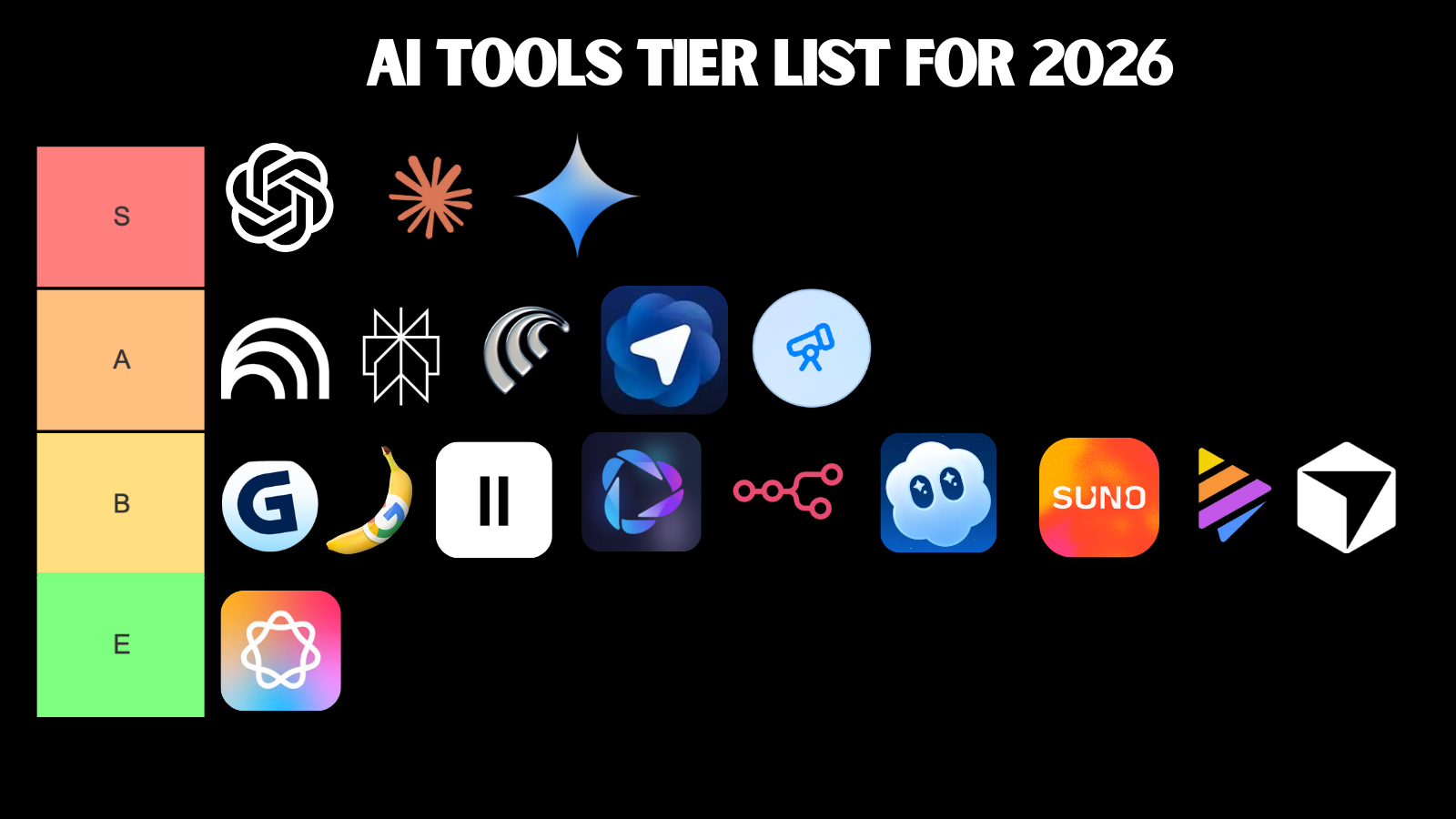
Image source: Medium
| Feature | GPT-5.6 Sol | Claude 5 Fable | Gemini 3.6 Flash |
|---|---|---|---|
| GPQA Diamond Score | 94.6% | 93.2% | 91.8% |
| Context Window | 1.5M Tokens | 2.5M Tokens | 2.0M Tokens |
| Primary Strength | Technical Reasoning | Nuanced Writing | Hardware Integration |
| Best Use Case | Software Engineering | Legal/Creative Research | Mobile Productivity |
Which Specialized AI Tools Are Dominating the Market Right Now?
While the frontier models provide the "brain," specialized tools have become the "hands" of the AI ecosystem. In Q3 2026, we are seeing a consolidation of tools that focus on specific professional workflows rather than general-purpose chat.
Why Cursor and AlphaEvolve Are the Top Choices for Developers
Cursor remains the dominant AI-integrated development environment (IDE) in 2026. Its ability to index entire codebases and provide "Composer" features that write multi-file features has made it a staple for modern engineers. However, Google Cloud’s AlphaEvolve has emerged as a strong contender, focusing on "evolutionary code optimization." AlphaEvolve doesn't just write code; it runs thousands of simulations to find the most efficient execution path, potentially reducing cloud compute costs by up to 20%.
How to Use Perplexity and Gemini Notebook for Research
For cited, real-time research, Perplexity AI continues to set a high standard. Its "Pro" search features in late 2026 now include deep-web indexing and automated synthesis of academic papers. Meanwhile, Gemini Notebook (formerly NotebookLM) has integrated secure cloud computing, allowing researchers to upload sensitive datasets into a "clean room" environment where the AI can analyze data without it ever leaving the encrypted silo.
The Best Tools for Automated Slide Decks and Multimedia
The presentation market has been disrupted by Decksy AI , which generates fully designed, data-backed slide decks from a single prompt or a raw transcript. Notably, OpenAI's Sora is no longer a standalone application. As of July 2026, Sora's video generation capabilities have been fully integrated into the ChatGPT interface, allowing users to generate B-roll and social clips directly within their writing workflow.
How to Manage the Shift to Consumption-Based AI Pricing
One of the most significant changes in 2026 is the decline of seat-based licensing. Enterprises found that paying $30/month per user was inefficient when some users barely touched the tools while others ran thousands of agentic tasks. The industry has pivoted toward consumption-based pricing .
What You Need to Know About Microsoft Agent 365 Credits
Microsoft Agent 365 now operates on a "Copilot Credit" system. Each credit costs approximately $0.01 . Simple tasks, like summarizing an email, might cost 1 credit, while complex autonomous agents that research and draft a 20-page report might consume 500 credits. This allows businesses to scale their AI usage up or down based on actual demand rather than headcounts.
Anthropic has introduced a similar concept called "Task Budgets." This feature allows administrators to set hard limits on how much an autonomous agent can spend on a specific project, preventing "agent sprawl" where recursive loops could accidentally drain a company's API budget overnight.
How to Set Up a Model Router to Cut API Costs by 50%
To combat rising costs, many organizations are implementing a Model Routing Strategy . Instead of sending every request to a frontier model like GPT-5.6 Sol, a "Router" (such as Cursor Router or a custom internal gateway) analyzes the prompt's complexity first.
How to Stay Compliant With the August 2026 EU AI Act
The regulatory environment changed significantly on August 2, 2026 , when the final provisions of the EU AI Act (Regulation 2026/1744) took effect. This legislation impacts any company doing business in the EU, regardless of where they are headquartered.
What Article 50 Means for Your Synthetic Content
Article 50 of the Act mandates that all synthetic content—whether text, image, or audio—must be clearly marked. Users must be notified that they are interacting with an AI system. For businesses, this means your customer service bots must explicitly state their AI nature at the start of every session, and any AI-generated marketing images must contain metadata or visible watermarks identifying them as synthetic.
A Checklist for Business Transparency and User Notification
To ensure your 2026 AI stack is legally compliant, follow these steps:
- Audit your bots: Ensure every AI-driven interface has a "Disclosure Header" identifying it as non-human.
- Watermark multimedia: Use C2PA standards to embed provenance data in all AI-generated visuals.
- Update Privacy Policies: Explicitly state which models (e.g., GPT-5.6, Claude 5) are processing user data.
- Implement Human-in-the-Loop: For high-stakes decisions (hiring, credit scoring), ensure a human review step is documented.
- Monitor for Bias: Conduct quarterly "Fairness Audits" as required for high-risk AI systems under the Act.
How AI Agents Are Changing the Modern Workforce
In late 2026, the conversation has moved beyond "AI replacing jobs" to "AI augmenting teams." The rise of Copilot Cowork has enabled a new era of high-output, small-team structures.
Why 3-Person Teams Can Now Launch Global Campaigns
Microsoft CPO Aparna Chennapragada recently noted that 2026 is the year a 3-person team can launch a global marketing campaign in days. By using specialized agents for market research, creative generation, and localized translation, small teams can achieve the output previously reserved for agencies with hundreds of employees. This "Agentic Leverage" is a significant advancement in labor productivity.
How AI Is Filling the Global Healthcare Worker Shortage
With the WHO projecting a shortage of 11 million health workers by 2030, AI has become a critical gap-filler. Tools like MAI-DxO are now solving complex medical diagnostics with 85.5% accuracy , significantly higher than the 20% average for unassisted physicians in preliminary trials. These tools act as a "second pair of eyes," reducing diagnostic errors and freeing up doctors to focus on patient care.
Why You Must Treat AI Agents Like Employees
As agents gain more autonomy—such as the ability to book travel, move funds, or access proprietary code—security becomes paramount. Vasu Jakkal of Microsoft Security warns that agents must be treated as employees with distinct digital identities. This prevents "double agent" risks, where an agent might be manipulated by prompt injection to leak sensitive data to an unauthorized third party.
The Bottom Line: Key Takeaways for Q3 2026
- Tiered Intelligence: Transition to model families like Sol, Terra, and Luna to balance performance and cost.
- Credit-Based Economy: Prepare for the death of seat-based licensing in favor of consumption-based "Copilot Credits."
- Mandatory Compliance: Ensure all synthetic content is marked according to the August 2026 EU AI Act requirements.
- Agentic Workflows: Shift your focus from "chatting" with AI to building autonomous agents that handle multi-step tasks.
- Model Routing: Implement a routing layer immediately to save up to 50% on API costs by utilizing smaller models for simple tasks.
Start by auditing your current AI spend and implementing a basic model router to ensure you are not overpaying for frontier intelligence on routine tasks.
Frequently Asked Questions
As of Q3 2026, Gemini 3.6 Flash-Lite and the ChatGPT Terra free tier are widely considered the strongest options for non-paying users. These models offer significant reasoning capabilities and large context windows, though they lack the advanced "Thinking" modes found in the Sol and Fable tiers.
No, Sora was discontinued as a standalone product in July 2026. Its video generation technology has been fully integrated into the ChatGPT Sol and Terra interfaces, allowing users to generate high-fidelity video clips directly within their standard AI workflow.
The current API pricing for GPT-5.6 Sol is $5 per 1 million input tokens and $30 per 1 million output tokens. For high-volume users, OpenAI offers a "Luna" tier that is significantly cheaper, priced at roughly $0.10 per 1 million tokens for basic tasks.
Sol is the "Frontier" model designed for high-stakes reasoning, scientific research, and complex coding. Terra is the "Balanced" model, optimized for speed and daily productivity. While Sol scores higher on benchmarks like GPQA Diamond, Terra is much faster and more cost-effective for standard office work.
To comply with the August 2026 deadline, you must ensure all AI-generated content is clearly labeled. This includes adding visible watermarks to images, using metadata tags for audio/video, and providing a clear disclosure at the start of any AI-driven chat session.