Home
Which AI Tools Released in April 2026 Offer the Most Utility for Businesses and Developers?
As of April 2026, the AI landscape has shifted from simple chat interfaces to autonomous execution systems . The standout releases include the GPT-5.6 family (Sol, Terra, Luna), Google’s open-source Gemma 4 , and ChatGPT Work . These tools prioritize long-running tasks, multi-agent coordination, and significant reductions in memory requirements via technologies like TurboQuant.
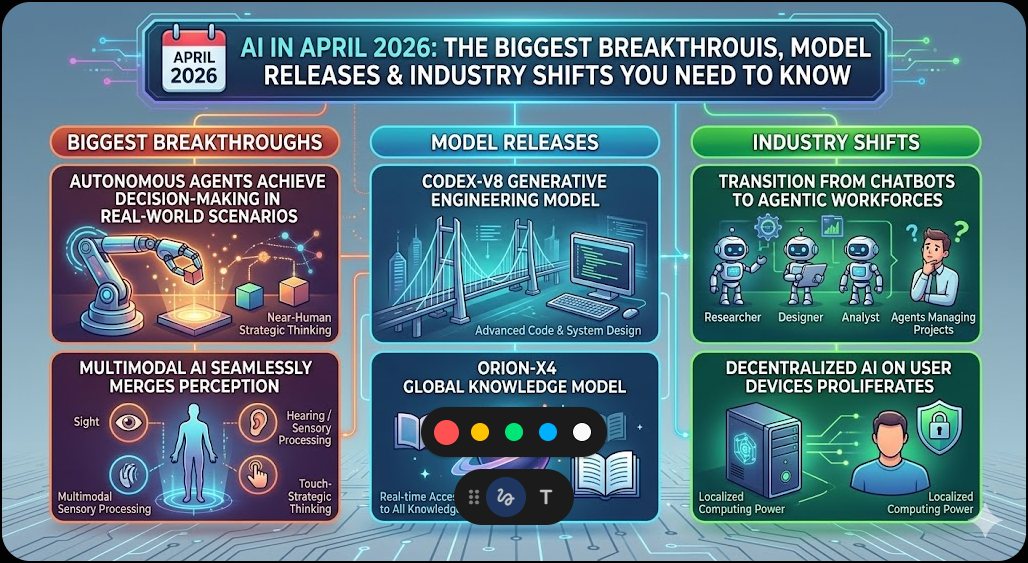
Image source: Kersai
The Arrival of the GPT-5.6 Model Family
On April 23, 2026, OpenAI introduced a significant update to its flagship series with the GPT-5.6 family. Unlike previous monolithic releases, this update bifurcates the model into three distinct variants designed for specific operational needs. According to recent industry analysis from DataNorth AI , this tiered approach allows organizations to balance reasoning depth against operational costs.
GPT-5.6 Sol
Designed for complex scientific research and high-level strategic planning. It offers the deepest reasoning capabilities currently available in the OpenAI ecosystem.
GPT-5.6 Terra
The standard choice for general-purpose business applications, offering a middle ground between speed and intelligence for daily operations.
GPT-5.6 Luna
Optimized for high-volume tasks and low-latency requirements. Luna is frequently utilized as a "Planner Agent" in multi-step workflows due to its efficiency.
The pricing structure for these models reflects the shift toward large-scale token consumption. GPT-5.6 Sol is priced at approximately $5 per 1 million input tokens and $30 per 1 million output tokens. While these costs are higher than previous generations, the efficiency gains in task completion often offset the initial investment for enterprise users.
How ChatGPT Work and Deep Research Max Are Changing Task Execution
April 2026 marked the definitive end of the "prompt-and-wait" era. The launch of ChatGPT Work has transformed the interface into a persistent agent capable of connecting directly to enterprise software like Slack, Salesforce, and Google Drive. Instead of answering a single question, these systems now execute long-running tasks that may span several hours.
Google has responded with Deep Research Max , an autonomous agent that moves beyond simple search queries. As noted in the official Google AI updates , this tool is designed to perform independent "grunt work," such as synthesizing thousands of documents into a cohesive report without human intervention. This capability is powered by the new 8th-Gen TPUs, which provide the necessary compute for sustained autonomous reasoning.
Why Gemma 4 Is a Top Choice for Open Source Agentic Workflows
Google’s release of Gemma 4 under the Apache 2.0 license has been widely regarded as a significant step forward for the open-source community. Optimized specifically for agentic workflows rather than just text generation, Gemma 4 ranks among the top-performing open models for intelligence-per-parameter.
For organizations concerned with data privacy or those operating in highly regulated industries, Gemma 4 provides a viable alternative to cloud-based frontier models. It allows for local, on-premise deployment, effectively bypassing the per-token costs associated with proprietary APIs. Furthermore, Gemma 4 has been designed to integrate seamlessly with TurboQuant , a research breakthrough that achieves a 6x reduction in KV cache memory requirements.
Comparison of Leading AI Models in April 2026
Choosing the right tool depends on the specific requirements of your project. The following table compares the primary strengths and costs of the most prominent models released or updated this month.
| Model Name | Primary Strength | Cost (per 1M Tokens) | Autonomy Level | Best For |
|---|---|---|---|---|
| GPT-5.6 Sol | Frontier Reasoning | $5 In / $30 Out | High (9/10) | Strategic Planning |
| Claude Code | Software Engineering | Usage-Based | High (8/10) | Codebase Refactoring |
| Gemma 4 | Open Source Privacy | Free (Local) | Moderate (7/10) | On-Premise Agents |
| GPT-5.6 Luna | Speed & Efficiency | $0.50 In / $2 Out | Moderate (6/10) | High-Volume Tasks |
Top AI Tools for Coding and Software Development
The software development landscape has been significantly impacted by the "Vibe Coding" movement, popularized by recent Google and Kaggle initiatives. This approach allows non-technical founders to build complex software by describing the "vibe" or intent of the application, while autonomous agents handle the underlying syntax and architecture.
Claude Code continues to be a strong contender in this space, recently achieving an 80.8% score on the SWE-bench, according to NXCode's latest rankings . This represents the highest score for a commercial agent to date, showcasing its ability to resolve real-world GitHub issues independently. Meanwhile, staples like Cursor and GitHub Copilot have integrated with 8th-Gen TPU acceleration to provide near-instant code refactoring for massive codebases.
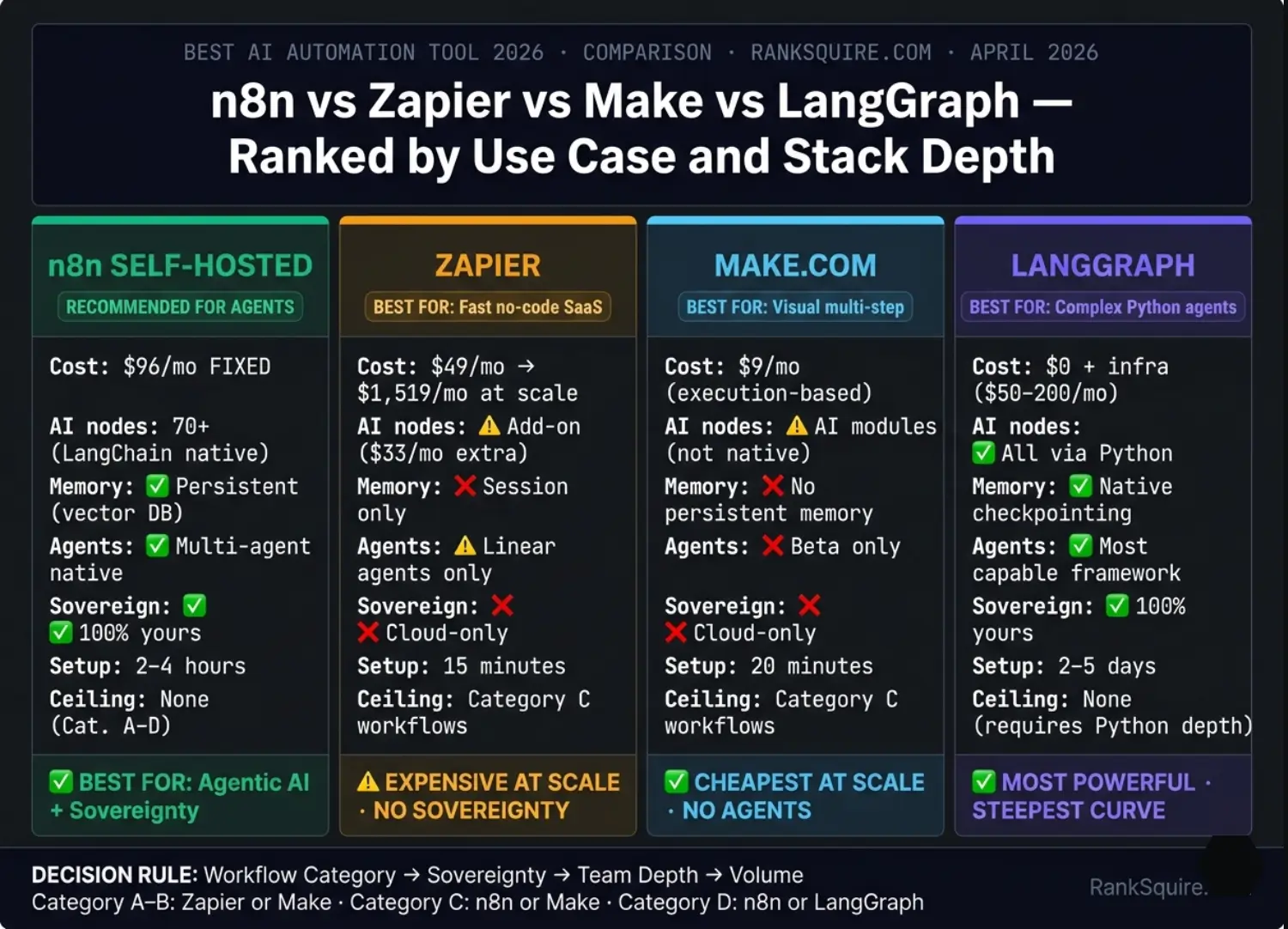
Image source: RankSquire
Building a Multi-Agent Stack Using GPT-5.6 and Gemma 4
One of the most effective strategies emerging in April 2026 is the Planner-Verifier pattern . This workflow leverages the strengths of different models to optimize both accuracy and cost. By using a high-reasoning model for planning and a more efficient model for verification, users can achieve results that rival single-model frontier performance at a fraction of the cost.
Step-by-Step Agent Stack Implementation
- Define the Objective: Clearly state the end goal (e.g., "Analyze this 500-page legal document for compliance risks").
- The Planner (GPT-5.6 Luna): Use a fast, efficient model to break the objective into 10-15 smaller sub-tasks.
- The Executor (Claude Code or GPT-5.6 Terra): Assign specific sub-tasks to models specialized in those domains.
- The Verifier (Gemma 4): Use a locally hosted Gemma 4 instance to verify the outputs of the executors against the original source material.
- Synthesis: Combine the verified outputs into a final report.
This multi-agent approach, detailed in recent Medium trend reports , can reduce API costs by up to 70% while maintaining high output quality. The integration of TurboQuant further enables this by allowing the "Verifier" agents to run on standard consumer hardware with as little as 16GB of RAM.
Understanding the Cost of AI Agents in 2026
The industry is currently witnessing the "Death of Seat-Based Pricing." Most major providers have shifted to Agent Credits or consumption-based billing. This change is necessary because autonomous agents can run for several hours on a single prompt, consuming millions of tokens in the process.
Users should be aware of "Billing Shock," where a single complex research task might cost $5 to $10 in API fees if not properly constrained. To manage this, many platforms now offer "Agent Budgets," allowing users to set hard caps on how much an autonomous process can spend before requiring human approval. When calculating ROI, businesses are now comparing the $30/1M output token cost of frontier models against the significant time savings provided by 8th-Gen TPU-powered execution.
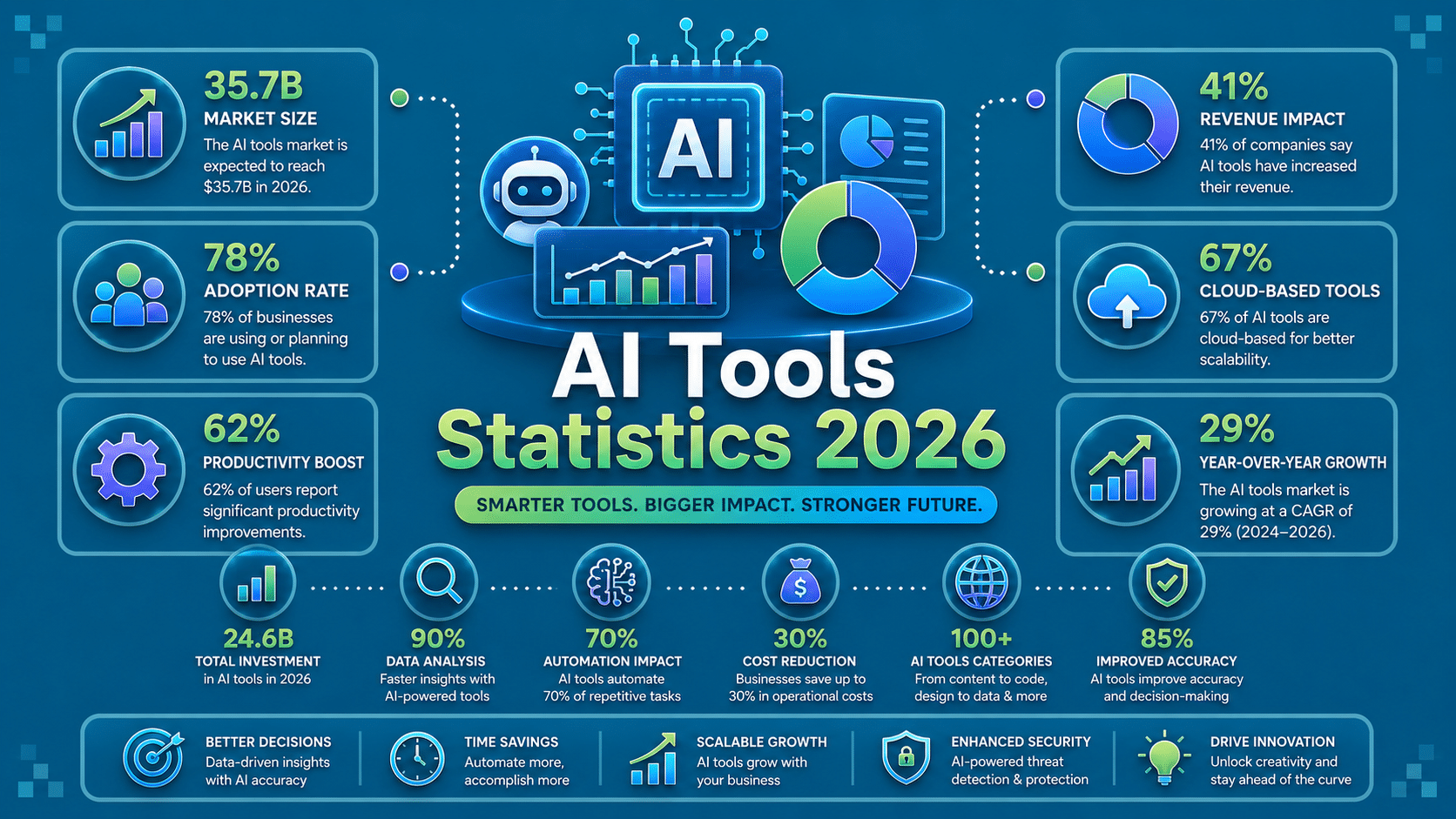
Image source: Panto AI
Managing Personal Knowledge with the LLMWiki Pattern
As the volume of AI-generated content grows, users are struggling with "context fragmentation." The LLMWiki pattern , a concept popularized by researchers like Andrej Karpathy, offers a solution by moving beyond traditional folder-based storage. Instead of saving files in specific locations, information is organized by semantic relationships .
Tools implementing this pattern use agents to bridge the gap between disparate data sources like Slack, Google Drive, and personal notes. When you ask a question, the system doesn't just search for keywords; it understands how concepts relate across your entire digital footprint. This creates a unified "knowledge graph" that grows more useful as more data is added, effectively solving the problem of losing information across multiple applications.
Staying Compliant with the EU AI Act in Late 2026
With the August 2026 deadline for the EU AI Act approaching, compliance has become a primary concern for tool developers and users alike. Article 50 of the Act requires that synthetic content be clearly marked and that autonomous execution systems maintain detailed logs of their actions.
Organizations using agents for customer-facing tasks must ensure transparency. This includes notifying users when they are interacting with an AI and providing a clear audit trail for any decisions made by autonomous systems. Most leading tools released in April 2026, including the Gemini Enterprise platform, now include built-in compliance dashboards to help users navigate these legal requirements.
The Bottom Line on April 2026 AI Tools
The releases of April 2026 signify a definitive shift from "chatting" to "executing." The tools available today are no longer just assistants; they are autonomous partners capable of managing complex workflows with minimal supervision.
- Adopt consumption-based budgeting to avoid billing shock from long-running autonomous agents.
- Leverage Gemma 4 for local verification to significantly reduce API costs in multi-agent stacks.
- Explore the LLMWiki pattern to unify your personal and professional knowledge across fragmented apps.
- Utilize GPT-5.6 Sol for high-stakes reasoning while delegating routine tasks to the more efficient Luna variant.
- Prioritize compliance by ensuring all autonomous actions are logged in accordance with the EU AI Act.
- Investigate Vibe Coding if you are a non-technical founder looking to build software rapidly.
For most business users, ChatGPT Work stands out as a top-tier choice this month due to its deep integration with existing enterprise ecosystems.
Frequently Asked Questions
- Which AI tools released in April 2026 have the strongest free tier?
- Google’s Gemma 4 is the leading option for those seeking high performance without recurring costs, as it is open-source and can be run locally. Additionally, Google Cloud often provides starter credits for their Enterprise Agent Platform, making it accessible for small-scale testing.
- How does Gemma 4 compare to GPT-5.6 in coding tasks?
- While GPT-5.6 Sol generally offers deeper reasoning for complex architectural decisions, Gemma 4 is exceptionally strong for localized code verification and routine refactoring. In terms of raw SWE-bench scores, Claude Code remains the benchmark for commercial agents, but Gemma 4 provides a highly competitive open-source alternative.
- What are the most effective autonomous AI agents for small business owners?
- ChatGPT Work and the Gemini Enterprise Agent Platform are currently among the top choices for small businesses. These tools offer "out-of-the-box" integrations with common software like Slack and Google Workspace, allowing owners to automate administrative tasks without needing a dedicated development team.
- Are there any new AI tools for video generation this month?
- Yes, Google Vids received a significant update in April 2026, integrating more advanced autonomous editing features. It can now take a raw script and independently source assets, generate voiceovers, and assemble a complete presentation-style video with minimal human input.
- What is Vibe Coding and do I need to learn it?
- Vibe Coding is a movement focused on natural language software creation. Instead of writing syntax, you describe the functionality and "feel" of an app. While you don't "need" to learn it, it is a highly impactful skill for non-developers who want to prototype and launch software products quickly in the current AI era.