Home
Home
Why AI Image Generation Is Transforming Creative Professionalism in 2025
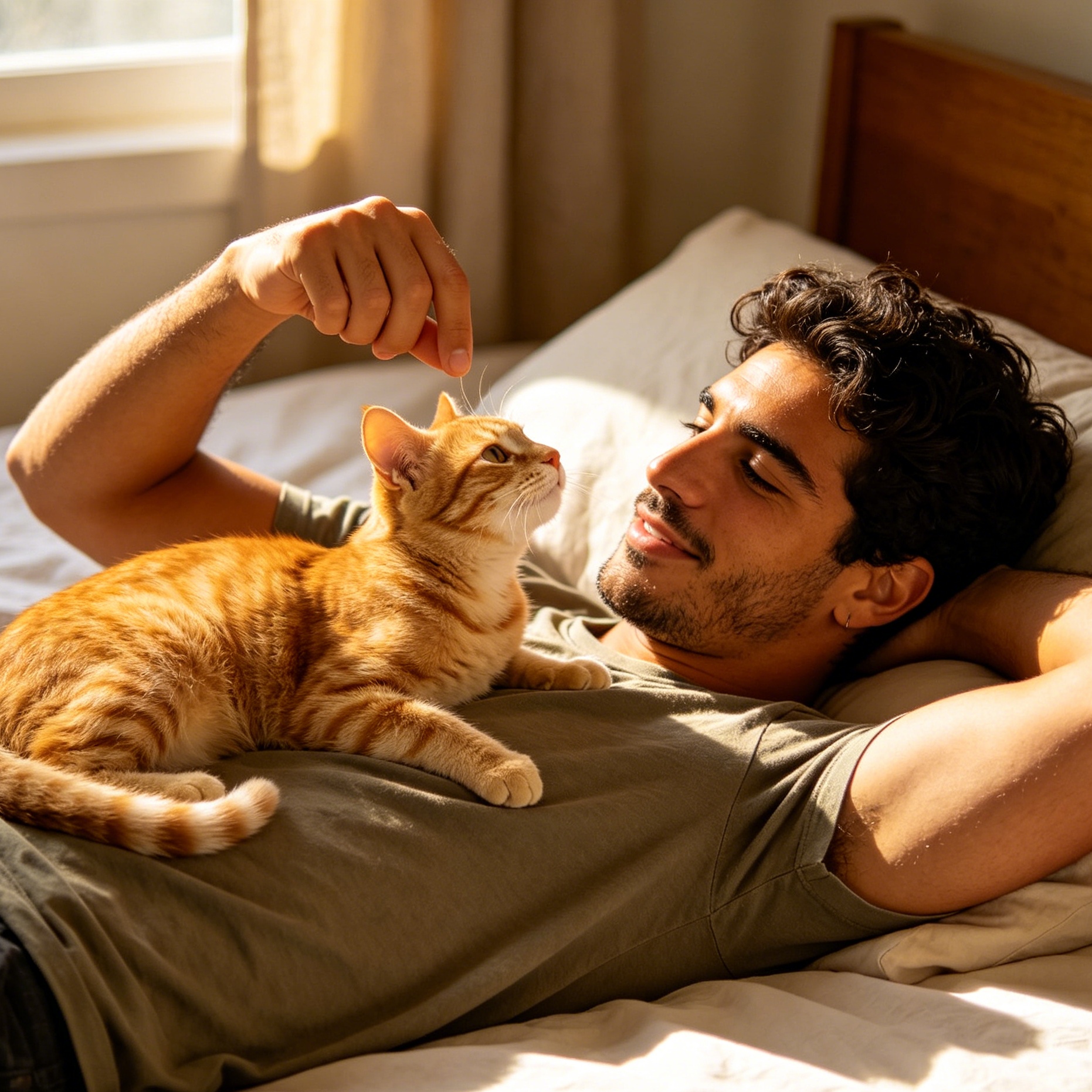
The landscape of visual creation has undergone a tectonic shift. What started as blurry, surrealistic experiments with Generative Adversarial Networks (GANs) has matured into a sophisticated industry powered by Diffusion Models. Today, AI image generation (commonly referred to as AI drawing) is no longer a novelty for tech enthusiasts; it is a fundamental pillar of modern digital artistry, marketing, and industrial design.
The ability to translate natural language into high-fidelity pixels has democratized creativity, but it has also raised the bar for what constitutes a "professional" output. Understanding the underlying technology, the nuances of different model architectures, and the strategic application of these tools is essential for anyone navigating the current creative economy.
The Technical Leap from Noise to Masterpiece
To appreciate the current state of AI drawing, one must understand the mechanics of the Diffusion Model. Unlike previous iterations of AI that attempted to "collage" existing images, diffusion models operate on the principle of denoising.
The process begins with a canvas of pure Gaussian noise—essentially static. Through a series of iterative steps, the model predicts how to remove this noise to reveal an image that matches the textual description provided by the user. This "reconstruction" is guided by a latent space, a compressed multidimensional map where the AI has learned the statistical relationships between words and visual concepts.
When a user inputs a prompt like "a translucent jellyfish floating in a neon-lit cyberpunk city," the AI isn't searching its database for a jellyfish. It is navigating its latent space to find the intersection of "translucence," "jellyfish," and "cyberpunk aesthetics," then shaping the random noise into those specific patterns. This allows for infinite variations and a level of originality that previous technologies could not achieve.
Evaluating the Modern AI Drawing Ecosystem
The market is currently dominated by four major players, each offering a distinct philosophy and technical capability. Choosing the right tool depends entirely on the required level of control and the specific aesthetic goal.
Midjourney: The Aesthetic Standard
Midjourney remains the benchmark for artistic quality. Since the release of version 6 and subsequent updates, it has moved toward a "photorealistic yet cinematic" bias. In our testing, Midjourney consistently produces images that look "finished" without requiring extensive post-processing.
The primary advantage of Midjourney is its internal "aesthetic ranker." The developers have trained the model on what humans perceive as beautiful—proper composition, color theory, and lighting. However, this comes at the cost of control. Midjourney is a "black box" system; users have limited ability to influence the internal architecture, making it ideal for concept ideation but challenging for precise, repeatable commercial assets.
Flux.1: The New Open-Source King
Released by Black Forest Labs (the original creators of Stable Diffusion), Flux.1 has disrupted the industry. During our 40-hour deep-dive into Flux.1 Dev and Schnell versions, the model demonstrated a superior understanding of human anatomy—specifically fingers and limbs—which has long been a weakness of AI.
Flux.1 excels in "text-in-image" rendering. Where older models would produce gibberish when asked to include a specific sign or label, Flux.1 handles complex typography with near-perfect accuracy. For professionals, running Flux.1 Dev requires significant hardware—ideally a GPU with 24GB of VRAM (like an RTX 3090 or 4090)—but the output quality rivals or even exceeds Midjourney in realism.
DALL-E 3: The King of Semantic Comprehension
Integrated into the ChatGPT ecosystem, DALL-E 3 is arguably the most "intelligent" model. Its strength lies not in its artistic flair, which can sometimes feel overly "plastic" or "stock-photo-like," but in its ability to follow complex, multi-layered instructions.
If you provide a prompt with four different characters doing four different things in a specific spatial arrangement, DALL-E 3 is the most likely to get it right on the first try. It acts as a bridge for those who lack technical prompting skills but have clear narrative ideas.
Stable Diffusion (SDXL & SD3): The Professional Sandbox
For those who require absolute control, Stable Diffusion remains the industry standard. Through interfaces like ComfyUI (node-based) or Automatic1111 (web UI), artists can utilize ControlNet, a neural network structure that allows for the precise control of character poses, architectural line-art, and depth maps.
Our professional workflow often involves generating a base image in Midjourney or Flux, then moving to Stable Diffusion to "in-paint" specific details or use LoRA (Low-Rank Adaptation) models to maintain character consistency across a series of images. This modularity is why Stable Diffusion is the backbone of most AI-integrated design studios.
The Architecture of a High-Performance Prompt
Quality in AI drawing is 70% dependent on the structure of the prompt. A professional prompt is not just a string of adjectives; it is a technical specification. We recommend a four-pillar framework for consistent results:
1. The Core Subject (The "What")
Be specific. Instead of "a cat," use "a Maine Coon with silver fur." Specify the action: "perched on a mahogany desk" rather than just "sitting."
2. Environment and Context (The "Where")
The background shouldn't be an afterthought. Describe the atmosphere: "a misty Victorian library at twilight," or "a minimalist brutalist concrete interior." This sets the mood and informs the AI about the expected color palette.
3. Lighting and Camera Technicals (The "How")
This is where professional experience shines. Using cinematic language leads to cinematic results.
- Lighting: "Volumetric lighting," "Rim lighting," "Golden hour," or "High-key studio lighting."
- Camera: "Shot on 35mm f/1.8 lens," "Deep depth of field," "Low-angle perspective," or "Macro photography."
4. Artistic Style and Medium
Define the medium clearly. Is it "Digital matte painting," "Analog film grain," "Ukiyo-e woodblock print," or "3D render in Unreal Engine 5"? Avoid generic quality words like "8k" or "masterpiece," as modern models are already trained on high-quality data. Instead, use "highly detailed textures" or "intricate patterns."
Example of a Professional Prompt:
Portrait of a weathered sea captain, close-up, intense gaze, skin textures showing salt and age, wearing a dark navy wool peacoat, background of a stormy Atlantic sea, dramatic chiaroscuro lighting, shot on Sony A7R IV, 85mm lens, cinematic color grading, 4k resolution.
AI Drawing in Commercial Pipelines
The transition from "AI as a toy" to "AI as a tool" is most visible in three specific sectors:
E-commerce and Product Photography
Traditionally, a product shoot required a studio, lighting, and a photographer. Now, using a technique called "Product In-painting," brands can take a basic photo of a bottle and use AI to generate infinite lifestyle environments—placing the product on a sun-drenched marble counter one second and a rustic wooden table the next. This reduces costs by over 80%.
Video Games and Concept Art
In the pre-production phase of game development, concept artists use AI to rapidly iterate on world-building. What used to take a week of sketching can now be explored in an afternoon. Artists use AI-generated "mood boards" to align the team’s vision before moving into manual 3D modeling.
Advertising and Graphic Design
Adobe’s integration of Firefly into Illustrator and Photoshop has streamlined the "boring" parts of design. Features like "Generative Fill" allow designers to expand canvases or remove objects instantly, while "Text to Vector" (as seen in Adobe Illustrator’s latest updates) allows for the creation of scalable icons and logos that maintain the mathematical precision of vector paths.
What are the system requirements for local AI drawing?
For users who want to move away from paid cloud services like Midjourney and run models locally for privacy and unlimited generation, hardware is the primary bottleneck.
- GPU (Graphics Card): This is the most critical component. You need an NVIDIA GPU because most AI software is built on CUDA cores.
- Minimum VRAM: 8GB (suitable for Stable Diffusion 1.5 and basic SDXL).
- Recommended VRAM: 12GB to 16GB (RTX 3060 12GB or RTX 4070 Ti Super).
- Professional VRAM: 24GB (RTX 3090 or 4090). This is necessary for training your own LoRAs or running the high-parameter Flux.1 models.
- RAM: 32GB is the sweet spot for handling large model files during the loading process.
Ethical Considerations and the Future of Copyright
The rapid rise of AI art has outpaced the legal framework. The core controversy centers on the training data—billions of images scraped from the internet, often without the explicit consent of the original artists.
Current legal precedents in many jurisdictions (such as the US) suggest that AI-generated images cannot be copyrighted because they lack "human authorship." This poses a challenge for businesses that want to protect their brand assets. However, a "hybrid" approach—where AI is used for 50% of the work and human artists perform significant manual overpainting and editing—is becoming the standard for securing intellectual property rights.
Looking ahead, we are moving toward "Multi-modal Workflows." The next step isn't just generating a still image; it's generating an image that seamlessly transforms into a 5-second video clip using tools like Luma Dream Machine or Kling AI. The line between a "painter" and a "director" is blurring.
Summary of the AI Drawing Landscape
The "AI drawing" revolution is a shift in the medium of expression. Just as the camera didn't kill painting but gave birth to photography as an art form, AI is creating a new category of "Prompt Engineers" and "AI Directors." The winners in this new era will be those who combine traditional artistic sensibilities—composition, color, and storytelling—with the raw computational power of diffusion models.
Whether you are using Midjourney for its unmatched beauty, Flux.1 for its anatomical precision, or Stable Diffusion for its professional-grade control, the key is to stop viewing AI as a "generate button" and start viewing it as a sophisticated brush.
Frequently Asked Questions (FAQ)
What is the best AI drawing tool for beginners?
For absolute beginners, DALL-E 3 (via ChatGPT) or Adobe Firefly (via Photoshop) are the best entry points. They understand natural language without requiring technical knowledge of parameters or "negative prompts."
Can AI generate text inside images accurately?
Yes, with the release of Flux.1 and Ideogram 2.0, AI can now render complex typography, signage, and brand names with high accuracy. Older models like SDXL often struggle with spelling.
Is AI art free to use?
It depends. Stable Diffusion is open-source and free to run on your own computer. However, cloud-based services like Midjourney and DALL-E 3 usually require a monthly subscription ranging from $10 to $30.
What is a "Negative Prompt"?
A negative prompt tells the AI what not to include in the image. Common negative prompts include "extra fingers," "blurry," "distorted anatomy," or "watermark." This is primarily used in Stable Diffusion workflows.
Does AI drawing replace professional illustrators?
AI replaces the process of manual rendering for certain tasks, but it does not replace the vision. Professional illustrators are increasingly using AI to handle the time-consuming parts of their workflow (like backgrounds or texture generation) while focusing their human effort on character design and emotional storytelling.
-
Topic: design professional charts and graphs | adobe illustratorhttps://www.adobe.com/products/illustrator/chart-design-software.html
-
Topic: ColourAlze: AI-Driven Colourisation of Paper Drawings with Interactive Projection Systemhttps://dl.acm.org/doi/pdf/10.1145/3279778.3279785
-
Topic: Imágenes vectoriales y gráficos gratuitos de al | FreeImageshttps://www.freeimages.com/es/illustrations/vector/al