Home
Home
Why Generative AI Is the Best Tool for Visualizing the Unknown Truth
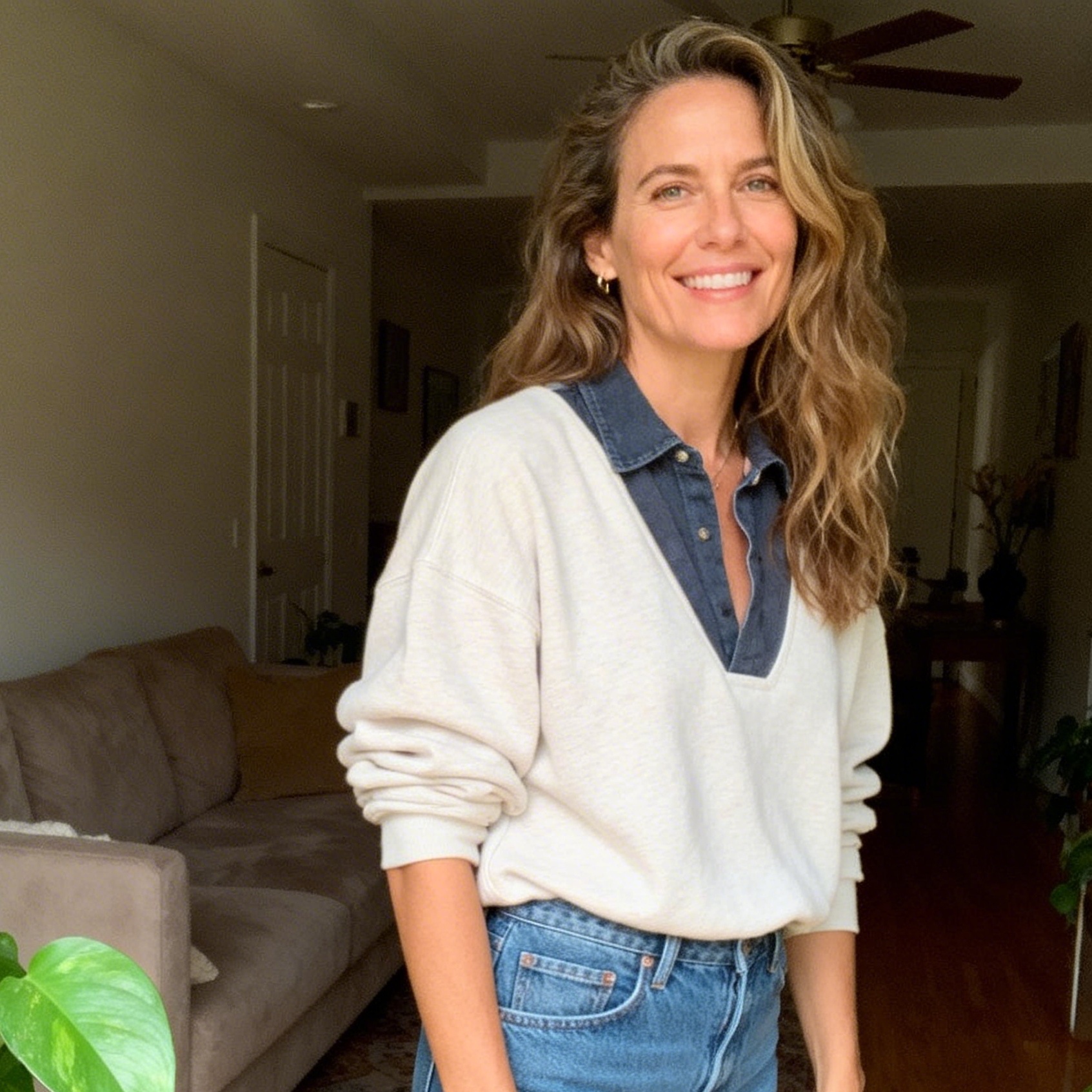
Representing the "unknown truth" has long been the ultimate challenge for artists, philosophers, and scientists alike. Unlike concrete objects that occupy physical space, the most profound truths of our existence—the nature of consciousness, the mechanics of higher dimensions, or the fragmented essence of memory—are often invisible to the naked eye. Historically, we relied on the metaphorical brushstrokes of surrealists or the complex equations of theoretical physicists to hint at these realities. However, the emergence of generative artificial intelligence has fundamentally shifted this paradigm. AI does not merely capture what exists; it synthesizes the collective human imagination to manifest what we feel but cannot see.
The ability to "picture the unknown truth" using AI relies on the machine's capacity to navigate the latent space—a mathematical realm where every concept ever fed into the model resides in a multidimensional web of relationships. By leveraging specific linguistic triggers, creators can force the AI to bridge the gap between abstract thought and visual form.
The Paradox of Truth in Generative Latent Space
Before diving into the creative process, it is essential to understand the epistemic crisis triggered by AI. For over a century, the phrase "seeing is believing" was anchored in the mechanical objectivity of photography. A photograph was a certificate of presence—what Roland Barthes called the ça-a-été (that-has-been). However, as modern diffusion models like Midjourney, Flux, and DALL-E 3 achieve near-perfect photorealism, this foundation has collapsed.
In the age of AI, a photograph no longer proves that a subject existed. Instead, it proves that a statistical model understood the visual grammar of existence well enough to simulate it. This collapse of photographic truth, while terrifying for journalists and forensic experts, is a liberation for the conceptual artist. When the requirement to depict "real things" is removed, the artist can use the language of photorealism to depict "real truths" that lack a physical body. The "unknown truth" is no longer a blurry mystery; it can be rendered in 8k resolution, complete with cinematic lighting and hyper-realistic textures.
Four Conceptual Frameworks for Picturing the Unknown
To visualize the unknown, one must move beyond literal descriptions. AI thrives on tension—the tension between light and shadow, order and chaos, the visible and the veiled. Based on extensive experimentation with prompt engineering, four distinct conceptual frameworks have emerged as the most effective ways to translate the "unknown truth" into compelling visual narratives.
The Veiled Cosmic Reality (The Metaphysical Approach)
This framework operates on the philosophical premise that truth is a layer of reality hidden just behind the physical world. It is the Platonist view: what we see are merely shadows on a cave wall. To represent this using AI, we use the metaphor of the veil.
In my testing with Midjourney v6, the key to this concept is the interplay of transparency and luminescence. When you prompt for a "translucent silk veil blowing in a cosmic wind," the AI must calculate how light passes through a semi-transparent medium to reveal a complex structure underneath. The "truth" here is not a person or an object, but a multidimensional geometric structure made of pure data and light.
- Core Visual Elements: Ethereal fabrics, glowing fractals, deep space backgrounds, and silhouettes of human figures in states of longing or reaching.
- Pro Tip for Creators: Use keywords like "subsurface scattering" and "volumetric lighting" to give the veil a tangible, physical presence that makes the hidden light behind it feel more authentic.
The Shattered Mirror (The Psychological Perspective)
If the cosmic approach looks outward, the shattered mirror looks inward. This framework suggests that the "unknown truth" is not a single, unified thing, but a collection of fragments. Human perception is limited; we only see shards of reality at any given time.
When using DALL-E 3 for this concept, the model excels at "impossible reflections." By prompting for a mirror standing in a barren landscape, where each shard reflects a different reality—a city, a microscopic cell, a dying star—you create a visual representation of cognitive dissonance and the fragmented nature of truth. The truth is found in the gaps between the shards, the parts that remain unreflected.
- Core Visual Elements: High-contrast reflections, desert or foggy environments, sharp glass edges, and mismatched environmental textures.
- Pro Tip for Creators: Incorporate "ray-tracing" and "caustics" in your prompts to ensure the AI handles the complex physics of light reflecting off broken surfaces, which adds a layer of "truthful" physics to a surreal scene.
The Architecture of the Void (Scientific and Mathematical Aesthetics)
Science often deals with truths that are mathematically certain but visually incomprehensible, such as the curvature of spacetime or the probability clouds of quantum mechanics. To visualize this, we look to the "architecture of the void."
This approach uses minimalism to emphasize the vastness of the unknown. Imagine an obsidian sphere—perfect, smooth, and light-absorbing—sitting in the middle of a golden neural network. The sphere represents the "Singularity" or the "Absolute Truth" which cannot be seen directly, while the surrounding filaments represent our attempts to map it through science and logic. In Stable Diffusion, using LoRAs (Low-Rank Adaptations) trained on architectural photography and fractal art can yield stunning results here.
- Core Visual Elements: Golden filaments, obsidian textures, absolute black (Vantablack style), and sacred geometry.
- Pro Tip for Creators: Experiment with "negative space" in your compositions. The void should feel heavy, almost as if it has its own mass.
The Anatomy of Secrets (Deep Symbolic Surrealism)
The final framework focuses on the human relationship with the unknown. We carry secrets, ancestral memories, and biological truths within our very cells. This is best visualized through the technique of double exposure.
By merging the silhouette of a human head with a galaxy, a library, or an intricate clockwork mechanism, the AI creates a visceral connection between the macrocosm and the microcosm. The "unknown truth" here is the realization that we are composed of the same stuff as the stars and the same logic as the machine.
- Core Visual Elements: Double exposure, smoke, decaying textures, ancient manuscripts, and nebulae.
- Pro Tip for Creators: Use "low-key lighting" and "intricate textures" to ground the surreal imagery in a moody, profound atmosphere that invites the viewer to linger and decode the symbols.
Technical Mastery Behind Abstract Prompts
Visualizing the unknown requires more than just a good idea; it requires a mastery of the AI's technical vocabulary. When the subject matter is abstract, the "style" and "medium" keywords carry the weight of the narrative.
The Power of Lighting and Atmosphere
Lighting is the primary tool for directing the viewer's eye toward the "truth." In AI art, lighting isn't just about visibility; it's about mood.
- Chiaroscuro: Using extreme contrasts between light and dark creates a sense of drama and mystery, perfect for "The Anatomy of Secrets."
- Bioluminescence: Adding a self-generated glow to objects suggests an inner life or a hidden energy, ideal for "The Architecture of the Void."
- Tyndall Effect: This refers to light scattering by particles in a colloid or a very fine suspension (like dust or smoke). It creates "God rays" that make the air feel thick with history and significance.
Materiality and Texture
To make an "unknown truth" feel real, the AI must render it with believable textures. If you are visualizing a cosmic veil, the silk must look like it has a specific thread count. If you are visualizing a shattered mirror, the glass must have microscopic scratches.
- Keywords to use:
8k resolution,photorealistic textures,macro photography,anodized metal,weathered stone.
Understanding Model Differences
Different AI models interpret "The Unknown" in different ways:
- Midjourney: Tends toward the artistic and the "painterly." It is excellent for "The Veiled Cosmic Reality" because it understands mood and aesthetics better than almost any other model.
- DALL-E 3: Excellent at following complex, logical instructions. If you need a specific number of shards in a mirror reflecting specific things, DALL-E is your tool.
- Flux.1: Currently the leader in text rendering and photorealism. It is perfect for "The Shattered Mirror" or any prompt where you need the environment to look indistinguishable from a real photograph.
The Ethics of Fabricating Reality
As we use AI to "picture the unknown truth," we must address a critical ethical question: Are we discovering truth, or are we merely inventing convincing illusions?
Reference material concerning AI upscaling—such as the viral "alien" photograph—highlights the danger. When AI enhances a low-resolution image, it doesn't "find" hidden pixels; it predicts them based on statistical patterns. It "hallucinates" details like facial features or skin textures that were never captured by the original lens.
In a creative context, this hallucination is a feature. It allows us to explore the "what if." But in a forensic context, it is a lie. When we use AI to visualize the unknown, we are not providing evidence; we are providing an interpretation. As creators, we must be transparent about this distinction. The "unknown truth" pictured by an AI is a mirror of our own collective subconscious, not a literal map of reality.
Practical Steps for Your Next AI Creation
If you are ready to start visualizing these concepts, follow this workflow:
- Define the Philosophical Pillar: Is your "truth" hidden (Veil), fragmented (Mirror), mathematical (Void), or internal (Anatomy)?
- Select Your Medium: Do you want it to look like a 19th-century daguerreotype, a modern National Geographic photo, or a 3D render from a high-end gaming engine?
- Layer Your Prompt: Start with the subject, add the environment, define the lighting, and finish with technical parameters (e.g.,
--v 6.0,--ar 16:9,--stylize 250). - Iterate and Refine: AI rarely gets the "truth" right on the first try. Use regional variations and subtle prompt adjustments to hone in on the specific visual you are imagining.
Summary
Visualizing the "unknown truth" is no longer a task confined to the limits of the human hand. Generative AI serves as a powerful bridge between the abstract and the concrete, allowing us to render the metaphysical in photorealistic detail. By utilizing frameworks like the Veiled Reality or the Shattered Mirror, and mastering the technical nuances of lighting and texture, creators can produce images that resonate with profound, unspoken truths. However, we must remain mindful that these images are interpretations—beautiful, high-resolution hallucinations that tell us more about ourselves than they do about the external universe.
FAQ
What are the best AI tools for visualizing abstract concepts?
Midjourney remains the industry leader for artistic and abstract imagery due to its sophisticated aesthetic algorithms. However, DALL-E 3 is better for prompts that require precise placement of objects, and Flux.1 is superior for achieving a "raw" photographic look.
How do I prevent my AI images from looking "too AI"?
Avoid generic terms like "beautiful" or "detailed." Instead, use technical photography terms like "f/1.8 aperture," "long exposure," "Kodak Portra 400," or "grainy film texture." This grounds the image in the history of physical media.
Can AI help scientists visualize real unknown truths?
Yes, but with caution. AI can help create models of complex data (like protein folding or galaxy clusters), but these visualizations must be verified by the underlying math. In science, the AI image is a hypothesis, not a proof.
Why does AI sometimes fail to understand "truth" in a prompt?
AI doesn't "understand" concepts in the human sense. It understands word associations. If you use the word "truth" directly, you will get clichés like gavels or Bibles. You must use visual metaphors for truth—light, clarity, reflections, and structures—to get the machine to produce something profound.
Is it ethical to use AI to upscale old, mysterious photos?
It is ethical for entertainment or artistic purposes, but it is misleading if presented as forensic proof. AI-enhanced photos contain "predicted" details that were not in the original, meaning they can inadvertently reinforce myths or false beliefs.
-
Topic: The quiet, terrifying collapse of photographic truth in the age of AIhttps://aestheticsofphotography.com/collapse-of-photographic-truth-in-the-age-of-ai/
-
Topic: Is This Picture Real a 2026 Guide to Spotting AI Fakes | AI Image Detectorhttps://www.aiimagedetector.com/blog/is-this-picture-real
-
Topic: Upscaled "Alien" Photograph Ignites Fresh Debate as AI Technology Revives Decades-Old Mystery - UFO Secrethttps://ufosecret.net/index.php/2026/07/29/upscaled-alien-photograph-ignites-fresh-debate-as-ai-technology-revives-decades-old-mystery/