Home
Home
Why Professional Designers Are Finding Better Results Beyond Adobe Firefly
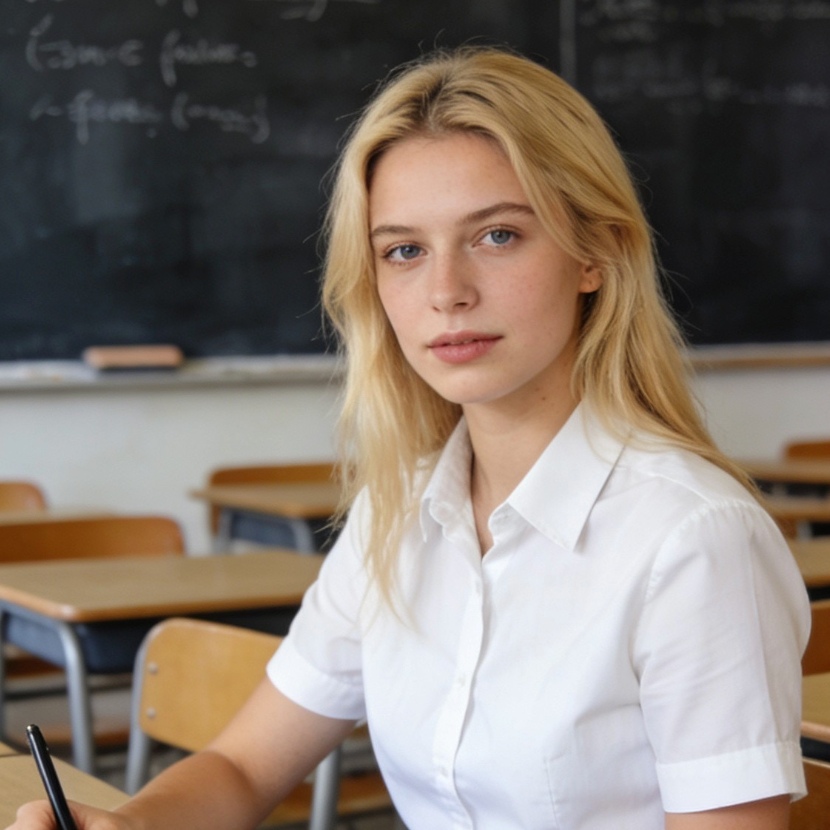
Adobe Firefly has established itself as a reliable, commercially safe entry point for generative AI within the Creative Cloud ecosystem. Its deep integration with Photoshop and Illustrator makes it a convenient choice for existing subscribers. However, as the generative AI landscape matures, many professional designers and marketing teams are identifying critical limitations in Firefly’s output quality, prompt adherence, and restrictive filtering systems.
While Firefly excels at "safe" corporate imagery, it often lacks the artistic soul found in specialized models or the technical precision required for complex typography and vector work. This shift in the industry has led to a surge in adoption for more powerful, specialized alternatives that prioritize visual excellence over ecosystem convenience.
Understanding the Performance Gaps in the Adobe Firefly Ecosystem
The decision to look beyond Adobe Firefly usually stems from four primary friction points. First is the aesthetic "uniformity." Because Firefly is trained predominantly on Adobe Stock assets, its outputs tend to have a distinct "stock photo" sheen—polished, yet sometimes lacking the raw texture and dramatic lighting found in cinematic photography.
Second is the restrictive nature of generative credits and safety filters. Many professionals find that Firefly’s filters occasionally block non-risky, creative prompts, stifling the ideation process. Third, the lack of control over model versions and fine-tuning makes it difficult for brands to maintain a consistent visual identity. Finally, the typography capabilities, while improving, still lag behind models specifically built to handle complex text rendering within images.
Best Alternatives for High-End Artistic Direction and Visual Nuance
When the primary goal is visual impact and artistic sophistication, the industry standard has shifted toward models that offer more diverse training sets and advanced stylization controls.
Midjourney and the Superiority of Aesthetic Stylization
Midjourney remains the most significant competitor to Adobe Firefly for high-end editorial and conceptual art. In practical workflows, Midjourney's version 6.1 demonstrates a level of lighting, texture, and composition that Firefly struggles to match.
One of the most notable advantages is the "Stylize" parameter. While Firefly offers a few style presets, Midjourney allows creators to dial in the level of artistic flair from subtle to extreme. In our testing, generating a "cyberpunk cityscape at golden hour" in Midjourney resulted in complex reflections and atmospheric depth that looked like a finished film still. Firefly’s version, by comparison, often looked like a clean digital illustration.
The introduction of the web editor has also solved one of Midjourney's biggest UX hurdles: the Discord interface. Professional users can now use the "Vary (Region)" tool to select specific parts of an image and regenerate them with new prompts, offering a level of surgical precision that rivals Photoshop’s Generative Fill but with much higher artistic quality. However, it is important to note that Midjourney does not offer a free tier, and its "commercially safe" status is often debated compared to Adobe’s fully licensed training set.
Specialized Tools for Typography and Branding Assets
One of the most common frustrations with early AI models was "gibberish" text. While Firefly introduced text effects early on, it often fails when asked to integrate specific, legible sentences into a complex scene.
Ideogram and the Breakthrough in Readable Text Rendering
Ideogram has carved out a niche as the premier tool for graphic designers who need readable text within AI-generated images. For tasks like movie posters, book covers, or social media tiles, Ideogram 2.0 outperforms almost every other model on the market.
In a direct comparison, asking both Firefly and Ideogram to create a "vintage neon sign that says 'Midnight Diner' in a rainy street" yields vastly different results. Firefly often misspells the words or blurs the neon tubes. Ideogram consistently renders the typography with perfect spelling and maintains the correct font style (serif, sans-serif, or script) as requested in the prompt. This makes it an essential alternative for marketing teams who need ready-to-use assets without heavy manual retouching in Illustrator.
Recraft for Scalable Vector Graphics and Professional Iconography
Adobe Illustrator is the king of vector software, yet Firefly’s "Text to Vector" capabilities are still in their infancy. Recraft has emerged as a specialized powerhouse for designers who need more than just pixels.
Unlike most AI generators that output raster files (JPEG/PNG), Recraft allows users to generate true vector graphics (SVG). This is a game-changer for logo design and iconography. In our experience, Recraft’s ability to maintain a consistent "brand language" across a set of 50 icons is unmatched. You can define a specific line weight and color palette, and the AI will adhere to those constraints across every generation. For a professional designer, this level of structural control is far more valuable than the general image generation offered by Firefly.
High-Performance Models for Power Users and Local Control
For users who find the "black box" nature of Adobe’s cloud processing limiting, open-weights models offer a level of transparency and customization that Firefly cannot replicate.
The Rise of Flux as the New Gold Standard for Realism
Flux, developed by Black Forest Labs, has quickly become the new benchmark for photorealism and human anatomy. While Firefly often struggles with the intricacies of human hands or complex limb positioning, Flux.1 [pro] and [dev] models handle these details with startling accuracy.
For power users, Flux offers a significant advantage: it can be run locally if you have sufficient hardware (typically 24GB of VRAM for the Dev version). This means no subscription fees after the initial hardware investment and total privacy for sensitive projects. In professional photography simulations, Flux captures skin pores, fine hair, and fabric textures with a level of fidelity that makes AI-generated images indistinguishable from real photos. Designers who require high-resolution, hyper-realistic outputs for print media often find Flux to be a superior choice over Firefly’s cloud-compressed results.
All-in-One Creative Suites for Rapid Prototyping
Not every user needs the complexity of Midjourney or the technical requirements of Flux. Some need a "studio" feel where they can manage multiple assets in one place.
Leonardo.ai and the Versatility of Fine-Tuned Models
Leonardo.ai provides a middle ground that many find more flexible than Adobe’s ecosystem. It offers a variety of "fine-tuned" models—some optimized for 3D textures, others for character portraits or architectural sketches.
One feature that stands out as a Firefly alternative is the "Universal Upscaler." While Adobe allows you to increase image size, Leonardo’s upscaler actually adds intelligent detail during the process, making a low-resolution concept look like a high-definition masterpiece. Their "Canvas" editor also allows for seamless out-painting, where you can expand the borders of an image with more control over the surrounding context than Photoshop’s current AI tools provide.
Canva Magic Studio for Social Media Teams
For social media managers and non-designers, Canva’s Magic Studio is often a more practical alternative than Firefly. While Adobe Express is the direct competitor, Canva’s integration of AI into its vast template library is currently more streamlined.
Canva’s "Magic Media" allows for quick generation of images and short videos that are immediately ready for a social layout. It lacks the deep technical controls of Photoshop, but for high-volume content production where speed is more important than "fine art" quality, Canva’s AI tools provide a lower barrier to entry and a more intuitive user experience.
Moving Beyond Still Images to Generative Video
As Adobe slowly rolls out its Firefly Video Model, competitors have already established robust platforms that are currently more capable for professional video production.
Leading Alternatives for Firefly Video Tools
If your workflow requires turning text or images into high-quality video, these platforms currently offer more advanced physics and motion control than the early iterations of Firefly Video:
- Runway (Gen-3 Alpha): Known for its "Motion Brush" feature, Runway allows users to paint over an area of a still image to dictate exactly where movement should occur. This level of granular control over temporal consistency is something Firefly is still working to perfect.
- Kling AI: Currently a leader in generating realistic human movement and long-form clips (up to 10 seconds or more). It excels at maintaining character consistency, which is vital for storytelling.
- Luma Dream Machine: Best for speed and "physics-aware" generations. It is particularly effective at understanding how objects should interact with gravity and light in a 3D space.
For creators who find Firefly’s video tools too limited in clip length or motion complexity, these standalone video AI platforms are the current industry leaders.
Practical Comparison of Costs and Credit Systems
The economic aspect of choosing an alternative is often the deciding factor for freelancers and small agencies. Adobe Firefly uses a "Generative Credits" system tied to a Creative Cloud subscription (usually around $55/month for the full suite). Once you run out of credits, generation speeds are significantly throttled.
By contrast, tools like Leonardo.ai offer a daily reset of free tokens, which is ideal for casual users or those on a tight budget. Midjourney requires a monthly subscription (starting at $10) but offers "Relax" mode on higher tiers, allowing for unlimited generations if you are willing to wait a few minutes. Flux and other Stable Diffusion-based models are "free" to run if you own the hardware, making them the most cost-effective long-term solution for high-volume studios.
Conclusion: Selecting the Right Tool for Specific Workflows
Adobe Firefly remains an excellent "all-rounder" for those already paying for Photoshop and who prioritize legal safety and ease of use. However, it is no longer the "gold standard" for every creative task.
- If you need unparalleled artistic beauty and cinematic lighting, Midjourney is the clear winner.
- If your project involves heavy typography or branding, Ideogram or Recraft will save you hours of manual editing.
- If you are a power user seeking the highest level of photorealism and control, the Flux ecosystem is the new frontier.
- For social media teams needing speed and templates, Canva provides a more efficient workflow than Adobe Express.
The modern creative stack is no longer limited to a single software provider. Most professional workflows now involve a "hybrid" approach: generating a base concept in Midjourney or Flux, refining the text in Ideogram, and then bringing the final assets into Photoshop for final compositing and retouching.
Frequently Asked Questions About Firefly Alternatives
Which Firefly alternative is best for commercial use?
Adobe Firefly is often cited as the safest for commercial use because it is trained on licensed Adobe Stock. However, many alternatives like Canva and the "Pro" versions of Midjourney and Leonardo.ai offer commercial rights in their paid tiers. Always check the specific Terms of Service for the model you are using.
Can I get high-quality vectors without Adobe Firefly?
Yes. Recraft is specifically designed to generate professional-grade vector files (SVG) and is currently considered superior to Firefly for logo and icon design due to its ability to maintain consistent stroke weights and styles.
Is there a free alternative to Adobe Firefly?
Leonardo.ai and Microsoft Designer (powered by DALL-E 3) offer free tiers with daily credit refreshes. For those with a powerful PC, running Flux or Stable Diffusion locally is a completely free way to generate unlimited high-quality images.
How do I get better photorealism than Firefly?
Flux.1 and Midjourney v6.1 currently lead the market in photorealism. They capture human anatomy, skin textures, and complex lighting environments with significantly more detail and fewer "AI artifacts" than Adobe Firefly.
Do any alternatives integrate with Photoshop?
While not "native" like Firefly, many tools like Leonardo.ai and Krea.ai offer plugins or web-based "canvas" editors that allow you to import and export layers directly, bridging the gap between the AI generator and your final design software.
-
Topic: The Best Adobe Firefly Video Generator Alternatives in 2026 | Pexohttps://pexo.ai/blog/adobe-firefly-video-generator-alternatives-8775
-
Topic: 10 Adobe Firefly Alternatives for Design, AI Images, and Creative Workflowshttps://www.media.io/comparison/adobe-firefly-alternatives.html
-
Topic: Adobe Firefly Alternatives: Best Alternative Tools and Selection Guide - ToolMagehttps://www.toolmage.com/en/tool/adobe-firefly/alternatives/