Home
Home
How AI Actually Turns Your Photos Into Cinematic Videos
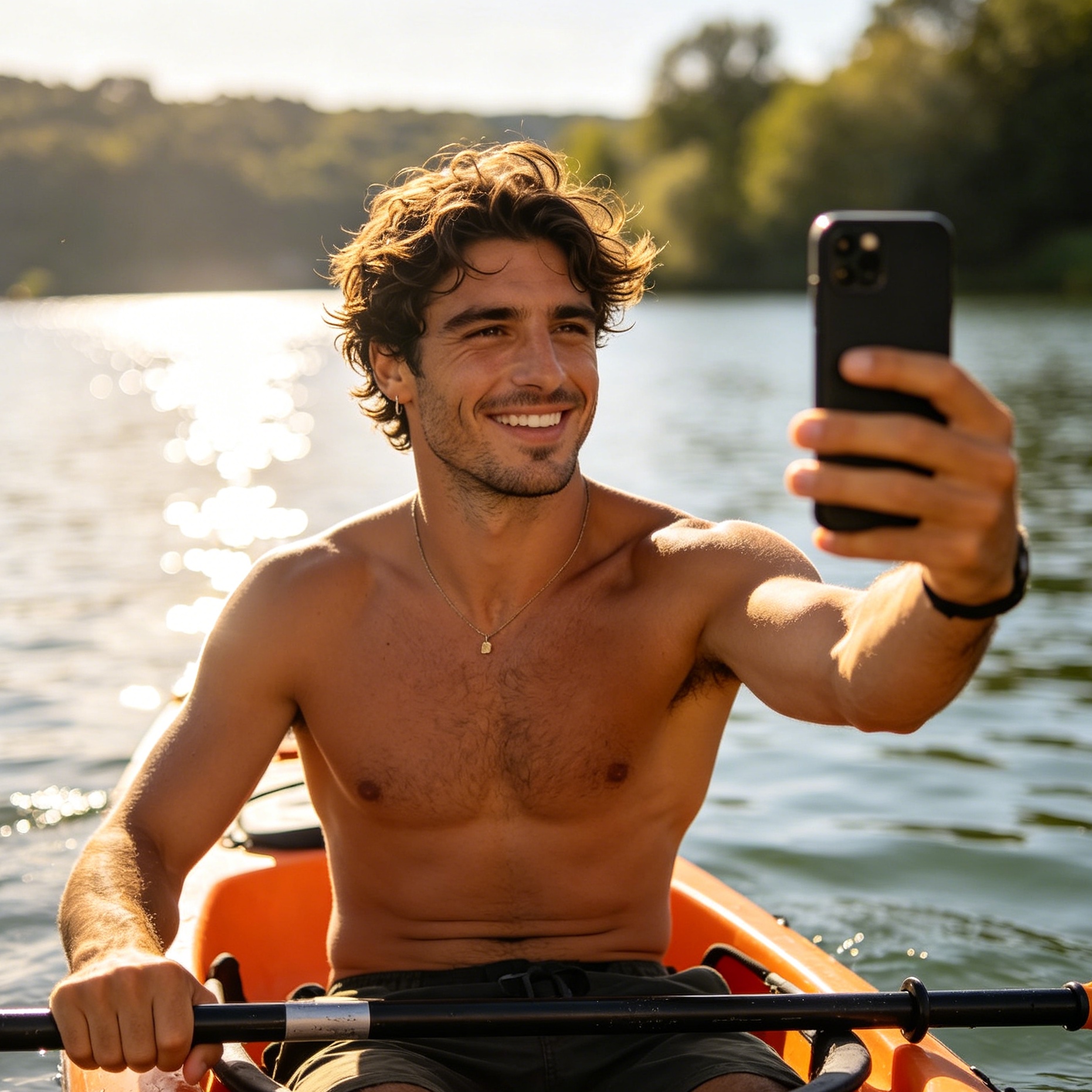
Generative artificial intelligence has progressed from static pixel generation to dynamic temporal synthesis. The ability to take a single, high-resolution image and transform it into a five-to-ten-second video clip is no longer a futuristic concept but a functional reality used daily by creative professionals and content creators. This process, often referred to as "Image-to-Video" (I2V) generation, leverages sophisticated neural networks to predict motion, maintain visual consistency, and simulate camera physics.
The Mechanism Behind Image to Video Generation
To understand how a picture becomes a video, one must look past the simple interface of tools like Runway or Luma. The underlying technology primarily relies on latent diffusion models that have been trained on millions of hours of video data. Unlike text-to-image models that focus on spatial arrangements, I2V models focus on the temporal dimension.
Diffusion and Temporal Consistency
The core of this technology is the diffusion process. The AI takes the input image as a "starting frame" (or a visual anchor). It then introduces Gaussian noise and attempts to "denoise" a sequence of frames that follow. The challenge lies in temporal consistency—ensuring that a character’s face or a building’s architecture does not morph into something else as the seconds pass. Advanced models use "attention mechanisms" to look back at the original image for every new frame generated, ensuring that textures, lighting, and colors remain synchronized throughout the clip.
Motion Prediction and Optical Flow
AI does not "animate" in the traditional sense; it predicts the most probable next state of a pixel. If the input image features a waterfall, the model recognizes the patterns associated with falling water from its training data. It knows that water moves downward and creates spray. It then generates subsequent frames that follow this physical logic. This is why AI-generated video often feels eerie yet realistic—it is a statistical hallucination of physical laws.
Essential Capabilities of Modern AI Video Tools
Current I2V platforms are not just "random motion generators." They offer granular control over how a scene evolves. Understanding these features is key to moving from amateur experiments to professional-grade outputs.
Cinematic Camera Movement
One of the most powerful aspects of I2V is the ability to simulate camera hardware. Users can dictate "camera pans," "tilts," "zooms," or "dolly shots." For instance, taking a static portrait and applying a "slow zoom" creates a sense of intimacy and cinematic weight. The AI achieves this by recalculating the perspective of the 2D image, often creating a 3D-like parallax effect where the subject moves at a different speed than the background.
Natural and Physics-Based Motion
Modern models excel at environmental motion. This includes the swaying of trees, the flickering of fire, or the movement of clouds. In our internal testing of various diffusion models, we found that "fluid dynamics" (water and smoke) are currently the most mature motion types. The AI accurately simulates the chaotic but predictable nature of these elements, making them ideal for background b-roll in video production.
Subject-Specific Animation
More advanced tools allow for "Motion Brushing" or "Regional Control." This means a creator can highlight a specific area of an image—such as a person's hair or a car's wheels—and command the AI to animate only that section. This prevents the entire scene from warping and allows for subtle, realistic movements like a person blinking or hair blowing in a gentle breeze.
Evaluating Top Tier Image to Video Platforms
Choosing the right platform depends on the specific requirements of a project, whether it is high-fidelity realism, narrative consistency, or commercial safety.
Runway Gen-3 Alpha for High Fidelity Motion
Runway has long been a leader in the AI video space. Their latest model, Gen-3 Alpha, represents a significant leap in photorealism. In our practical application tests, Gen-3 Alpha demonstrated a superior understanding of human anatomy and clothing physics.
When we uploaded a high-fashion portrait, the model was able to generate a "catwalk" motion that maintained the intricate patterns of the fabric without significant blurring. However, it requires precise prompting. Using a prompt like "cinematic lighting, slow motion, high contrast" alongside the image significantly improves the output. The processing speed is also notable, often delivering 10-second clips in under 90 seconds.
Luma Dream Machine and Narrative Consistency
Luma Labs' Dream Machine entered the market with a focus on "high-action" sequences. While some models struggle with fast movement, Dream Machine handles it with impressive stability. We tested this using a static shot of a sports car. By prompting a "high-speed chase through a neon-lit city," the AI generated not only the motion of the car but also the accurate reflection of city lights on the car's body.
The primary strength here is "temporal stability." Even at high speeds, the car’s shape remained intact for the full duration of the clip. The trade-off is occasionally lower resolution in the background elements compared to Runway, but for action-oriented content, it is a formidable tool.
Adobe Firefly Video for Commercial Creative Workflows
Adobe’s approach with Firefly is distinct. It is built for professional editors who need "commercially safe" content. Unlike other models that may have been trained on copyrighted material, Firefly is trained on Adobe Stock and public domain content.
From a workflow perspective, Firefly’s integration with Premiere Pro and After Effects is its "killer feature." You can upload a frame grab from your timeline, generate a b-roll clip that matches the lighting and color grade of your project, and drop it straight back into the edit. While it might not produce the "wildest" animations, its reliability and legal safety make it the preferred choice for corporate marketing and traditional film production.
Best Practices for High Quality Video Outputs
Achieving professional results with I2V requires more than just clicking a button. It is a collaborative process between the user's creative direction and the AI's generation.
Selecting the Right Base Image
The quality of the video is directly proportional to the quality of the input image. Low-resolution or "noisy" images often result in distorted videos because the AI struggles to identify edges and textures.
- Resolution: Always use images at 1080p or higher.
- Clarity: Clear subjects with a distinct foreground and background perform best. Cluttered images often lead to "merging" where the subject accidentally blends into the background during motion.
- Composition: Images that imply motion—like a person leaning forward or a car on a road—help the AI's "prediction" engine work more efficiently.
Mastering Motion Control Prompts
Prompting for video is different than prompting for images. You must describe the change over time.
- Direct Action: Instead of saying "a man," say "a man turns his head slowly to the left and smiles."
- Camera Language: Use technical terms like "Pan right," "Low-angle tilt," or "Dolly zoom."
- Atmosphere: Add descriptors like "volumetric lighting," "motion blur," or "4k cinematic" to guide the stylistic output.
In our testing, we found that "negative prompting"—specifying what you don't want—is equally important. Phrases like "no warping," "no flickering," and "no morphing" can help the model stay focused on maintaining the original image's integrity.
Common Challenges and Current Limitations
Despite the rapid progress, I2V technology is not perfect. Understanding these limitations prevents frustration during the creative process.
The "Temporal Warp"
As a video progresses, the AI's "memory" of the first frame can fade. This often results in objects slowly changing shape or disappearing. This is most common in clips longer than 5 seconds. To mitigate this, professionals often generate multiple 2-second clips and stitch them together in post-production rather than trying to get one perfect 10-second shot.
Human Extremities and Fine Textures
AI still struggles with complex human movements, specifically fingers and toes. A hand resting on a table in a static image might sprout an extra finger once it starts moving. Similarly, text in the background of an image often turns into "gibberish" or "alien runes" as the video plays.
Physical Logic Failures
While the AI knows water falls down, it doesn't truly understand "weight" or "collision." A ball hitting a wall might pass through it or flatten in an unrealistic way. These "physics glitches" are the hallmark of current-generation AI video and often require multiple "rerolls" (re-generating the video) to fix.
Business and Creative Use Cases
The practical applications for I2V are expanding across industries, offering significant cost and time savings.
Social Media and Rapid Content Creation
For influencers and social media managers, I2V allows for the creation of "thumb-stopping" content without a production crew. Turning a static product photo into a dynamic 5-second ad for Instagram Reels or TikTok can be done in minutes.
Marketing and E-commerce
E-commerce brands are using I2V to bring product catalogs to life. A static shot of a dress can be transformed into a video showing the fabric swaying in the wind, providing a better sense of the product's quality to potential customers.
Film Production and B-Roll
In the film industry, I2V is becoming a staple for "pick-up shots" and b-roll. If a director realizes they need a three-second shot of a sunset over a specific landscape but the production has already moved locations, they can take a high-quality still from the location and animate it using AI, saving thousands of dollars in travel and equipment costs.
Conclusion/Summary
The transition from "Picture to AI Video" represents a paradigm shift in digital storytelling. By utilizing diffusion models to predict motion and simulate cinematic camera work, platforms like Runway, Luma, and Adobe Firefly have democratized high-end video production. While challenges like temporal consistency and physical accuracy remain, the ability to control motion through regional brushes and precise prompting allows for professional-grade outputs. Success in this field requires a strategic combination of high-quality source imagery, an understanding of camera physics, and an iterative approach to prompting. As these models continue to evolve, the line between "captured" and "generated" video will continue to blur, making AI an indispensable tool in the modern creative's arsenal.
FAQ
What is the best image format for AI video generation?
Most platforms prefer high-resolution JPG or PNG files. PNG is generally better as it avoids the compression artifacts that can confuse the AI’s motion prediction algorithms. Ensure the image is at least 1920x1080 for optimal results.
Can I turn my own photos into AI videos for commercial use?
It depends on the platform. Adobe Firefly is specifically designed for commercial safety. Other platforms like Runway or Luma offer commercial licenses with their paid tiers. Always check the terms of service regarding "ownership of outputs" before using generated clips in a paid campaign.
How long does it take to generate an AI video from a picture?
Generation time typically ranges from 60 seconds to 3 minutes, depending on the complexity of the motion and the length of the clip (usually 4 to 10 seconds). High-traffic periods on cloud-based servers can occasionally increase wait times.
Why does my AI video look "blurry" compared to the original photo?
This is often due to the model's internal resolution limits. Many models generate at 720p and up-scale to 1080p. If the motion is too fast or complex, the "denoising" process can lose fine details. To fix this, try reducing the "motion intensity" setting or using a clearer, higher-contrast starting image.
Can I control the specific direction of movement in the video?
Yes, most top-tier tools now offer "Camera Controls" (Pan, Tilt, Zoom) and "Motion Brushes." These allow you to manually indicate which parts of the image should move and in what direction, providing much higher precision than text prompts alone.
-
Topic: Image to video AI - Adobe Fireflyhttps://www.adobe.com/ca/products/firefly/features/image-to-video.html
-
Topic: Free AI Image to Video Generator: Convert Photos to Videos - Adobe Fireflyhttps://www.adobe.com/au/products/firefly/features/image-to-video.html
-
Topic: Runway Aleph: Leading AI Video Generation & Editing Platformhttps://runwayaleph.com/