Home
Home
How AI Image Generation Works and Which Tools Are Leading in 2025
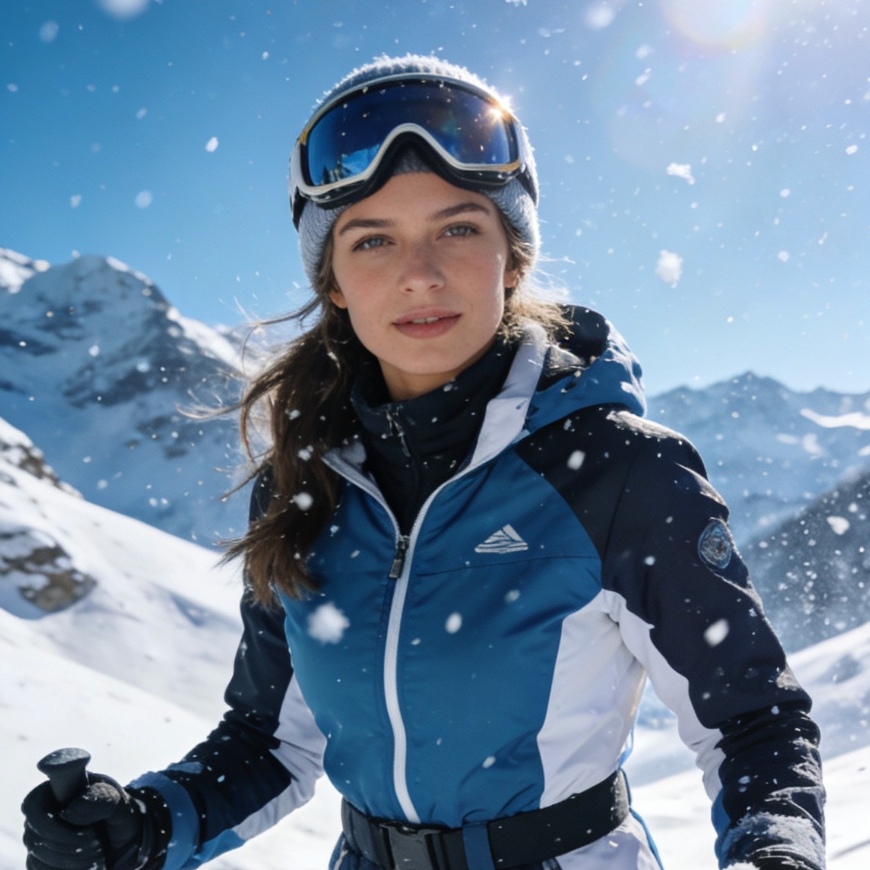
AI image generation has transitioned from a niche experimental technology to a fundamental pillar of modern digital creativity. This technology uses machine learning models to interpret text descriptions and convert them into high-fidelity visual assets, ranging from photorealistic portraits to complex architectural renderings. In 2025, the landscape is defined by the rapid maturation of diffusion models and the emergence of hybrid architectures that combine speed with unprecedented creative control.
Understanding the Core Technology Behind AI Art
To understand why AI-generated images look as good as they do today, it is essential to look at the architectural shift from Generative Adversarial Networks (GANs) to Diffusion Models.
The Shift from GANs to Diffusion
For years, GANs were the gold standard. They functioned through a "cat and mouse" game between two neural networks: a generator that created images and a discriminator that tried to spot the fakes. While GANs were excellent at generating specific categories of images (like human faces), they were notoriously unstable to train and struggled with diverse, complex scenes.
Today, the industry has almost entirely moved toward Diffusion Models. This process works on the principle of reverse entropy. A model is trained by taking an image and gradually adding Gaussian noise until it becomes unrecognizable. The neural network then learns the inverse: how to predict and remove that noise step-by-step to recover a clean image. When a user enters a prompt, the model starts with a field of random static and "sees" the requested image within that static, refining it over dozens of iterations until a coherent visual emerges.
The Role of Latent Space
Modern tools like Stable Diffusion utilize "Latent Diffusion." Instead of processing every pixel of a high-resolution image—which would be computationally catastrophic—the model operates in a compressed "latent space." This mathematical representation of the image allows the AI to understand concepts (like "a cat" or "sunset") without needing the brute-force power to render 4K pixels at every stage of the denoising process.
Top AI Image Generators for 2025: A Deep Dive
The choice of an AI image generator depends heavily on the specific requirements of the project, whether it is artistic flair, photorealism, or integration into a professional design workflow.
Midjourney: The Artistic Gold Standard
In the current ecosystem, Midjourney remains the leader for users seeking high-aesthetic quality with minimal effort. Operating primarily through a Discord interface, Midjourney v6.1 and its subsequent iterations have moved beyond simple image generation into advanced aesthetic control.
Subjective Review: In our testing, Midjourney consistently produces the most "ready-to-use" results. While other models might require complex prompt engineering to avoid a "plastic" or "AI look," Midjourney’s internal style tuners default to a cinematic, artistic quality. It excels at complex lighting, such as sub-surface scattering on skin or the caustic reflections of light through water.
- Best for: Conceptual art, editorial illustrations, and high-end marketing visuals.
- Key Parameter: The
--stylizecommand allows users to control how much of the model's internal aesthetic is applied versus strictly following the prompt.
DALL-E 3: The King of Semantic Accuracy
Developed by OpenAI and integrated into ChatGPT, DALL-E 3 is the most "intelligent" model when it comes to following complex instructions. It uses a powerful LLM (Large Language Model) to rewrite user prompts into more descriptive versions before generation.
Technical Insight: DALL-E 3 excels at spatial relationships. If you prompt "a blue cube on top of a red sphere to the left of a yellow pyramid," DALL-E 3 is significantly more likely to get the positioning correct compared to earlier versions of Stable Diffusion.
- Best for: Users who want to use natural, conversational language without learning technical prompt codes.
- Constraint: It offers less control over technical parameters (like aspect ratios or seed numbers) compared to its competitors.
Stable Diffusion (SDXL and Beyond): The Power User's Choice
Stable Diffusion is open-source, meaning it can be run locally on personal hardware. This provides total privacy and the ability to use "ControlNet," a technology that allows users to guide the AI using sketches, depth maps, or pose data.
Hardware Requirements: Running Stable Diffusion locally for high-resolution work (1024x1024 or higher) typically requires an NVIDIA GPU with at least 12GB of VRAM (Video RAM), though 24GB is recommended for professional workflows involving LoRA training or high-end upscaling.
- Best for: Professional creators, developers, and those requiring NSFW-safe (private) environments or hyper-specific fine-tuning.
Flux.1: The Realism Disruptor
Flux.1, developed by Black Forest Labs (founded by the original creators of Stable Diffusion), has recently taken the industry by storm. It bridges the gap between the artistic quality of Midjourney and the prompt adherence of DALL-E 3.
Experience Note: During our recent stress tests, Flux.1 Dev outperformed Midjourney in rendering human hands and complex text. Where previous models would struggle with "fingers merging" or "gibberish text on signs," Flux.1 can accurately render a person holding a sign with a specific, legible sentence.
- Best for: Hyper-realistic photography and images requiring precise text rendering.
Adobe Firefly: The Designer's Workflow Companion
Firefly is unique because it is built directly into the Adobe Creative Cloud. Its primary value proposition is not just generation, but "Generative Fill" and "Generative Expand" within Photoshop.
Professional Application: For a professional retoucher, Firefly is indispensable for extending a background or removing objects from a photograph while maintaining the original lighting and grain of the source file. It is also trained exclusively on Adobe Stock images, making it "commercially safe" compared to other models that might have trained on un-cleared internet data.
Mastering the Art of Prompt Engineering
A prompt is the bridge between human intent and machine execution. In 2025, prompt engineering has evolved from a series of "magic words" into a structured discipline.
The Universal Prompt Formula
To get consistent, professional results, a prompt should be structured in a specific order:
[Subject] + [Action/Context] + [Environment/Lighting] + [Art Style/Medium] + [Technical Parameters]
- Subject: Be specific. Instead of "a dog," use "a wet, chocolate Labrador retriever puppy."
- Context: Where is the subject? "Sitting on a weathered wooden pier in the middle of a foggy lake."
- Lighting: This is the most underrated aspect. Use terms like "Golden hour," "Cinematic rim lighting," "High-key studio lighting," or "Neon cyberpunk glow."
- Medium: Specify the tool. "35mm film photography," "Vector art," "Oil painting with heavy impasto," or "Unreal Engine 5 render."
Advanced Modifiers and Negative Prompting
In tools like Stable Diffusion, the "Negative Prompt" is just as important as the main one. It tells the AI what not to include. Common negative prompts for 2025 include:
deformed, extra fingers, blurry, low resolution, text, watermark, bad anatomy, mutated, cropped.
For technical control, aspect ratios are vital. In Midjourney, adding --ar 16:9 transforms a square image into a cinematic widescreen format, while --ar 9:16 is perfect for mobile-first social media content.
How Industry Sectors are Utilizing AI Image Generation
The impact of this technology extends far beyond digital art enthusiasts. It is fundamentally altering business models and creative pipelines.
Marketing and Advertising
Major retailers like Zalando have reported significant efficiency gains. By using generative AI to create lifestyle backgrounds for product shots, they have slashed production times from weeks to days. Instead of flying a crew to a desert for a photoshoot, a brand can now generate 50 different desert environments for their product in a single afternoon, reducing costs by up to 90%.
Game Development and 3D Art
Concept artists are using AI to rapidly iterate on world-building. Instead of spending three days on a single environment sketch, an artist can generate 20 variations in an hour, pick the best one, and use it as a reference for a 3D model. This "AI-assisted brainstorming" is becoming the standard in AAA game studios.
Architecture and Interior Design
Architects use models trained on architectural datasets to visualize buildings before they are built. By inputting a floor plan and a prompt like "Mid-century modern living room with floor-to-ceiling windows and forest views," they can provide clients with high-fidelity visualizations in minutes rather than hours of 3D rendering time.
Ethical, Legal, and Economic Challenges
The rise of AI image generation is not without controversy. There are three primary areas of concern that users and businesses must navigate.
Copyright and Fair Use
The question of whether AI models can legally train on copyrighted images found on the internet is currently being tested in courts worldwide. Some artists argue that AI is a form of "automated plagiarism," while tech companies argue that it falls under "fair use," similar to how a human artist learns by studying the works of masters.
Deepfakes and Misinformation
The ability to generate hyper-realistic images of real people has raised significant alarms regarding misinformation. To combat this, companies like Google have introduced "SynthID," a digital watermark embedded into the pixels of AI-generated images that is invisible to the human eye but detectable by software.
Bias in Training Data
Because AI models are trained on internet data, they often inherit human biases. For example, if an AI is asked to generate "a CEO," it may disproportionately produce images of middle-aged men. Developers are actively working on "de-biasing" algorithms to ensure more diverse and representative outputs.
The Future of Visual Creation
Looking toward the end of the decade, the boundary between "generating" and "editing" will likely disappear. We are moving toward a future of "multimodal conversation," where a user can generate an image, then talk to the AI to tweak specific details: "Make the sun a bit lower," "Change his shirt to blue," or "Make the trees look more like it's autumn."
As these tools become more integrated into our standard software suites, the "AI" label may eventually vanish, becoming just another brush in the digital artist's toolkit—a powerful, intelligent brush that understands the world as well as the artist does.
Summary of Key Takeaways
AI image generation has evolved into a sophisticated ecosystem of tools and techniques. While Midjourney remains the favorite for artistic quality, DALL-E 3 leads in ease of use, and Stable Diffusion offers unmatched control for professional workflows. The new entrant, Flux.1, is currently the benchmark for photorealism and text accuracy. To succeed in this field, users must master the structure of prompts, understand the technical limitations of their chosen model, and remain cognizant of the evolving legal landscape.
Frequently Asked Questions
What is the best free AI image generator?
Currently, Microsoft Designer (which uses DALL-E 3) and the free tier of Flux.1 on platforms like Hugging Face are the most powerful free options. Stable Diffusion is also free to use if you have the hardware to run it locally.
Can I sell the images I generate with AI?
This depends on the tool's Terms of Service. Most paid subscriptions (like Midjourney Pro or Adobe Firefly) grant you commercial rights to the images you create. However, keep in mind that in many jurisdictions, AI-generated images cannot currently be copyrighted because they lack "human authorship."
Why do AI-generated hands often look strange?
Hands are complex anatomical structures with many possible positions and overlaps. Early models struggled to understand the underlying skeletal structure, often seeing fingers as "general hand-matter." Newer models like Flux.1 and Midjourney v6 have largely solved this issue through higher-quality training data and more parameters.
How do I make my AI images look less "fake"?
To avoid the stereotypical AI look, avoid over-prompting with words like "ultra-realistic" or "hyper-detailed." Instead, use specific photography terms like "35mm film grain," "natural overcast lighting," or "slight motion blur." This anchors the AI in the physics of real-world cameras.
What is the difference between a prompt and a negative prompt?
A prompt tells the AI what to create (e.g., "a cat in a hat"). A negative prompt tells the AI what to exclude (e.g., "no red color, no whiskers"). Negative prompts are essential for refining details and removing unwanted artifacts.
-
Topic: AI Image Generation Models: A Guide to GANs & Diffusionhttps://tapflare.com/articles/pdfs/ai-image-generation-models.pdf
-
Topic: Generate images using Imagen | Gemini API | Google AI for Developershttps://ai.google.dev/gemini-api/docs/imagen#:~:text=aspectRatio%20%3A%20Changes%20the%20aspect%20ratio,is%20%221%3A1%22%20.
-
Topic: Quickstart: Generate images with Azure OpenAI in Azure AI Foundry Models - Azure OpenAI | Microsoft Learnhttps://learn.microsoft.com/en-us/azure/ai-services/openai/dall-e-quickstart