Home
Home
How AI Is Turning Static Images Into Cinematic Moving Pictures
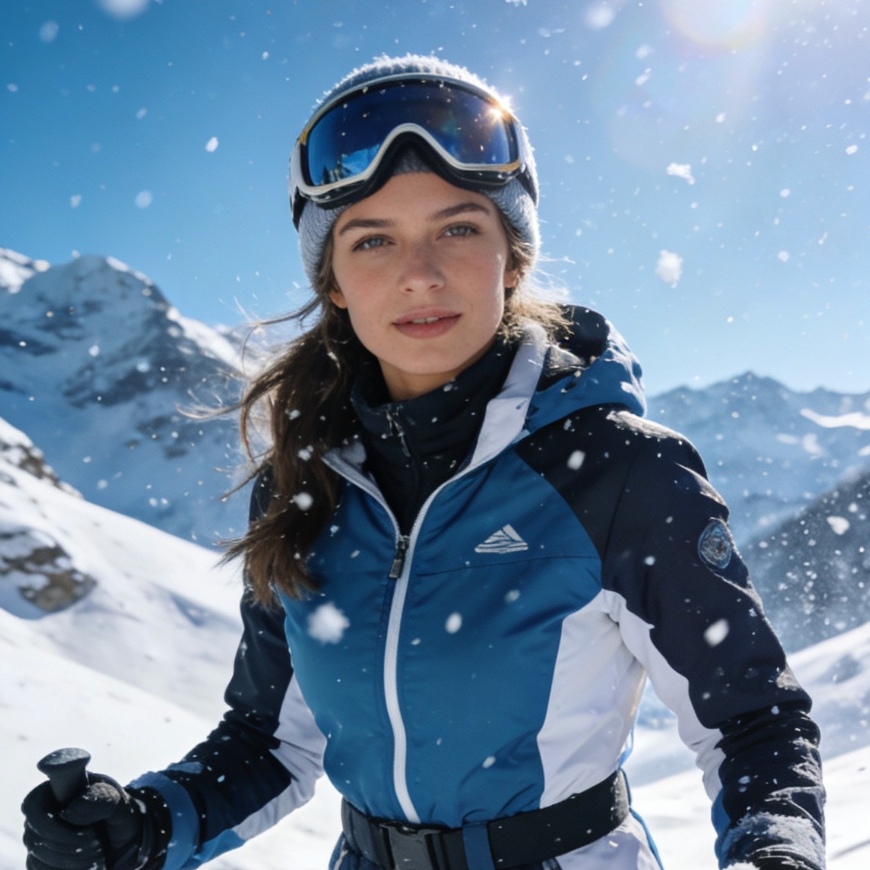
Artificial intelligence has fundamentally altered the medium of photography and videography by blurring the line between a still moment and a living sequence. The term AI moving pictures refers to the technological process of using generative models—primarily diffusion-based architectures—to animate static images or generate fluid video content from text descriptions. This is no longer the era of jittery, surrealist morphing; today, AI can simulate complex physics, consistent lighting, and cinematic camera movements that were once the exclusive domain of professional VFX studios.
The Evolution From Static Graphics to AI Generated Motion
The journey toward realistic AI moving pictures began with Generative Adversarial Networks (GANs). In the mid-2010s, these models functioned through a competitive process where one network created an image and another judged its realism. While GANs were revolutionary for face generation and simple transitions, they struggled with "temporal coherence"—the ability to keep a subject looking the same from one frame to the next.
The real breakthrough occurred with the advent of Diffusion Models. Unlike GANs, diffusion models work by adding Gaussian noise to data and then learning to reverse that process to recover the original structure. When applied to video, the AI doesn't just generate a single image; it predicts the most statistically probable next set of pixels based on millions of hours of training footage. This allows the AI to understand that if a person is walking, their limbs should move in a specific arc, and the shadows on the ground should shift accordingly.
Core Modalities of AI Moving Pictures
To understand how these tools are used in professional workflows, it is essential to distinguish between the different ways AI creates motion.
Image to Video (I2V)
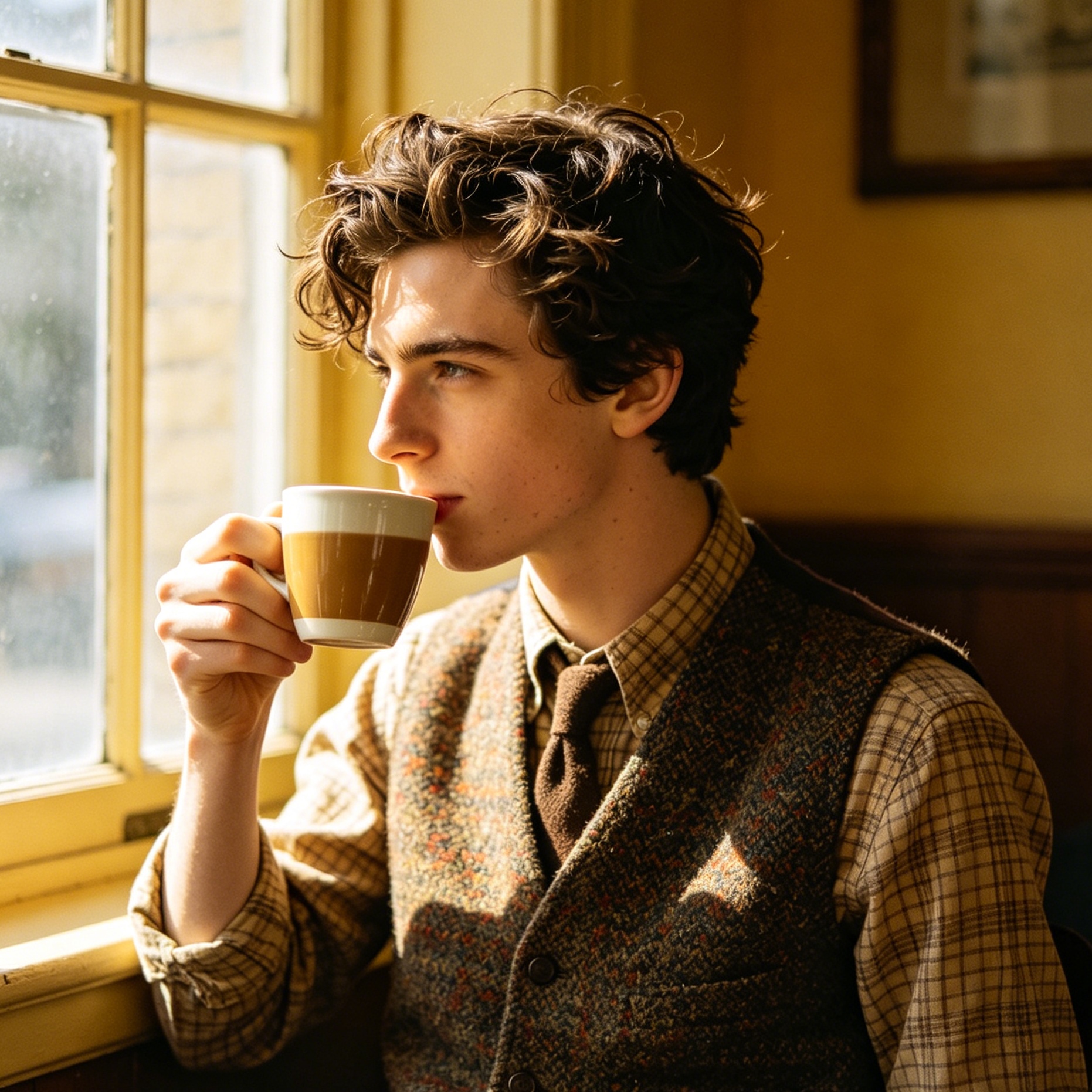
This is perhaps the most popular application for creators. You provide a high-resolution static image, and the AI "breathes life" into it. In our internal testing with various models, we have observed that Image-to-Video is significantly more reliable than Text-to-Video because the static image provides a "structural anchor." The AI knows the color of the character's eyes, the texture of their clothing, and the environment's layout before the first frame is even rendered.
Text to Video (T2V)
In this modality, the user describes a scene in a text prompt, and the AI generates the imagery and the motion simultaneously from pure noise. While this offers the highest level of creative freedom, it requires sophisticated prompt engineering to ensure the AI doesn't produce "hallucinations"—artifacts where objects merge or disappear.
Video to Video (V2V)
This involves taking an existing video and using AI to restyle it. For example, a video of a person walking down a city street can be transformed into a charcoal sketch or a futuristic robot walking through a neon-drenched cyberpunk alley. The AI maintains the original motion path but completely replaces the "skin" of the video.
How the Technology Handles Physics and Consistency
One of the biggest hurdles in creating AI moving pictures is maintaining temporal consistency. If you are animating a bird flying, the AI must ensure that the bird doesn't spontaneously grow a third wing or change color mid-flight.
Modern models solve this using "Attention Mechanisms." The AI looks at multiple frames simultaneously, ensuring that the pixels in Frame 24 align logically with the pixels in Frame 1. Furthermore, latest-generation models like Runway Gen-3 Alpha and Luma Dream Machine have integrated a "physics engine" of sorts within their neural weights. They have learned through sheer data volume how gravity affects falling water, how wind interacts with different types of fabric, and how light reflects off metallic surfaces during a camera pan.
Leading Tools for Creating High Quality AI Moving Pictures
The landscape of AI video is highly competitive. Each platform offers unique strengths depending on whether you are looking for photorealism, artistic flair, or commercial safety.
Luma Dream Machine
Luma has gained significant traction for its ability to handle complex 3D movements. In our evaluation, Luma excels at "depth perception." When you prompt a camera to move through a doorway, the model maintains the spatial relationships of the room remarkably well. It is currently one of the few models that can generate 5-second clips with high fidelity in under two hundred seconds.
Runway (Gen-3 Alpha)
Runway remains the industry standard for professional creators. Their latest model, Gen-3 Alpha, focuses on "fine-grained temporal control." It allows users to use descriptive language to control the speed of an action or the specific intensity of a lighting change. For those who require consistent characters across multiple clips, Runway’s toolset is currently the most robust.
Kling AI
Emerging as a powerful competitor, Kling AI has demonstrated an uncanny ability to generate long-form AI moving pictures—up to two minutes in some versions. Its strength lies in human anatomy. While many models struggle with the complexity of human eating or hand gestures, Kling manages these interactions with a level of realism that often bypasses the "uncanny valley."
Adobe Firefly (Video Model)
Adobe’s entry into the space is built around "Commercial Safety." Unlike some models trained on scraped web data, Firefly is trained on Adobe Stock and public domain content. For corporate users, this is the gold standard for avoiding copyright infringement. It integrates directly into Premiere Pro, allowing editors to generate B-roll directly on their timeline.
Technical Parameters for Optimizing AI Motion
Creating a high-quality moving picture requires more than just a simple prompt. Understanding the underlying parameters can significantly improve the output.
Motion Bucket and Intensity
Most professional AI video tools allow you to set a "Motion Score" or "Motion Bucket." A low score (e.g., 1-3) is ideal for subtle movements like a portrait where only the eyes blink or the hair moves slightly in the breeze. A high score (e.g., 8-10) is necessary for high-action sequences like a car chase or an explosion.
Seed Values and Reproducibility
Every AI generation starts with a "Seed"—a long string of numbers that determines the initial state of the noise. If you find a movement style you like, keeping the same seed while slightly adjusting your text prompt allows for "iterative refinement" without losing the soul of the original generation.
Aspect Ratios and Resolution
While most AI models default to 16:9 for a cinematic look, mobile-first creators should look for models that support vertical 9:16 natively. Upscaling is also a critical step; most AI moving pictures are generated at 720p or lower to save compute power, necessitating the use of a secondary AI upscaler (like Topaz Video AI) to reach 4K for professional delivery.
Why Prompt Engineering Is the Key to Cinematic Results
To get the most out of AI moving pictures, your prompts should follow a "Cinematic Formula." Instead of just saying "a cat running," a professional prompt would look like this:
"Cinematic wide shot, low-angle tracking, a sleek black cat sprinting through a rain-slicked London street at night, neon lights reflecting in puddles, 35mm film grain, hyper-realistic fur physics, 24fps."
By specifying the Camera Angle, Lighting Conditions, and Technical Specs, you guide the AI to use its training data more effectively, resulting in a clip that looks like it was shot by a professional cinematographer rather than a random algorithm.
Practical Use Cases for AI Moving Pictures
The applications for this technology extend far beyond social media novelties.
- Marketing and E-commerce: Brands are now taking static product photos and turning them into "scroll-stopping" ads. A static picture of a watch can be transformed into a 5-second cinematic reveal with the watch rotating under studio lights.
- Film Prototyping (Pre-visualization): Directors use AI moving pictures to create "living storyboards." This allows them to see the pacing and lighting of a scene before a single cent is spent on location or cast.
- Education and Historical Restoration: Museums are using AI to animate historical photographs, allowing visitors to see "living" versions of people from the 19th century, making history feel more immediate and human.
- Social Media Content Creation: For creators who lack a B-roll library, AI moving pictures allow them to generate custom background footage that perfectly matches the topic of their narration.
Ethical Considerations and the Future of Visual Truth
As AI moving pictures become indistinguishable from reality, the industry faces significant ethical hurdles.
Transparency and Watermarking
Most leading platforms have committed to the C2PA standard, which embeds metadata into the video file indicating it was generated by AI. This is crucial for preventing the spread of misinformation and "deepfakes" that could be used to manipulate public opinion.
The Copyright Debate
The legal status of AI-generated video remains in flux. While the US Copyright Office has generally ruled that purely AI-generated content cannot be copyrighted, the "human-in-the-loop" factor—where a human provides a complex image and specific prompts—creates a gray area. Companies like Adobe are leading the way by offering indemnification for their users, but for those using open-source models, the risk remains higher.
Quality Variance and Ghosting
Despite the hype, AI video is not perfect. "Ghosting"—where a limb leaves a trail behind it—and "Identity Drift"—where a character’s face changes slightly over five seconds—are still common issues. Achieving a perfect 10-second clip often requires "cherry-picking," where a creator generates 10 or 20 versions of a prompt to find the one where the physics hold together perfectly.
Summary of the Current AI Video Landscape
| Feature | Best Tool | Why |
|---|---|---|
| Photorealism | Kling AI | Exceptional human anatomy and texture rendering. |
| Cinematic Control | Runway Gen-3 | Advanced brush tools and camera motion settings. |
| 3D Consistency | Luma Dream Machine | Superior spatial awareness and depth perception. |
| Commercial Safety | Adobe Firefly | Trained on licensed data with copyright protection. |
| Free/Open Access | Pika Labs | Great for beginners with a generous free tier on Discord. |
Conclusion
The rise of AI moving pictures represents the most significant shift in visual storytelling since the transition from silent film to "talkies." We have moved from a world where motion required a camera to a world where motion requires an imagination and the right prompt. While the technology is still evolving, the ability to turn a single static image into a cinematic sequence has democratized high-end production, allowing independent creators to compete with major studios in visual fidelity. As the models become faster and more "physically aware," the focus will shift from the technology itself to the creative vision of the people using it.
Frequently Asked Questions
What is the best free AI for moving pictures?
Currently, Pika Labs and Luma Dream Machine offer the most generous free trials. Pika is highly accessible via Discord, while Luma allows for a set number of high-quality renders per month through their web interface.
How do I stop AI videos from looking "weird" or melting?
This is usually caused by a motion setting that is too high or a prompt that is too vague. To reduce "melting," try lowering the motion intensity and adding "highly consistent" or "stable physics" to your prompt. Using a high-quality, clear source image in Image-to-Video mode is the best way to prevent artifacts.
Can I use AI moving pictures for commercial work?
Yes, but you must choose your tool carefully. Adobe Firefly and the paid tiers of Runway and Luma generally provide the necessary rights for commercial use. Always check the Terms of Service for the specific platform, especially regarding the training data used.
Does AI video generation require a powerful computer?
If you are using cloud-based tools like Runway, Luma, or Kling, you only need a standard web browser. The heavy processing is done on their servers. However, if you wish to run open-source models like Stable Video Diffusion locally, you will typically need an NVIDIA GPU with at least 16GB to 24GB of VRAM.
How long can AI moving pictures be?
Most current models generate clips between 5 and 10 seconds long. However, these clips can be "extended" by using the last frame of one video as the first frame of the next, allowing creators to build sequences that are several minutes long through "looping" or "concatenation" features found in professional AI video suites.
-
Topic: ReelMind - Open Source AI Video Models Communityhttps://reelmind.ai/blog/image-to-motion-ai-tools-for-video-creation
-
Topic: Image to video AI - Adobe Fireflyhttps://www.adobe.com/products/firefly/features/image-to-video.html
-
Topic: 9 free ai animation tools [ make ai videos faster ]https://pikalabsai.org/free-ai-animation-tools/