Home
Home
How AI Photo Generators Transform Text Into Professional Visuals in 2025
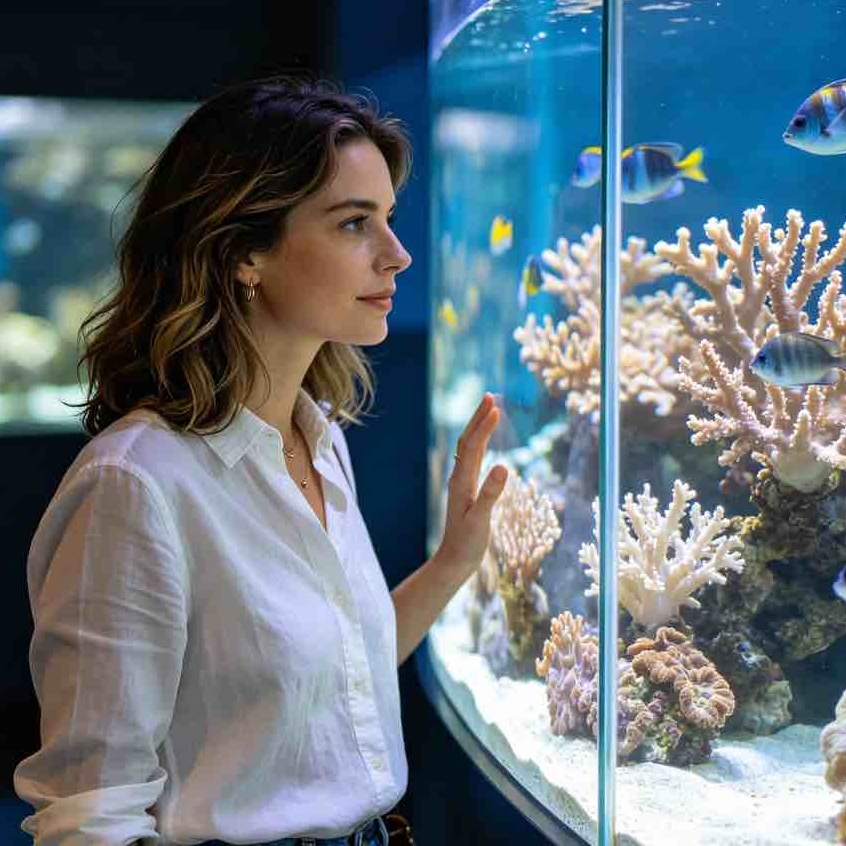
AI photo generators represent a fundamental shift in how visual media is conceptualized and produced. At its core, an AI photo generator is a sophisticated software system that utilizes machine learning—specifically deep learning architectures—to synthesize original imagery from natural language descriptions known as prompts. Unlike traditional stock photo databases that retrieve existing files, these engines generate entirely new pixels by interpreting the intent, style, and composition requested by the user.
As we move deeper into 2025, the technology has evolved from a novelty capable of producing dream-like, often distorted images to a precision tool used by creative agencies, game developers, and individual marketers. The current landscape is dominated by models that understand not just objects, but lighting physics, material textures, and historical artistic movements.
The Engineering Behind the Pixels: Understanding Diffusion Models
Most high-end AI photo generators today rely on a technology called latent diffusion. To understand how a text string becomes a high-resolution image, one must look at the training and synthesis phases.
From Noise to Clarity
The process begins with "noise"—a chaotic field of pixels similar to static on an old television. During the training phase, an AI model is exposed to billions of image-text pairs. It learns to associate specific pixel patterns with descriptive words. When a user inputs a prompt, the model starts with a noisy canvas and iteratively "de-noises" it.
Over several steps, the neural network predicts which pixels should be changed to align more closely with the text description. For example, if the prompt mentions "polished marble," the AI identifies the patterns of reflection and smoothness it learned during training and refines the noise until those specific visual characteristics emerge.
Neural Networks and Latent Space
The actual "thinking" happens in what researchers call "Latent Space." This is a mathematical representation of all the visual concepts the AI has learned. Instead of working with large, uncompressed image files, the AI works with compressed mathematical vectors. This allows for immense speed and the ability to combine disparate concepts—like "a Victorian-style astronaut"—in a way that looks coherent and anatomically plausible.
Professional Evaluation of Leading AI Photo Generators in 2025
Choosing the right tool depends on the specific requirements of a project, ranging from raw artistic power to commercial safety and workflow integration.
Midjourney: The Artistic Standard
Midjourney remains the preferred choice for those seeking the highest aesthetic quality. In our testing of the latest V7 architecture, the model demonstrated a significant leap in handling cinematic lighting and complex textures.
- Primary Strength: Midjourney excels in "stylization." It has an inherent bias toward making images look "good" even with minimal prompting. Its ability to handle "Subsurface Scattering"—the way light penetrates surfaces like skin or wax—is currently unrivaled.
- User Experience: Operating primarily through a web interface and Discord, it requires a subscription. For professional photographers, its "Stylize" and "Chaos" parameters allow for granular control over how much creative liberty the AI takes.
- Hardware Demand: As a cloud-based service, it requires no local GPU power, making it accessible on standard laptops.
DALL-E 3: The King of Prompt Fidelity
Integrated directly into the ChatGPT ecosystem, DALL-E 3 focuses on understanding exactly what the user says. While Midjourney might occasionally ignore parts of a prompt to prioritize aesthetics, DALL-E 3 follows instructions with literal precision.
- Practical Use Case: If you need an image containing "a red square on top of a blue circle with three yellow stars on the left," DALL-E 3 is the most likely to get the spatial relationships correct.
- Consistency: It is excellent for brainstorming and rapid ideation where the specific placement of objects is critical for a storyboard or a conceptual layout.
Adobe Firefly: Built for Commercial Safety
Adobe Firefly was developed with a "creator-first" approach, meaning it was trained exclusively on Adobe Stock images and public domain content. This addresses the legal concerns many enterprises have regarding copyright infringement.
- Workflow Integration: Firefly’s greatest asset is its integration into Photoshop through "Generative Fill." This allows designers to expand canvases or change clothing on a model with a single click, maintaining the original lighting and perspective of the photo.
- Resolution and Detail: While earlier versions struggled with hyper-realism, the latest Firefly Image 4 model has closed the gap, offering crisp 4K outputs suitable for print advertising.
Flux: The Open-Source Powerhouse
Flux has disrupted the market by offering an open-weight model that rivals the quality of closed systems. It is particularly popular among enthusiasts who want to run AI locally.
- Technical Requirement: To run Flux.1 [dev] locally at a reasonable speed, a system typically needs at least 24GB of VRAM (such as an NVIDIA RTX 3090 or 4090).
- Realism: Flux is currently noted for its exceptional ability to render human skin and hands, which have historically been a weakness for AI. Its "Pro" variant offers some of the most photorealistic outputs available in the current market.
Mastering the Prompt: A Strategic Formula for High-Quality Output
The difference between a generic AI image and a professional-grade visual lies in the prompt structure. A successful prompt is not just a sentence; it is a set of coordinates for the AI to navigate its latent space.
The Modular Prompting Formula
To achieve consistent results, we recommend using a modular approach: [Subject] + [Action/Pose] + [Style/Medium] + [Environment/Background] + [Lighting/Mood] + [Camera/Composition]
- Subject: Be specific. Instead of "a woman," use "an elderly woman with deep wrinkles and silver hair."
- Style/Medium: Define the aesthetic. Is it "35mm film photography," "oil painting on canvas," "isometric 3D render," or "charcoal sketch"?
- Lighting: This dictates the mood. "Golden hour," "high-key studio lighting," "neon cyberpunk glow," or "soft morning mist" all yield vastly different results.
- Camera Specs: Using photography terminology helps the AI understand depth of field and perspective. Terms like "f/1.8 aperture," "wide-angle lens," or "top-down bird's-eye view" provide clear structural instructions.
Example Evolution
- Basic Prompt: "A cat in a kitchen."
- Professional Prompt: "A ginger tabby cat leaping through the air to catch a treat in a rustic sunlit kitchen, flour dust floating in the air, captured with a high-speed shutter, macro photography, shallow depth of field, warm natural lighting, 8k resolution."
What are the current limitations of AI photo generators?
Despite the rapid progress, AI photo generators are not yet a "magic button" for every scenario. Users must be aware of several persistent technical hurdles.
The Problem of Text and Typography
While models like Ideogram 3.0 and DALL-E 3 have improved significantly, many AI generators still struggle to render specific, lengthy text within an image. Often, the AI will produce "gibberish" or "pseudo-letters" that look like English from a distance but are nonsensical upon closer inspection. This makes AI-generated logos or posters often require manual touch-ups in graphic design software.
Anatomical Accuracy and "The Uncanny Valley"
Rendering human hands, feet, and specific limb connections remains a challenge. The AI sometimes generates six fingers or limbs that merge into the background. This occurs because the model understands the appearance of a hand but not the underlying biological structure (skeletal and muscular) that limits how a hand can move.
Temporal and Style Consistency
Creating a series of images featuring the same character in different poses or environments—essential for filmmaking or comic books—is difficult. Tools like Leonardo.ai and Midjourney have introduced "Character Reference" features to solve this, but maintaining 100% consistency across 50 different shots still requires significant manual intervention and "in-painting."
Ethical Considerations and the Future of Visual Content
The rise of AI-generated imagery has sparked intense debate regarding copyright and the future of creative labor.
- Training Data Transparency: Many artists argue that training AI on their work without consent is a form of intellectual property theft. This has led to the development of "opt-out" mechanisms and tools like Adobe Firefly that prioritize licensed data.
- The Concept of "Post-Truth": As photorealism becomes indistinguishable from reality, the potential for deepfakes and misinformation increases. In response, many platforms are adopting "C2PA" standards—metadata embedded in the image that identifies it as AI-generated.
- AI as a Collaborative Tool: The most successful professionals in 2025 do not view AI as a replacement but as a "co-pilot." It is used for storyboarding, generating textures for 3D models, or creating initial mood boards that are then refined by human designers.
Summary of the Current AI Photo Generation Landscape
The evolution of AI photo generators has reached a point where the barrier to entry for high-quality visual creation has never been lower, yet the ceiling for mastery has never been higher. By understanding the underlying diffusion technology and mastering the nuances of prompting, creators can unlock unprecedented levels of productivity. Whether using Midjourney for artistic flair, DALL-E 3 for precision, or Firefly for commercial safety, the key is matching the tool to the specific needs of the project while remaining mindful of the technical and ethical boundaries of the medium.
Frequently Asked Questions (FAQ)
What is the best free AI photo generator?
While many high-end tools require a subscription, Microsoft Designer (formerly Bing Image Creator) offers free access to DALL-E 3 technology for users with a Microsoft account. Leonardo.ai also offers a generous free tier with daily token refreshes, making it an excellent starting point for beginners.
Can I use AI-generated photos for commercial purposes?
It depends on the platform's Terms of Service and the local laws in your jurisdiction. Generally, paid subscriptions to Midjourney and DALL-E 3 allow for commercial use. Adobe Firefly is specifically marketed as "commercially safe" because of its training data. However, in some regions, AI-generated images cannot be copyrighted because they lack "human authorship."
How do I get more realistic skin in AI photos?
To achieve photorealism, include specific photographic terms in your prompt. Mention "skin pores," "fine facial hair," "slight imperfections," and "natural uneven lighting." Avoid overusing terms like "perfect" or "flawless," as these often trigger a "plastic" or overly smoothed look.
Why do AI-generated hands always look strange?
AI models predict the placement of pixels based on statistical patterns rather than understanding human anatomy. Since hands are highly flexible and appear in thousands of different configurations in the training data, the AI often gets confused about the number of fingers or how they connect to the palm in specific angles.
What is the difference between an AI photo generator and an AI image editor?
An AI photo generator (like Midjourney) creates an image from scratch based on text. An AI image editor (like the AI features in Photoshop or Canva) takes an existing image and modifies it—changing the background, adding objects, or enhancing the resolution—using similar AI models.
-
Topic: Image generation with AIhttps://www.hs-bremen.de/assets/hsb/de/Dokumente/ZLL/LehrePlus/KI_Impulse/20251118_AI_Impulse_Image_Generators.pdf
-
Topic: Best AI Image Generator: Top Tools for Stunning Imageshttps://www.acethinker.com/resource/best-ai-image-generator.html
-
Topic: 10 Best AI Image Generators in 2026 (Tested & Ranked) » AI Content Mindshttps://aicontentminds.com/10-best-ai-image-generators/