Home
Home
How to Generate Professional Quality AI Pictures Without Spending a Dime
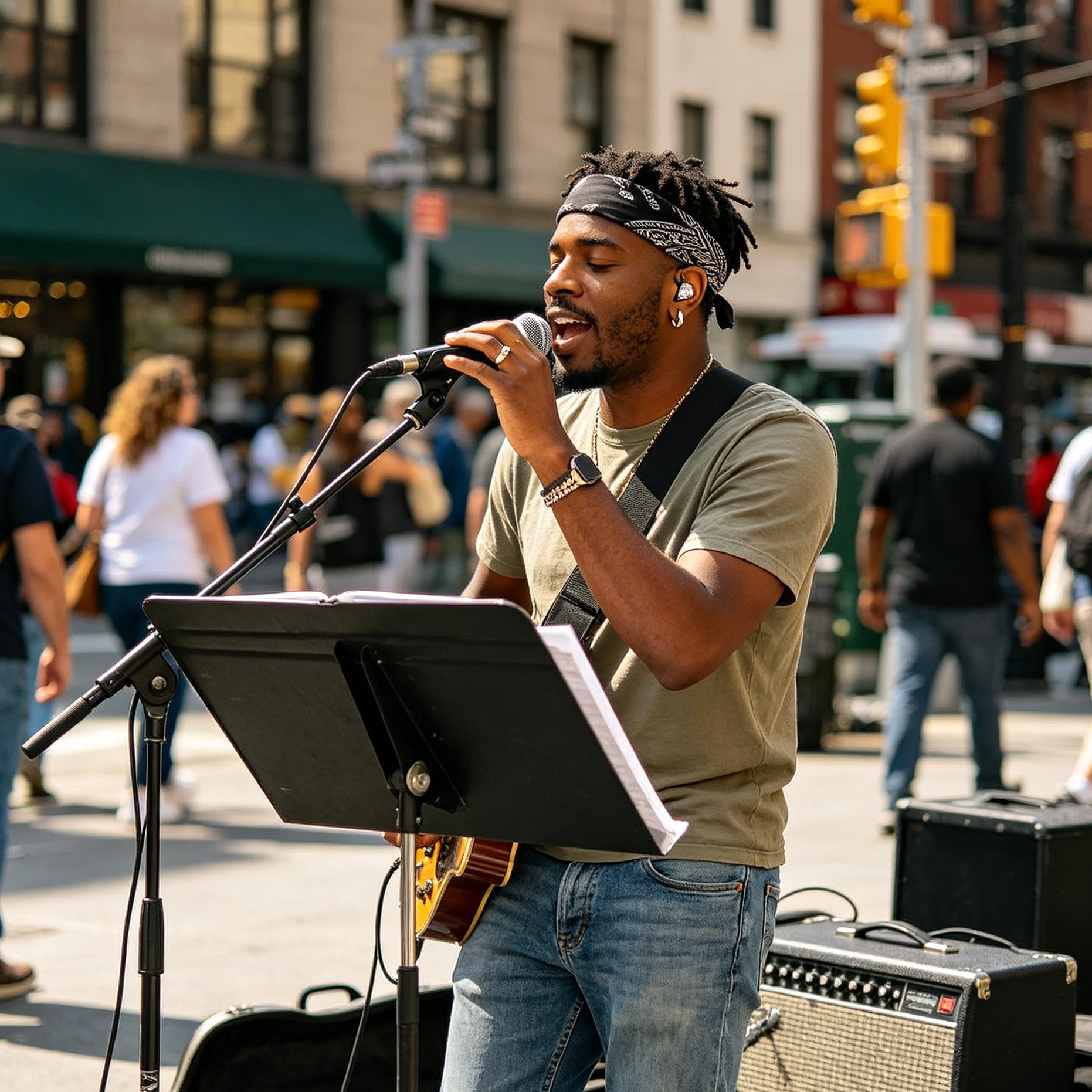
The landscape of visual content creation has undergone a seismic shift as of mid-2026. What used to require a professional studio or an expensive Midjourney subscription is now accessible through a variety of high-performance free tools. Generating high-resolution, photorealistic, or artistically complex AI pictures no longer necessitates a massive budget, provided you know which models to leverage and how to bypass the limitations of free tiers.
For those seeking an immediate answer, the most reliable platforms for generating free AI pictures right now are Google Gemini (utilizing the Nano Banana Pro model) for photorealism and Microsoft Designer for sheer volume and ease of use. If your project requires precise text rendering, Ideogram remains the specialized leader.
The Reality of Free AI Image Generation in 2026
The market has shifted toward a "freemium" ecosystem. While most platforms offer free access, they typically operate on a credit-based system or a "slow queue" model. Understanding the underlying technology—primarily advanced Diffusion Models—is key to maximizing these free resources. These models work through a process called denoising, where the AI starts with a field of static and gradually refines it based on your text prompt until a coherent image emerges.
In our practical testing across various creative workflows, we have found that the gap between free and paid models has narrowed significantly. The following breakdown analyzes the top-tier tools currently dominating the free space, evaluated based on image fidelity, prompt adherence, and the generosity of their free plans.
Top Platforms for High-Fidelity Free AI Pictures
Google Gemini and the Nano Banana Pro Breakthrough
Google's integration of the Nano Banana Pro model into the Gemini interface has set a new benchmark for free users. Unlike previous iterations, this model excels in understanding cultural nuances and hyper-local landmarks.
In professional testing, Nano Banana Pro consistently delivers the most realistic human anatomy. While earlier AI models struggled with "uncanny valley" faces and the infamous "six-finger" glitch, Gemini handles hands and micro-expressions with remarkable accuracy.
- Free Allowance: Currently, users can generate up to 100 images per day through the Gemini interface, though this is subject to server demand.
- Best For: Photorealistic portraits, cinematic landscapes, and images requiring deep contextual knowledge.
- Subjective Insight: In our side-by-side comparisons, Gemini’s rendering of "natural sunlight" feels significantly more organic and less "plastic" than Microsoft’s DALL-E 3 outputs. It captures the subtle bounce of light off surfaces in a way that rivals professional photography.
Microsoft Designer and DALL-E 3 Accessibility
Microsoft Designer remains the most accessible entry point for most users. Because it is tied to the Microsoft account ecosystem, it offers a seamless experience without the need for complex setups.
The underlying DALL-E 3 engine is highly intuitive. It doesn't require "prompt engineering" in the traditional sense; you can speak to it in plain English, and it understands the intent behind the description.
- Free Allowance: Offers 15 "Priority Boosts" per day. Once these are exhausted, you can still generate images at a slower "Standard" speed, effectively providing unlimited generation for patient users.
- Best For: Quick social media graphics, conceptual art, and users who prefer natural language over technical prompts.
- Technical Note: Microsoft Designer is particularly strong at composition. If you ask for "a cat sitting on a blue velvet sofa under a red neon sign," it rarely misses any of the three key elements.
Ideogram 2.0: The Specialist for Typography
The biggest frustration with free AI pictures has historically been "gibberish text." Ideogram solved this. In 2026, Ideogram 2.0 is the gold standard for any image that needs to include legible writing—be it a logo, a poster, or a product label.
- Free Allowance: 10 slow-queue generations per day.
- Best For: Graphic design, branding, and social media posts with specific slogans.
- Pro Tip: To get the most out of your 10 daily credits, be extremely specific about font styles. Instead of saying "with text," try "with the word 'Evolve' written in a bold, 1970s retro-futuristic sans-serif font."
Leonardo.ai: The Power User's Sandbox
For those who want more control than a simple text box, Leonardo.ai provides a suite of tools that mimic a professional editing environment. It allows you to choose between different specialized models—such as those optimized for anime, architectural renders, or 3D game assets.
- Free Allowance: 150 tokens per day. Depending on the complexity and resolution settings, this translates to roughly 5 to 12 high-quality images.
- Key Feature: The "Alchemy" refiner. Even on the free tier, Leonardo provides a way to upscale and enhance the detail of your generations, making them suitable for print or high-res web displays.
Advanced Techniques to Enhance Free AI Outputs
Generating "free" images often comes with the cost of lower priority or restricted features. To compensate, professionals use specific techniques to ensure the output looks like it came from a paid, high-end tier.
Master the Prompt Structure
Avoid generic prompts like "a futuristic car." To get the best results from a free model like Flux.1 or Gemini, use the C-L-S-P (Composition, Lighting, Style, Post-processing) framework:
- Composition: "A low-angle shot of a sleek carbon-fiber vehicle parked on a wet neon-lit street in Tokyo."
- Lighting: "Cyberpunk aesthetics, reflections of pink and blue neon on the car's surface, dramatic rim lighting."
- Style: "Hyper-realistic photography, cinematic 8k resolution."
- Post-processing: "Shot on 35mm lens, f/1.8 aperture, slight motion blur in the background."
Leveraging Open Source: The Flux.1 Revolution
For users with capable hardware, the "free" price tag can be truly unlimited. Flux.1, developed by Black Forest Labs, is an open-source model that rivaled Midjourney v6 at its launch.
- Hardware Requirement: To run Flux.1 Dev locally, you typically need a GPU with at least 16GB to 24GB of VRAM (like an RTX 3090 or 4080).
- The Benefit: Zero censorship, zero subscription fees, and complete privacy. If you don't have the hardware, you can find "Hugging Face Spaces" that host Flux.1 for free, though you may have to wait in a queue.
The Denoising Strength Secret
If you are using a tool that allows for "Image-to-Image" generation (like Leonardo.ai), the "Denoising Strength" parameter is your best friend.
- Low Denoising (0.3): Keeps the image very close to your original sketch or photo.
- High Denoising (0.8): Gives the AI creative freedom to reinvent the image.
- Professional Application: Sketch a rough layout in a basic paint program, upload it, and set the denoising to 0.6. This ensures the AI follows your specific layout rather than guessing where elements should go.
Commercial Use and the Legal Fine Print
One of the biggest traps in the "free AI pictures" world is the distinction between generating and using.
Understanding Platform Terms
Just because an image was free to create doesn't mean it’s free for your business.
- Adobe Firefly: Trained on Adobe Stock and public domain images. While it has a very restrictive free tier (25 credits per month), it is widely considered the "safest" for commercial use because of its clean training data.
- Microsoft Designer: Generally allows for personal and commercial use, but always check the latest Service Agreement as these terms evolve.
- Leonardo.ai: Their free tier often allows for commercial use, but they maintain a right to showcase your images in their public gallery unless you pay for a private tier.
The Copyright Conundrum
As of current 2026 legal precedents, AI-generated images typically cannot be copyrighted in many jurisdictions (such as the US and parts of the EU) because they lack "human authorship." This means that while you can use the image for your blog or marketing, you may not be able to stop a competitor from using that same image if they find it.
For mission-critical branding, the best approach is to use AI to generate the base image and then have a human designer modify it significantly. This "human-in-the-loop" process creates a derivative work that is much more likely to receive legal protection.
Matching the Tool to Your Specific Query
Depending on why you searched for "free ai pictures," your ideal tool will vary.
1. "I need images for a professional presentation."
- Top Choice: Microsoft Designer or Adobe Firefly.
- Why: They produce clean, corporate-friendly aesthetics that integrate well with PowerPoint or Google Slides.
2. "I need an avatar or a character for a story."
- Top Choice: Leonardo.ai.
- Why: Their specialized "Character Models" are designed to maintain consistency and artistic flair that general-purpose models sometimes lack.
3. "I need a realistic photo of a product that doesn't exist yet."
- Top Choice: Google Gemini (Nano Banana Pro).
- Why: Its ability to handle "Product Photography" lighting and textures is currently unparalleled in the free market.
4. "I need a quick meme or social media post."
- Top Choice: Perchance or Craiyon.
- Why: These are "no-signup" options. You can generate an image in seconds without giving away an email address or managing a credit balance.
Common Challenges and How to Fix Them
Even with the best free tools, you will encounter roadblocks. Here is how to navigate the most common issues:
Issue: The AI keeps giving me weird hands or limbs.
- Solution: Use "Negative Prompting" if the tool supports it. Add terms like "deformed, extra fingers, mutated, bad anatomy" to the negative prompt box. If using a simple tool like Microsoft Designer, try adding "hands in pockets" or "holding an object" to give the AI a simpler geometry to calculate.
Issue: The image looks "grainy" or low resolution.
- Solution: Most free tiers limit resolution to 1024x1024 pixels. Use a free external AI Upscaler (like Upscayl or various web-based tools) to quadruple the resolution without losing detail.
Issue: The prompt is being ignored.
- Solution: Simplify. AI models can get "confused" by overly long sentences. Use commas to separate key concepts and put the most important element at the very beginning of the prompt.
Summary of Top Free AI Picture Resources
| Feature | Best Platform | Why it Wins |
|---|---|---|
| Photorealism | Google Gemini | Nano Banana Pro model handles light and skin perfectly. |
| User Friendliness | Microsoft Designer | Best "plug and play" experience with unlimited slow gen. |
| Text Accuracy | Ideogram | Unmatched ability to render legible fonts and logos. |
| Creative Control | Leonardo.ai | Professional-grade sliders and model selection. |
| Privacy/Local Run | Flux.1 | Open-source; can be run on your own hardware. |
Conclusion
The era of paying high monthly fees for basic AI imagery is coming to an end. By strategically using Google Gemini for realism, Microsoft Designer for volume, and Ideogram for typography, you can build a complete visual library for free. The secret to success in 2026 isn't just about having the "best" tool; it's about understanding the specific strengths of each platform and applying professional prompt frameworks to bridge the gap between a free generation and a masterpiece.
Frequently Asked Questions (FAQ)
What is the best free AI image generator with no sign-up?
Perchance and Craiyon are the leading options for users who want to generate images without creating an account. While the quality may be slightly lower than Gemini or Microsoft Designer, they offer instant access and high privacy.
Can I use free AI pictures for my YouTube channel or blog?
Yes, most platforms like Microsoft Designer and Google Gemini allow for use on social media and blogs. However, you must check the specific terms of service regarding monetization. Generally, as long as you aren't selling the image itself as a standalone product, you are in the clear.
How do I make AI images look more like real photos?
Focus on your lighting and lens descriptions. Using terms like "shot on 85mm lens," "f/2.8," "depth of field," and "natural golden hour lighting" will force the AI to simulate the physics of a real camera rather than a digital illustration.
Is there a limit to how many free AI pictures I can make?
Every platform has a different limit. Microsoft Designer offers unlimited "slow" generations, while Gemini offers roughly 100 per day. Leonardo.ai uses a daily token reset. If you hit a limit on one, you can simply switch to another tool on our list.