Home
The 15 Best New AI Tools Released in 2026 Ranked by Utility
As of September 13, 2026, the artificial intelligence landscape has transitioned from simple conversational interfaces to autonomous agentic systems. The Q3 releases have introduced a new paradigm where models no longer just "chat" but execute complex, multi-step operations across entire operating systems. This shift is driven by the July 9 release of the GPT-5.6 family and the subsequent launch of Claude 4.8, both of which have redefined benchmarks for reasoning and efficiency.
For professionals navigating these updates, the challenge is no longer finding a tool that works, but selecting the right tier for the right task. With the introduction of "Agentic Billing" and consumption-based credits, managing AI costs has become as critical as managing human headcount. This guide analyzes the most significant releases of 2026, providing a structured framework for integration and ROI optimization.
What Is New with the Big Three Models in Q3 2026?
The "Big Three"—OpenAI, Anthropic, and Google—have all updated their flagship offerings in recent months, moving toward a tiered architecture that prioritizes task-specific efficiency over a one-size-fits-all approach.
The GPT-5.6 Family Breakdown
OpenAI’s July 9 release of the GPT-5.6 family marked a significant departure from previous naming conventions. Instead of a single model, OpenAI introduced three distinct variants: Sol , Terra , and Luna . According to DataNorth's Q3 update , these models are built on the GPT-5.1 architecture, which allows users to toggle between "Instant" and "Thinking" modes depending on the complexity of the query.
- Sol (Frontier Reasoning): Designed for high-stakes logic, scientific research, and complex software architecture. It currently leads the SWE-Bench Pro rankings.
- Terra (Balanced): The workhorse model for daily professional tasks, offering a middle ground between speed and reasoning depth.
- Luna (Efficiency): A lightweight model optimized for high-volume API calls and simple text processing, significantly reducing operational costs.
Anthropic’s Claude 4.8 and Fable 5
Anthropic has maintained its focus on safety and long-context reasoning with the release of Claude 4.8 Opus and Sonnet 4.5 . A notable addition to their lineup is the Fable 5 tier, specifically engineered for creative long-form narrative and nuanced storytelling. While Opus 5 was shipped shortly after the Q3 update, Opus 4.8 remains a top choice for developers due to its exceptionally strong performance in multi-file code analysis.
Google Gemini 3.5 Pro vs. Flash 3.6
Google has faced some delays in the rollout of its Pro tier, but the Gemini 3.5 Pro flagship remains a strong contender for users deeply integrated into the Google Workspace ecosystem. However, the Flash 3.6 line has become the dominant choice for high-speed API applications, where low latency is more critical than deep reasoning. Gemini’s primary advantage in 2026 continues to be its massive context window, which now handles up to 10 million tokens in select enterprise previews.
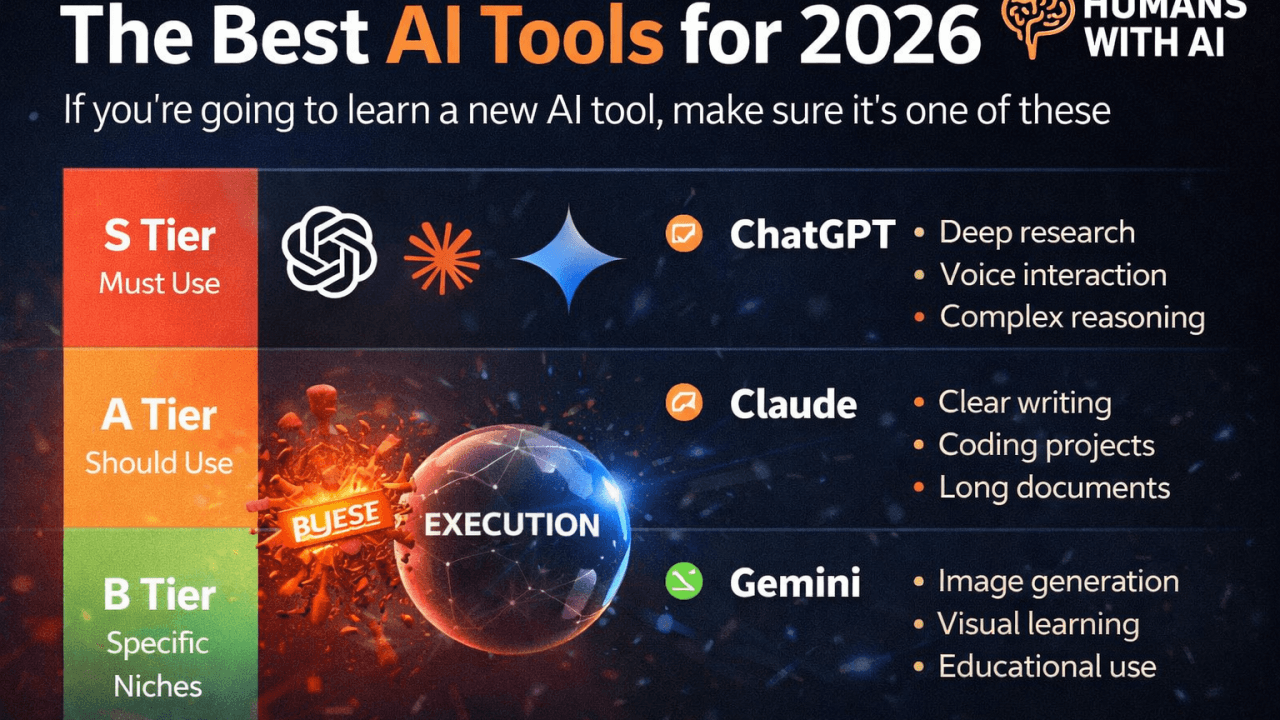
Image source: Codevally
| Model Variant | SWE-Bench Pro | GPQA Diamond | Input Price (per M) | Output Price (per M) |
|---|---|---|---|---|
| GPT-5.6 Sol | 64.6% | 94.6% | $5.00 | $30.00 |
| Claude 4.8 Opus | 62.1% | 93.2% | $15.00 | $75.00 |
| Gemini 3.5 Pro | 58.9% | 91.5% | $3.50 | $10.50 |
| GPT-5.6 Luna | 12.4% | 45.2% | $1.00 | $6.00 |
How Agentic AI Is Changing the Way We Work This Year
The most significant advancement in 2026 is the transition from "Chatbots" to "OS-Level Agents." Tools are no longer confined to a browser tab; they now possess the ability to interact directly with the operating system, moving files, updating CRMs, and managing communications autonomously.
The Shift from Chat to Operations
Key releases such as Microsoft Agent 365 (released May 1, 2026) and ChatGPT Work (released July 9, 2026) have moved beyond answering questions. These tools are designed to execute multi-step tasks. For example, a user can now command an agent to "Find the Q2 budget spreadsheet, extract the marketing spend, and draft a summary email to the CFO," and the agent will navigate the file system and email client to complete the task without further human input.
Computer-Use Workflows
Anthropic’s "Computer Use" feature, now natively integrated into Claude 4.8, allows the AI to "see" the screen and move the cursor. This is not just a macro; it is a vision-based reasoning system that can troubleshoot software bugs or perform data entry in legacy systems that lack APIs. According to GitHub developer discussions , this has reduced manual data migration time by nearly 80% for enterprise teams.
Copilot Cowork and Collaborative Agents
Released on June 16, 2026, Copilot Cowork introduces the concept of "Collaborative Agents." These agents can participate in Microsoft Teams meetings as active participants, assigning themselves action items based on the conversation and following up with team members via Slack or email. This represents a shift from AI as a tool to AI as a digital colleague.
With agents running autonomously, there is a risk of "runaway tasks" that can exhaust API quotas. Always set a Task Budget in your Anthropic or OpenAI dashboard. A $50 limit per agent per day is recommended to prevent unexpected $500 bills caused by infinite loops in complex workflows.
Why You Should Care About the New Agentic Billing Models
The traditional seat-based subscription model is rapidly disappearing. In 2026, the industry has shifted toward consumption-based billing for high-autonomy agents. This change reflects the reality that an agent performing 1,000 tasks a day consumes significantly more compute than a casual user asking for a recipe.
Microsoft has introduced Copilot Credits , where each autonomous action costs approximately 1 cent. Similarly, Anthropic now utilizes Task Budgets . This allows organizations to allocate "compute capital" to specific departments. A marketing team might have a budget of 50,000 credits per month, which they can spend on automated campaign generation or social media monitoring.
This shift requires a new type of management: AI Financial Operations (AIFinOps) . Companies are now hiring specialists to optimize model routing—sending simple tasks to the $1/million token Luna model while reserving the $30/million token Sol model for high-value reasoning. This strategy can save large enterprises millions in annual API costs.
The Best Specialized AI Tools for Video and Media Production
Generative media has reached a level of fidelity in 2026 where AI-generated content is often indistinguishable from high-end studio production. The focus this year has been on consistency and synchronized audio.
Google Veo and Cinematic Sound
Google’s Veo has emerged as a top-tier choice for cinematic video generation. Its standout feature is the ability to generate 4K clips with synchronized, AI-generated Foley sound effects. If the video shows a car driving over gravel, Veo generates the corresponding crunching sound, perfectly timed to the visual motion. This eliminates one of the most time-consuming steps in post-production.
Sora 2 Integration in ChatGPT
OpenAI’s Sora 2 is no longer a standalone product. As of Q3 2026, it has been fully integrated into the ChatGPT interface. This allows for a "narrative-to-video" workflow where users can write a story in ChatGPT and have Sora 2 generate a consistent, multi-scene video based on that narrative. The technology focuses on character consistency, ensuring that a protagonist looks the same across different shots and environments.
Higgsfield for Dynamic Motion
For social media marketers, Higgsfield has become a popular choice due to its ability to handle high-motion character consistency. Unlike other models that may "hallucinate" limbs during fast movement, Higgsfield maintains structural integrity, making it ideal for dance videos, sports highlights, and dynamic advertisements.
Why Developers Are Switching to Agentic Coding Tools
The developer experience has been completely transformed by "Agentic Coding." Tools like Cursor and Claude Code are no longer just autocomplete engines; they are autonomous junior developers.
Cursor , which reached a $60B valuation in early 2026, now features a "Composer" mode that can handle multi-file database schema updates. A developer can describe a new feature, and Cursor will modify the SQL schema, update the API endpoints, and adjust the frontend components simultaneously. This "agentic" approach ensures that all parts of the stack remain in sync.
The 2026 "Gold Standard" developer workflow, as identified in GitHub community reports , follows a four-step process:
- Static Analysis: The AI scans the existing codebase for context.
- AI Review: An agent proposes changes and identifies potential edge cases.
- Automated Tests: The agent writes and runs unit tests to verify the fix.
- Human Review: The developer performs a final check before merging the code.
This workflow has allowed teams to maintain high velocity while significantly reducing the number of regressions introduced into production environments.
Essential Marketing and SEO AI Tools for 2026
Marketing in 2026 is defined by the "Digital-to-Offline" attribution gap and the rise of AI-driven search citations. Brands are moving away from traditional blog-centric SEO toward "Citation SEO."
NVIDIA Alembic and Marketing Mix Modeling
NVIDIA Alembic has become a critical tool for solving attribution challenges. By using AI-driven marketing mix modeling, it helps brands understand how digital ads influence offline purchases. According to Memob's analysis , generative-first campaign architectures have led to a 66% ROI uptick for major retailers like Forever 21.
The LinkedIn Citation Shift
A major trend identified by MarketingProfs is the shift in how AI chatbots cite sources. ChatGPT, Claude, and Gemini now prioritize LinkedIn Newsletters and professional articles as primary sources for professional and B2B queries. To appear in AI Overviews, brands must now prioritize high-authority professional networks over traditional blog posts. Citation frequency on LinkedIn has doubled in the last six months, making it a cornerstone of 2026 SEO strategy.
How to Build a Cross-Tool AI Workflow That Actually Works
The most successful professionals in 2026 do not use tools in isolation. They build "pipelines" that chain multiple AI systems together. One of the most effective is the "Financial-to-Pitch" Pipeline .
This workflow allows a single individual to produce a high-quality, narrated financial report in under an hour—a task that previously required an entire team and several days of work.
What You Need to Know About the EU AI Act Article 50
Regulatory compliance is no longer optional. While many parts of the EU AI Act have long implementation windows, Article 50 (Transparency) took effect on August 2, 2026 . This article mandates that any AI system interacting with humans must be clearly disclosed.
For businesses using AI in marketing or HR, this means:
- Chatbot Disclosure: Users must be informed they are speaking with an AI, not a human.
- Deepfake Labeling: Any AI-generated image or video that resembles a real person or event must be watermarked or labeled.
- HR Transparency: If AI is used to screen resumes or evaluate employee performance, the criteria and the use of AI must be disclosed to the candidates or employees.
Failure to comply can result in significant fines, making it essential to audit your 2026 AI stack for transparency features.
Frequently Asked Questions
The Bottom Line
The AI landscape of late 2026 is defined by a shift from passive tools to active agents. Success in this environment requires moving beyond simple prompting to mastering agentic workflows and consumption-based cost management.
- Tiered Models: The "Big Three" have moved to Sol/Terra/Luna and Opus/Sonnet/Flash tiers. Always match the model's reasoning power to the task's complexity to optimize costs.
- Agentic Operations: AI now handles OS-level tasks. Tools like Microsoft Agent 365 are becoming the primary interface for professional work.
- Consumption Billing: Seat-based pricing is dying. Implement "Task Budgets" and "Copilot Credits" to prevent runaway API costs.
- Citation SEO: To appear in AI search results, prioritize high-authority professional networks like LinkedIn over traditional blogs.
- Regulatory Compliance: Ensure your tools comply with the EU AI Act Article 50 transparency requirements, which are now in full effect.
- Model Routing: Use "Routers" to automatically send simple tasks to cheaper models (Luna/Flash) and reserve frontier models (Sol/Opus) for complex logic.
To stay competitive, audit your current AI stack today and identify one manual, multi-step process that can be transitioned to an agentic workflow using Microsoft Agent 365 or Claude Code.