Home
Which AI Gadgets Are Actually Worth Buying for Real World Utility?
As of late 2026, the AI gadget market has matured beyond simple novelties. If you are looking for immediate utility, these three devices stand out as top choices:
- Plaud NotePin: Widely considered one of the best tools for professionals needing high-accuracy meeting transcription (92-95% accuracy).
- Ray-Ban Meta Smart Glasses: A premier option for hands-free visual assistance and multimodal interaction.
- Timekettle T1: A top-tier choice for real-time translation, despite a manageable 2-3 second latency.
The landscape of personal technology is undergoing a fundamental shift. We are moving away from "reactive" AI—the kind found in traditional assistants like Siri or Alexa that wait for a command—toward "anticipatory" AI. According to industry research , these new devices observe patterns and act before a user even recognizes a specific need. However, this transition has not been without its hurdles.
In recent years, the tech community has grown increasingly skeptical of what many call "apps in a box"—hardware devices that offer no more functionality than a standard smartphone application. For an ai gadget to justify its place in your pocket or on your face in 2026, it must perform its primary task with significantly less friction than a phone. This article examines which devices have successfully crossed that threshold and which remain cautionary tales of over-hyped hardware.

Image source: Quantilus Innovation
What Makes a Device a True AI Gadget Instead of Just an App?
The distinction between a meaningful piece of hardware and a redundant "wrapper" often comes down to where the processing happens. In the early wave of AI devices, many were criticized for being essentially Android phones in plastic shells. To understand the value proposition of modern gadgets, we must look at the technical architecture.
The Technical Divide Between Edge AI and Cloud Wrappers
Edge AI refers to devices that process data locally on the hardware itself. This is a significant advancement because it reduces latency and enhances privacy. When a device relies entirely on the cloud, every request must travel to a server, be processed by a Large Language Model (LLM), and travel back. This creates a "latency gap" that can make a device feel sluggish.
For example, the Timekettle T1 translator typically experiences a 2–3 second delay because it relies on cloud-based processing. While acceptable for casual travel, this latency can be disruptive in fast-paced professional environments. In contrast, newer devices aiming for "Edge" capabilities attempt to handle basic intent recognition locally, only reaching for the cloud for complex reasoning. As noted in recent testing reports , the speed of response is often the deciding factor in whether a user continues to use a device after the first week.
Understanding MKBHD’s Law of AI Hardware
Tech critics have popularized a concept often referred to as "MKBHD’s Law": A standalone AI device must perform its "one thing" dramatically better than a phone does it as one of a thousand things. If it takes three steps to trigger an AI action on a gadget, but only two steps on an iPhone, the gadget has failed.
This law explains why the Rabbit R1 faced such intense criticism. While it promised a "Large Action Model" that could navigate apps for you, users found that simply using the apps on their phones was faster and more reliable. A true AI gadget in 2026 must offer a "zero-friction" interface—such as a single physical button or a persistent voice-active state—that a smartphone's lock screen prevents.
High-Performing AI Gadgets for Productivity and Professional Workflows
The most successful category of AI hardware in 2026 is undoubtedly professional productivity. These devices don't try to be everything; they focus on capturing and organizing information with high precision.
Plaud NotePin and the New Standard for Meeting Capture
The Plaud NotePin has emerged as a top-rated choice for doctors, lawyers, and executives. Its success lies in its form factor—it can be worn as a pin, a necklace, or clipped to a lapel. Unlike a phone, which might be distracting or intrusive when placed on a conference table, the NotePin is discrete and purpose-built for one-press recording.
Technically, the NotePin integrates GPT-4o to provide summaries that are remarkably accurate. In professional settings, it maintains a transcription accuracy of 92–95%, which is exceptionally strong compared to standard mobile apps. Furthermore, it addresses the critical need for security by offering GDPR and HIPAA compliance, making it a viable tool for medical professionals who need to document patient interactions without manual note-taking.
Ray-Ban Meta Smart Glasses as a Hands-Free Visual Assistant
Ray-Ban Meta glasses represent a significant step forward in wearable AI because they solved the "form factor" problem. By looking like standard, stylish eyewear, they avoided the social stigma that doomed previous smart glasses. Their utility comes from multimodal AI—the ability for the glasses to "see" what you see.
Users can ask the glasses to "Look and tell me what kind of plant this is" or "Translate this menu in real-time." Because the camera is at eye level, it provides a perspective that a handheld phone cannot match. With over 10,000 units sold monthly in recent periods, they have proven that there is a massive market for AI that assists with visual tasks hands-free.
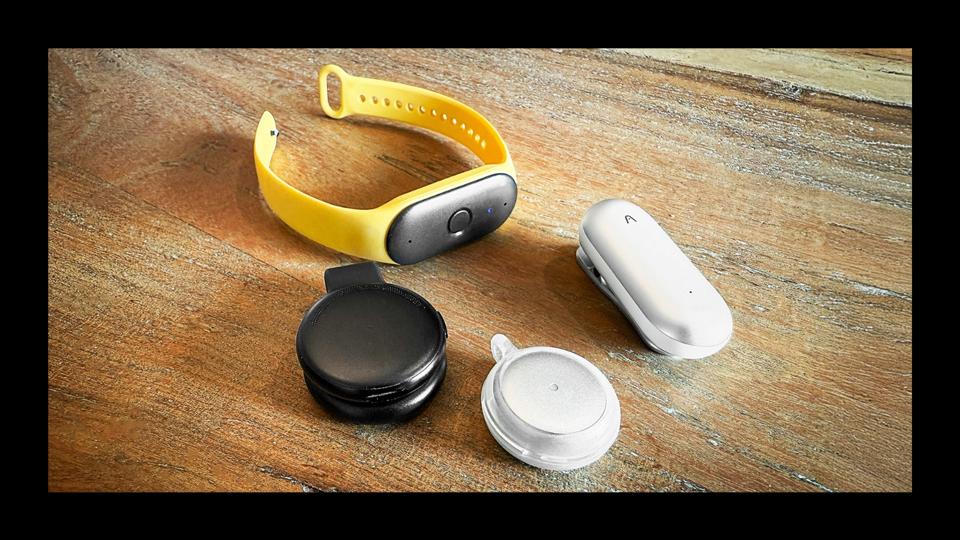
Image source: Forbes
How Much Do These Devices Actually Cost Over Three Years?
One of the most overlooked aspects of the ai gadget market is the "Subscription Trap." Many devices are sold at a relatively low entry price, but require a monthly "intelligence fee" to function. This fee covers the cost of the cloud-based LLMs that power the device's brain.
Navigating the Subscription Trap and Intelligence Fees
When evaluating a device, it is essential to calculate the Total Cost of Ownership (TCO). A device that costs $200 upfront but requires a $24 monthly subscription will eventually become far more expensive than a $600 device with no recurring fees. As of 2026, subscription fatigue has led many users to prefer devices that offer a "Lifetime Access" tier or those that allow users to plug in their own API keys from providers like OpenAI or Anthropic.
| Device Name | Sticker Price | Monthly Subscription | 3-Year Total Cost |
|---|---|---|---|
| Humane AI Pin | $699 | $24 | $1,563 |
| Plaud NotePin | $169 | ~$10 (Optional) | $529 |
| Rabbit R1 | $199 | $0 | $199 |
| Ray-Ban Meta | $299 | $0 | $299 |
Building an Integrated AI Stack for Your Daily Life
Rather than looking for one device to do everything, many power users are building an "AI Stack"—a combination of specialized tools that work together. This multi-step strategy ensures that each friction point in a daily routine is addressed by the most appropriate hardware.
The Three-Step Anticipatory Workflow
A highly impactful workflow involves three distinct phases: Capture, Visualize, and Delegate. By using different gadgets for each phase, you can create a seamless productivity ecosystem.
- Capture (Audio): Use a device like the Plaud NotePin to record all verbal commitments during a client briefing. This ensures no detail is lost to memory.
- Visualize (Visual): Use Ray-Ban Meta glasses to take a photo of a whiteboard or a physical document. The AI can then digitize this text and merge it with your audio notes.
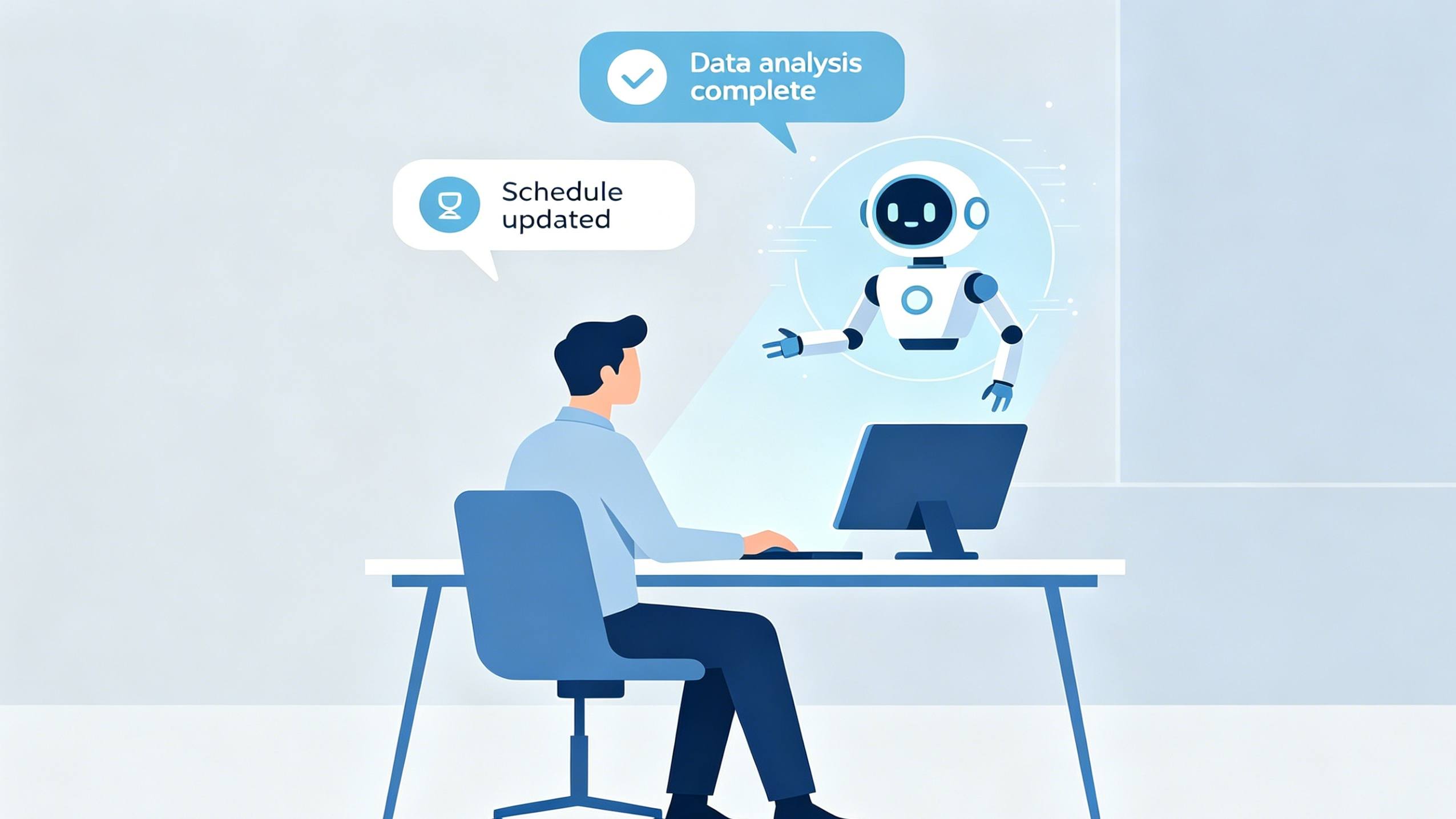
- Delegate (Management): Sync these inputs to an AI Smart Hub or dashboard. The system then automatically creates calendar invites, task lists, and follow-up emails based on the combined data from your audio and visual sensors.
The Privacy and Etiquette of Always-On AI Wearables
The rise of "always-on" gadgets has brought significant social and legal challenges. The "creep factor"—the discomfort people feel when they suspect they are being recorded—is a major barrier to the adoption of AI wearables.
Managing the Creep Factor in Social Settings
Public backlash against devices like the "Friend" necklace and the "Limitless" pendant highlighted the need for clear social signaling. Ethical use of AI gadgets requires transparency. Many modern devices now include physical LEDs that glow brightly when recording is active, a design choice intended to build trust with those in the vicinity.
Legal considerations are also paramount. In "two-party consent" jurisdictions, recording a conversation without explicit permission can lead to legal repercussions. Users of AI gadgets must be diligent about announcing their use of recording tools, especially in private or sensitive professional settings. The most successful users are those who frame the device as a tool for "active listening" rather than "surveillance."
Which AI Gadgets Failed to Live Up to the Hype?
The road to 2026 is littered with high-profile hardware failures. These cases serve as a reminder that even significant venture capital cannot overcome fundamental flaws in utility or technical execution.
Once touted as a phone replacement, it suffered from severe overheating and slow response times. The lack of a screen made verifying AI responses difficult, leading to a collapse in user retention.
Despite a successful launch, it struggled to deliver on its "Large Action Model" promise. It has since pivoted toward being a niche tool for developers, often described as "vibe coding" hardware.
A promising tool for memory enhancement that was ultimately discontinued after the company was acquired by Meta. It remains a "legacy" device that serves as a blueprint for current wearables.
How We Test AI Gadgets for Real-World Utility
To cut through the marketing fluff, we employ an 8-point testing framework. This ensures that every device we recommend offers genuine value rather than just a novel experience.
The 8-Point Testing Framework for 2026
- Practical Daily Integration
- Does the device fit into a standard routine without requiring a change in behavior?
- Adaptive Intelligence
- Does the AI learn from user preferences over time, or is it static?
- Core AI Accuracy
- How often does the device hallucinate or provide incorrect transcriptions?
- Latency Score
- The time in seconds from command to execution. Ideally under 1.5 seconds.
- Battery Performance
- Can it last a full workday? (e.g., Bee wearable lasts 7 days; Ray-Ban Meta lasts 4 hours of active use).
Battery life remains a significant bottleneck. While the Flowtica AI recorder offers an impressive 100 hours of recording time, multimodal devices like smart glasses struggle to exceed 4-5 hours of active AI use. This "battery anxiety" is a major factor in our testing, as a dead gadget provides zero utility.
Frequently Asked Questions
Do AI gadgets require a monthly subscription to work?
Many high-end AI gadgets do require a subscription, often ranging from $7 to $24 per month. This fee covers the ongoing costs of accessing powerful cloud-based models like GPT-4o or Claude 3.5. However, some devices like the Rabbit R1 and Ray-Ban Meta do not currently charge a recurring fee, making them more attractive for budget-conscious users. Always check the "intelligence fee" before purchasing.
Can an AI gadget replace my smartphone in 2026?
Currently, no. While some devices like the Humane AI Pin attempted to replace the phone, they lacked the versatility of a screen-based interface for complex tasks like banking, navigation, or social media. In 2026, AI gadgets are best viewed as "companions" that handle specific hands-free tasks, allowing you to keep your phone in your pocket more often, but not eliminate it entirely.
What is the best AI gadget for students?
For students, transcription and organization tools are the most beneficial. The Plaud NotePin is a top choice for recording lectures and generating study summaries. Translation tools like the Timekettle series are also highly recommended for language students or those studying abroad, as they allow for more natural conversation than a phone-based translation app.
Are AI gadgets safe for privacy?
Privacy varies significantly by manufacturer. Devices that offer "Edge AI" (local processing) are generally safer as your data doesn't leave the device. For cloud-reliant gadgets, look for those that offer GDPR and HIPAA compliance, such as Plaud. Always check if the device has a physical "mute" switch or a recording indicator light to ensure you are not inadvertently capturing sensitive information.
Why is my AI gadget so slow to respond?
Slowness is usually caused by "latency," which is the time it takes for your request to travel to the cloud and back. If your internet connection is weak, or if the manufacturer's servers are overloaded, the response time will increase. Devices with local processing (Edge AI) are significantly faster because they don't have to wait for a round-trip to a remote server.
Key Takeaways for Choosing an AI Gadget
- Prioritize Edge AI: Look for devices that handle processing locally to ensure faster response times and better privacy.
- Calculate the TCO: Don't just look at the sticker price; include 3 years of subscription fees to find the true cost.
- Focus on Multimodal: Devices that can process both audio and visual data offer significantly more utility than audio-only pins.
- Check for Compliance: If using for work, ensure the device meets GDPR or HIPAA standards for data security.
- Solve One Friction Point: Only buy a gadget if it does one specific task (like note-taking) much faster than your phone.
Before buying your next device, ask yourself if the task it performs is worth the extra space in your pocket and the potential recurring monthly cost.