Home
Top 10 AI Tools for Healthcare Diagnostics to Use in 2026
As of late 2026, the healthcare AI market has surpassed $110.61 billion , shifting focus from administrative scribes to high-stakes diagnostic agents. For clinicians, the top-performing tools are categorized by their NOHARM completeness scores and FDA status. AMBOSS LiSA 1.0 currently leads in clinical completeness (62.3%), while EvidenceMD is widely regarded as a top choice for complex reasoning. For emergency radiology, Aidoc remains a primary standard for real-time triage.
Image source: daftarsekolah.spmb.teknokrat.ac.id
The diagnostic landscape in 2026 is defined by a critical transition. We have moved beyond simple pattern recognition to "Chain-of-Thought" reasoning models that can explain their logic to a human physician. However, this advancement brings a new challenge: the Safety vs. Completeness Paradox . While models are becoming more accurate, they are also being programmed with extreme caution, sometimes at the expense of providing actionable clinical advice.
How to Navigate the Safety vs Completeness Paradox in Medical AI
Recent data from the NOHARM study has highlighted a significant friction point in clinical AI adoption. Researchers found that "safer" models, such as OpenAI’s o3 mini, often default to generic advice like "consult a specialist," missing up to 77% of critical actions required in complex cases. This is known as the "Safety Trap," where a model's restraint prevents it from being useful in a high-stakes environment.
- Prioritize risk mitigation.
- High "refusal" rates for specific dosing.
- Lower potential for commission errors.
- Example: Google Gemini 2.5 Pro (59.9% safety score).
- Prioritize comprehensive differentials.
- Provide specific diagnostic paths.
- Higher utility in rare disease cases.
- Example: AMBOSS LiSA 1.0 (62.3% completeness).
According to Forbes and the NOHARM research team , approximately 22% of clinical AI recommendations still carry the potential for severe harm, primarily through omission —failing to suggest a necessary test or intervention—rather than through incorrect advice. Clinicians must therefore choose tools that balance these two poles based on the specific needs of their patient population.
What Are the Top 10 AI Diagnostic Tools for 2026?
The following table provides a technical comparison of the leading diagnostic tools available to healthcare professionals in 2026. These rankings are based on clinical trial performance, FDA clearance status, and accessibility requirements such as the "NPI Gate."
| Tool Name | Primary Use Case | NOHARM Score | FDA Status | NPI Required |
|---|---|---|---|---|
| EvidenceMD | Complex Reasoning | 58.8% | Software as Service | Yes (US Only) |
| AMBOSS LiSA 1.0 | Differential Diagnosis | 62.3% | Clinical Support | Yes |
| Aidoc | Emergency Radiology | N/A (Imaging) | FDA Cleared | Institutional |
| PathAI | Oncology Pathology | N/A (Cellular) | FDA Cleared | Institutional |
| Glass Health 4.0 | Clinical Plans | 59.0% | Clinical Support | No |
| Google DeepMind | Ophthalmology/Renal | 94% Accuracy | Research/Cleared | No |
| Viz.ai | Stroke Triage | N/A (Triage) | FDA Cleared | Institutional |
| DxGPT | Rare Disease | 55.2% | Educational | No |
| Tempus | Precision Medicine | N/A (Genomic) | FDA Cleared | Yes |
| Nanox.AI | Population Health | N/A (Screening) | FDA Cleared | Institutional |
EvidenceMD for Complex Clinical Reasoning and Auditable Logic
EvidenceMD stands out as a top choice for clinicians who require "Chain-of-Thought" reasoning. Unlike black-box models, EvidenceMD provides a transparent audit trail for every diagnostic suggestion it makes. In 2026, its "Snow" model has been significantly improved to handle cases where medical literature is sparse or conflicting.
One critical aspect of EvidenceMD is the NPI Gate . To maintain high clinical standards and HIPAA compliance, the platform requires US-verified clinician credentials. This ensures that the high-level diagnostic capabilities are reserved for licensed professionals, mitigating the risk of patient self-diagnosis errors. According to EvidenceMD's 2026 rankings , it remains the #1 tool for complex questions that require synthesizing multiple data points from unstructured EHR notes.
AMBOSS LiSA 1.0 for the Highest Clinical Completeness Scores
AMBOSS LiSA 1.0 has achieved a 62.3% completeness score in recent NOHARM trials, the highest recorded for a general clinical model in 2026. It is specifically designed to assist in patient management and the generation of comprehensive differential diagnoses. LiSA integrates directly with the AMBOSS knowledge library, ensuring that every recommendation is backed by peer-reviewed clinical guidelines.
Clinicians often use LiSA when they encounter a "diagnostic wall"—a point where standard protocols have been exhausted but the patient's symptoms persist. Its ability to suggest "low-probability but high-impact" diagnoses makes it an essential asset for internal medicine and primary care departments.
Image source: AiNexTec
Aidoc for Real Time Triage in Emergency Radiology
In the high-pressure environment of the Emergency Department (ED), Aidoc has become a leading standard for radiology triage. It specializes in detecting acute abnormalities such as intracranial hemorrhages, pulmonary embolisms, and fractures in real-time. By flagging these critical findings the moment a scan is completed, Aidoc allows radiologists to prioritize the most urgent cases, significantly reducing the time to treatment.
As noted in Onsurity's 2026 healthcare report , the global AI healthcare market's growth is heavily driven by these "always-on" triage systems. Aidoc's integration with existing PACS (Picture Archiving and Communication Systems) makes it a seamless addition to hospital workflows without requiring significant technical overhauls.
PathAI for Precision Cellular Level Cancer Detection
PathAI is widely regarded as a premier tool for pathology and oncology. It utilizes deep learning to analyze biopsy slides at a cellular level, identifying cancerous cells that might be missed by the human eye. In 2026, PathAI has expanded its capabilities to include predictive analytics, suggesting which immunotherapy treatments are most likely to be effective based on the specific morphology of the tumor.
This tool is particularly valuable in reducing human error in pathology, where fatigue and high volume can lead to diagnostic discrepancies. By providing a "second set of eyes," PathAI ensures that oncology patients receive the most accurate diagnosis possible at the earliest stage of their disease.
Glass Health 4.0 for Generating High Appropriateness Differentials
Glass Health 4.0 has emerged as a top-tier option for generating clinical plans from unstructured notes. With a 59.0% accuracy rate in clinical trials, it excels at taking a physician's initial observations and structuring them into a coherent diagnostic and treatment plan. It is particularly popular among residents and medical students for its ability to model expert-level clinical reasoning.
The platform's strength lies in its "appropriateness" scores—ensuring that the suggested tests and treatments align with the latest evidence-based standards. This helps prevent over-testing and ensures that hospital resources are used efficiently.
Google DeepMind Health for Preventative Eye and Kidney Diagnostics
Google DeepMind Health continues to set a high standard for preventative diagnostics. Its ophthalmology AI can detect over 50 different eye conditions with a 94% accuracy rate , often identifying issues before the patient experiences any vision loss. Furthermore, its predictive model for Acute Kidney Injury (AKI) can alert clinicians to a potential crisis up to 48 hours before it occurs, allowing for life-saving interventions.
DeepMind’s focus on "long-range" diagnostics makes it a cornerstone of population health management. By identifying chronic risks early, health systems can move from reactive care to a proactive, preventative model.
Viz.ai for Critical Stroke and Emergency Care Coordination
For stroke care, timing is everything. Viz.ai is a highly impactful tool that uses AI to synchronize stroke care across entire hospital networks. It identifies suspected large vessel occlusions (LVOs) on CT scans and immediately alerts the entire neuro-interventional team via a secure mobile platform. This reduces the "door-to-needle" time, which is critical given the 4.5-hour window for effective stroke treatment.
Neurologists like Dr. Paul Bentley have highlighted that AI’s ability to identify the timescale of onset is as critical as the diagnosis itself. Viz.ai provides this temporal context, helping teams decide on the best course of action—whether it be thrombolysis or mechanical thrombectomy.
DxGPT for Rare Disease Brainstorming and Free Access
While many tools are gated behind NPI requirements or expensive institutional licenses, DxGPT stands out as a top choice for global accessibility. It is a leading free tool for clinicians and researchers looking to widen the diagnostic net for rare diseases. While it may not have the same EHR integration as EvidenceMD, its ability to brainstorm rare genetic conditions based on a list of symptoms is remarkably strong.
DxGPT is often used as a "third opinion" in cases where standard diagnostic paths have failed. Its open access makes it particularly valuable for clinicians in resource-limited settings who still need access to high-level diagnostic support.
Tempus for Combining Genomic and Clinical Data
Tempus is a leader in the field of precision medicine. It combines a patient's genomic data with their clinical history to create a truly personalized diagnostic profile. This is particularly transformative in oncology, where the genetic makeup of a tumor can dictate the success of a specific chemotherapy or targeted therapy. Tempus's library of clinical-genomic data is among the largest in the world, providing a robust foundation for its diagnostic insights.
Nanox.AI for Opportunistic Screening and Population Health
Nanox.AI specializes in "Opportunistic Screening"—the practice of using AI to find hidden chronic risks in scans that were originally taken for other reasons. For example, a CT scan taken to check for pneumonia might be analyzed by Nanox.AI to detect early signs of osteoporosis or cardiovascular calcification. This allows health systems to identify "silent" diseases in the general population without requiring additional imaging procedures.
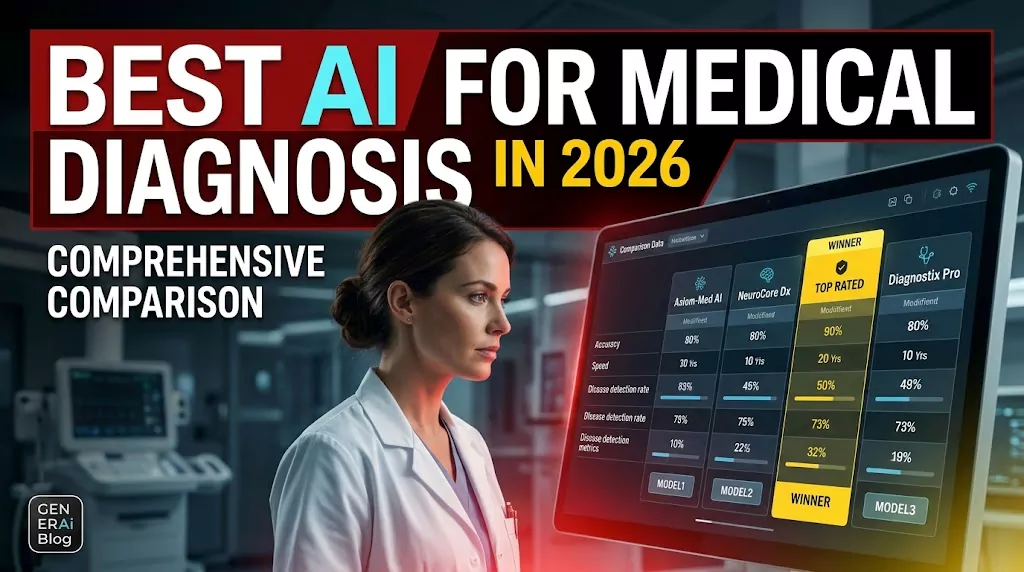
Image source: GenerAiBlog
How to Get Reimbursed for AI Diagnostics Using CPT 92229
One of the most significant barriers to AI adoption has historically been the lack of a clear financial model. However, in 2026, the CPT 92229 code has become a standard for AI-based diagnostic reimbursement. This code specifically covers "imaging of retina for detection of monitoring of disease... with remote analysis and report."
According to American Healthcare Leader , the financial viability of AI diagnostics is now a reality for private practices. To successfully bill for these services, practices must ensure:
- The AI tool used is FDA-cleared for the specific diagnostic purpose.
- The analysis is performed autonomously by the software.
- A formal report is generated and integrated into the patient's medical record.
For hospital systems, the ROI (Return on Investment) is often found in the reduction of "length of stay" and the prevention of readmissions through more accurate initial diagnostics. Procurement departments are now evaluating AI tools not just on their clinical accuracy, but on their ability to trigger these specific reimbursement codes.
Why You Should Consider a Multi Agent Diagnostic Workflow
The most advanced clinical teams in 2026 do not rely on a single AI tool. Instead, they utilize a Multi-Agent Diagnostic Loop . This workflow combines the strengths of different models to overcome the Safety vs. Completeness Paradox.
An open-source, high-completeness model is used to "scout" the widest possible range of differentials, including rare and atypical presentations.
A safety-first model reviews the scout's suggestions to flag any high-risk recommendations or potential contraindications.
The final list is cross-referenced with peer-reviewed clinical guidelines to ensure the plan is actionable and evidence-based.
This "Expert Combination" ensures that the clinician receives a comprehensive view of the patient's condition while maintaining a high level of safety. It mimics the traditional medical hierarchy of a resident (scout) reporting to an attending (validator).
How to Overcome Technical Friction with Open Source Medical Models
While proprietary tools like EvidenceMD offer seamless integration, there is a growing community of clinicians interested in open-source models like Llama3-OpenBioLLM . However, as noted in various clinician forums, the "technical friction" of running these models can be a significant hurdle.
To use these models effectively without a computer science degree, clinicians are moving toward "Contextual AI" platforms that provide a user-friendly interface for open-source weights. Key strategies for overcoming this friction include:
- Using LM Studio: A GUI-based tool that allows you to run local models without using the Command Line Interface (CLI).
- API Aggregators: Services that provide access to multiple open-source medical models through a single, HIPAA-compliant portal.
- Focusing on Small Language Models (SLMs): Using models specifically fine-tuned for medicine (like BioMistral) which require less computing power than general-purpose giants.
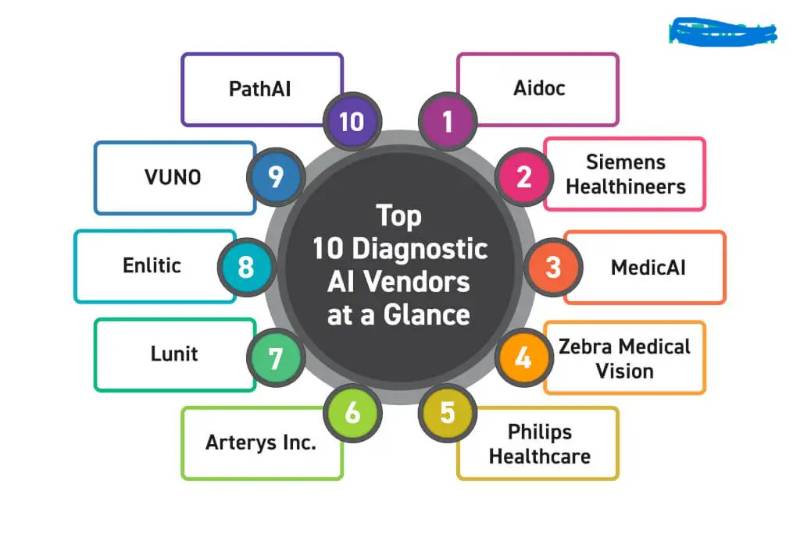
Image source: DevOps School
Frequently Asked Questions
Key Takeaways for 2026
- Prioritize Completeness: Use models like AMBOSS LiSA 1.0 for complex cases where a broad differential is more valuable than a "safe" refusal.
- Verify the NPI Gate: Be prepared to provide medical credentials for high-authority tools like EvidenceMD to ensure HIPAA compliance.
- Leverage CPT 92229: Ensure your practice is capturing available reimbursement for AI-driven diagnostics to maintain financial sustainability.
- Adopt Multi-Agent Loops: Combine "Scout" models with "Safety" models to balance diagnostic depth with patient safety.
- Monitor the Safety Trap: Be aware that some models may miss critical actions by being overly cautious; always cross-reference AI advice with clinical intuition.
- Focus on Opportunistic Screening: Use tools like Nanox.AI to find hidden risks in existing patient data, improving population health outcomes.
To begin your implementation, evaluate your current diagnostic bottlenecks and select a tool that offers native integration with your existing EHR system.