Home
Which AI Overviews Checking Tools Provide the Most Accurate Citation Tracking in 2026?
For most SEO professionals in 2026, SE Ranking and ZipTie stand out as top choices for monitoring Google AI Overviews (AIO). SE Ranking offers a versatile all-in-one platform with advanced citation extraction, while ZipTie is widely considered a leading option for enterprise-scale audits. If your focus is on brand health, GetMint provides specialized sentiment analysis that few competitors match.
The search landscape has undergone a fundamental shift. We have moved from a world where ranking #1 was the primary goal to an era of "Answer Engine Optimization" (AEO). In this new environment, the most critical metric is no longer just your position in the blue links, but your presence within the Gemini-powered summaries at the top of the page.
According to recent industry data, approximately 64% of keywords now trigger an AI Overview, particularly for informational and long-tail queries. For brands cited in these summaries, visibility gains can reach a staggering 1200% , as these snapshots occupy the most valuable real estate on the screen. However, tracking this visibility is notoriously difficult because Google Search Console does not yet provide granular citation data for AIOs.
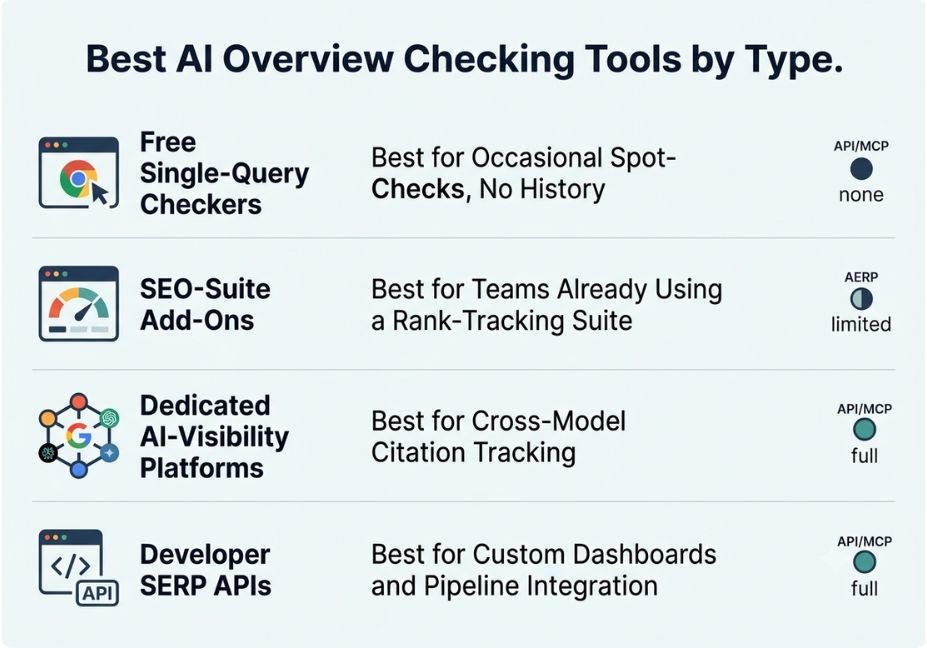
Image source: Agentive AI Agents
Why Standard Rank Tracking No Longer Meets Modern SEO Needs
Traditional rank trackers were built for a static world. They look for a specific URL at a specific position. AI Overviews, however, are non-deterministic . This means the summary shown to one user in New York might differ significantly from the one shown to a user in London, even for the exact same prompt. Furthermore, the presence of an AIO can fluctuate wildly; a brand might appear in the morning and vanish by the afternoon.
Research indicates that roughly 80% of SEO teams currently struggle because they continue to treat AIOs like standard blue links. They miss the "Visibility Gap"—the space between where their organic link sits and where the AI citation appears. Because AIOs often cite 6 to 14 different sources, being the first link in the summary is often more valuable than being the first link in the organic results below it.
Furthermore, the volatility is extreme. Visibility metrics for specific domains can swing by over 800% in short periods. Without specialized tools that render the full SERP (Search Engine Results Page) and extract specific citation data, businesses are essentially flying blind in the most important part of the search funnel.
Essential Features to Look for in a Professional AI Overview Tracker
When evaluating tools to monitor your AI visibility, you must look beyond simple "presence" tracking. A professional-grade tracker should offer the following capabilities:
- Citation Extraction: The tool must be able to identify every link cited within the AI summary, not just confirm that a summary exists.
- Non-Deterministic Handling: It should track variations by location, device, and time to provide a statistically significant "Share of Voice."
- Archived Snapshots: As AIOs change rapidly, having a visual record of what the summary looked like on a specific date is vital for reporting to stakeholders.
- Sentiment Analysis: Being cited is not always a win. If the AI uses your brand as a negative example, you need to know immediately.
Because Gemini generates responses in real-time, the "truth" of a SERP is now fluid. A top-tier tracking tool doesn't just check once; it aggregates multiple checks to give you a probability of appearance, which is a much more accurate metric for 2026.
8 Top AI Overviews Checking Tools for Every Budget and Need
Why SE Ranking Ranks Among the Top All-in-One Trackers for Agencies
Best for AgenciesSE Ranking has established itself as a premier choice by integrating AIO tracking directly into its core ecosystem. Their AI Overviews Tracker is particularly notable for its Model Context Protocol (MCP) integration . This allows advanced users to feed live tracking data directly into AI assistants like Claude or ChatGPT.
Imagine asking Claude: "Based on my SE Ranking data from the last 7 days, why did my citation share for 'enterprise cloud security' drop while my competitor's rose?" The MCP bridge makes this level of analysis possible, moving SEO from manual reporting to automated insight generation.
However, procurement teams should be aware of the "Two-Product" structure. SE Ranking offers AIO tracking as both an add-on to their main platform and via their standalone "SE Visible" tool. It is important to verify which version fits your workflow to avoid unexpected costs.
ZipTie for Enterprise-Scale Visibility Audits
Best for EnterpriseFor organizations managing tens of thousands of keywords, ZipTie is widely regarded as one of the strongest options available. It was one of the first tools to market specifically for AIO tracking and focuses heavily on data depth.
ZipTie’s standout feature is its ability to provide archived SERP snapshots. In a corporate environment where you must prove to executives that a traffic drop was caused by a change in Google's AI behavior, having a visual "before and after" is invaluable. It handles massive keyword sets with a level of stability that few other specialized tools can match.
Omnia for Real-Time Citation Extraction and Competitor Identification
Best for Real-Time DataDaniel Espejo, CEO of Omnia , has frequently emphasized that citation extraction is the "make-or-break" capability of any modern SEO tool. Omnia excels here, providing a granular breakdown of which domains are winning the most citations across specific industries.
Omnia is particularly useful for identifying "hidden" competitors—sites that don't rank well in traditional organic results but are frequently cited by Gemini. This allows SEOs to adjust their content strategy to mirror the characteristics of these AI-favored sources.
GetMint for Monitoring Brand Sentiment and Health
Presence is only half the battle. GetMint stands out for its focus on sentiment analysis. As AI Overviews become more conversational, they often synthesize opinions about brands. GetMint tracks whether your brand is being mentioned in a positive, neutral, or negative context.
If Gemini starts telling users that your software is "difficult to set up," GetMint will flag this sentiment shift. This makes it an essential tool for PR and brand management teams, not just technical SEOs.
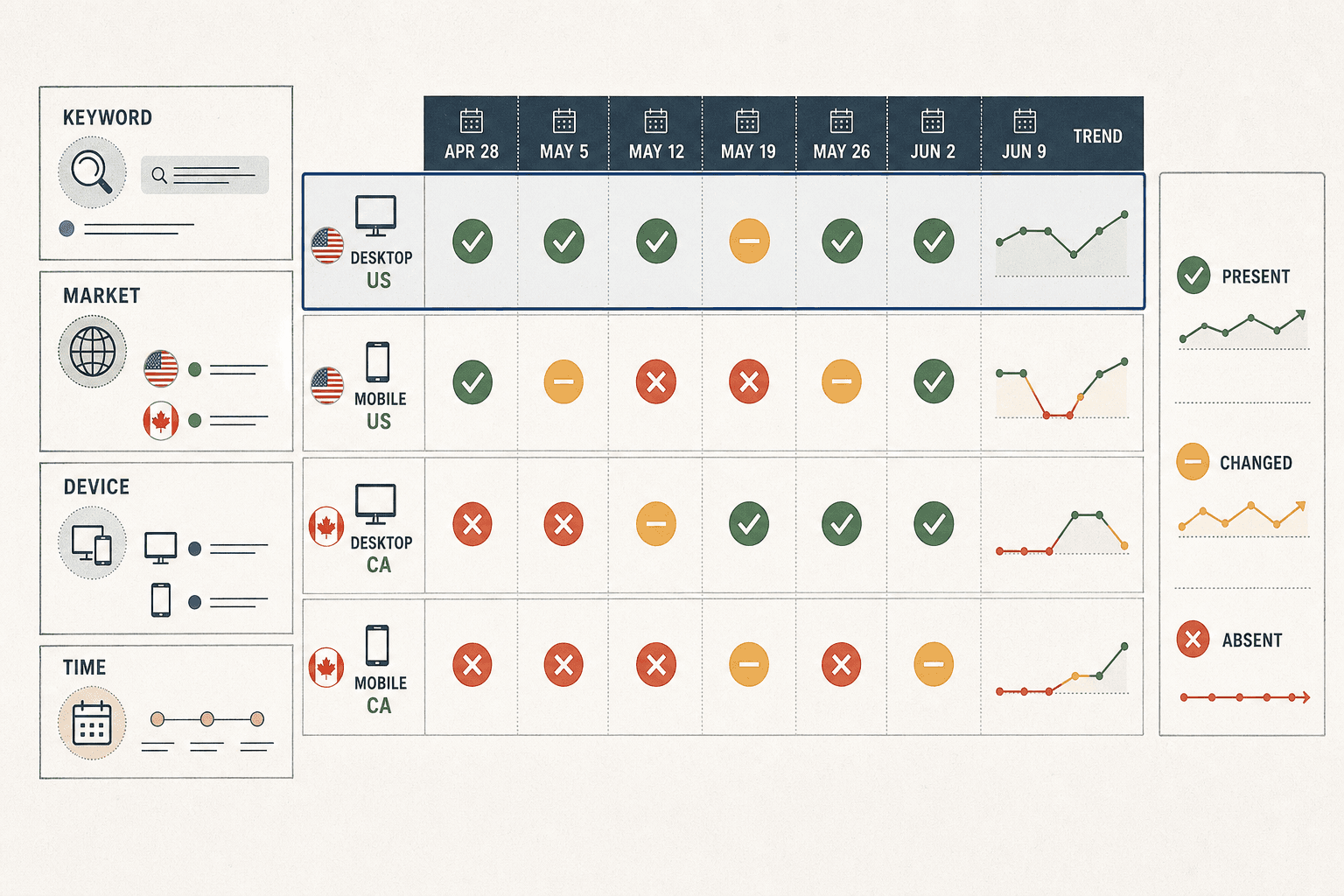
Image source: Mygom SEO
Thruuu for Content Gap Analysis and AEO Recommendations
Thruuu takes a more proactive approach. Instead of just telling you where you rank, it analyzes the content that is getting cited and identifies what your pages are missing. If the top-cited sources all include a specific comparison table or answer a specific sub-question, Thruuu will recommend adding those elements to your content to increase your chances of being picked up by the AI.
Semrush and Ahrefs for Basic AIO Monitoring
For those already paying for legacy tools, Semrush and Ahrefs offer basic AIO monitoring via their "SERP Features" filters. You can see which of your tracked keywords trigger an AI Overview. However, these tools generally lack the deep citation extraction and sentiment analysis found in specialized platforms like ZipTie or GetMint. They are a good starting point for a high-level view but may not suffice for a dedicated AEO strategy.
Comparing the Top AI Trackers at a Glance
| Tool Name | Primary Strength | Citation Accuracy | Best For |
|---|---|---|---|
| SE Ranking | MCP Integration & All-in-One | High | Agencies & Mid-Market |
| ZipTie | Enterprise Scale & Snapshots | Very High | Large Corporations |
| Omnia | Real-Time Extraction | High | Competitive Research |
| GetMint | Sentiment Analysis | Moderate | Brand Health Monitoring |
| Thruuu | Content Recommendations | Moderate | Content Strategists |
How to Build a High-Performance AEO Workflow
Tracking is only useful if it leads to action. A successful Answer Engine Optimization (AEO) workflow follows an 8-step pipeline to ensure consistent visibility in AI Overviews.
How to Verify AI Citations Using the Lateral Reading Method
One of the biggest risks in the AI era is "hallucination"—when the AI cites a source that doesn't actually support the claim it's making. To combat this, professional researchers use a technique called Lateral Reading .
Instead of reading the AI summary from top to bottom, you open the cited sources in new tabs (reading "laterally" across your browser). According to research from TAMUCC , this method allows you to verify if the source is authoritative and if the AI has accurately represented the information.
For SEOs, this is a massive opportunity. If you find that Gemini is citing a "weak" source—perhaps a low-authority blog or a forum post that only partially answers the question—you can create a superior, more authoritative piece of content to displace that citation. Specialized tools help you find these "weak links" at scale.
Understanding the Source Categorization Google Prefers
Google does not treat all sources equally when building an AI Overview. Data from SE Ranking suggests that the mix of sources varies significantly by intent. For example:
- Forums (like Reddit): Often make up 40% of citations for "subjective" or "experience-based" queries.
- Niche Blogs: Frequently cited for specific "how-to" instructions.
- Major Media: Preferred for news-related or high-authority health and finance topics.
By using a tool that categorizes citations by domain type, you can see exactly what *kind* of content Google wants to show. If the AIO for your target keyword is dominated by Reddit threads, you might find that participating in those threads is more effective than writing a new blog post.
Frequently Asked Questions
Because Google Search Console does not provide specific AIO data, you must use specialized API-based trackers like SE Ranking, ZipTie, or Omnia. These tools simulate user searches and extract the citation links directly from the Gemini-generated summaries, allowing you to see exactly where your URLs appear.
Manual checking is the only truly free method, but it is not scalable due to the non-deterministic nature of AI. Some tools like Semrush offer a limited free tier that shows if a keyword triggers an AIO, but full citation extraction and historical tracking usually require a paid subscription or add-on.
Accuracy in GenAI tracking is measured by how well a tool handles volatility. ZipTie and SE Ranking are widely considered among the most accurate because they perform multiple checks across different locations and times, providing a probabilistic view of visibility rather than a single, potentially misleading snapshot.
AIO sources can change in real-time. Research has shown that visibility can swing by over 800% in just a few days as Google's models are updated or as new content is indexed. This high-frequency change makes daily or even real-time tracking essential for competitive industries.
Yes, tools like Omnia and Position Digital are expanding their capabilities to monitor "Answer Engines" beyond Google. As users shift their search behavior toward ChatGPT and Perplexity, tracking your brand's "Share of Model" across all major AI platforms is becoming a standard part of modern SEO.
The Bottom Line on Choosing an AI Overview Tracker
Navigating the shift to AI-driven search requires a new set of tools and a different mindset. Here are the key takeaways for selecting your tracking stack:
- Identify your scale: Choose ZipTie for enterprise-level audits or SE Ranking for agency-wide management.
- Prioritize citation extraction: Ensure your tool identifies the specific links within the summary, not just the presence of the AIO.
- Monitor sentiment: Use GetMint if your brand is in a sensitive industry where negative AI summaries could cause reputational damage.
- Leverage MCP integrations: Connect your tracking data to AI assistants like Claude to automate your competitive analysis.
- Verify with lateral reading: Don't trust the AI blindly; use manual verification to find weak citations you can displace.
- Watch the pricing: Be mindful of "add-on" costs in platforms like SE Ranking to ensure the tool fits your budget.
Start by auditing your top 100 informational keywords to see how much of your current traffic is at risk from AI Overviews.