Home
Home
Why Text to Video AI Is Finally Ready for Real Production Workflows

Text-to-video artificial intelligence has transitioned from a conceptual novelty to a functional pillar of digital content creation. What began as low-resolution, flickering clips has evolved into high-definition cinematic sequences capable of simulating complex physical interactions and artistic styles. This technology serves as a bridge between written concepts and visual media, utilizing advanced machine learning architectures to synthesize video frames based on textual descriptions. As these models become more accessible through platforms like Adobe Firefly, Kling AI, and Luma Dream Machine, understanding the underlying mechanics and mastering the art of the prompt has become essential for creators, marketers, and filmmakers alike.
Understanding the Core Technology Powering AI Video
The leap in video quality witnessed over the last year is not the result of a single breakthrough but the convergence of several sophisticated AI architectures. To appreciate how a simple sentence becomes a 1080p video, one must look at the synergy between language models and visual generation engines.
The Role of Large Language Models in Context Understanding
Before a single pixel is rendered, the AI must understand the semantics of the user’s request. Modern text-to-video systems utilize Large Language Models (LLMs) to parse the prompt. These models don't just look for keywords; they interpret intent, spatial relationships, and even emotional undertones. For instance, if a user types "a lonely lighthouse in a storm," the LLM understands that "lonely" implies isolation, which might influence the camera angle (wide shot) and the color grading (cool, desaturated tones). The LLM translates the natural language into a dense vector of information that the visual engine can process.
Diffusion Models and Temporal Consistency
The majority of current high-end video generators rely on diffusion models. Originally popularized by image generators like Midjourney and Stable Diffusion, these models work by starting with a field of random noise and iteratively refining it until a clear image emerges. In video generation, this process is exponentially more complex because the AI must maintain "temporal consistency." This means that the objects, lighting, and textures must remain stable from one frame to the next.
Advanced models now integrate temporal layers into the diffusion process, ensuring that if a character turns their head in frame five, their facial features remain identical in frame fifty. This prevents the "shimmering" or "morphing" effects that plagued early AI video attempts.
Transformers and Long-Form Generation
While diffusion handles the visual texture, Transformer architectures—the same technology behind ChatGPT—are increasingly used to manage the logical flow of motion. By treating video frames as a sequence of data points (similar to words in a sentence), Transformers allow models like OpenAI's Sora to predict what should happen next in a scene. This capability is crucial for generating longer clips that follow the laws of physics, such as a ball bouncing or liquid pouring into a glass.
Mastering the Prompt for Precise Visual Output
The quality of an AI-generated video is directly proportional to the quality of the input prompt. Moving beyond simple descriptions requires a structured approach to communication with the model. Based on industry standards, an effective prompt should be divided into three core pillars: Subject, Style, and Motion.
Defining the Subject with Granular Detail
The subject is the "what" of your video. Vague subjects lead to generic results. Instead of "a car driving," a professional prompt specifies the make, model, color, and condition of the vehicle.
- Weak Prompt: "A cat playing with a toy."
- Strong Prompt: "A fluffy Maine Coon kitten with amber eyes batting at a red woolen ball on a polished mahogany floor."
By adding specific textures (fluffy, polished) and colors (amber, red, mahogany), you provide the AI with the necessary constraints to generate a high-fidelity scene.
Setting the Artistic Style and Lighting
Style dictates the visual language of the video. This includes the camera type, lens choice, lighting conditions, and overall aesthetic. In professional workflows, using cinematography terminology often yields the best results.
Descriptors such as "cinematic lighting," "golden hour," "high dynamic range (HDR)," or "handheld camera movement" tell the AI how to render the environment. If the goal is an animated sequence, specifying the medium—such as "3D render in Unreal Engine 5," "Studio Ghibli style watercolor," or "stop-motion claymation"—is vital.
Controlling Motion and Camera Dynamics
Motion is what separates video prompts from image prompts. You must describe both the internal motion (what the subject is doing) and the external motion (how the camera is moving).
- Internal Motion: "The waves crash violently against the cliffs, sending white spray into the air."
- External Motion: "A slow drone zoom-out starting from a close-up of a flower to reveal a vast mountain range."
Using terms like "pan," "tilt," "dolly," and "crane shot" helps the AI simulate professional film equipment, resulting in a more polished look.
The Current Leaders in Text to Video Generation
The landscape of AI video is highly competitive, with different models excelling in specific areas. Choosing the right tool depends on whether the priority is physical realism, commercial safety, or creative flexibility.
OpenAI Sora and Physical Realism
Sora represents a significant milestone in simulating the physical world. During internal testing and public demonstrations, Sora has shown an uncanny ability to understand cause and effect—such as a person taking a bite out of a cookie and leaving a realistic bite mark. Its ability to generate videos up to 60 seconds long with high resolution makes it a benchmark for the industry, though its limited availability means most creators are still waiting for full access.
Adobe Firefly Video and Commercial Viability
Adobe’s approach focuses on the needs of professional designers and brands. The Firefly Video Model is trained on Adobe Stock and public domain content, making it "safe for commercial use." This is a critical distinction for corporate clients who cannot risk copyright infringement.
In a production workflow, Firefly stands out for its integration with the Creative Cloud. It allows users to upload a still image and use it as a reference frame, ensuring that the generated video matches an existing brand aesthetic. Furthermore, Adobe’s multi-model hub allows creators to compare results from different engines like Google Veo and Luma Ray within a single interface, streamlining the iterative process.
Kling AI and Advanced Character Consistency
Kling AI has gained massive popularity for its ability to handle complex human movements and long-duration clips (up to 2 minutes in some modes). In my practical testing, Kling excels at maintaining character features across different angles. While many models struggle with human hands and gait, Kling produces remarkably fluid walking and running cycles. It is particularly effective for creators looking to produce narrative-driven content where character stability is paramount.
Luma Dream Machine and Cinematic Motion
Luma’s Dream Machine is optimized for speed and cinematic flair. It is particularly adept at "Image-to-Video" conversions, where a single photograph is brought to life. The motion generated by Luma often feels "filmic," with natural-looking depth of field and realistic light leaks. It is an excellent choice for creating B-roll footage or social media teasers where visual impact is more important than minute physical accuracy.
Runway Gen-3 Alpha and Creative Control
Runway has long been a pioneer in the space, and Gen-3 Alpha continues this tradition by offering granular control tools. Features like "Motion Brush" allow users to paint over specific areas of an image to tell the AI exactly where movement should occur. This level of intentionality is vital for professional editors who need to match the AI's output to a specific storyboard.
A Practical Workflow for Generating AI Clips
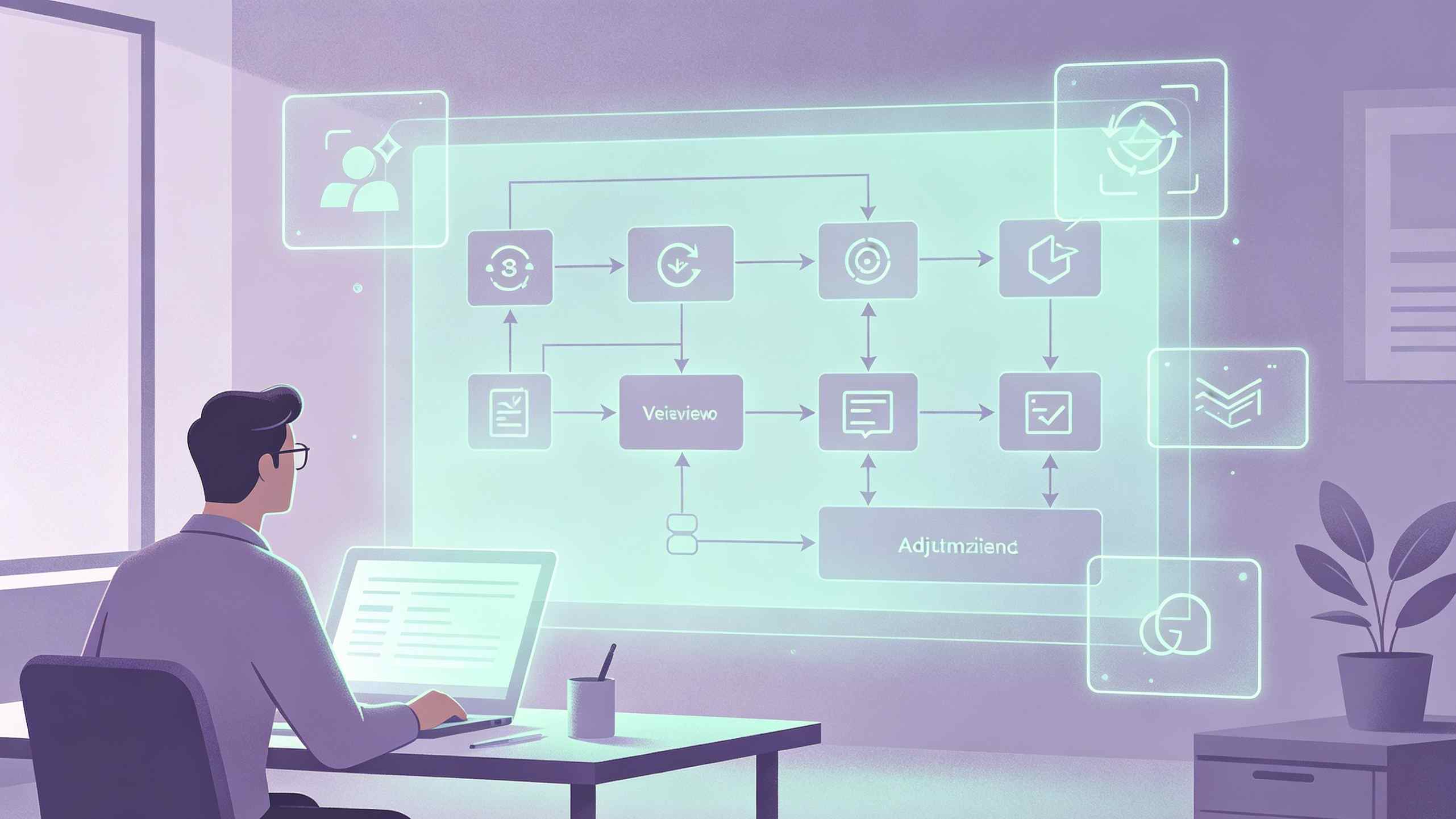
Creating a high-quality AI video is rarely a one-click process. It involves a modular pipeline that mirrors traditional film production.
- Scripting and Conceptualization: Use an LLM to expand a simple idea into a detailed scene-by-scene script. For each scene, identify the core visual elements.
- Prompt Refinement: Take the script and translate it into the Subject-Style-Motion framework. Test the prompt in a fast, low-resolution mode to see if the AI understands the basic composition.
- Base Clip Generation: Generate the initial video. In most cases, you will need to generate 3 to 5 variations of the same prompt to find one where the motion is fluid and the artifacts are minimal.
- Upscaling and Enhancement: Many AI video tools generate clips at 720p or lower to save compute power. Use an AI upscaler to bring the footage to 4K and improve textures.
- Post-Production Integration: Bring the AI clips into a traditional video editor (like Premiere Pro or DaVinci Resolve). This is where you add color grading, sound design, and music to mask any remaining AI "uncanniness."
Addressing the Limitations of Current Generative Video
Despite the rapid progress, text-to-video AI is not without its flaws. Understanding these limitations is key to using the technology effectively without falling into common traps.
Temporal Artifacts and "Hallucinations"
AI models do not "know" that a person has five fingers or that a chair has four legs; they only know that these objects usually look that way in their training data. This can lead to "hallucinations," where objects appear or disappear mid-frame, or limbs morph into each other. These issues are most common in scenes with high-speed movement or complex overlapping subjects.
The Physics Problem
While Sora and Kling have made strides in physics, AI still struggles with complex interactions like fire, smoke, and liquid. Generating a realistic explosion or a person tieing their shoelaces remains a significant challenge because these actions involve intricate topological changes that are difficult for current diffusion models to map accurately.
Resolution and Duration Limits
Generating high-definition video requires massive computational resources. Most tools currently limit individual clips to 5–10 seconds. Creating a longer film requires stitching these clips together, which poses a challenge for maintaining consistent lighting and character appearance across the entire project.
Ethical Considerations and the Future of Visual Media
The rise of AI video brings significant ethical questions to the forefront. The potential for "deepfakes" and misinformation is a primary concern for developers and regulators. Most major platforms have implemented strict filters to prevent the generation of non-consensual imagery or harmful content.
Furthermore, the impact on the creative industry is a subject of intense debate. While AI tools lower the barrier to entry for storytelling, they also automate tasks previously handled by junior animators and stock footage houses. The consensus among industry leaders is that AI will function as a "force multiplier"—allowing a single creator to perform the work of a small studio—rather than a total replacement for human creativity.
Summary of Key Takeaways
Text-to-video AI has reached a level of maturity where it can be integrated into professional creative workflows. By understanding the synergy between LLMs and diffusion models, creators can leverage tools like Sora, Firefly, and Kling to produce cinematic content from simple text. The key to success lies in structured prompting—focusing on subject detail, cinematic style, and specific motion—and accepting that AI is currently best used as a tool for B-roll, concept visualization, and rapid prototyping.
Frequently Asked Questions
What is the best AI video generator for beginners?
For those just starting, tools like Canva or Adobe Firefly are highly recommended. They offer user-friendly interfaces and integrated tools that simplify the prompting process. Firefly, in particular, provides a safe environment for those who want to ensure their work is commercially viable.
Can I generate AI videos for free?
Many platforms, including Luma Dream Machine and Pika Labs, offer a limited number of free credits per month. However, for high-resolution, watermark-free exports and faster rendering times, a paid subscription is typically required.
How do I fix flickering in AI videos?
Flickering is often a result of low temporal consistency. To minimize this, try simplifying your motion prompts or using a tool that supports "Image-to-Video," as starting with a high-quality base image provides the AI with a stable reference point for the rest of the clip.
Is text-to-video AI safe for commercial use?
It depends on the model. Adobe Firefly Video is specifically designed for commercial safety. Other models may have more ambiguous training data sources, so it is essential to check the terms of service of each platform before using the output for paid advertisements or film projects.
How long does it take to generate an AI video?
Generation times vary based on the model and resolution. A 5-second clip can take anywhere from 60 seconds to several minutes to render. High-end cinematic models usually take longer as they perform more complex denoising passes to ensure visual quality.
What are the hardware requirements for AI video?
Most popular text-to-video tools are cloud-based, meaning all the heavy processing happens on the provider's servers. Users only need a modern web browser and a stable internet connection. However, if you are running open-source models like Stable Video Diffusion locally, you will need a powerful GPU with at least 16GB to 24GB of VRAM.
-
Topic: Free AI Video Generator: Text to Video online - Adobe Fireflyhttps://www.adobe.com/products/firefly/features/ai-video-generator.html
-
Topic: Animator – Ai-Powered Text-To-Video Animation Systemhttps://www.ijset.in/wp-content/uploads/ICSEMT_V14_issue3_105.pdf
-
Topic: Free AI Video Generator: Text to Video online - Adobe Fireflyhttps://www.adobe.com/ca/products/firefly/features/ai-video-generator.html