 Home
Home
Where to Find and How to Use Public Domain Pictures Safely
Navigating the world of public domain pictures requires a balance of creative exploration and legal diligence. As of 2026, the volume of available imagery has reached unprecedented levels, driven by massive institutional digitization projects and the explosion of AI-generated content. However, the term "free" is often used loosely on the web, leading many creators into copyright traps that could have been avoided with a clearer understanding of licensing nuances.
Public domain assets are those for which intellectual property rights have expired, have been forfeited, or were never applicable. These images are essential for designers, marketers, and historians because they can typically be used, modified, and distributed for commercial purposes without the need for attribution or payment. This guide explores the most reliable repositories and provides a framework for verifying image safety in a complex digital landscape.
Understanding the Legal Status of Public Domain Assets in 2026
In the United States, the public domain is not a single static list but a dynamic collection that grows every year. On January 1st of each year—often celebrated as Public Domain Day—a new batch of works published decades ago sees its copyright expire. As of 2026, works published in 1930 have entered the public domain, providing a wealth of Art Deco illustrations, early cinematic photography, and historical documentation for modern reuse.
It is important to distinguish between "Public Domain" and "Creative Commons." While both allow for free use, Public Domain implies no ownership exists, whereas Creative Commons (CC) is a licensing framework where the owner *grants* specific permissions. The most permissive of these is CC0 (Creative Commons Zero), which is a tool used by creators to effectively place their work into the public domain by waiving all copyright interests.
According to recent legal precedents, the distinction between a site-specific license (like those used by Unsplash or Pexels) and a true CC0 license is critical. While site licenses allow for free use, they often include clauses that prevent you from selling the images themselves or using them to create a competing service. True public domain works carry no such restrictions, making them a top choice for high-stakes commercial projects.
Top Institutional Archives for Historical and Fine Art Pictures
For those seeking high-resolution historical assets, institutional archives are widely regarded as the most reliable sources. These organizations have invested heavily in high-fidelity scanning and metadata accuracy, ensuring that the images you download are both authentic and legally cleared.
The Library of Congress Digital Collections
The Library of Congress (LOC) stands out as a premier resource for Americana and global history. Their "Free to Use and Reuse" sets are particularly valuable for creators who need curated content quickly. These sets cover niche topics ranging from "Giant Produce Postcards" to "African American Women Changemakers." The LOC is one of the strongest options for finding primary source documents, maps, and photographs that are verified to be without known copyright restrictions.
The Metropolitan Museum of Art Open Access Program
The Met's Open Access program is a significant advancement for the art community. It provides CC0 access to more than 406,000 high-resolution images of public-domain artworks in the museum's collection. This includes everything from ancient Egyptian artifacts to masterworks by Van Gogh and Monet. When searching their site, look for the "Open Access" filter to ensure the results are safe for commercial modification.
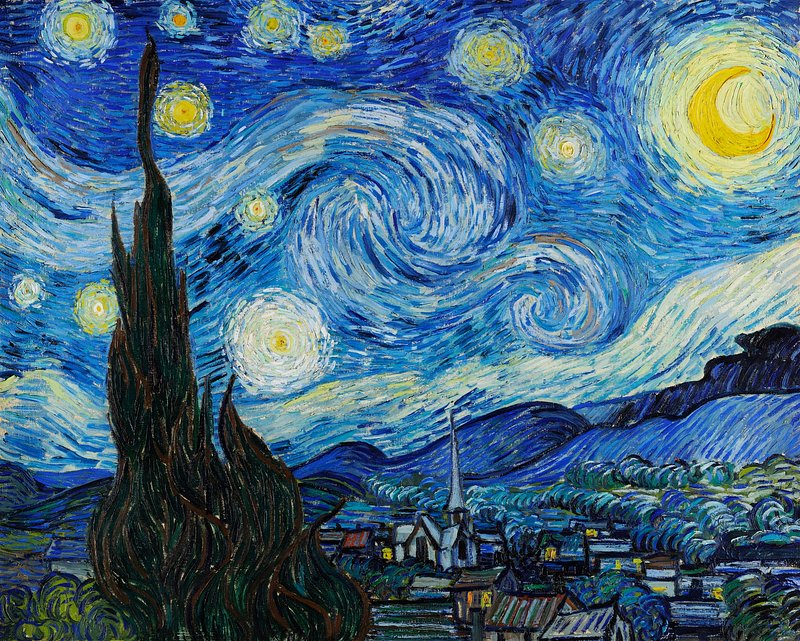
Image source: Rawpixel
Other notable institutions include the New York Public Library (NYPL) , which hosts over 180,000 public domain items, and the Getty Open Content Program , which has contributed over 160,000 images since its inception in 2013. These archives are particularly useful because they provide "clean" files—scans that haven't been overly processed by third-party stock sites.
Modern Repositories for Commercial Stock Photography
While museums are excellent for historical needs, modern commercial projects often require contemporary photography. Several platforms specialize in hosting modern images that are either donated by photographers under CC0 or are otherwise cleared for public use.
PublicDomainPictures.net is a leading choice in this category. With over 769,000 images, it provides a massive variety of stock-style photography, ranging from business landscapes to nature shots. Unlike many "free" sites that hide high-quality images behind a paywall, this repository focuses on providing accessible assets for designers who need to avoid the complexities of traditional stock licensing.
It is worth noting the distinction between these sites and popular platforms like Pixabay or Pexels. While these sites are often cited in guides, they transitioned away from the CC0 license years ago in favor of their own custom "Free to Use" licenses. For most users, this distinction is minor, but for those building products for resale (like templates or print-on-demand items), the legal difference between a site license and a public domain status is significant. According to UT Austin's research guides , verifying the specific license type is the most important step in the acquisition process.
Finding Niche Scientific and Botanical Illustrations
For designers working on packaging, editorial layouts, or scientific communication, niche archives offer a level of detail that general stock sites cannot match. The Biodiversity Heritage Library (BHL) is an exceptionally strong resource in this regard. Their Flickr collection contains millions of high-quality scientific and nature illustrations scanned from rare books.
Similarly, the British Library has uploaded over 1 million public domain images to Flickr, focusing on 17th–19th-century book illustrations. These collections are a goldmine for "curious" imagery—strange anatomical drawings, early maps of the stars, and intricate botanical sketches that add a unique aesthetic to modern designs. Because these images are often hundreds of years old, their copyright has long since expired, making them among the safest assets to use for any purpose.
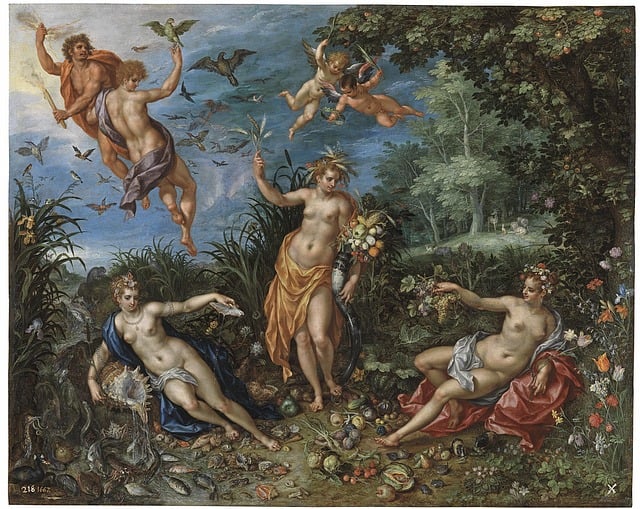
Image source: Pixabay
Why AI-Generated Content Represents a New Frontier for Public Domain
As we move through 2026, the influx of AI-generated imagery has fundamentally changed the public domain landscape. The US Copyright Office has maintained a consistent stance: works created by artificial intelligence without "significant human authorship" are not eligible for copyright protection. This means that millions of high-quality images generated by tools like Midjourney, DALL-E, and Stable Diffusion effectively enter the public domain the moment they are created.
This represents a massive opportunity for creators. If you generate an image using an AI tool, you do not "own" the copyright in the traditional sense, but neither does anyone else. This makes AI-generated assets a top-tier option for creating custom "public domain" pictures for your own projects. However, there are two major caveats to keep in mind:
- The Prompting Threshold: To gain copyright, a human must provide "creative control" that goes beyond a simple text prompt. Most standard AI outputs remain in the public domain.
- Training Data Concerns: While the *output* may be public domain, if the AI was trained on copyrighted works and produces a "substantially similar" result to a protected work, you could still face infringement claims.
For professional use, many designers are now using AI to create base assets—textures, backgrounds, and abstract elements—which are then heavily modified by hand to ensure a unique, copyrightable final product.
How to Verify if a Picture Is Truly Safe for Commercial Use
Just because an image is on a "public domain" site does not mean it is 100% safe for every use case. Verification is a multi-step process that involves checking both the license of the image and the content within the image itself.
| License Type | Commercial Use | Resale of File | Attribution |
|---|---|---|---|
| Public Domain (Expired) | Yes | Yes | Not Required |
| CC0 (Waived) | Yes | Yes | Not Required |
| Site License (Pexels/Unsplash) | Yes | No (Unmodified) | Appreciated |
| CC-BY (Attribution) | Yes | Yes | Mandatory |
When using museum archives, always look for the "Open Access" or "CC0" toggle. Institutions like the Art Institute of Chicago or the National Gallery of Art often have mixed collections where some items are still under copyright due to recent acquisitions or donor restrictions. A common mistake is assuming that because an artist has been dead for 100 years, every photo of their work is public domain. In reality, the *museum's specific photograph* of that work might be protected if it was taken recently and the museum hasn't waived its rights.
Common Pitfalls and the Fan-Art Trap
One of the most frequent troubleshooting issues in the public domain space is the "Fan-Art Trap." This occurs when a user downloads an image from a community-driven site like Pixabay or Flickr that is labeled as "Public Domain" but features a copyrighted character or trademark. For example, a high-quality photo of a Mickey Mouse statue or a person wearing a Nike shirt might be licensed as CC0 by the *photographer*, but the *subject* of the photo is still protected by trademark law.
Another area of conflict is the "Sweat of the Brow" doctrine. In the United States, the Supreme Court case *Feist v. Rural* established that mere effort (like scanning a book) does not create a new copyright. However, some archives in Europe or other jurisdictions may claim "database rights" or "typographic rights" over their digital scans of public domain works. While these claims are often legally weak in the US, they can lead to ethical conflicts or platform-level takedowns if you are selling products internationally.
Advanced Search Workflows for Professional Designers
To move beyond basic search results, professional designers use a "Cross-Tool Strategy." Instead of searching one site at a time, they use specialized aggregators. One of the strongest options is the "Public Work" search engine, which allows you to scan multiple museum archives (MET, NYPL, Cleveland Museum of Art) simultaneously. This saves hours of manual searching and ensures you are seeing the highest-quality versions of an image available.
Once assets are found, tools like Cosmos or Eagle are used to organize them into mood boards. These tools often use AI to tag images automatically, making it easier to find that "19th-century botanical sketch of a fern" months after you first saved it. Finally, always perform a Reverse Image Search using Google Lens or TinEye before finalizing a commercial project. This helps verify the original source of the image and ensures it hasn't been mislabeled as public domain by a third-party uploader.
"The public domain is a vast, shared territory of the imagination... a place where the past is not just preserved, but actively reused to create the future." — The Public Domain Review
Frequently Asked Questions
Is Public Domain the same as Creative Commons Zero (CC0)?
Are all NASA and US government photos in the public domain?
Can I trademark a logo made from a public domain image?
Do I need to change a public domain image before selling it?
Are public domain image sites safe from copyright trolls?
Final Takeaways for Using Public Domain Pictures
Successfully using public domain imagery is about more than just finding a "free" button; it is about understanding the provenance of the visual assets you use.
- Prioritize institutional archives like the Library of Congress or the MET for the most reliable legal clearance.
- Verify the specific license , distinguishing between true CC0/Public Domain and site-specific "Free to Use" licenses.
- Watch for third-party IP , including trademarks, logos, and celebrity likenesses that may exist within a public domain photo.
- Leverage AI-generated assets as a modern source of public domain imagery, keeping in mind the lack of traditional copyright ownership.
- Maintain a paper trail by saving screenshots of licenses and source URLs for every image used in a commercial project.
- Use advanced search tools like "Public Work" to find high-resolution versions of historical assets across multiple databases.
Before you start your next project, take five minutes to run your chosen image through a reverse search to ensure its public domain status is widely recognized and documented.















